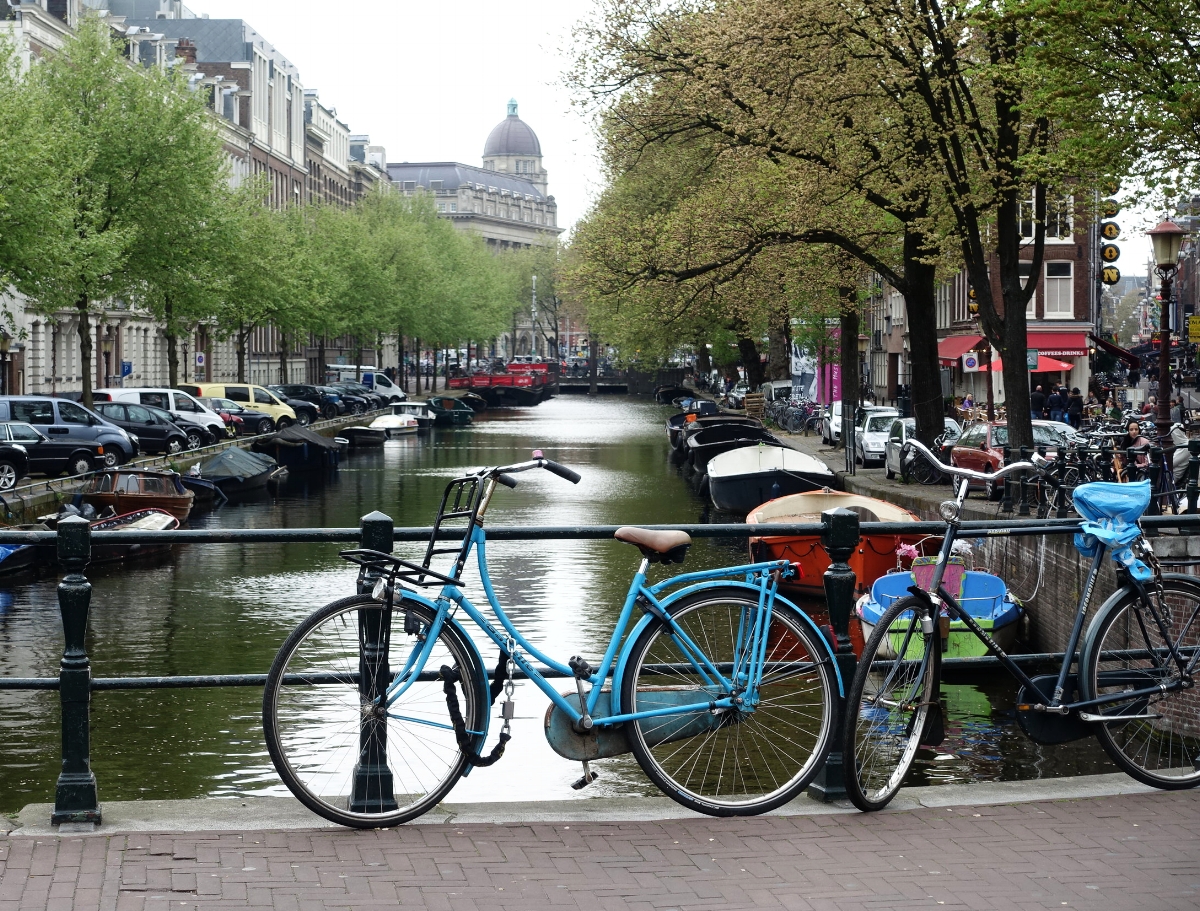
From the Baltic to the Black Sea: Helsinki to Istanbul. Part 4: Slovenian Program 2.0
/
Introduction
In 2017 we visited our Slovenian friends, Samo and Mircha, in their hometown, a small village close to the town of Kranj. We had a fabulous action-packed few days exploring their beautiful country. In early July 2025 we went back for more. This time it was only for a weekend, but we still managed to visit Slovenia’s slice of the Adriatic Sea as well as the spectacular mountain settlement of Velika Planina. Here’s what happened.
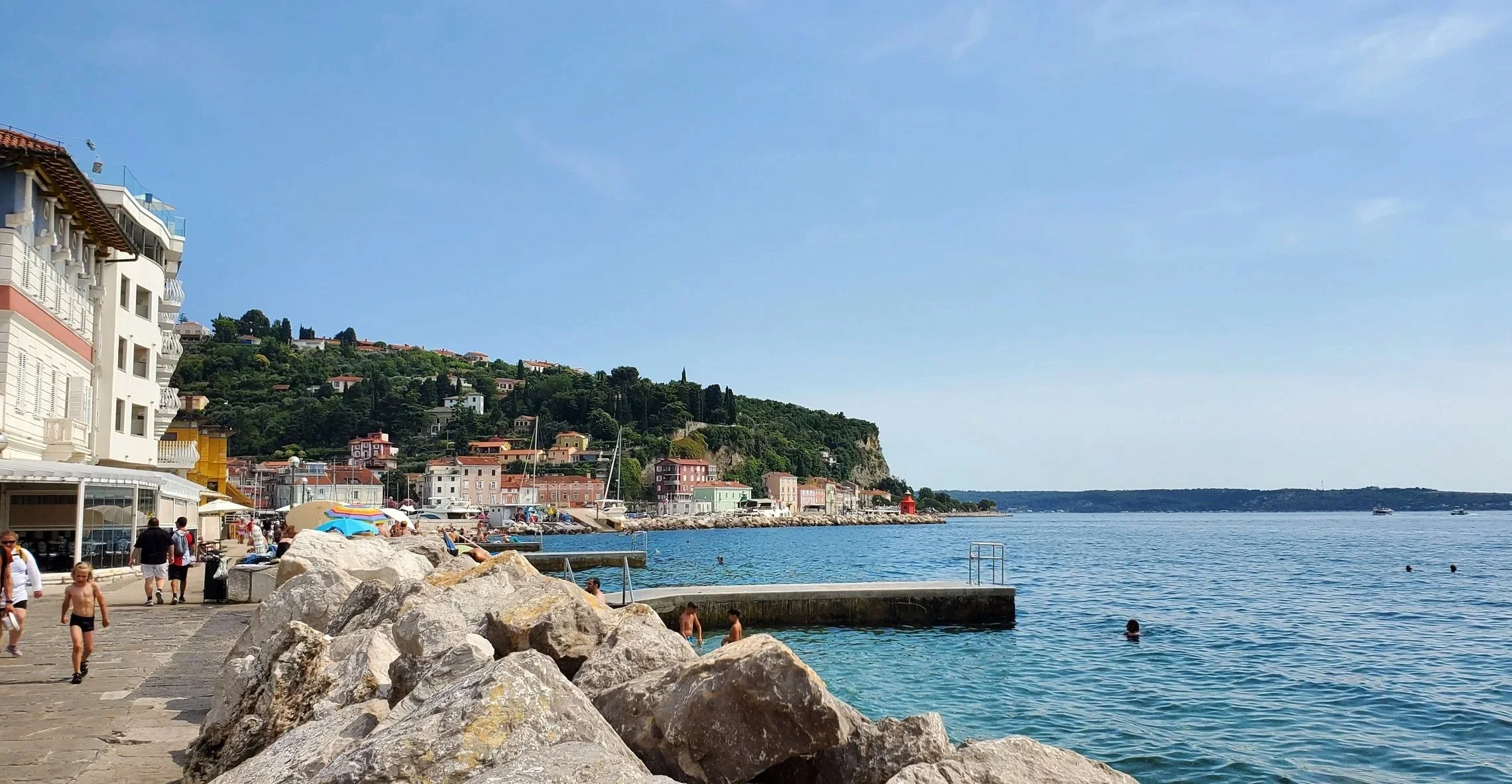
piran
Note: Here’s a link to “Our Slovenian Program” our 2017 visit.
Arrival in Slovenia
In Part 3: A Walk in the High Tatras, we finished in Bratislava, Slovakia. From Bratislava we took a 7-hour bus ride to Ljubljana, the capital of Slovenia. Samo and Mircha met us there and we drove 30 km north to Kranj.
It was Friday night. Kranj was buzzing with an outdoor concert and droves of people enjoying the warm summer evening, filling the many bars and restaurants. But we didn’t take any pictures – we just enjoyed catching up.
Saturday – To the Sea.
Saturday morning, we made the 146 km drive from Kranj to Piran on the Adriatic. This is the main town on Slovenia’s 46 km stretch of coast, sandwiched between Italy and Croatia. First stop was Sečovlje Salt Nature Park. This is a park dedicated to the production of salt. Salt production has been practiced here since the 14th century and continues today.
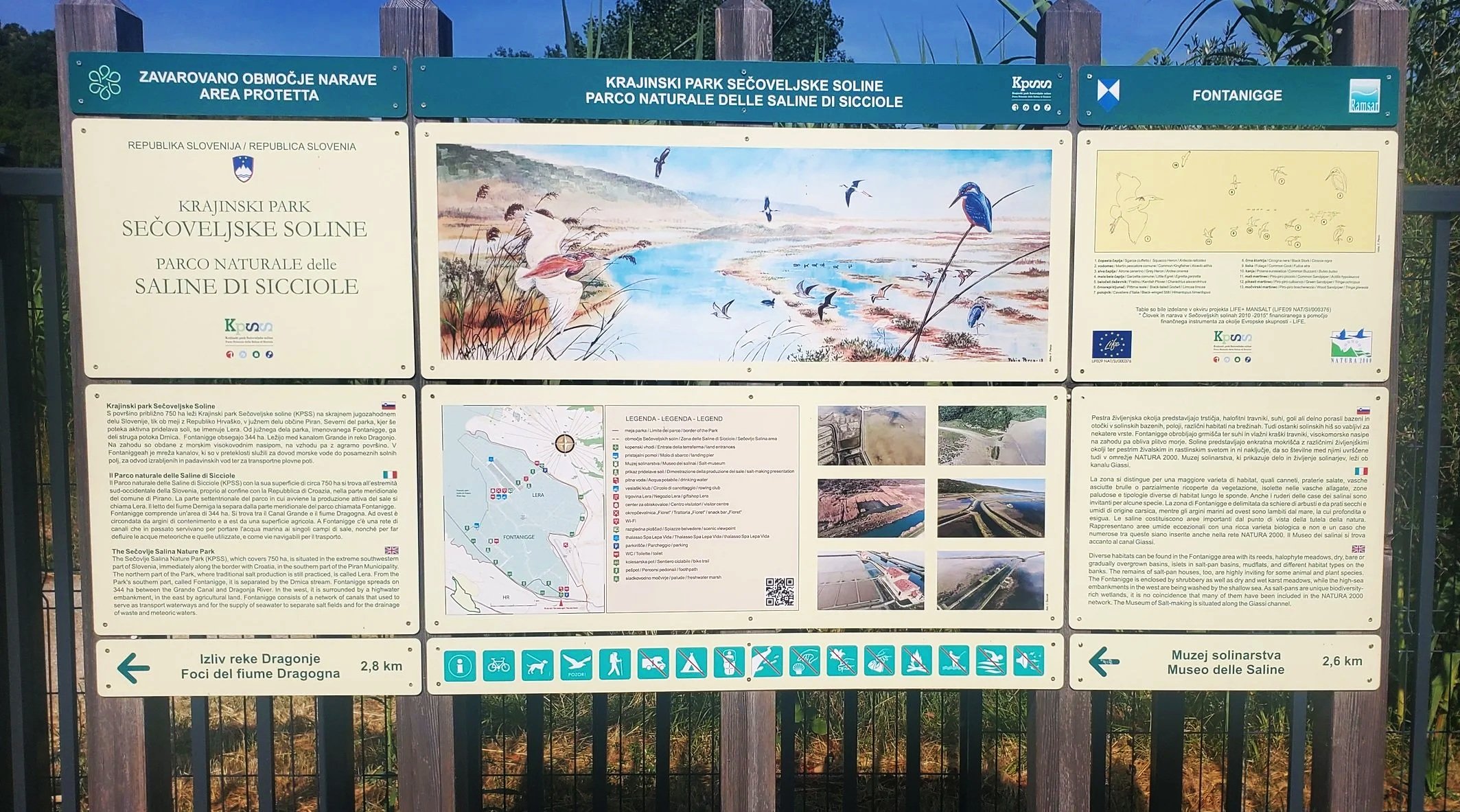
The 700-hectare park sits on Piran Bay. Around half is called Fontanigge and is no longer producing salt but does contain some interesting artefacts and a salt-making museum. The other half is called Lera, and this is where salt making continues.
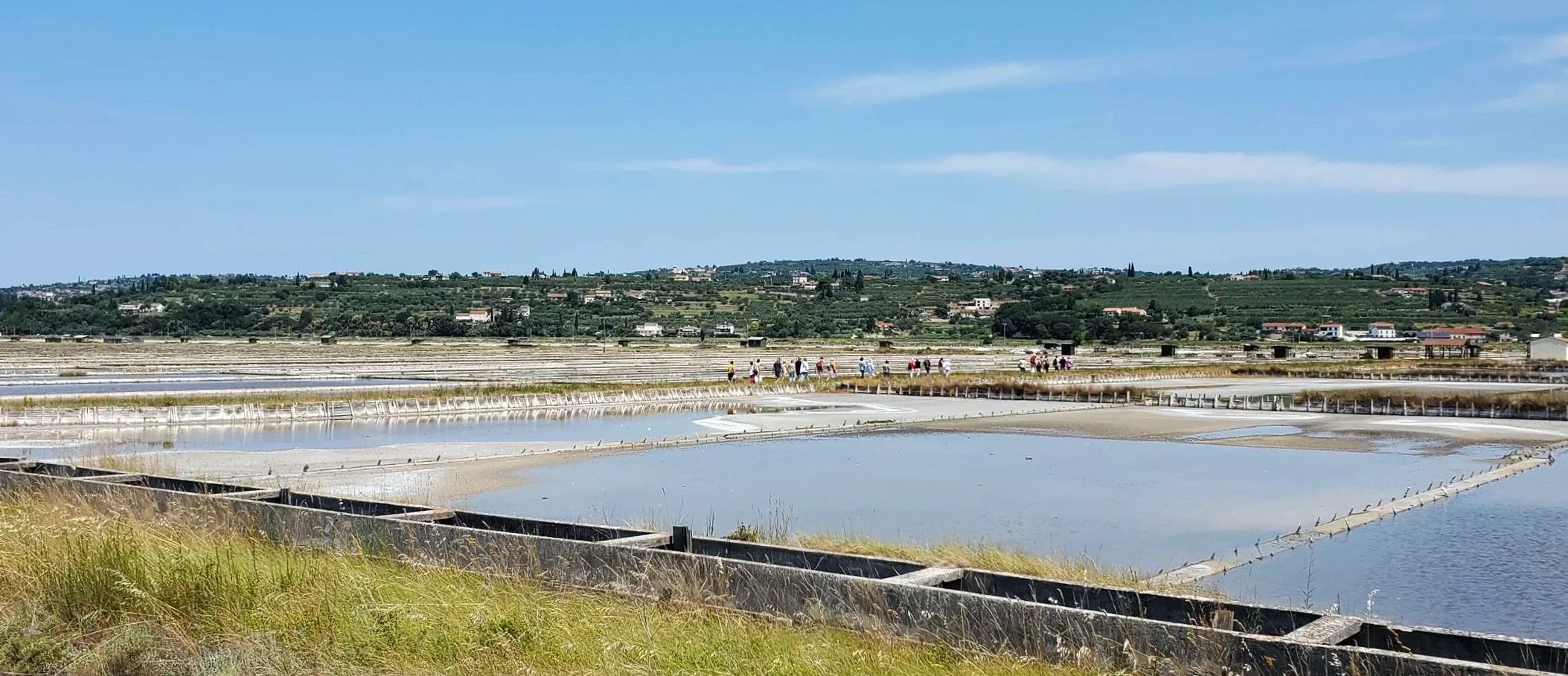
visitors at the salt pans
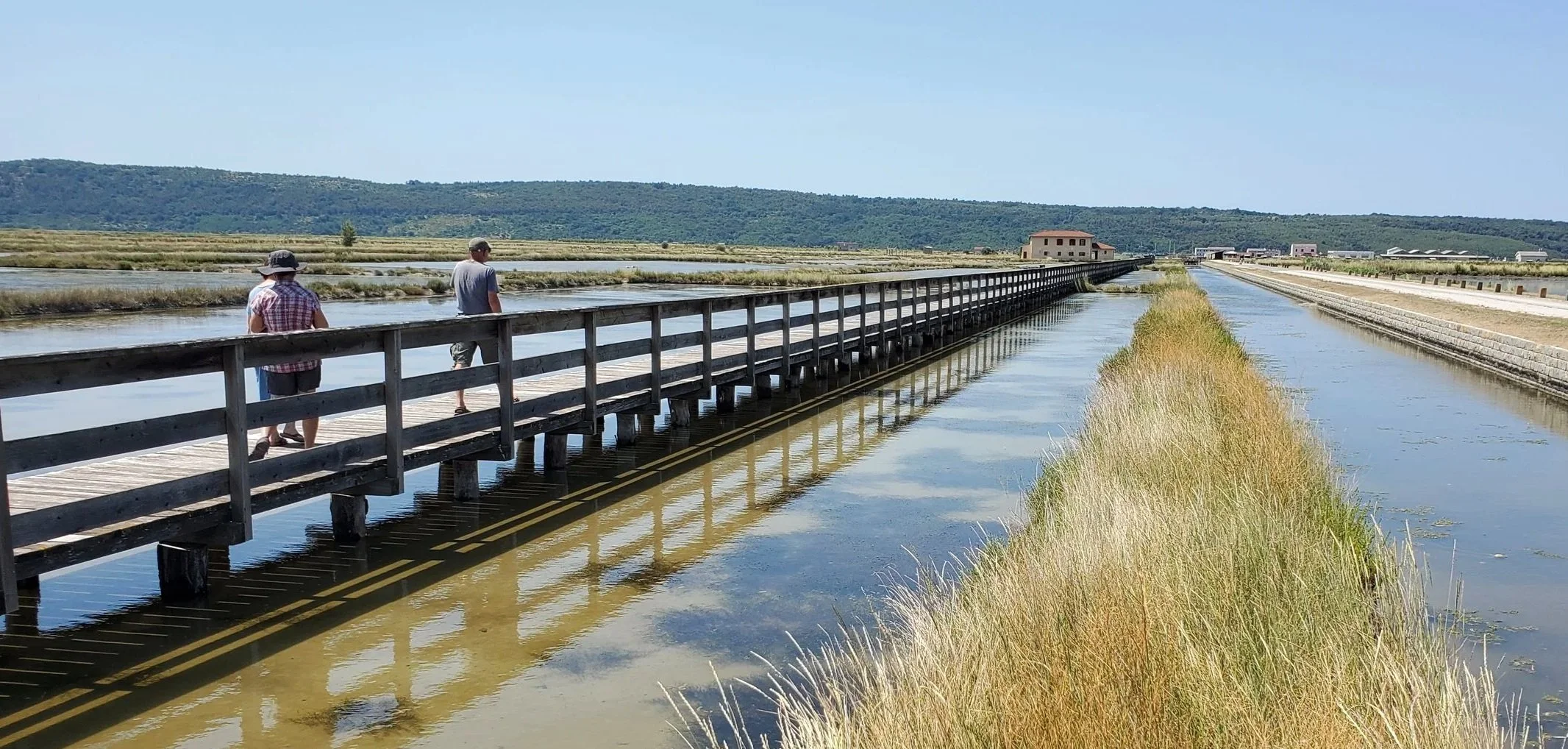
We started our exploration on bicycles that we hired on site.
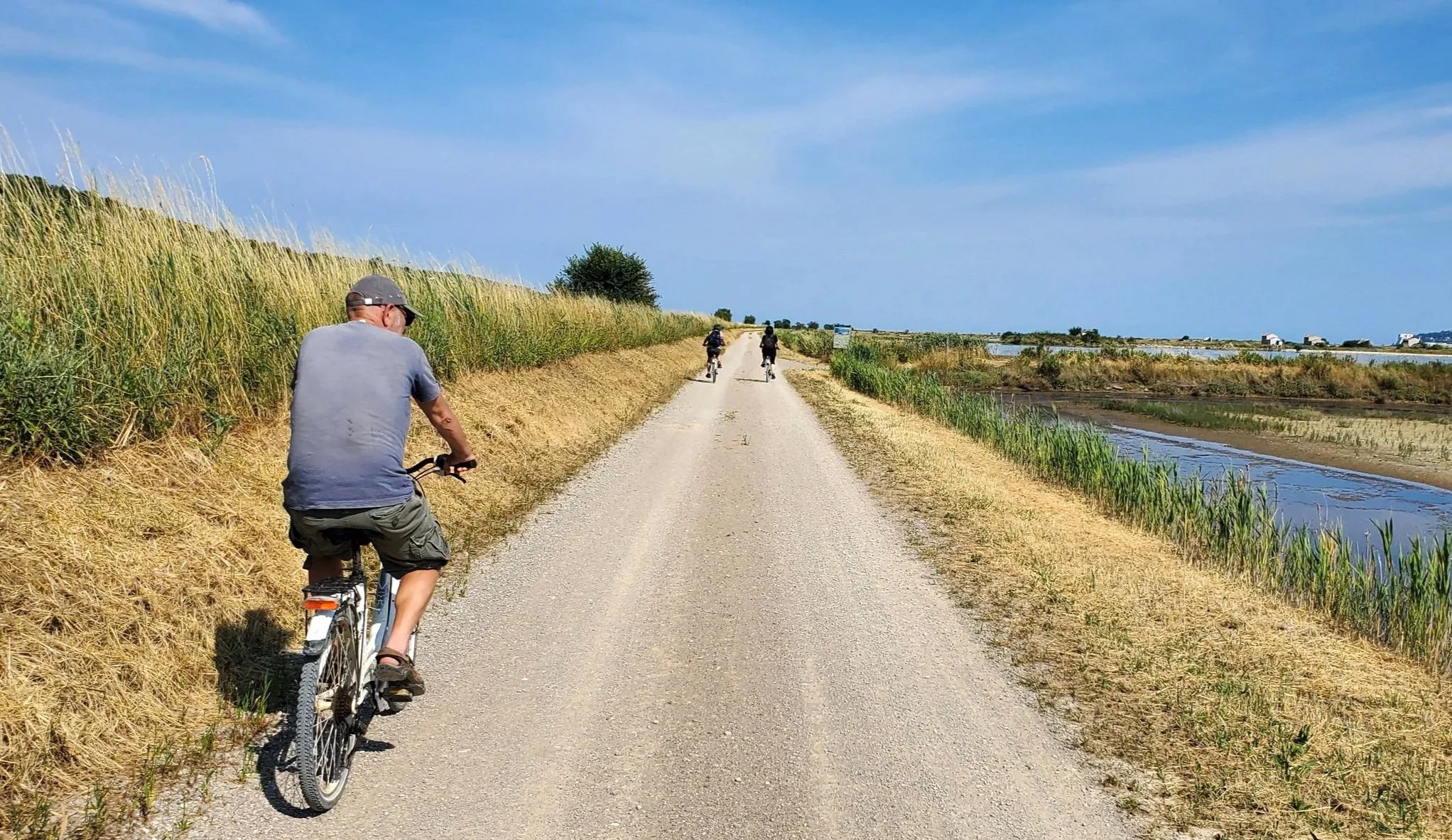
On our left was the River Dragonja which forms the border with Croatia.
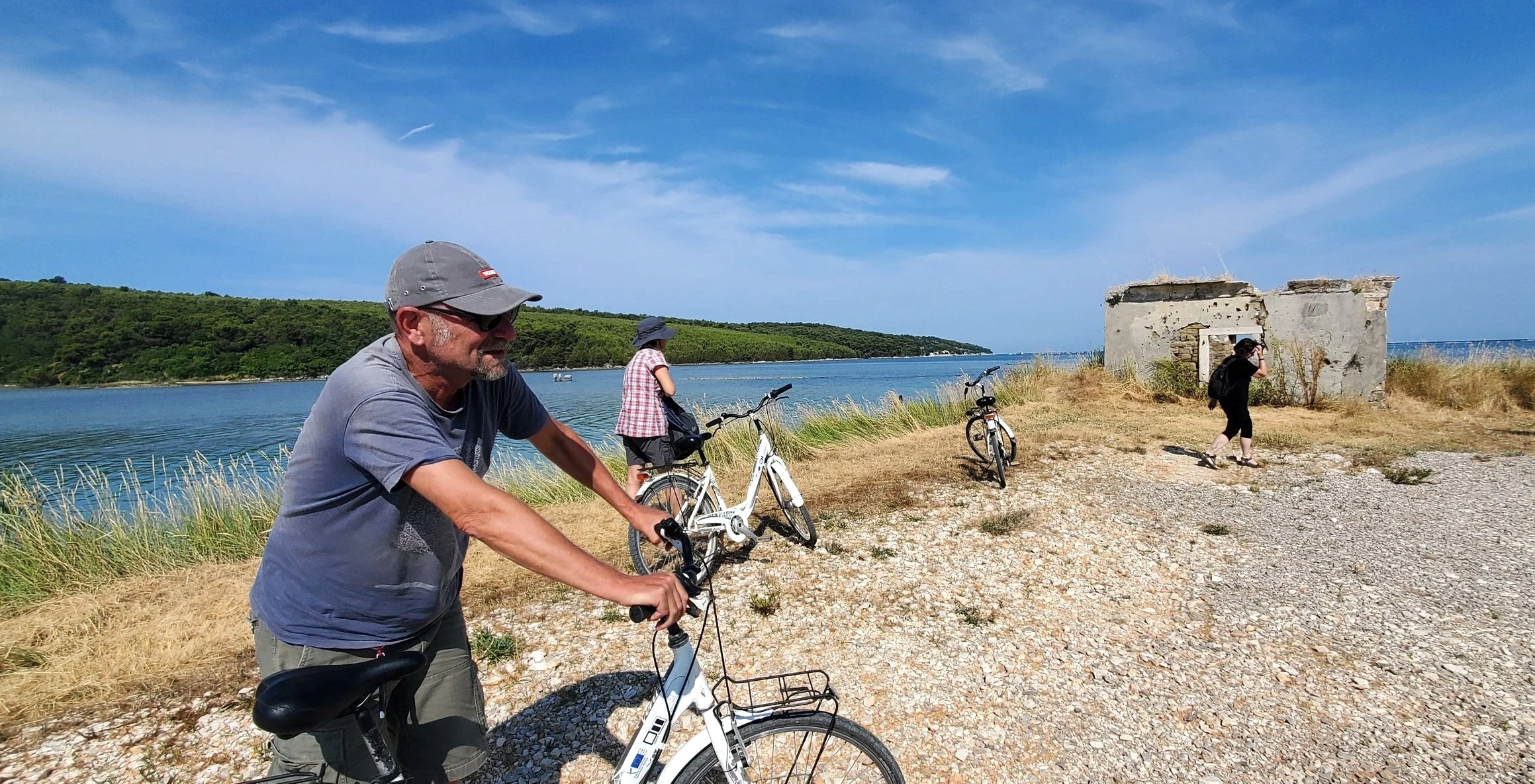
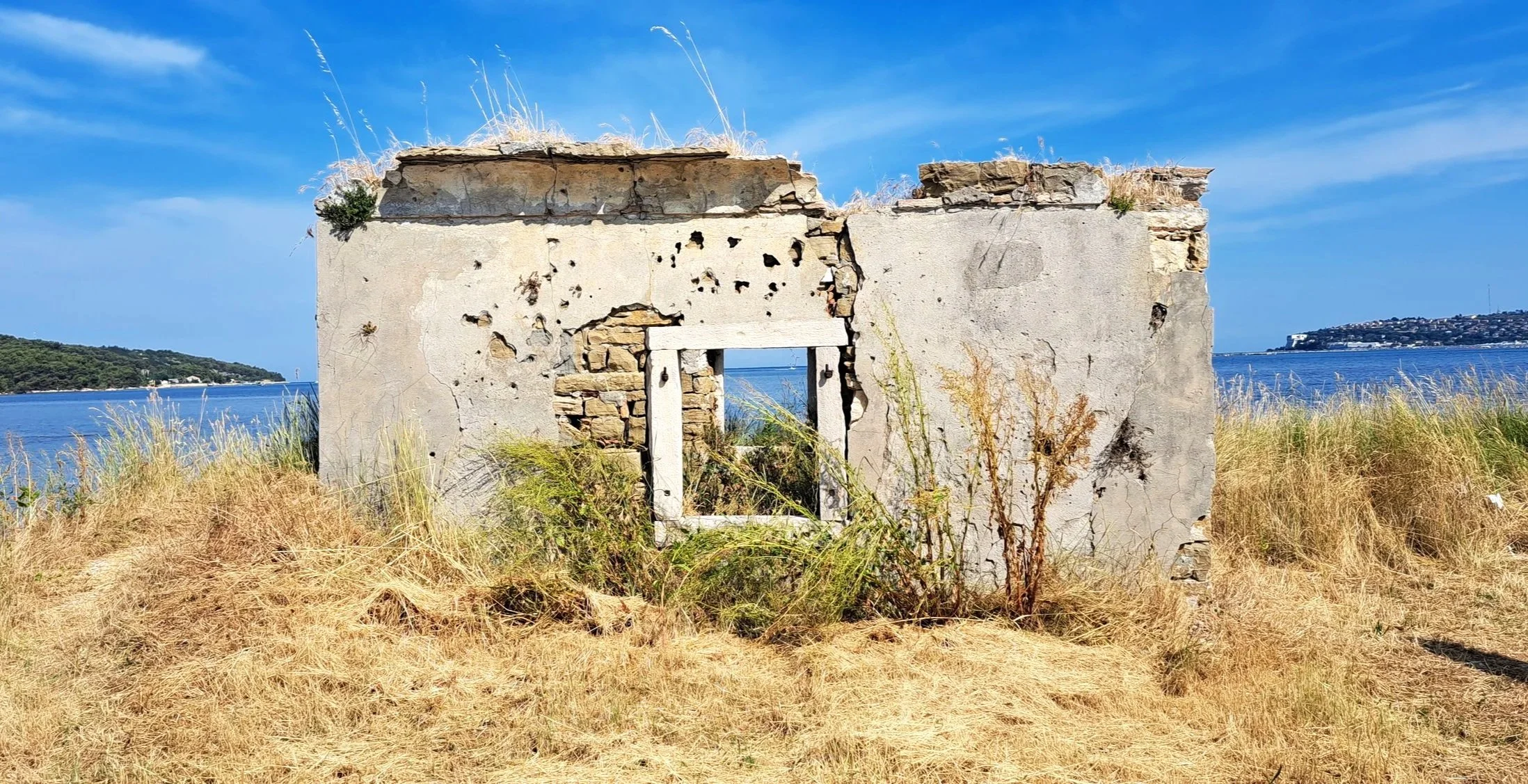
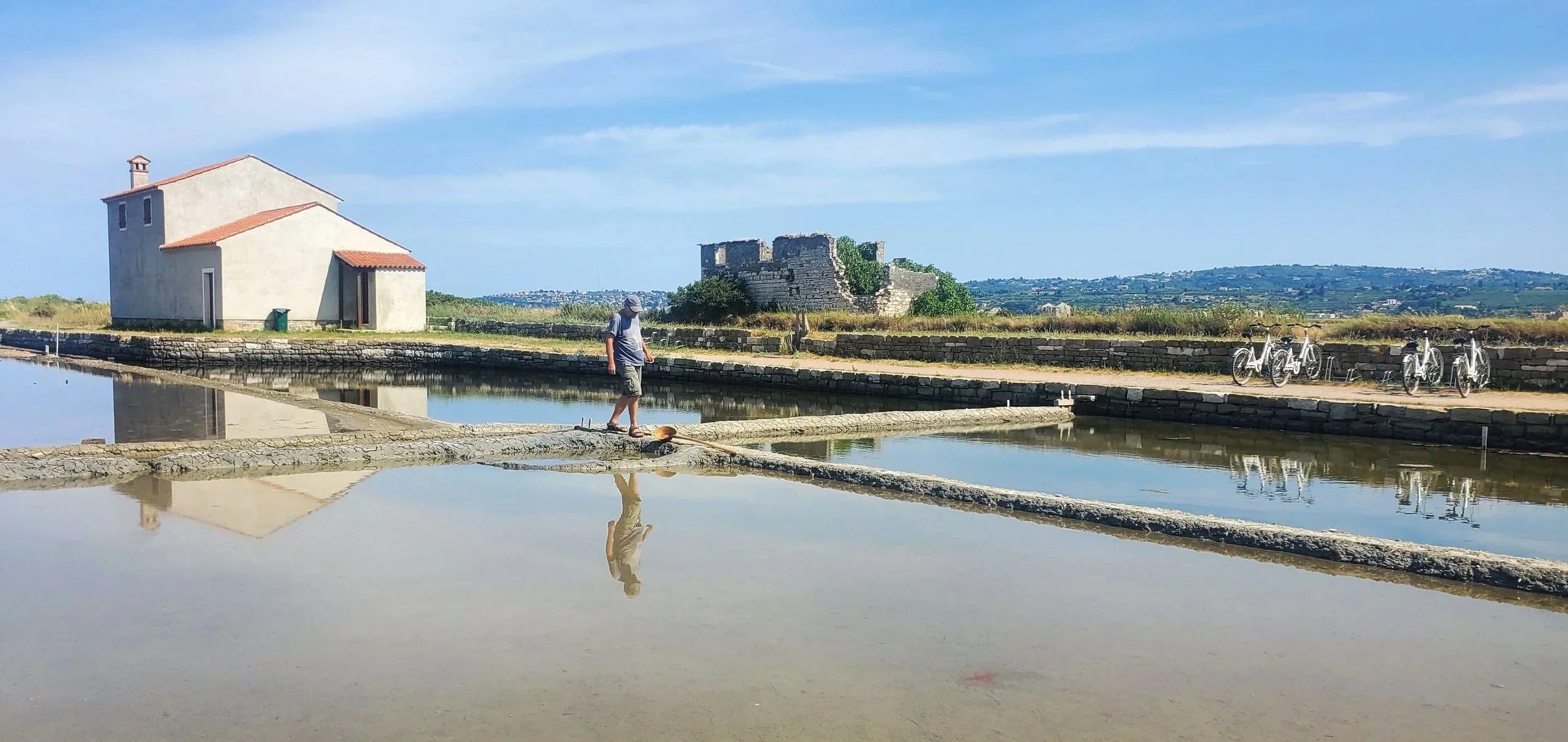
Numerous derelict buildings are testament to when people lived and worked amongst the salt pans.
It was a hot day, so we decided to head for the shade of the museum.
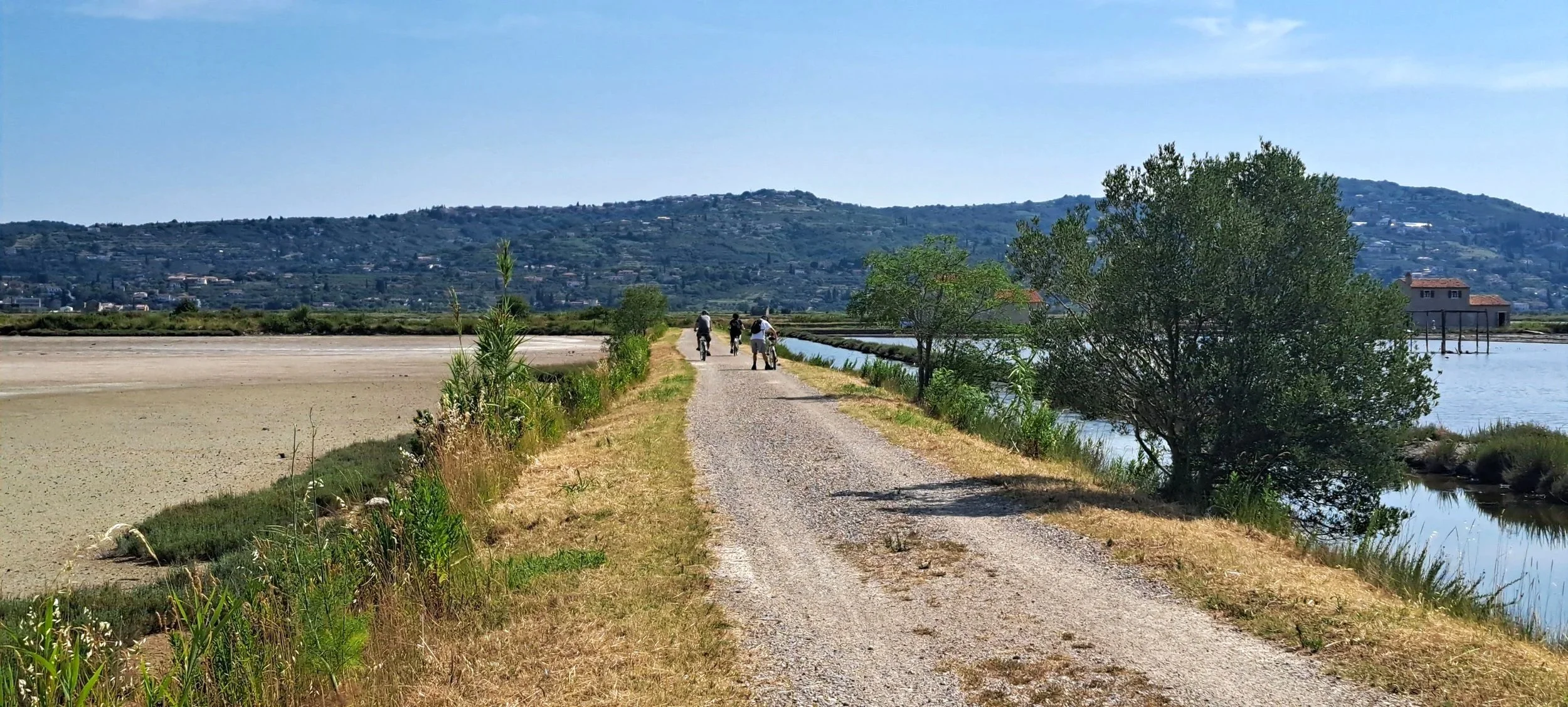
We passed some long-abandoned salt production areas on the way.
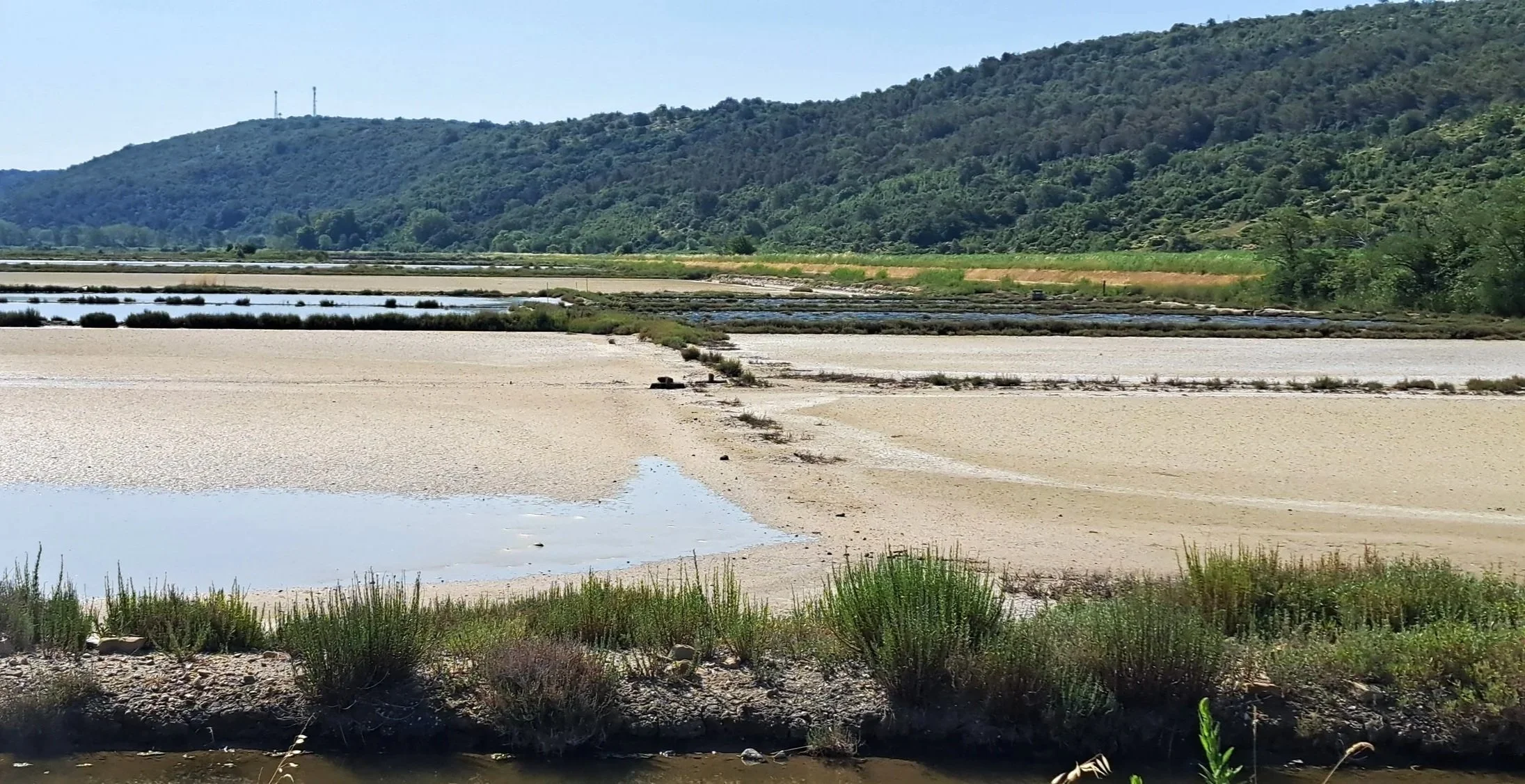
We arrived at the museum. Parked our bikes.
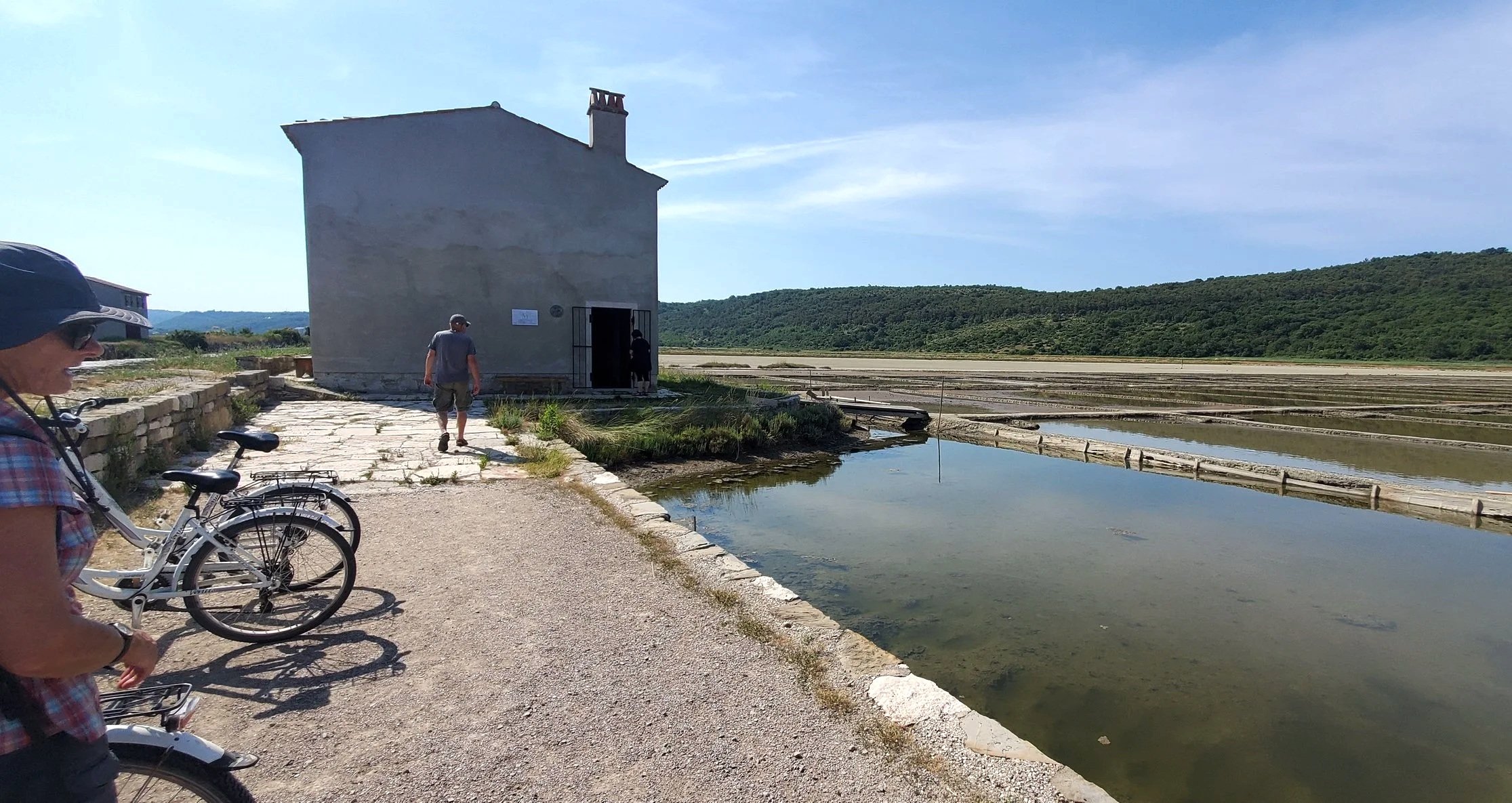
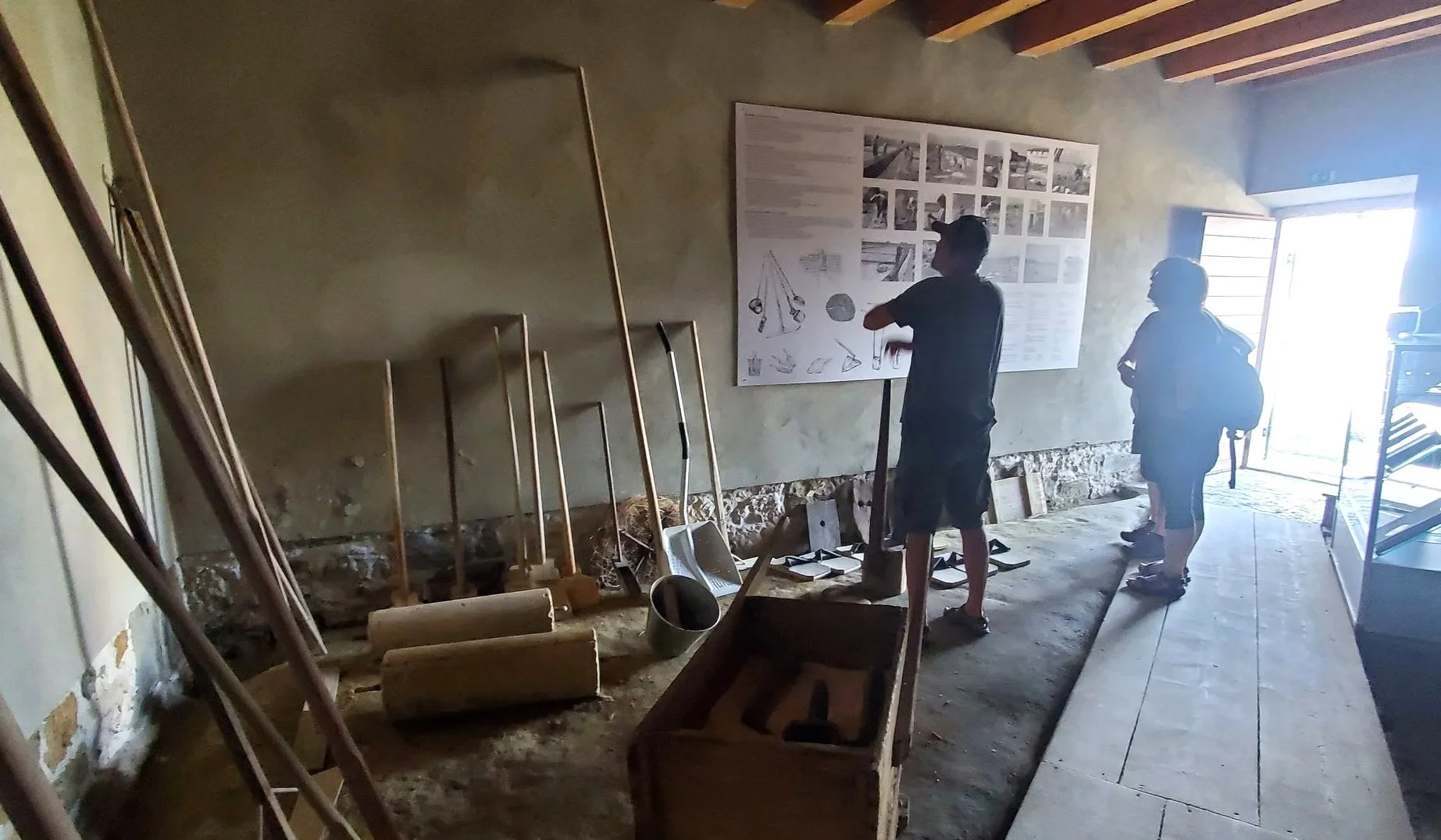
And headed into the small Museum of Salt Making.
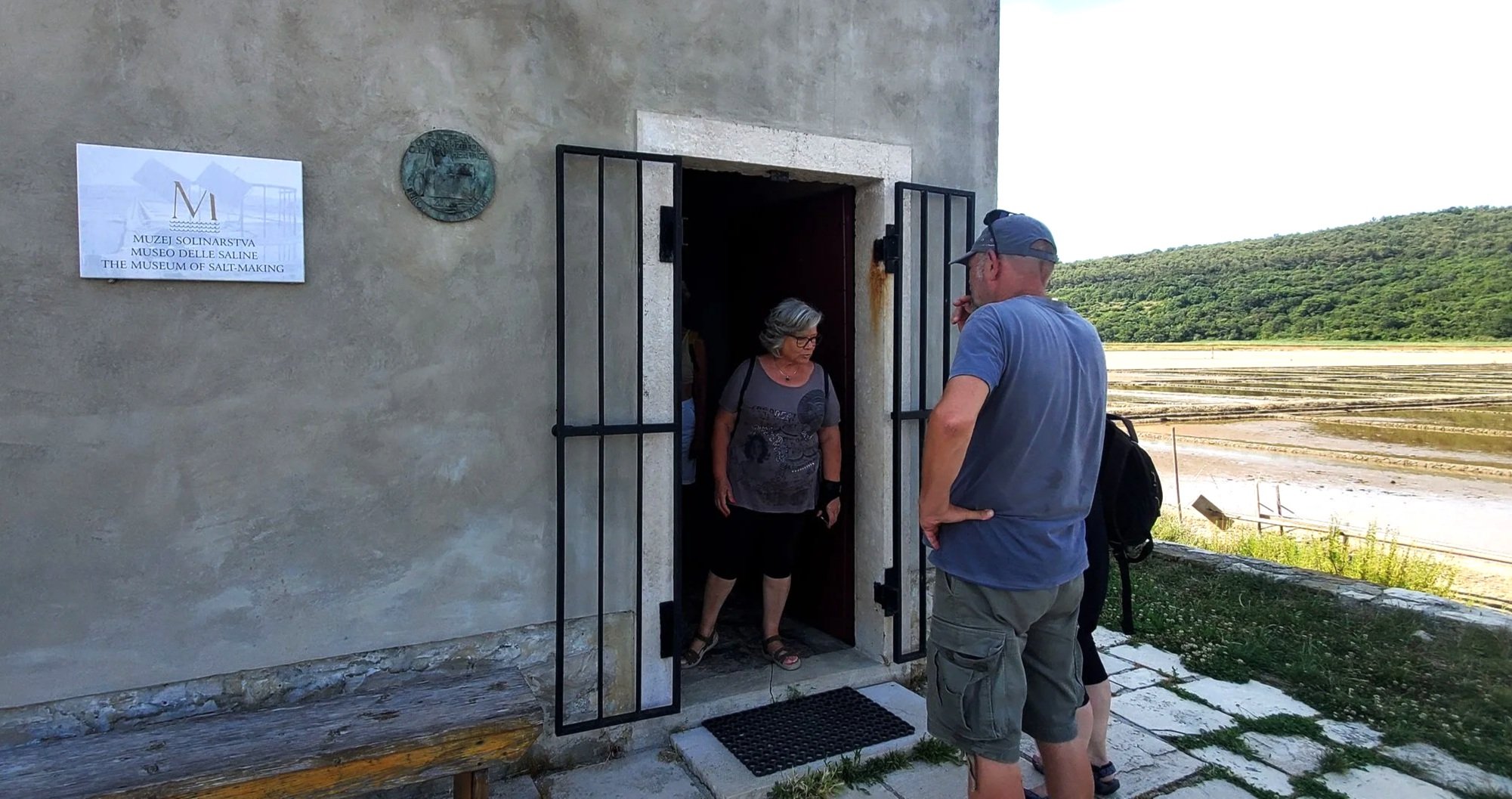
We familiarised ourselves with the tools of salt production.
We then made our way to Lera to see the productive salt making ponds.
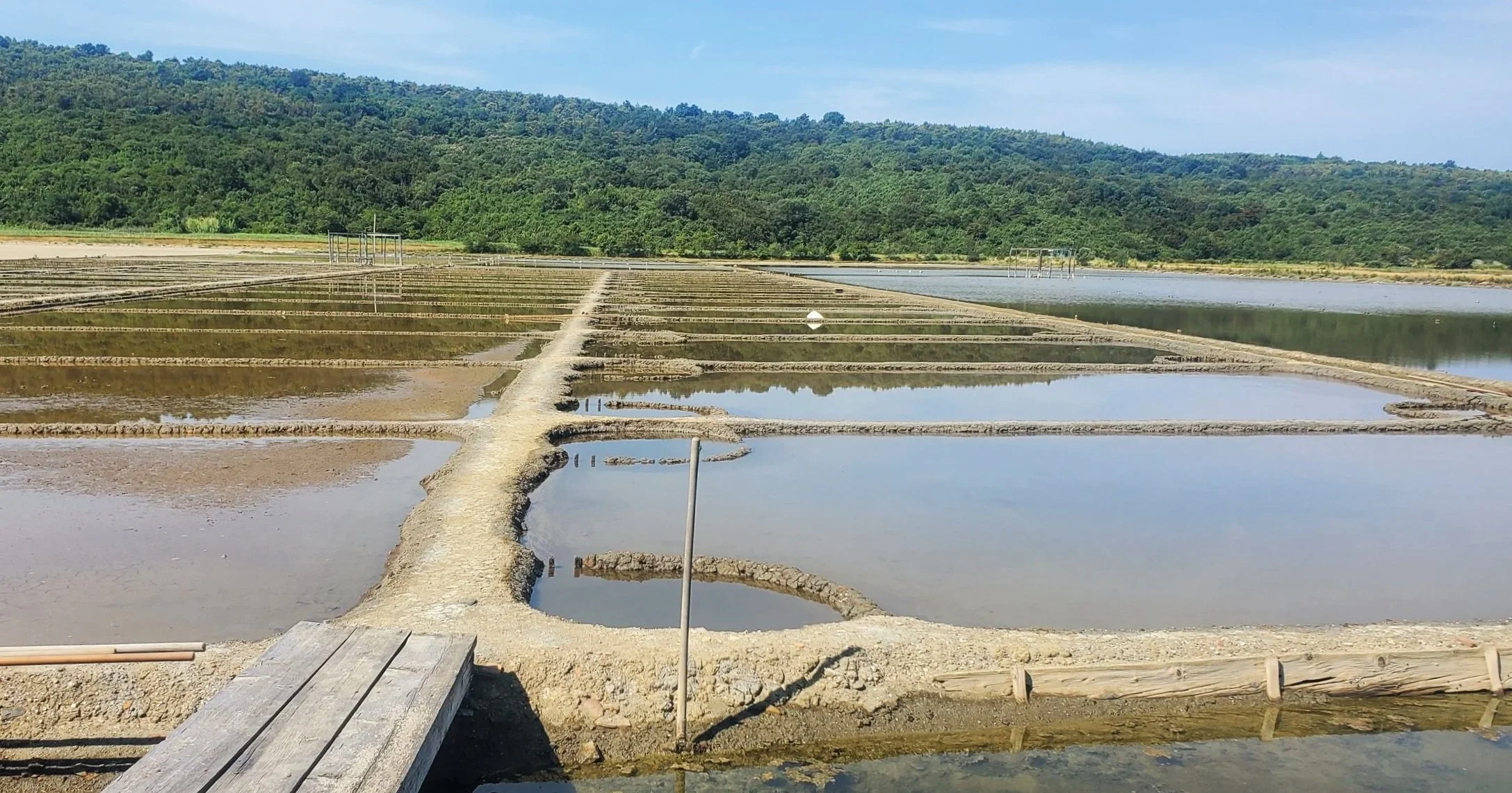
It was an interesting excursion.
Here is a link to the Sečovlje Salt Nature Park website.
The day was continuing to warm. It was around 34C when we stopped for our first dip.
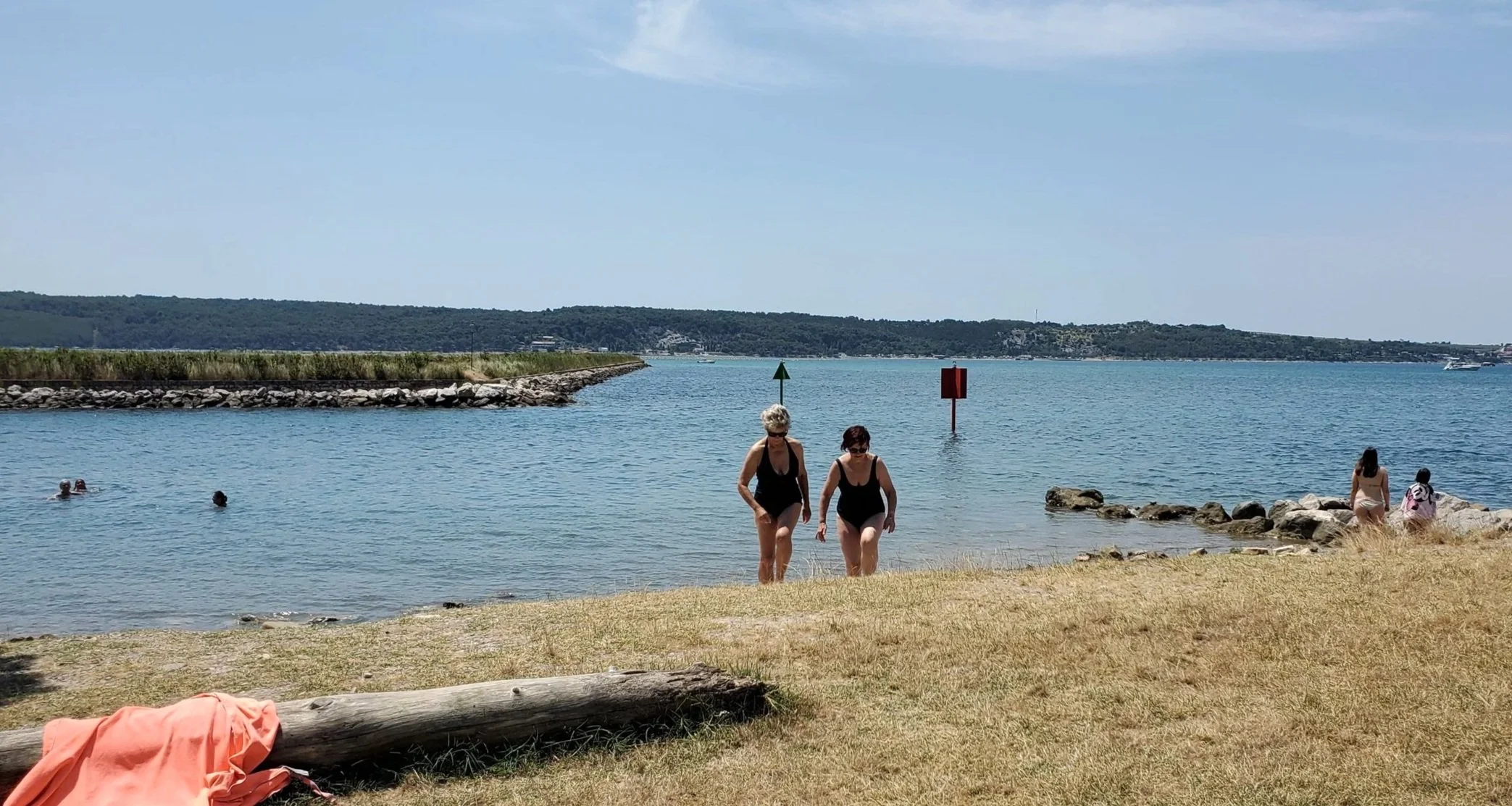
We then drove the short distance to Piran town, parked a bit outside, and walked into the centre.
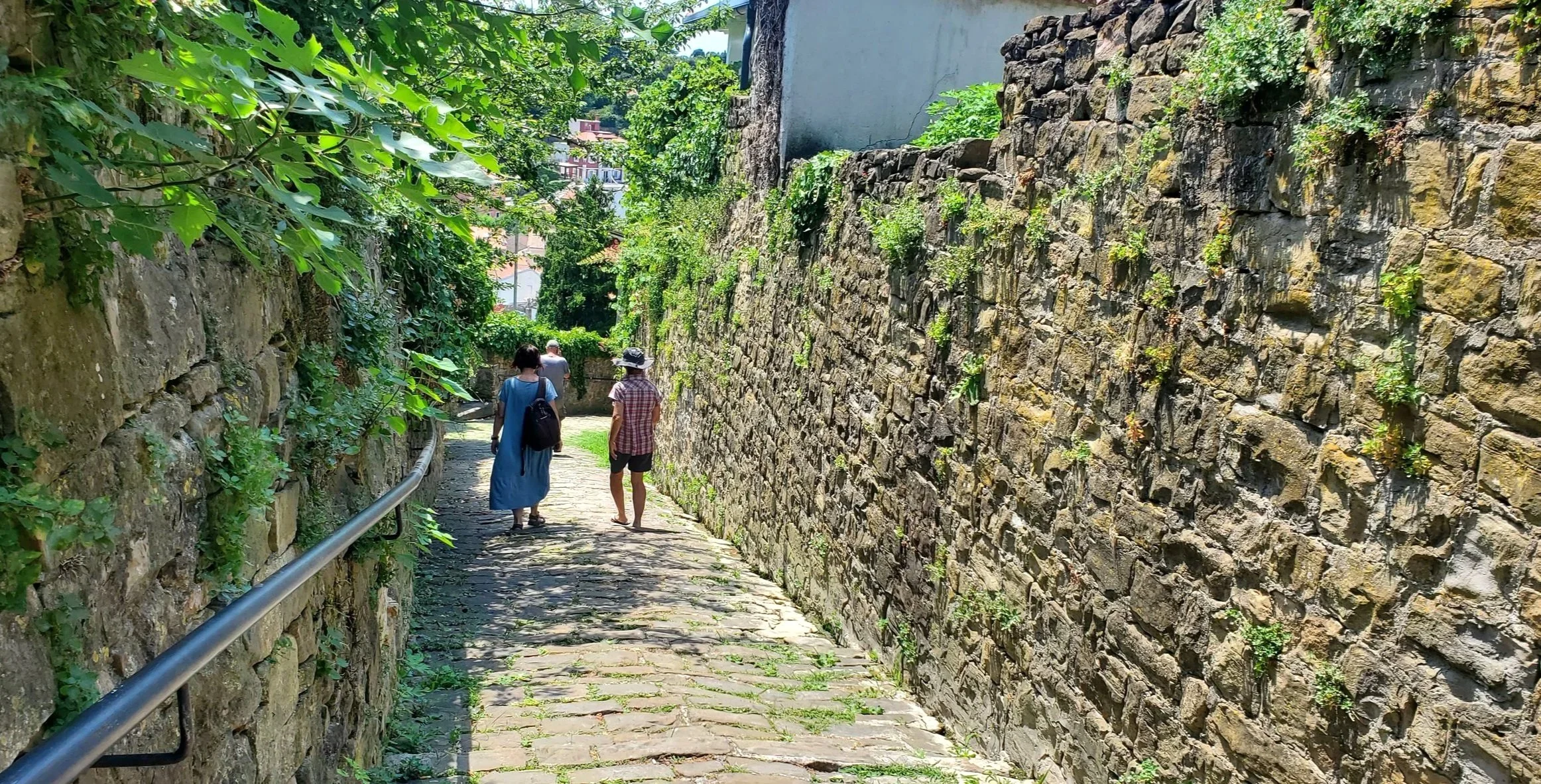
There were plenty of yachts in the harbour.
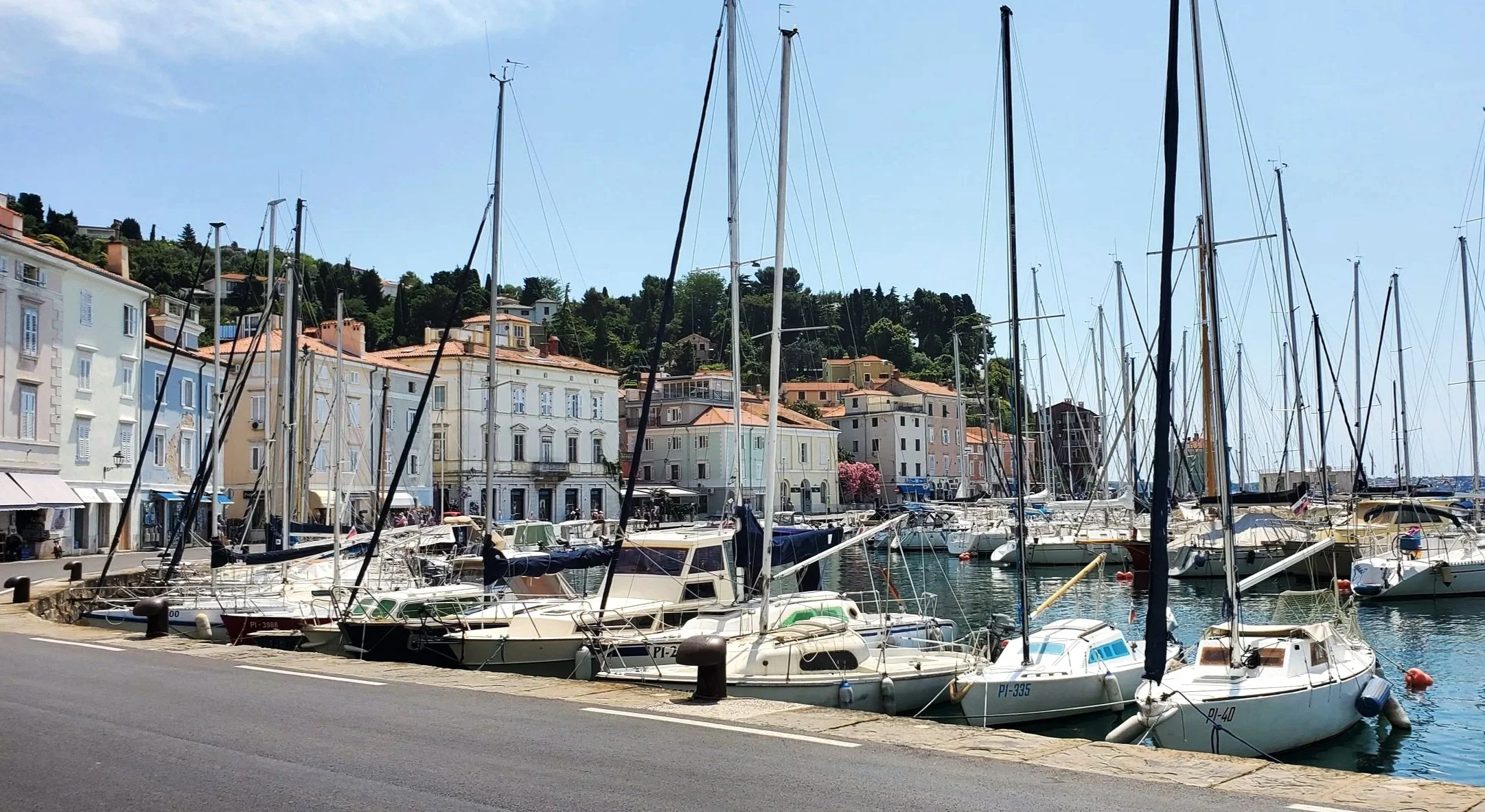
It is a pretty town that can trace its history back 1300 years.
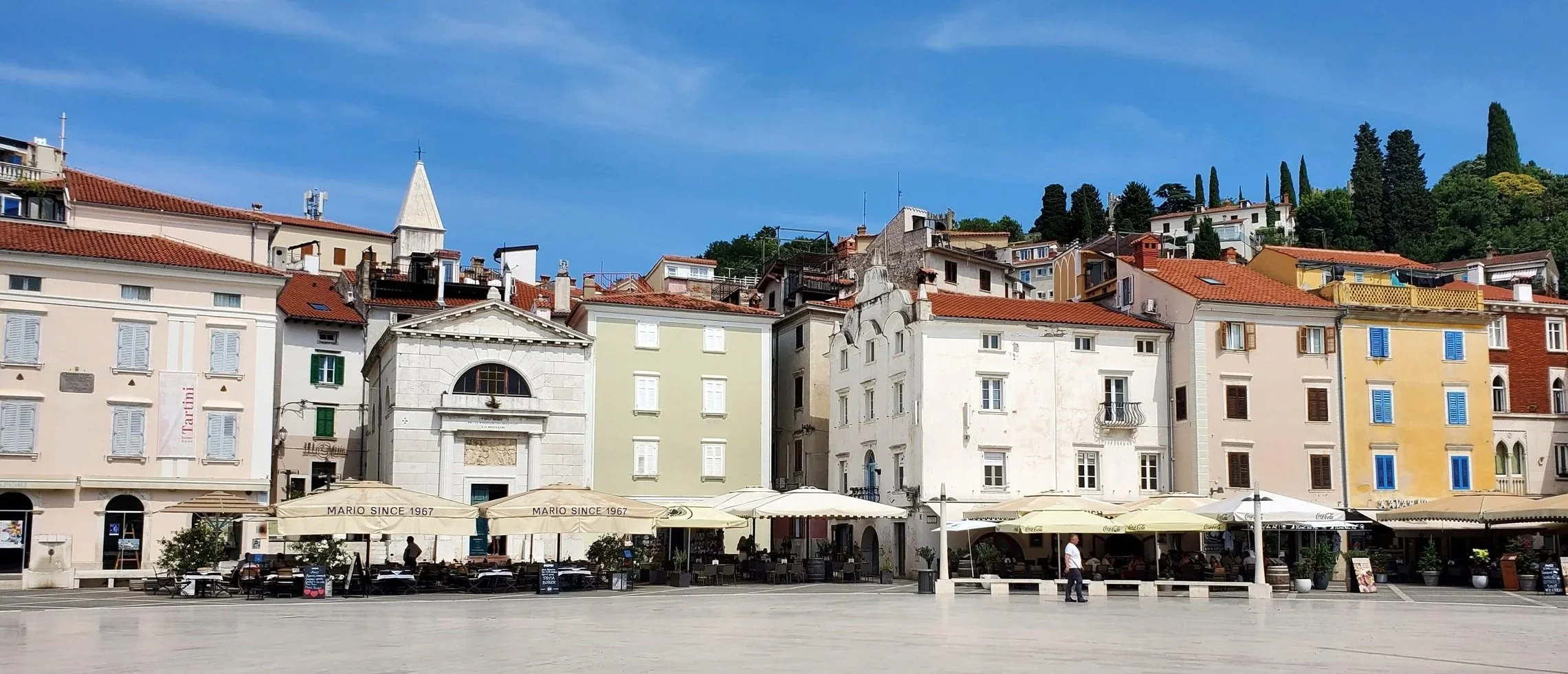
We checked out the central square.
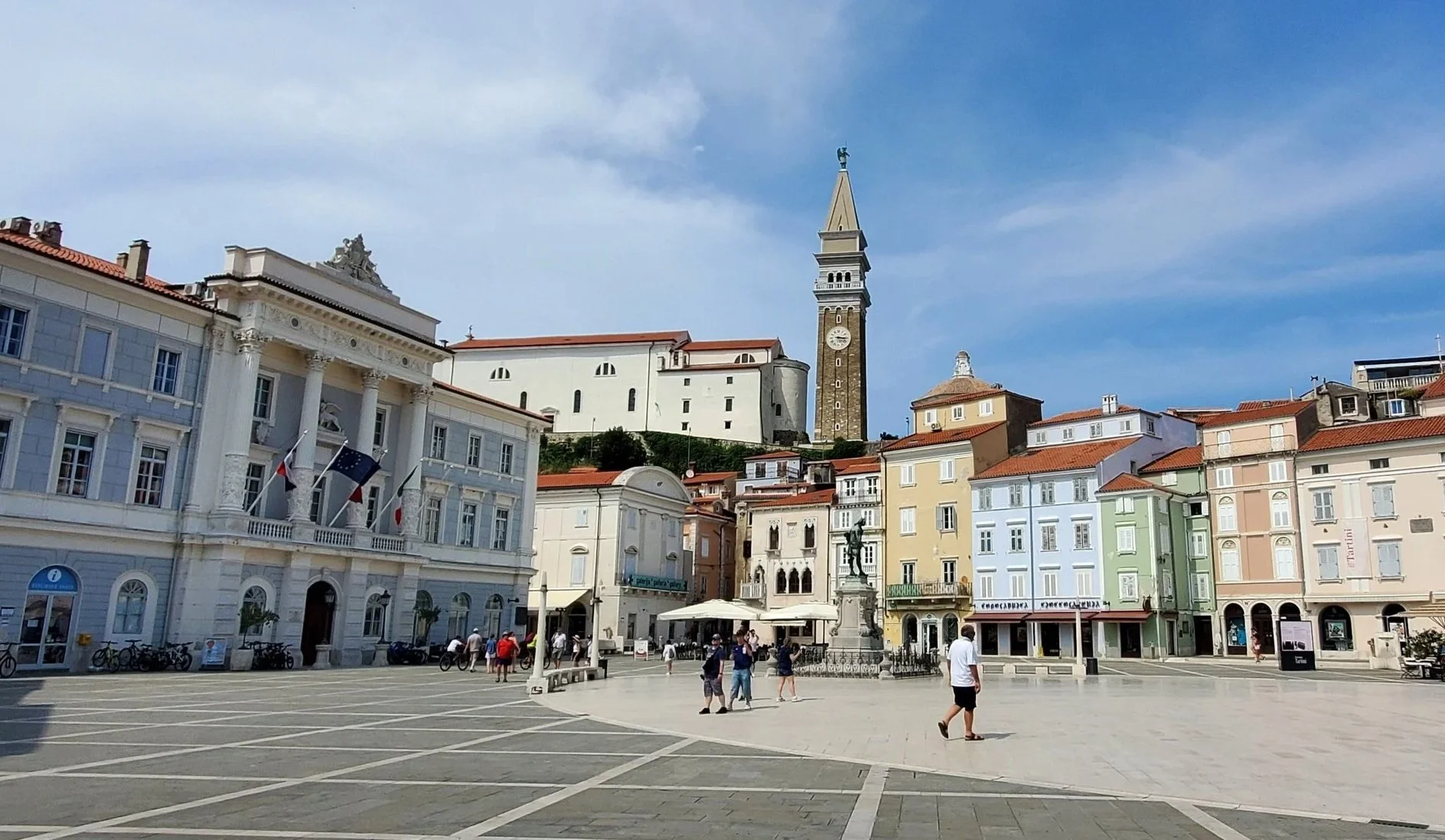
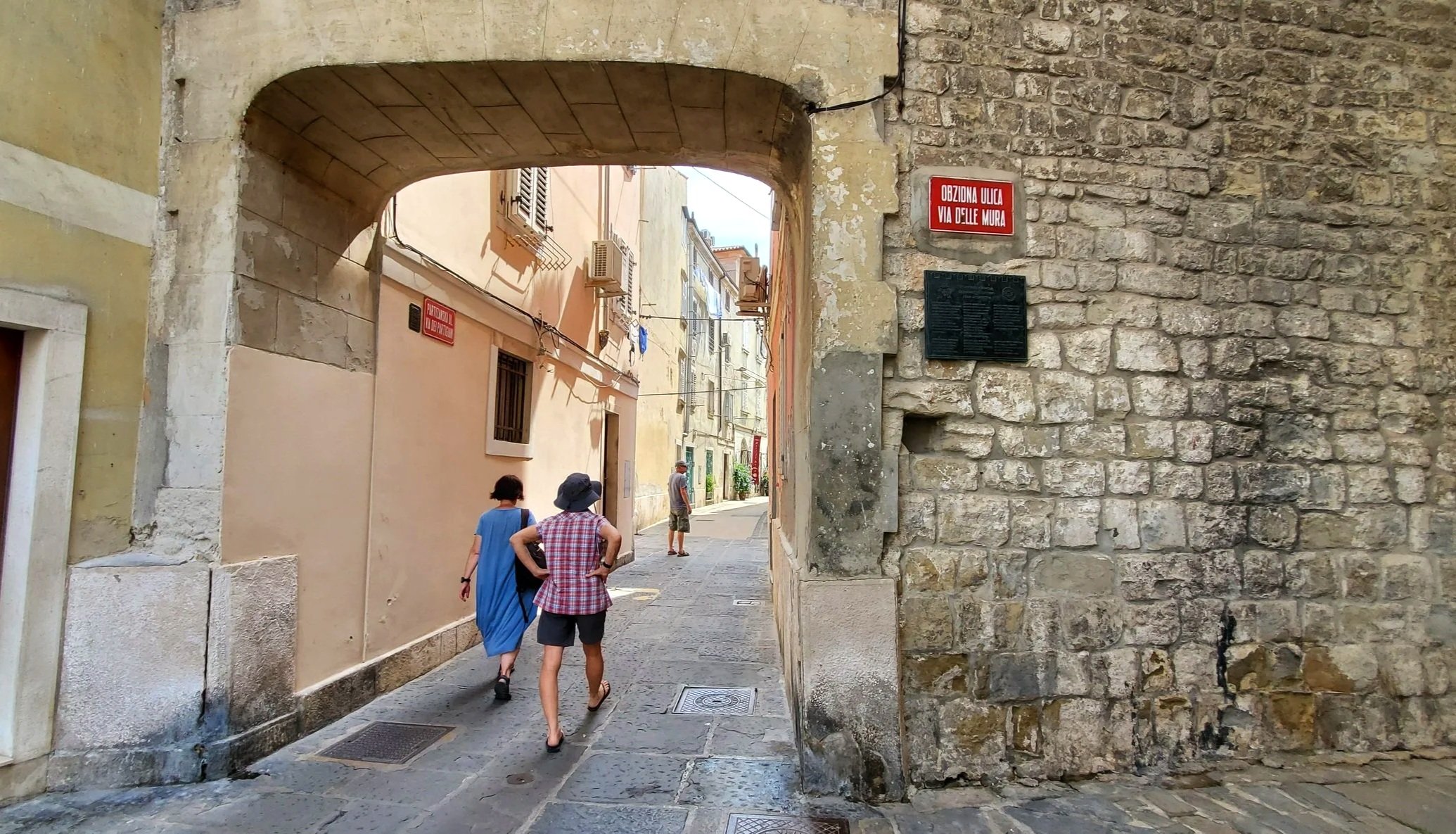
After a spot of lunch, we explored some of the back streets.
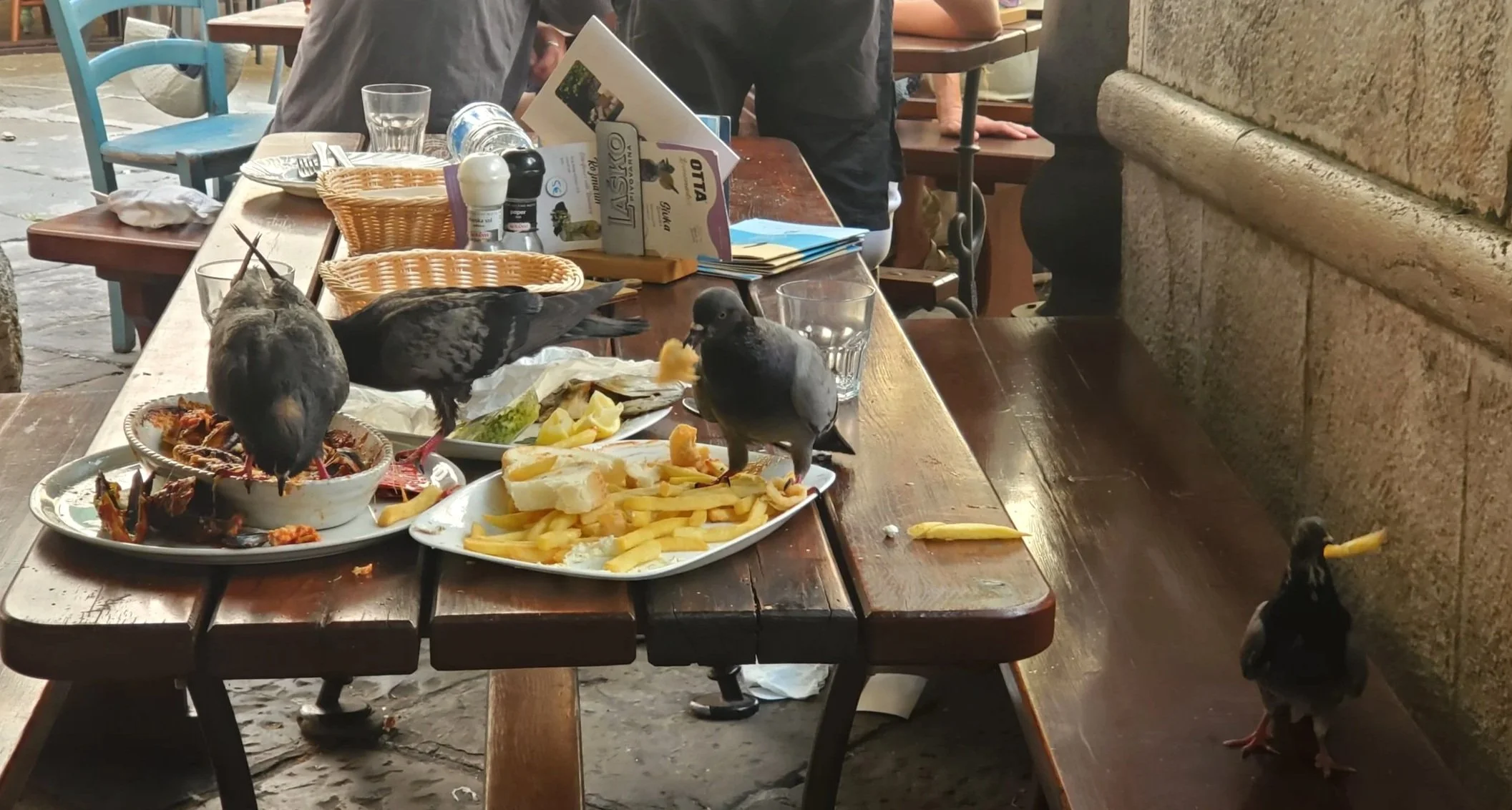
These bold pigeons helped themselves to someone else’s leftovers.
Time for another dip. This time off Piran itself. Some of the coast is rocky, no actual beach.
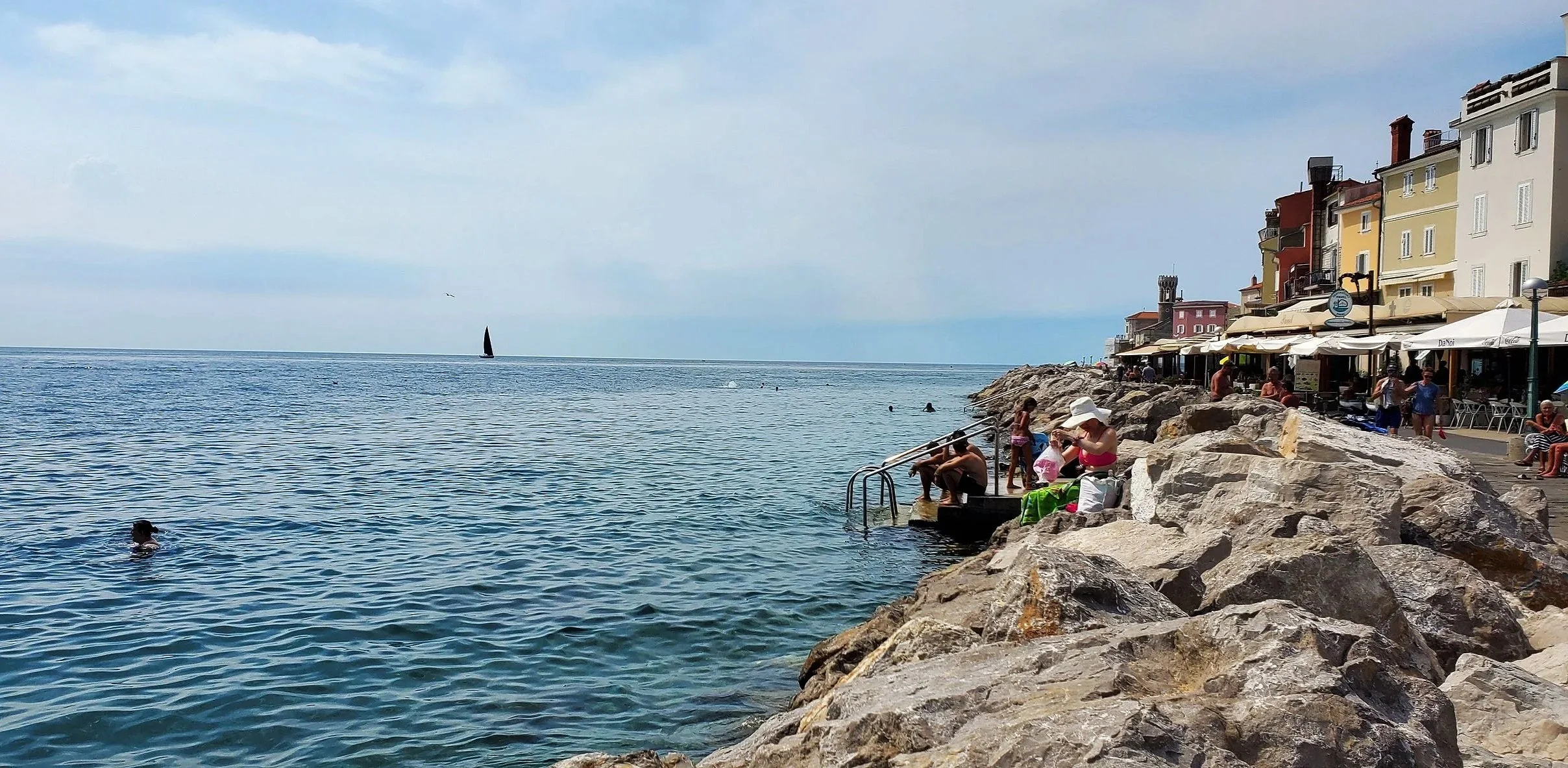
But a little further along we came to a pebble beach.
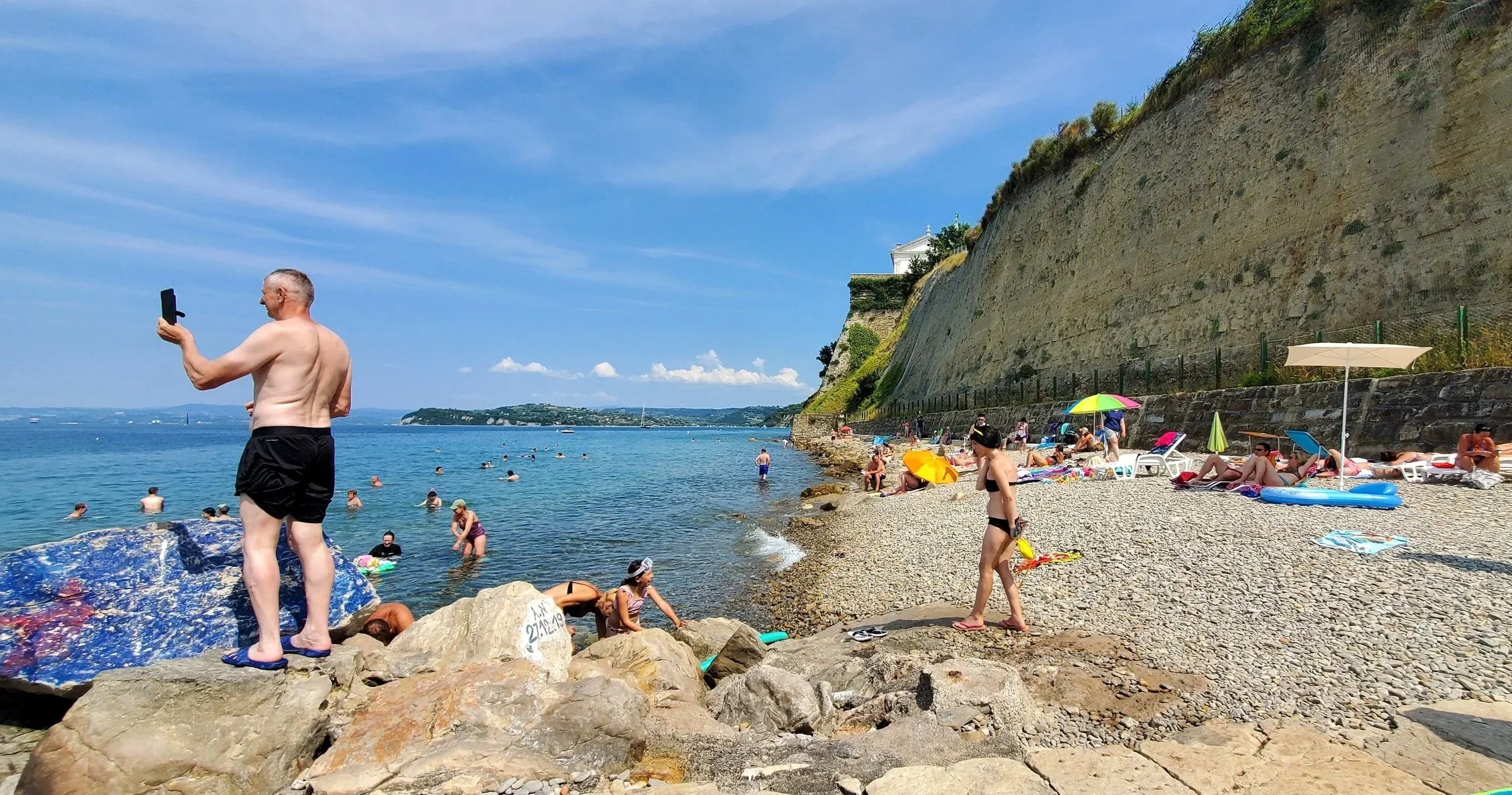
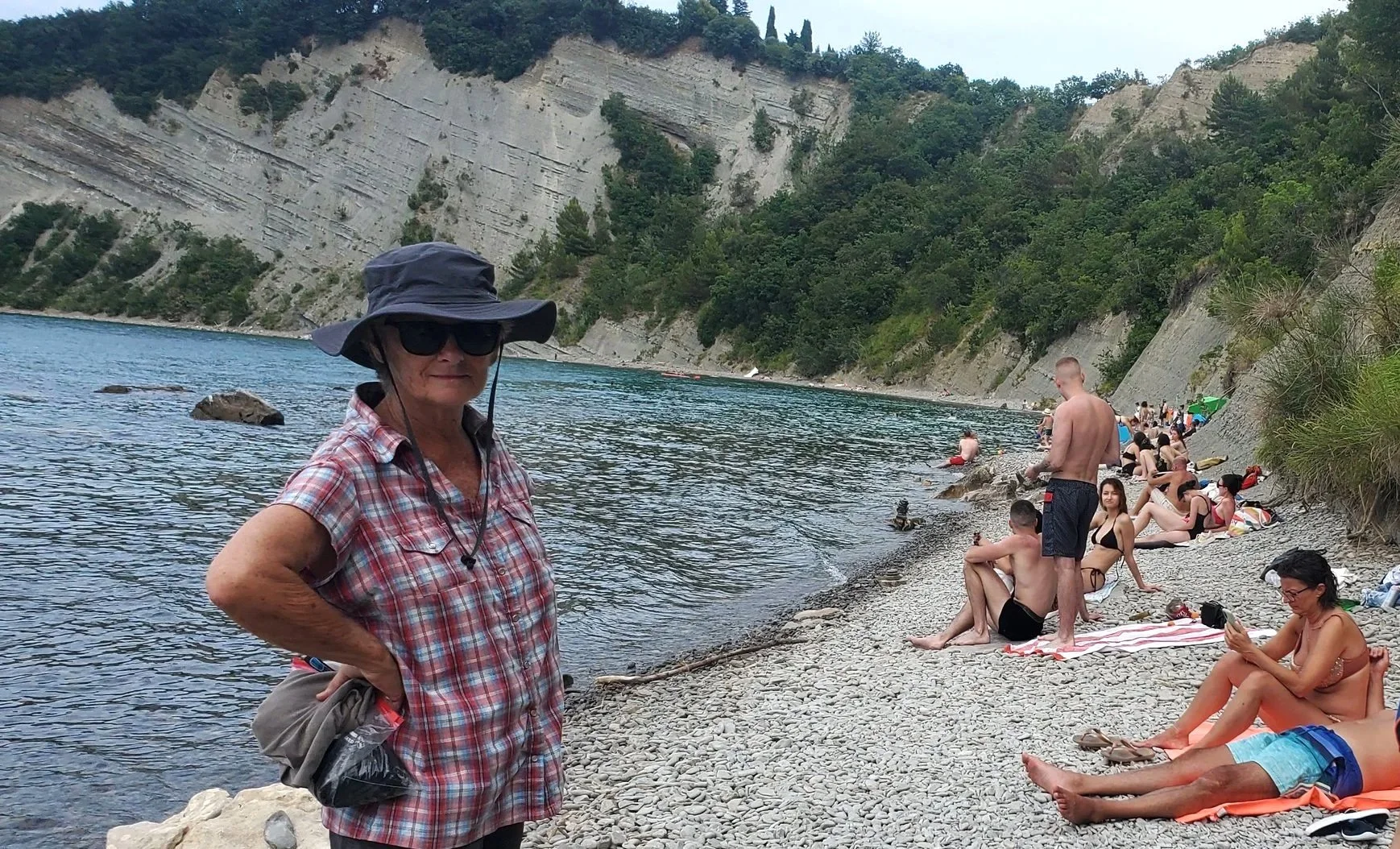
Before returning to Kranj we ventured to another, more secluded beach, known locally as Moon Bay.
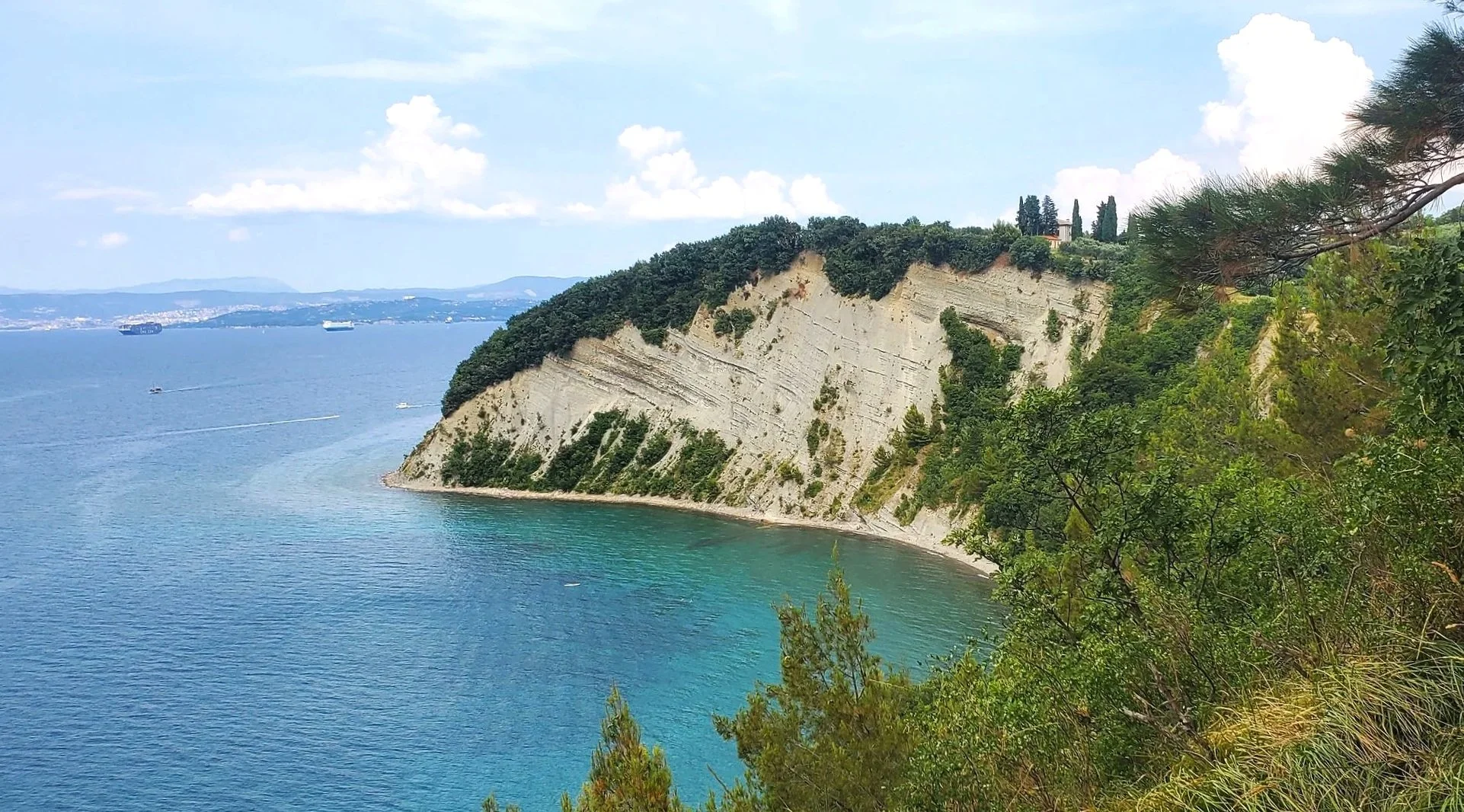
moon bay
Secluded but nevertheless busy. A final dip before heading home.
Sunday – In the Mountains
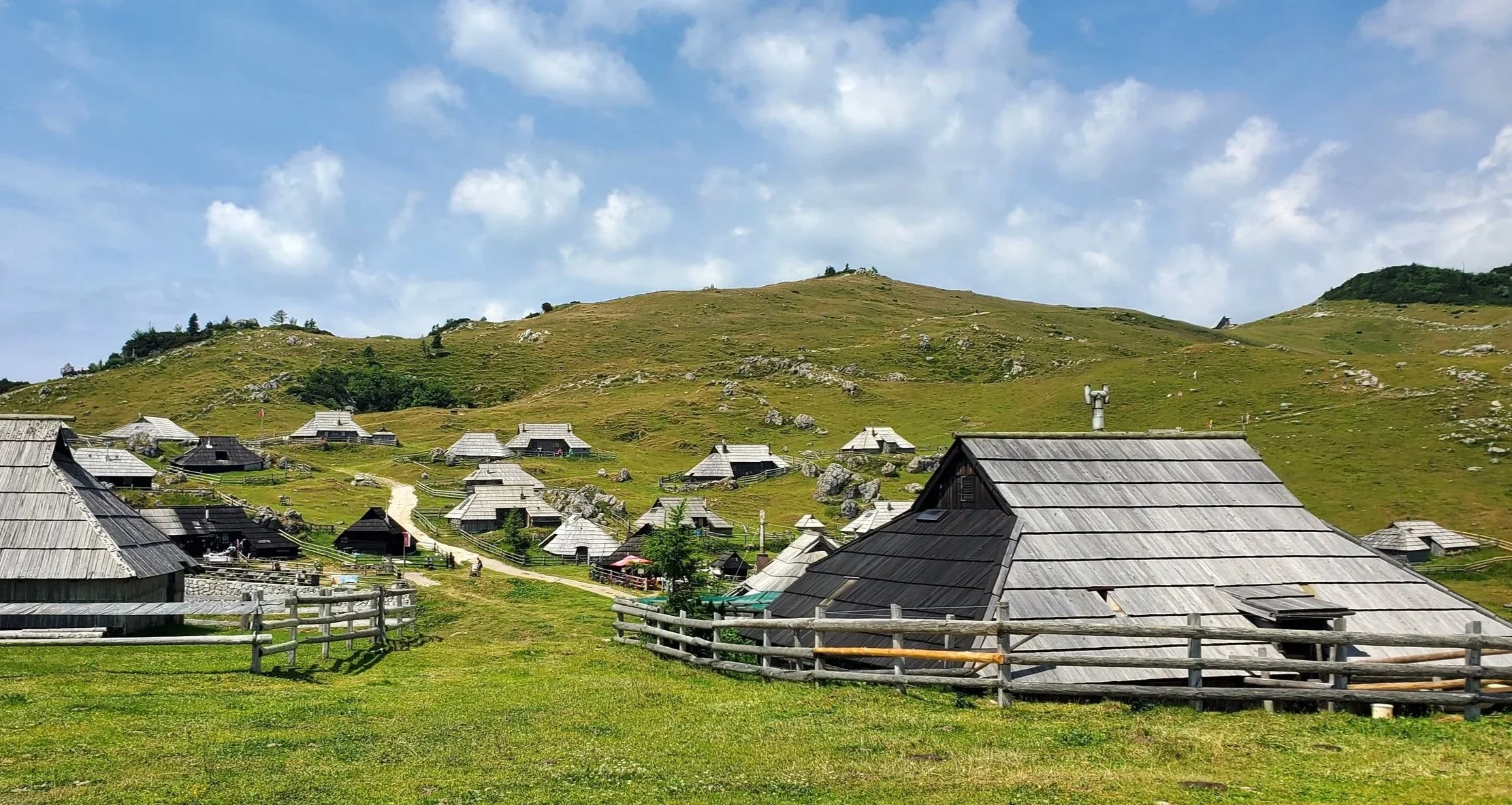
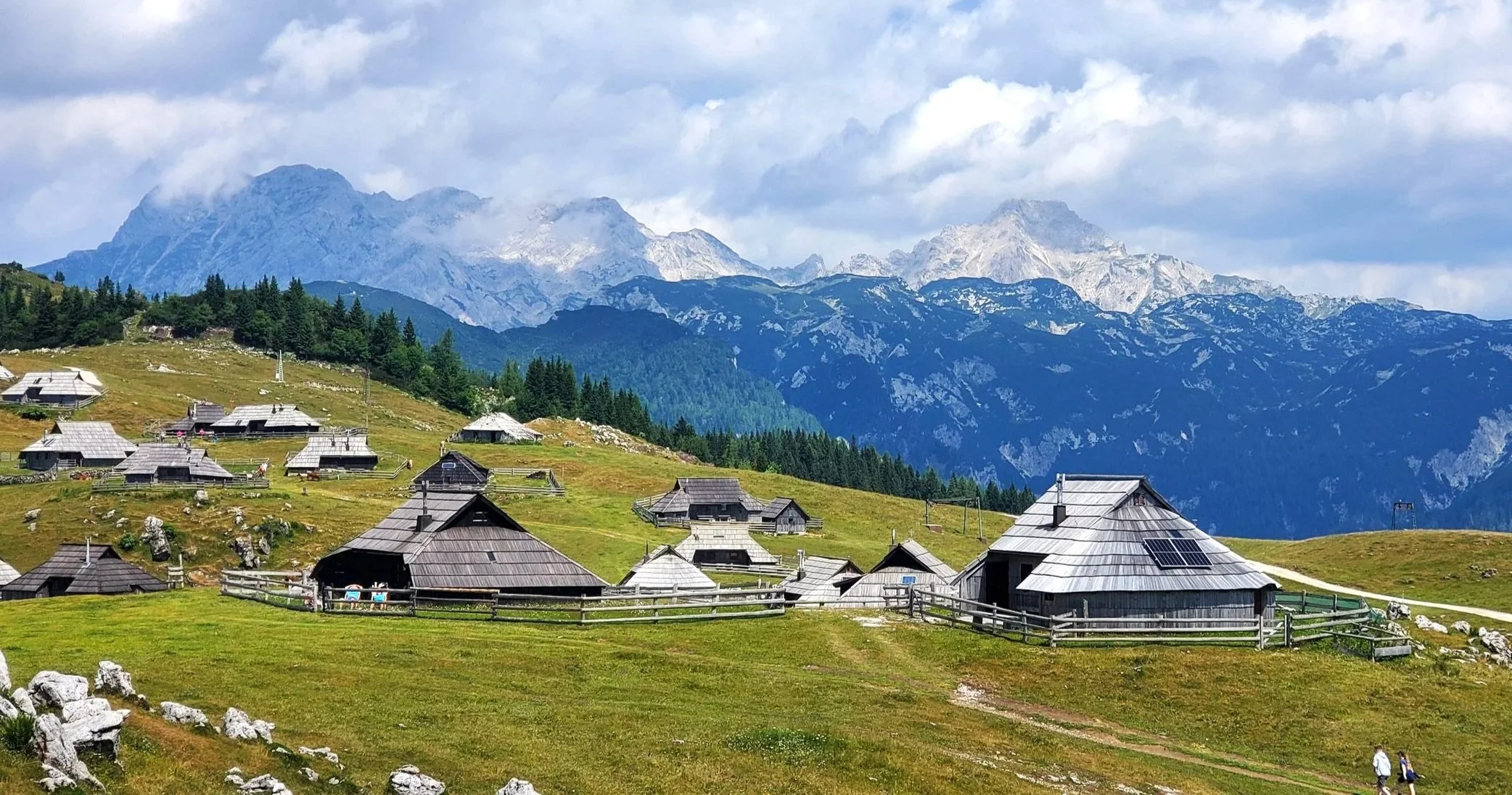
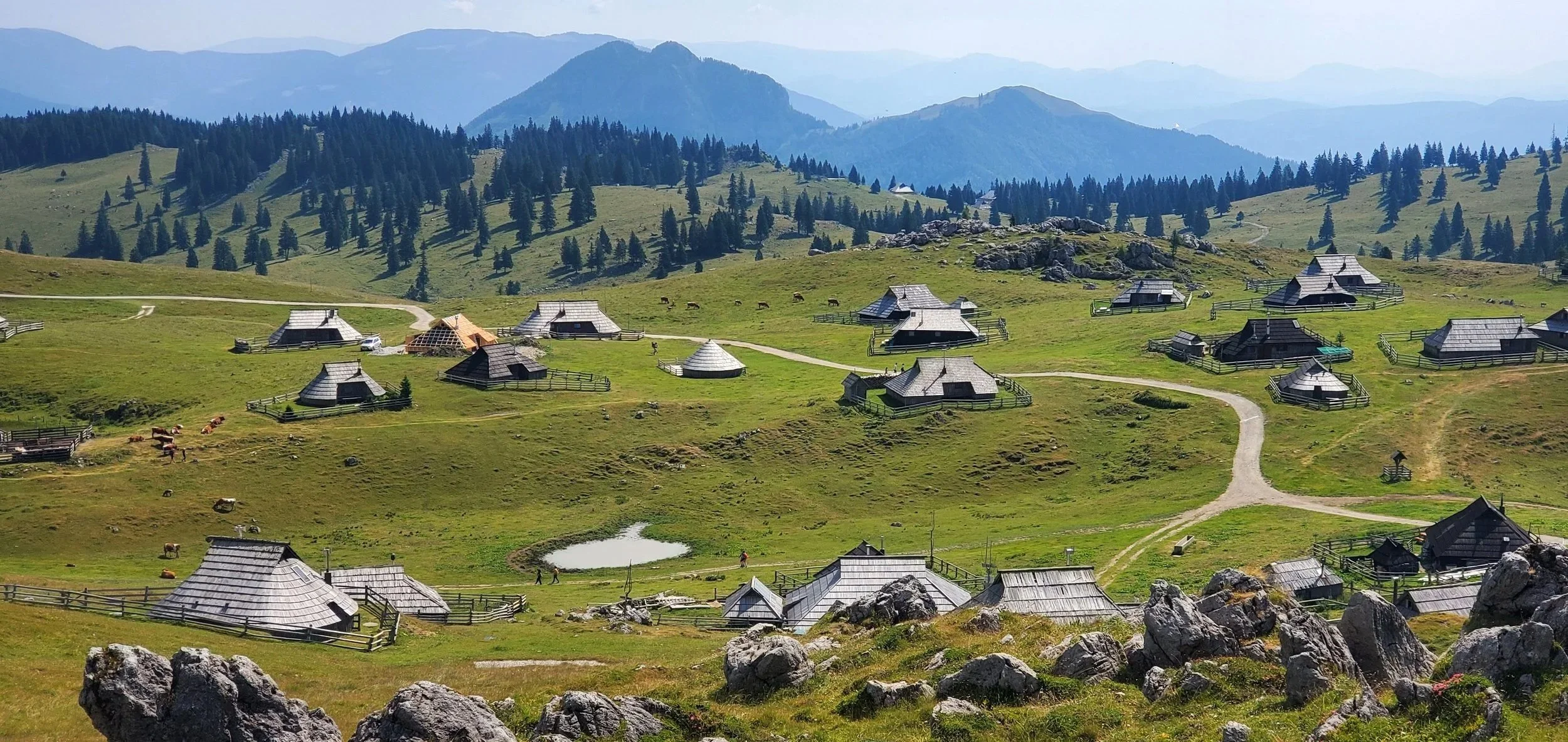
Our destination today was Velika Planina, a herdsmen’s settlement in the mountains around 50 km north-east of Kranj. Traditionally, shepherds come to this mountain area from June to September to tend to their livestock. The practice continues to this day, but with a lot of modern additions to what previously was an isolated settlement and now with many visitors.
To get to the main tourist-orientated part of the mountain we caught a cable car.
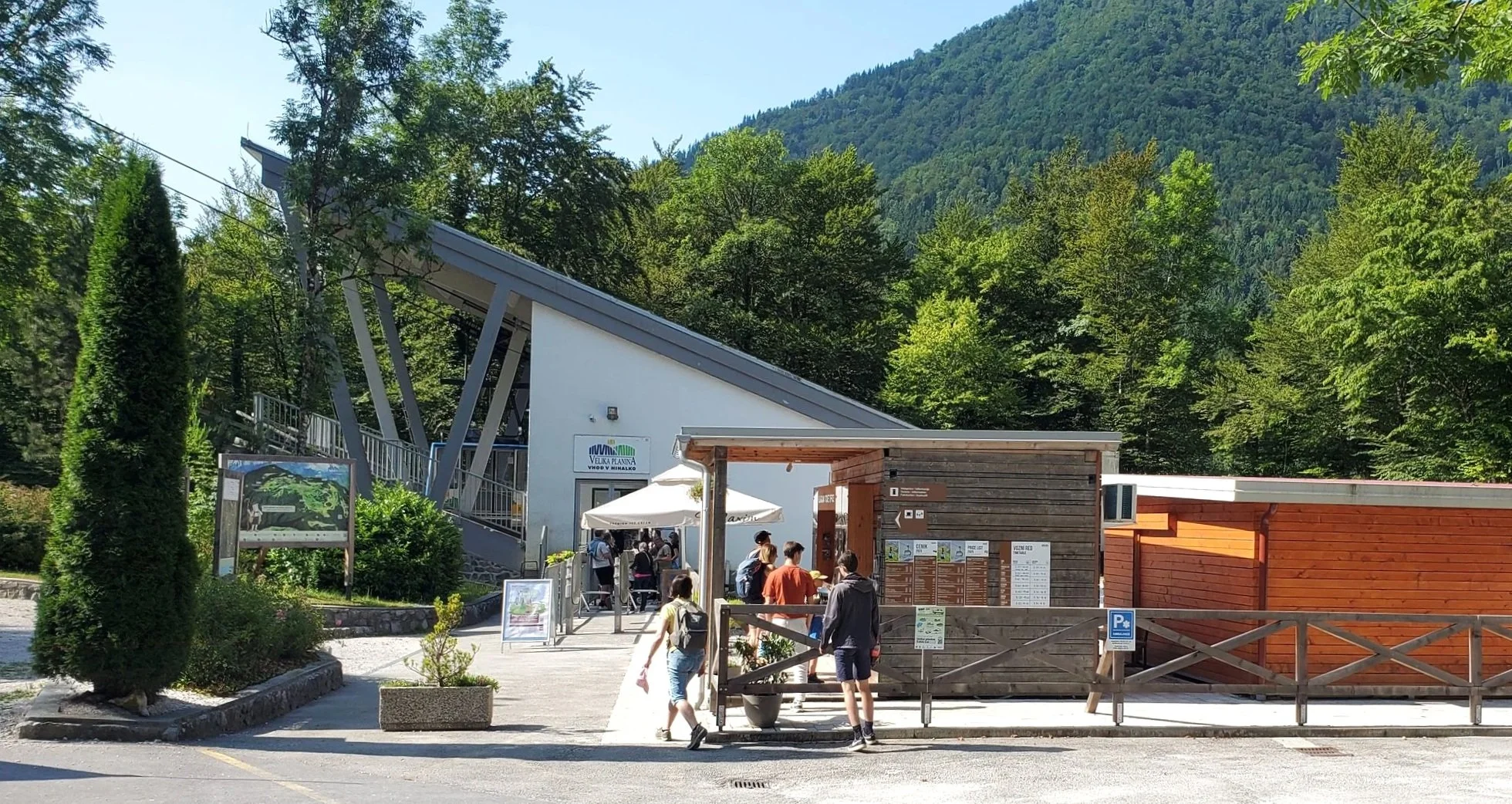
cable car station at the bottom of the mountain
And then a chair lift.
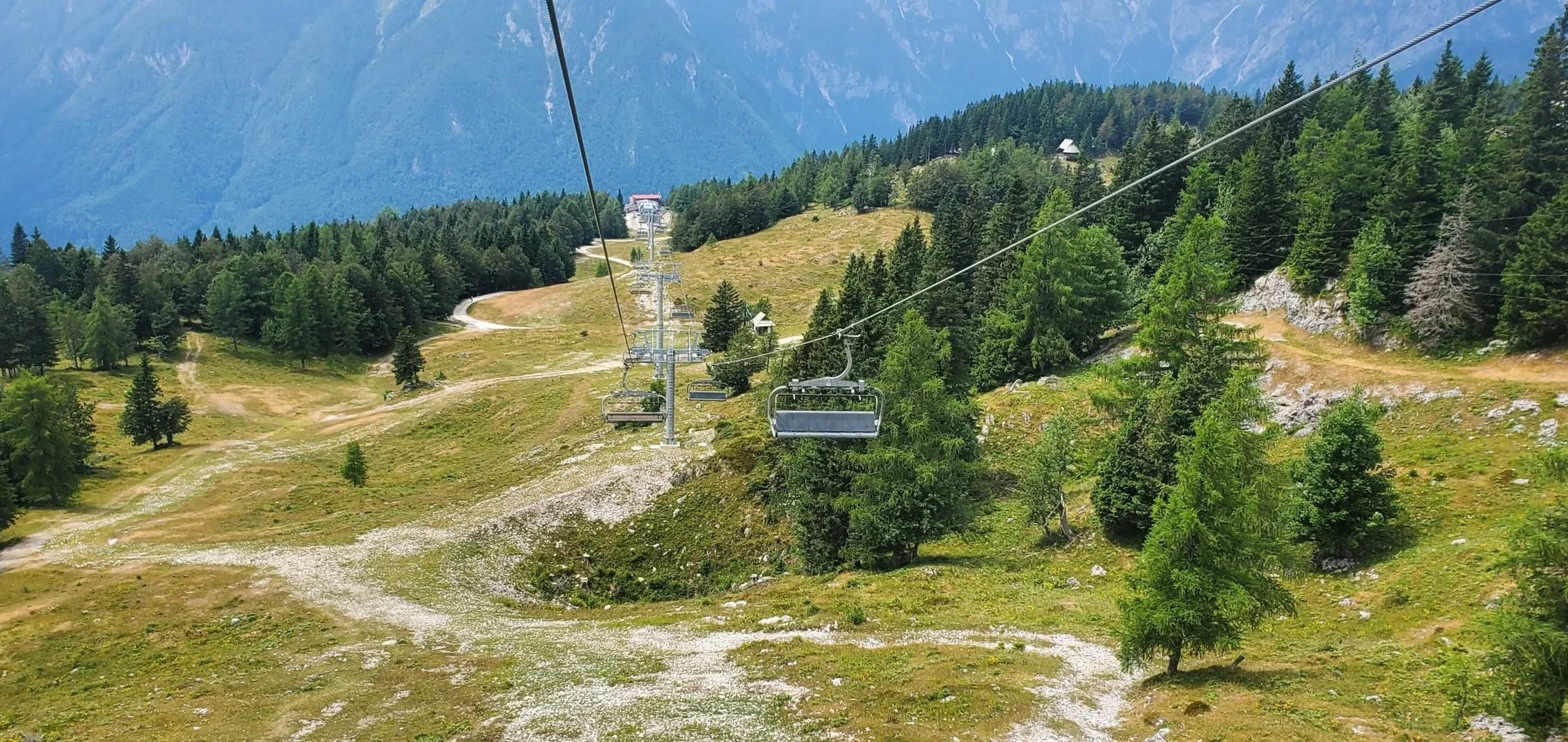
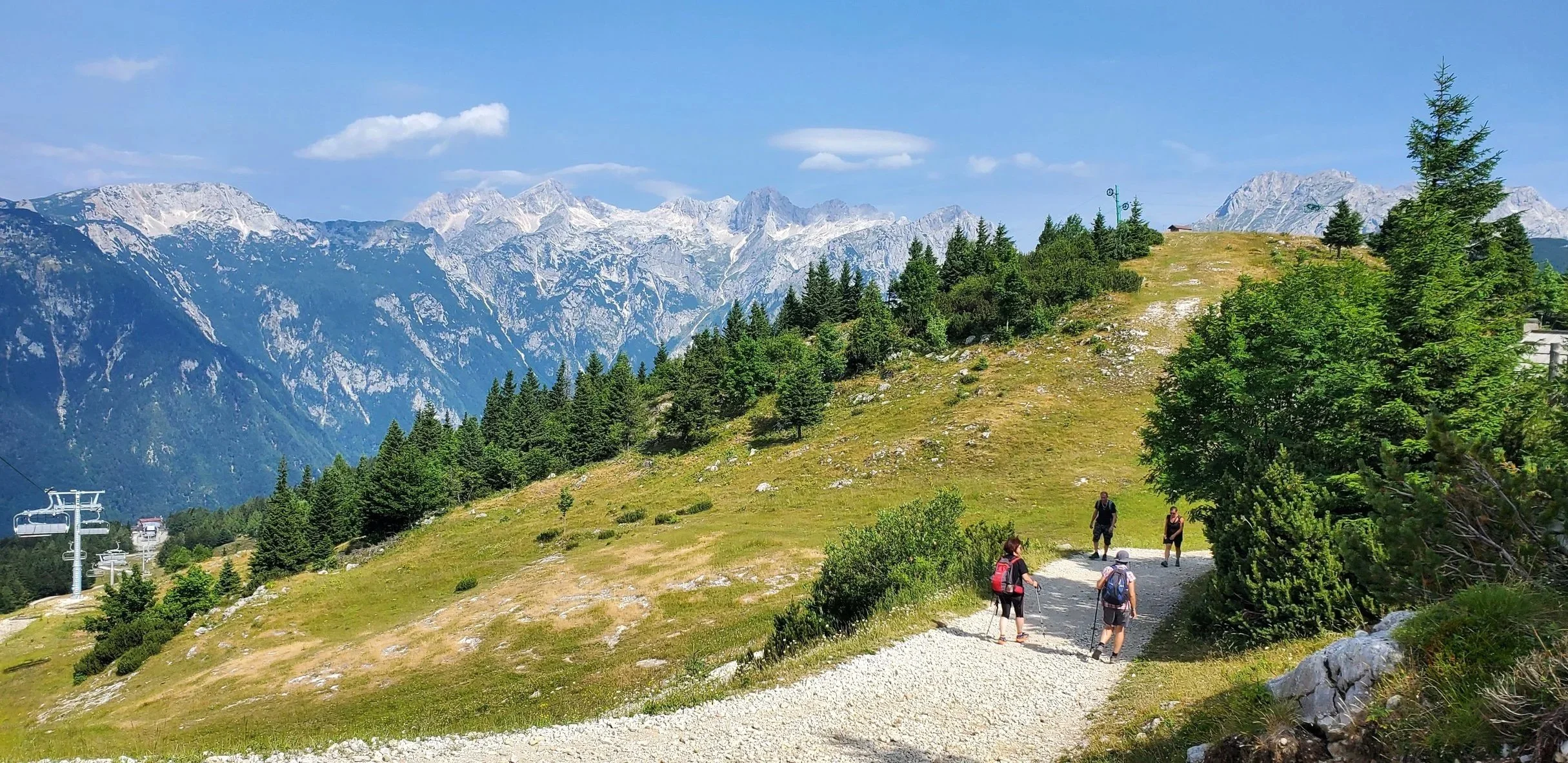
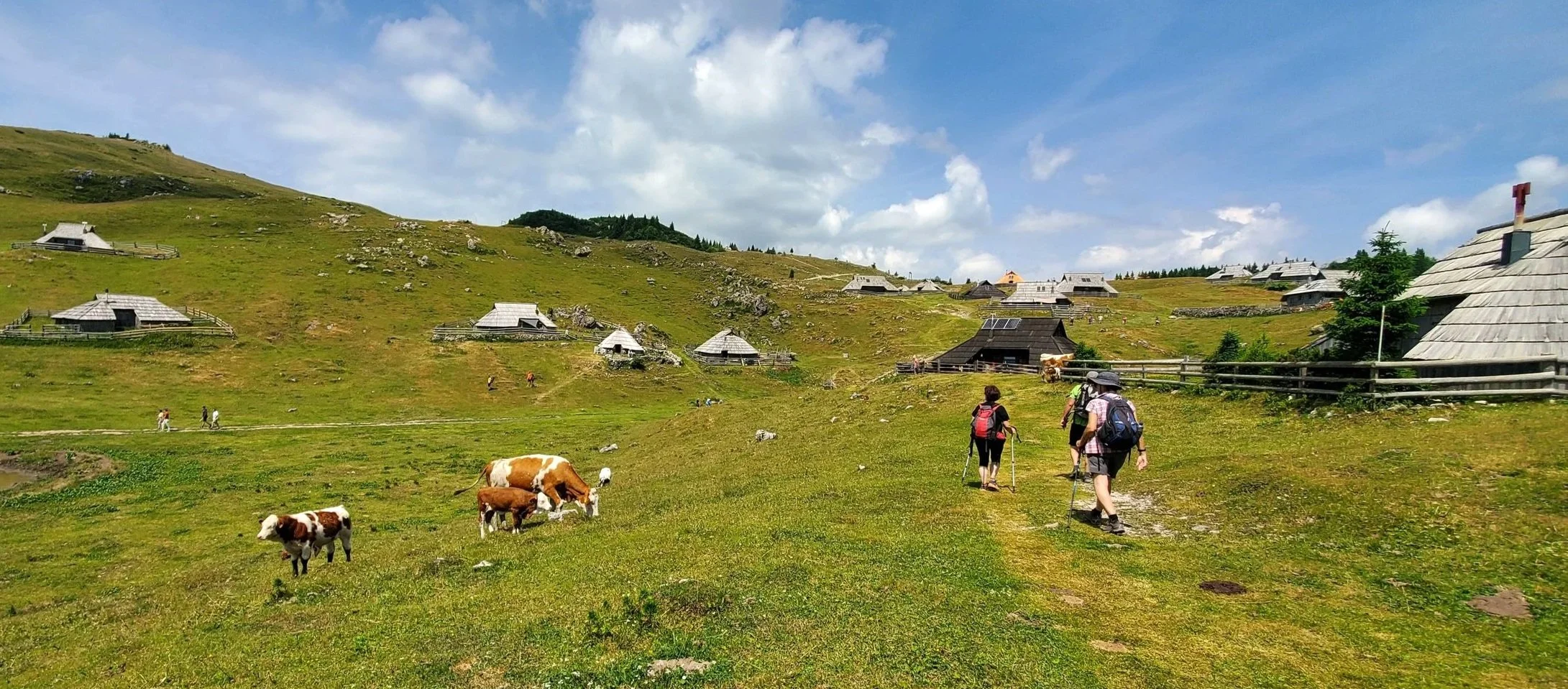
We disembarked at an altitude of 1500 m. The mountains were spectacular.
We popped into the nearby Zeleni rob Inn to say hello to a “herdsman”.
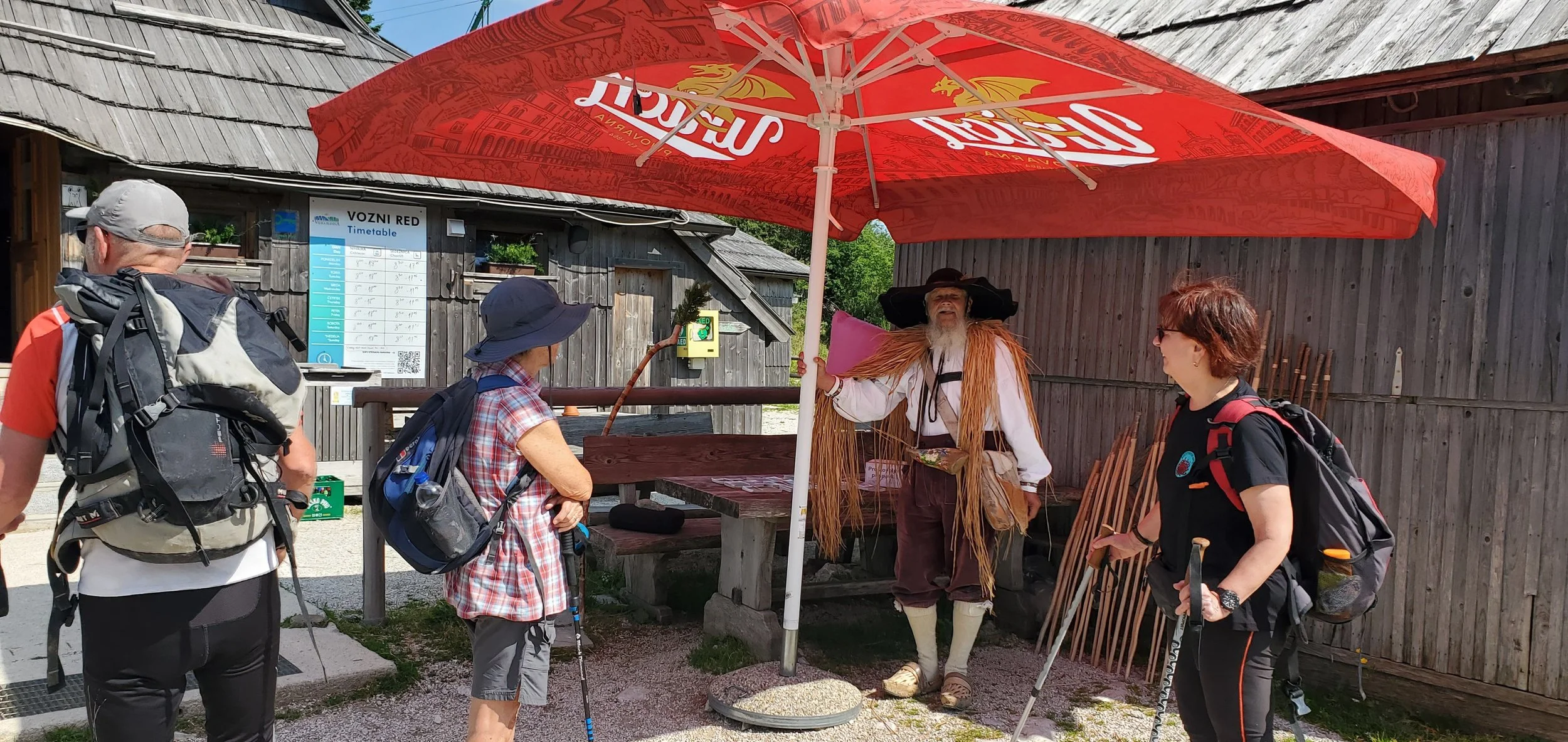
There is plenty of information to help visitors understand the history and function of the place.
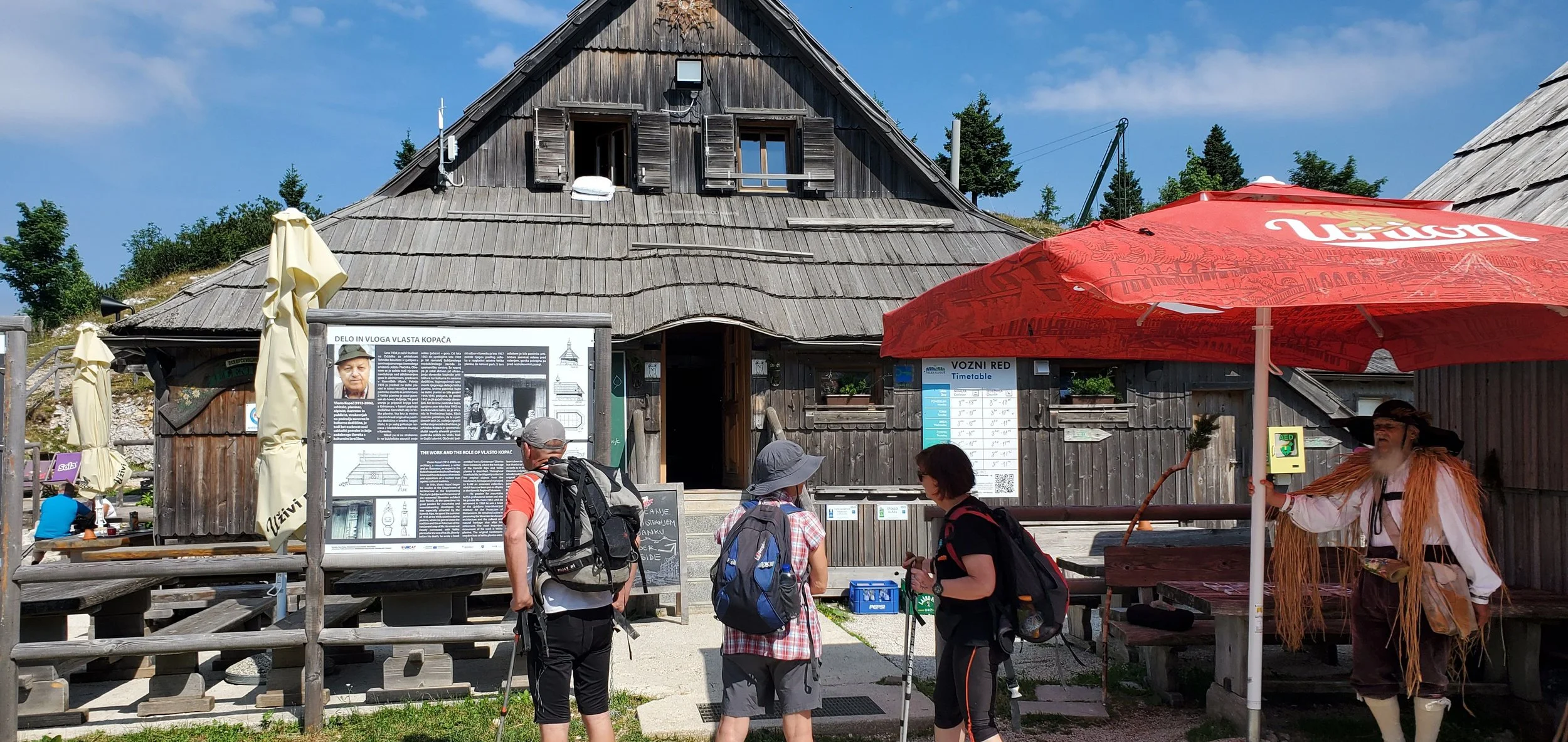
It was a clear, warm day – ideal for a walk in the mountains. We headed over to the main settlement area.
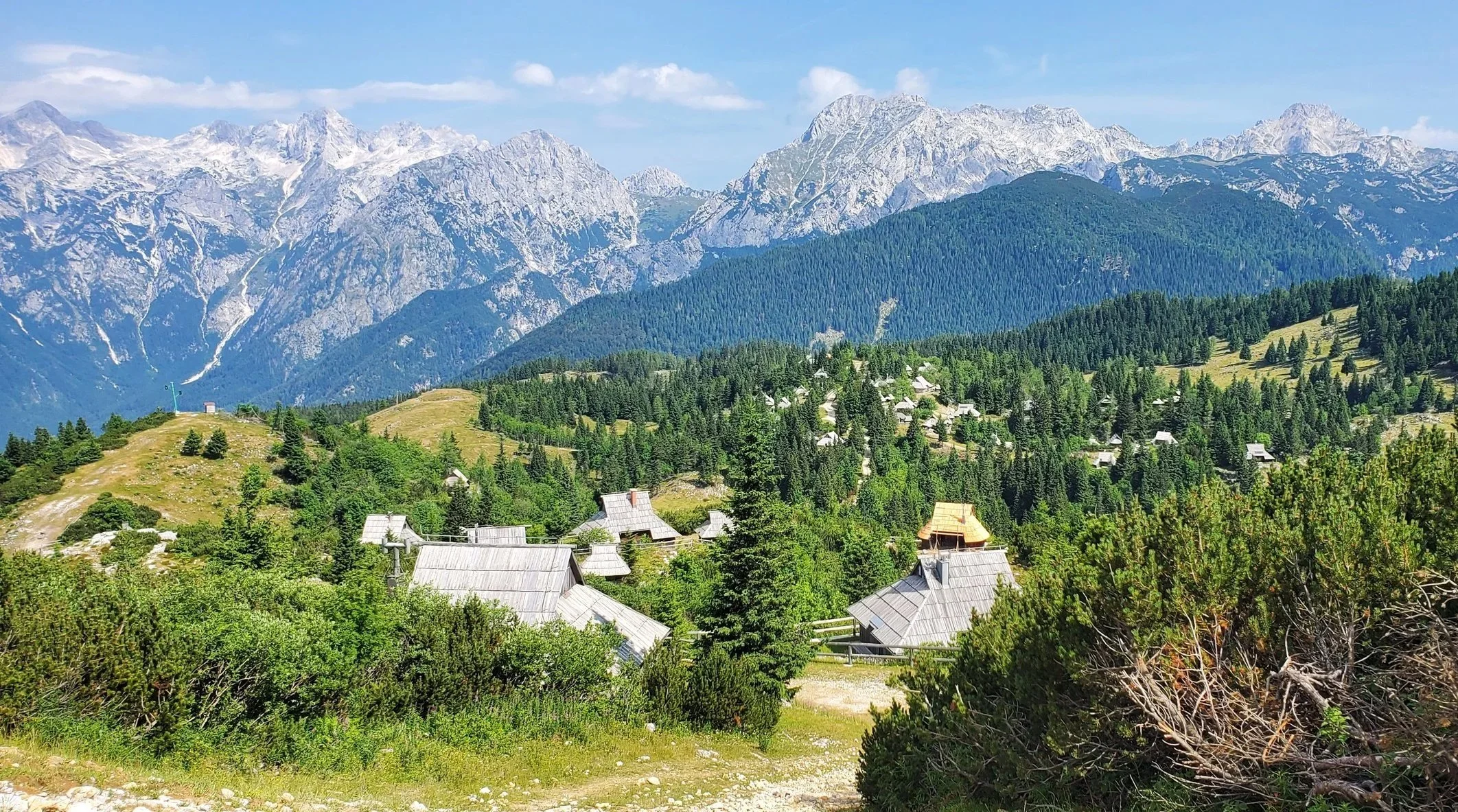
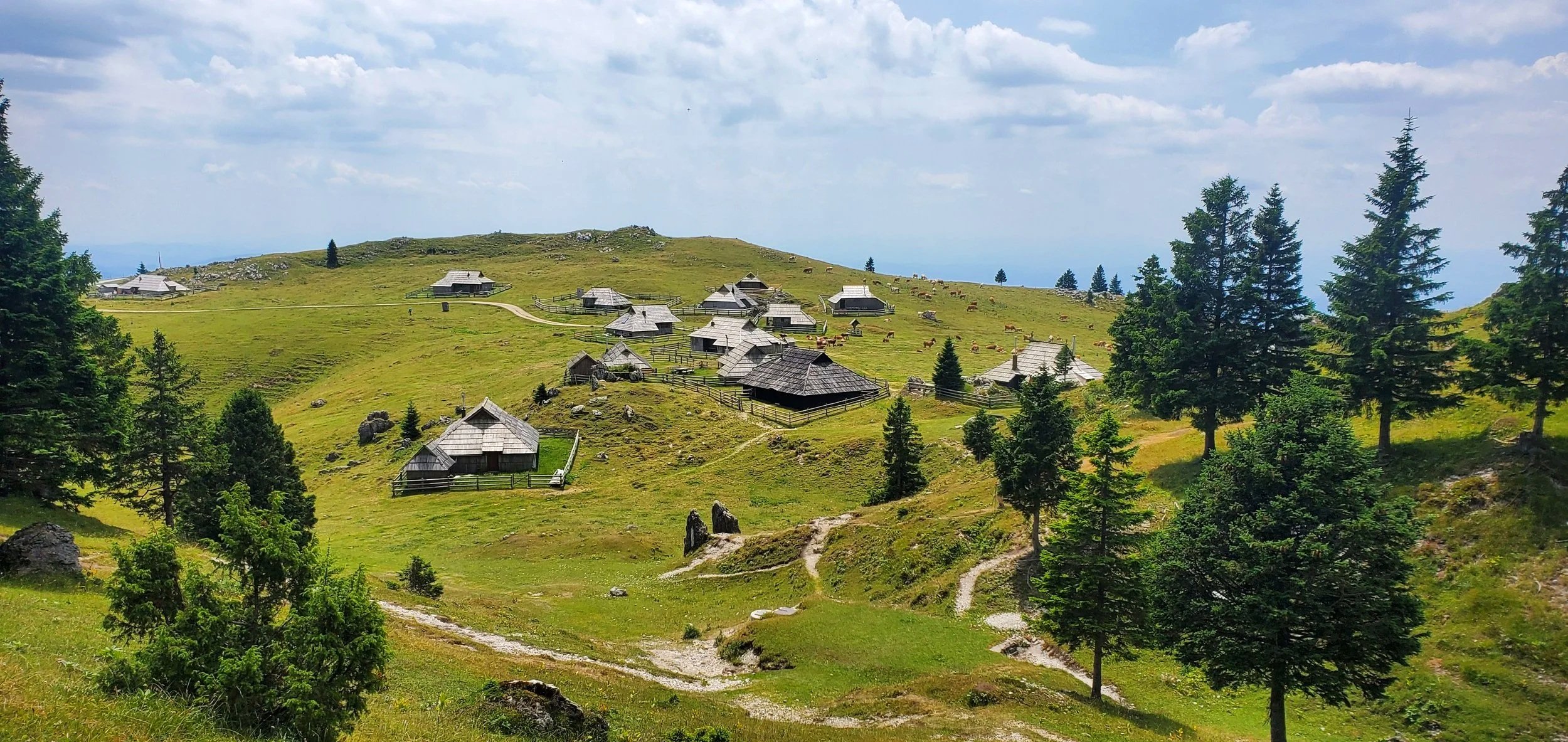
This is where the very distinctive herdsmen’s cottages are clustered.
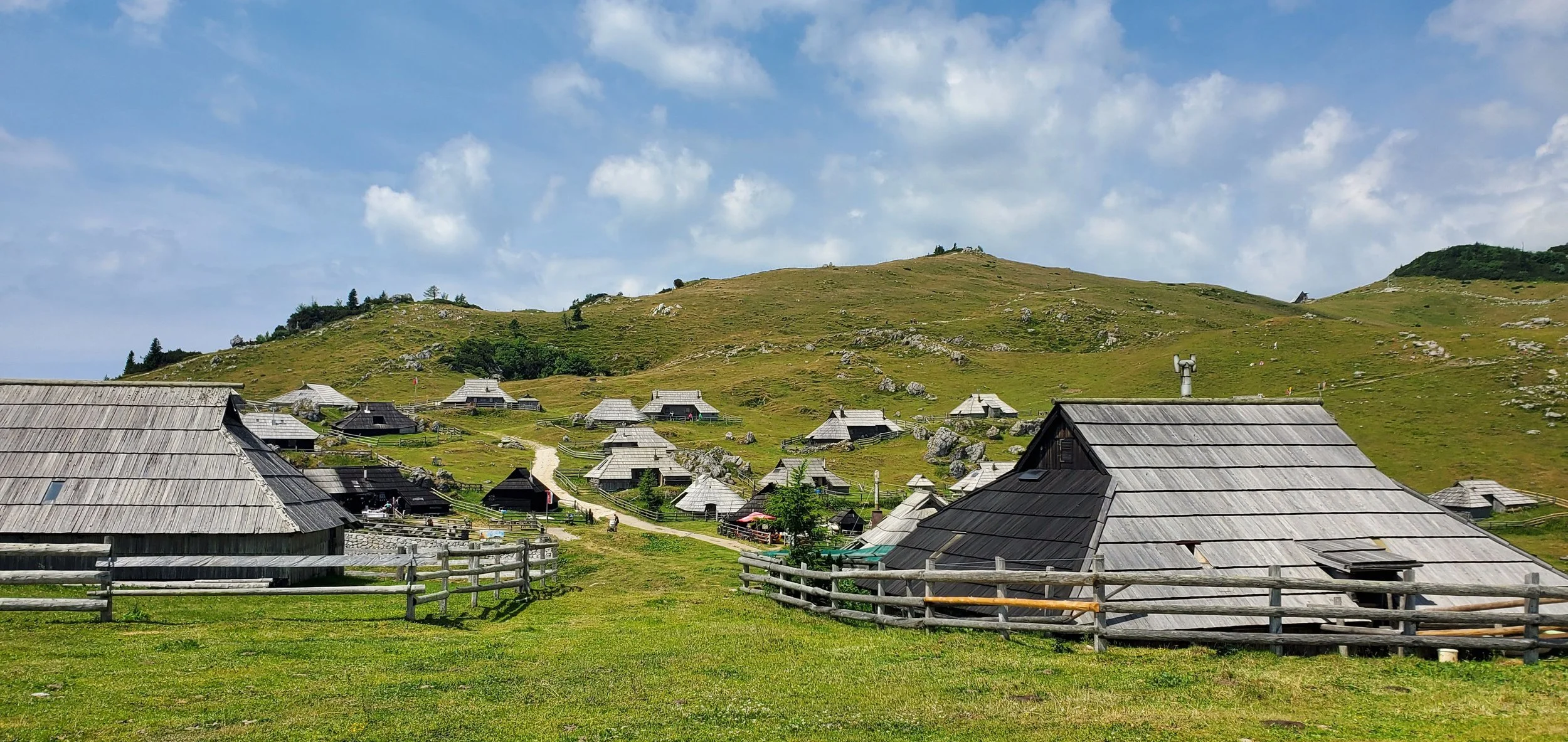
We wandered through the lanes and along the paths.
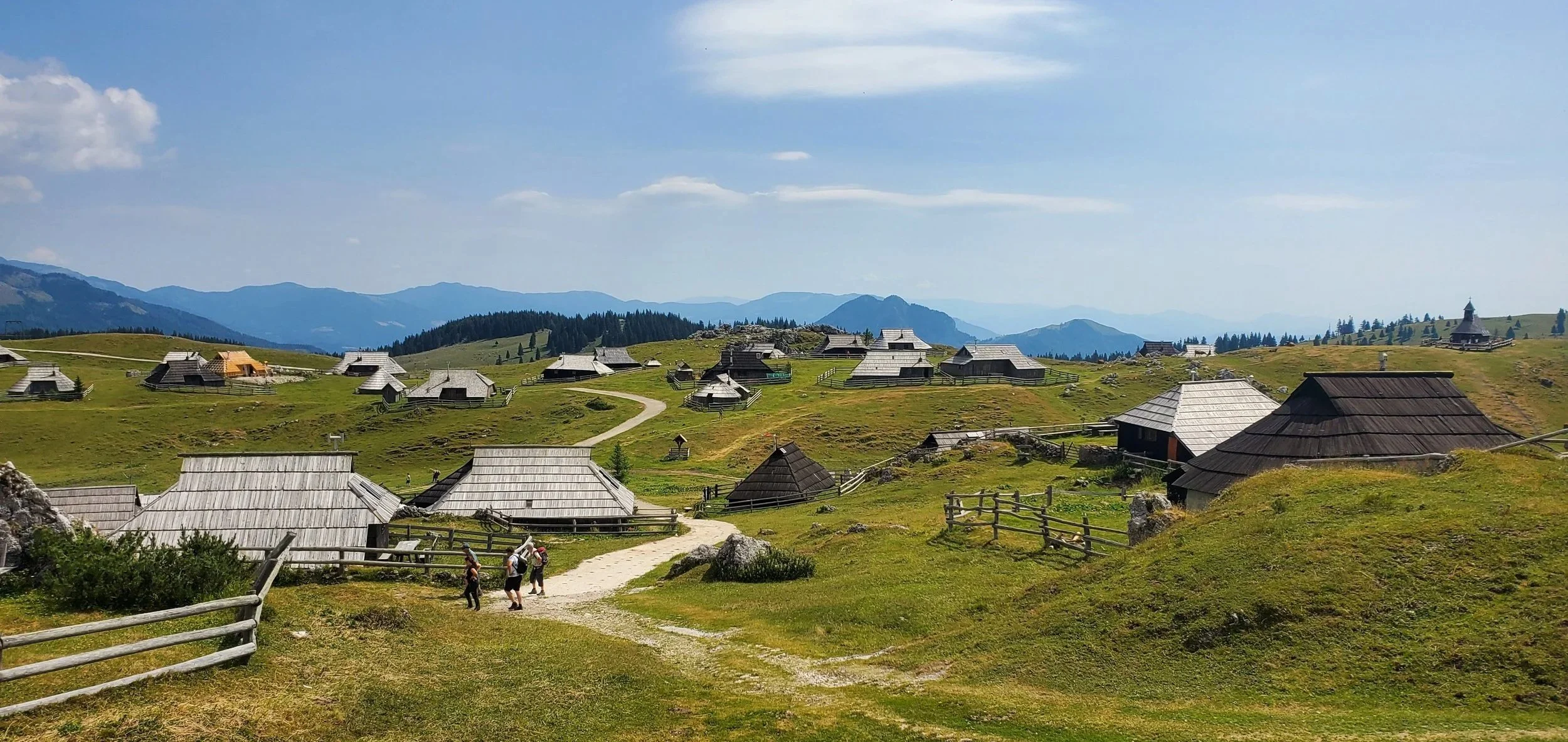
The steep-roofed design is important for coping with the winter snows. It is possible to rent some of the cottages for tourist stays.
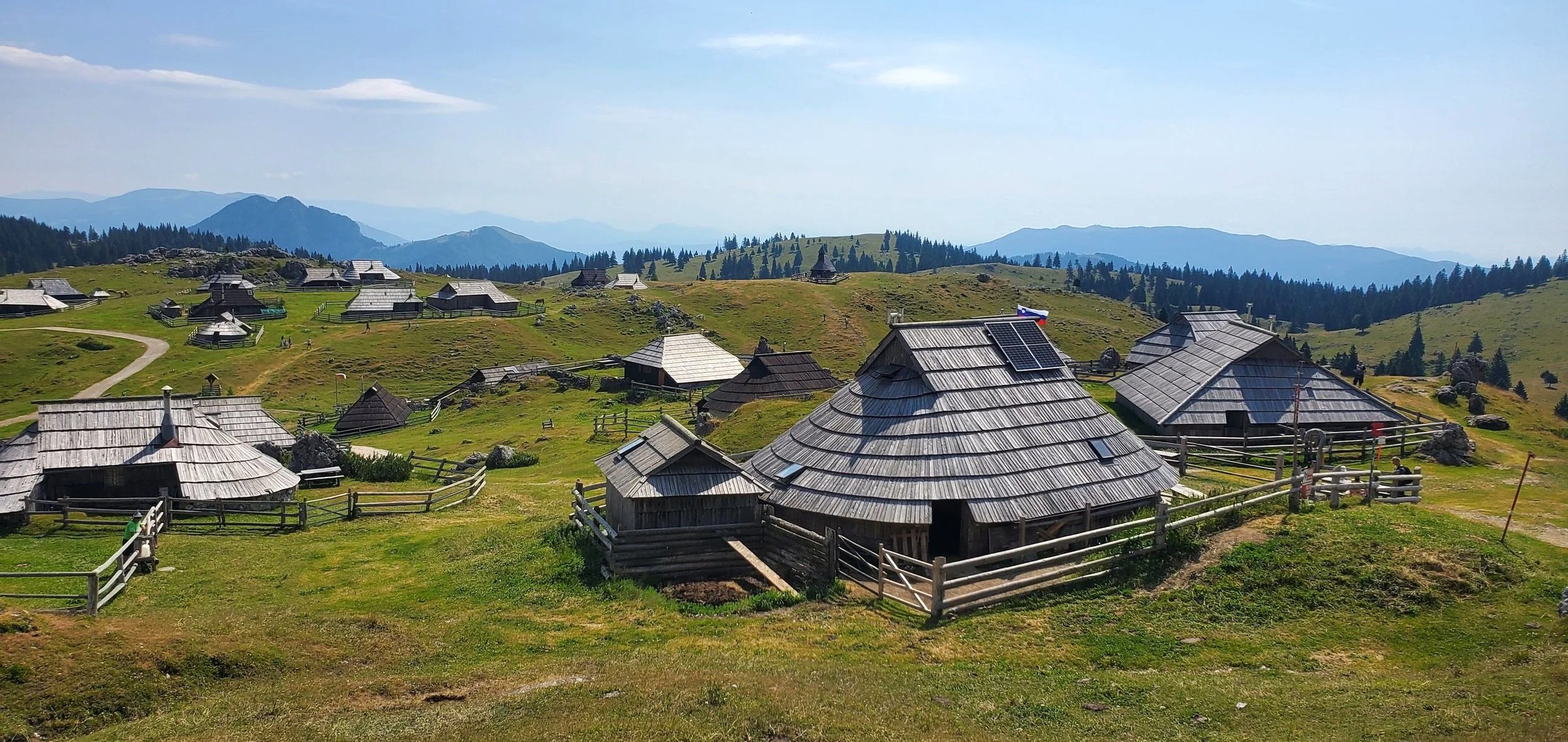
Samo explained a little about the village.
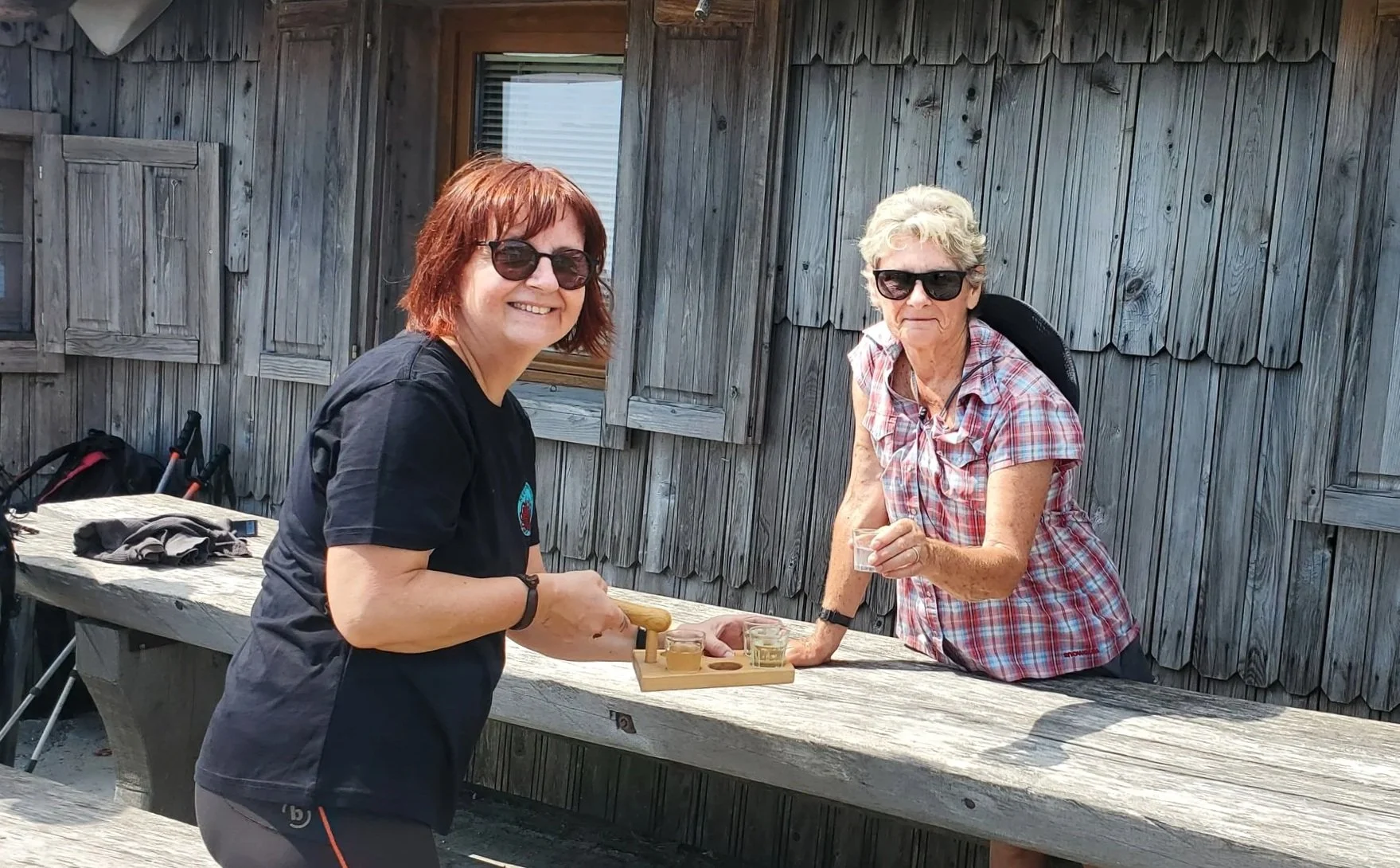
After all that walking it was time for a little schnaps. Very good for the stomach we are told. Or was it the blood?
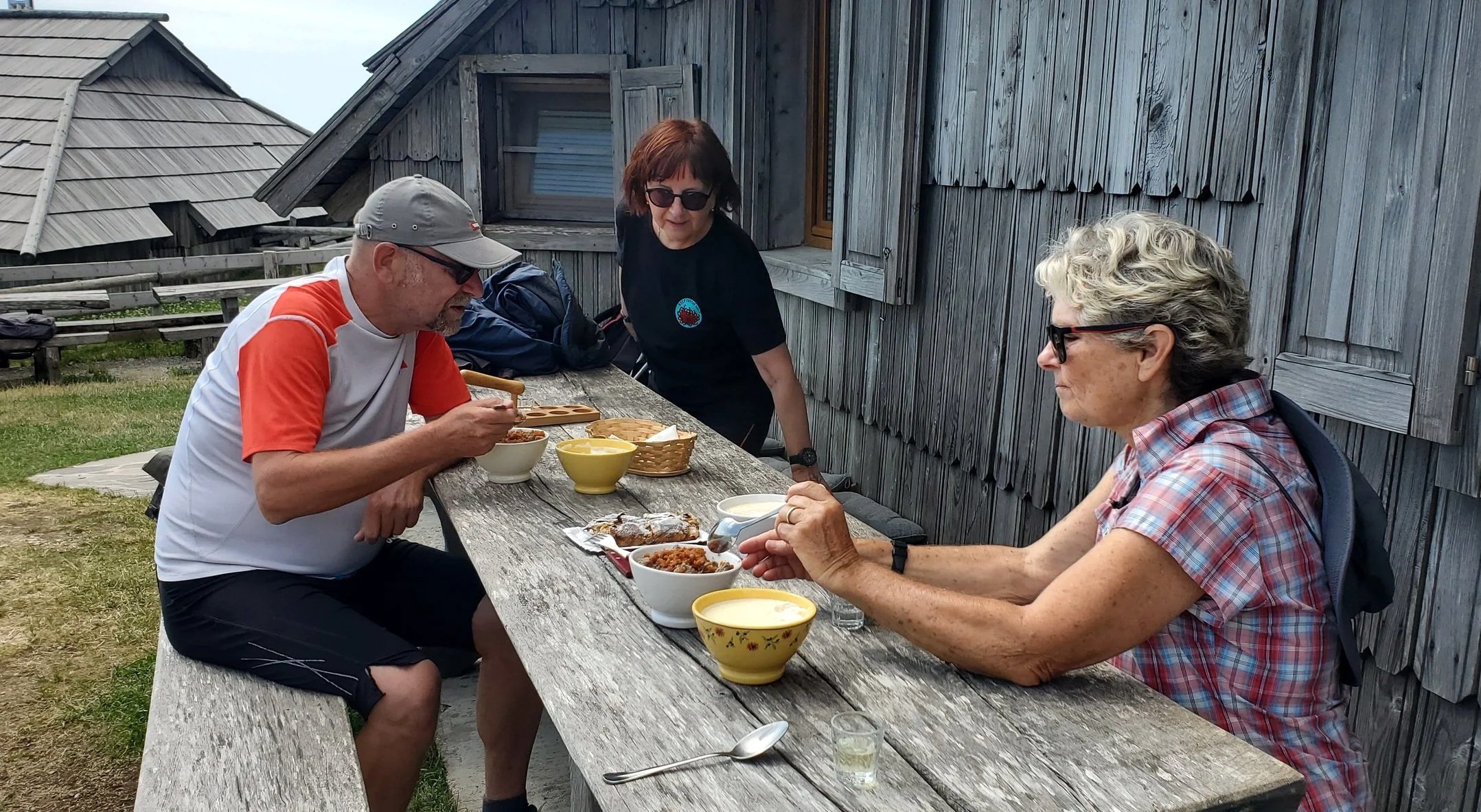
Then we partook of a traditional herdsman’s meal of buckwheat mash with sour milk. It tasted better than it sounds.
More walking.
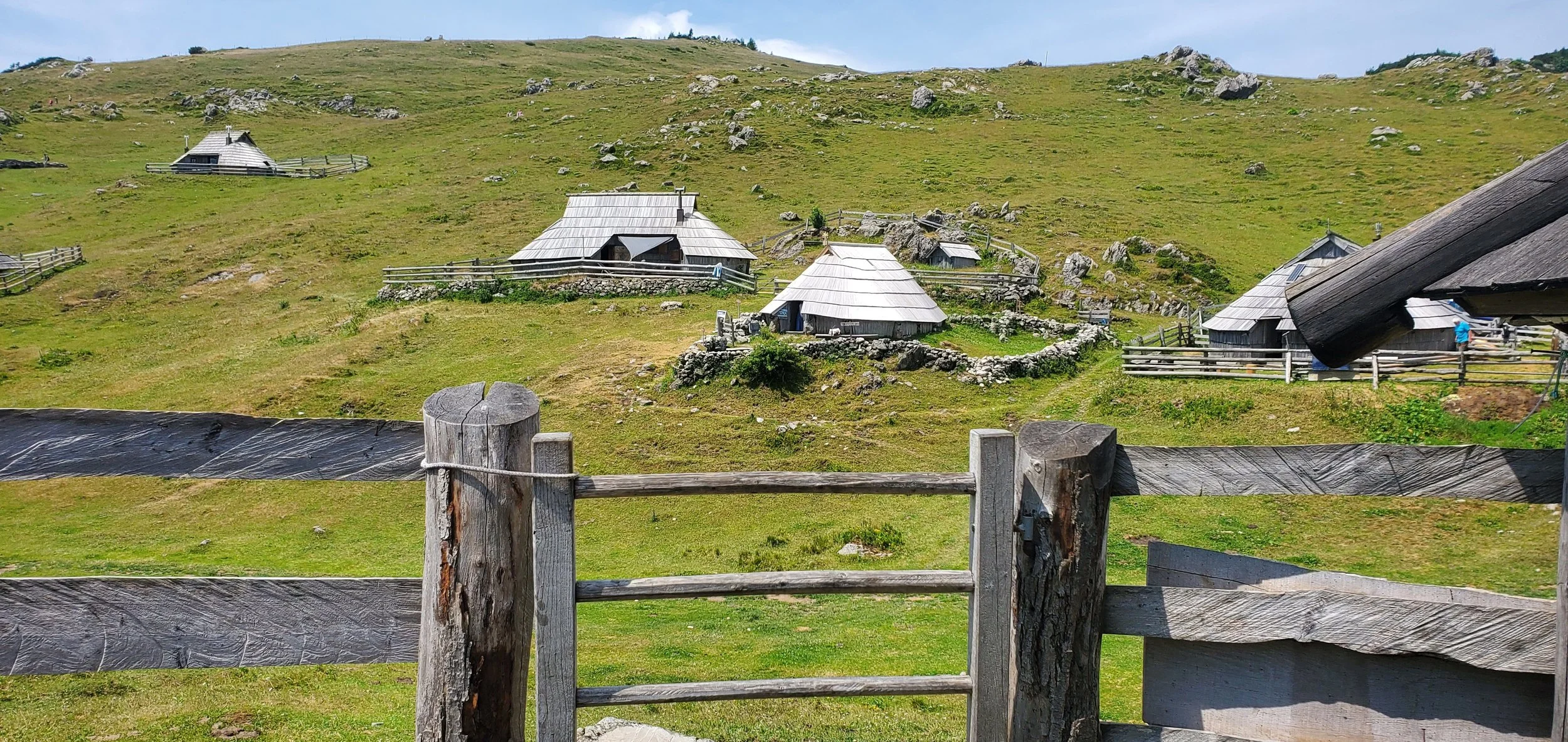
And checking out the huts.
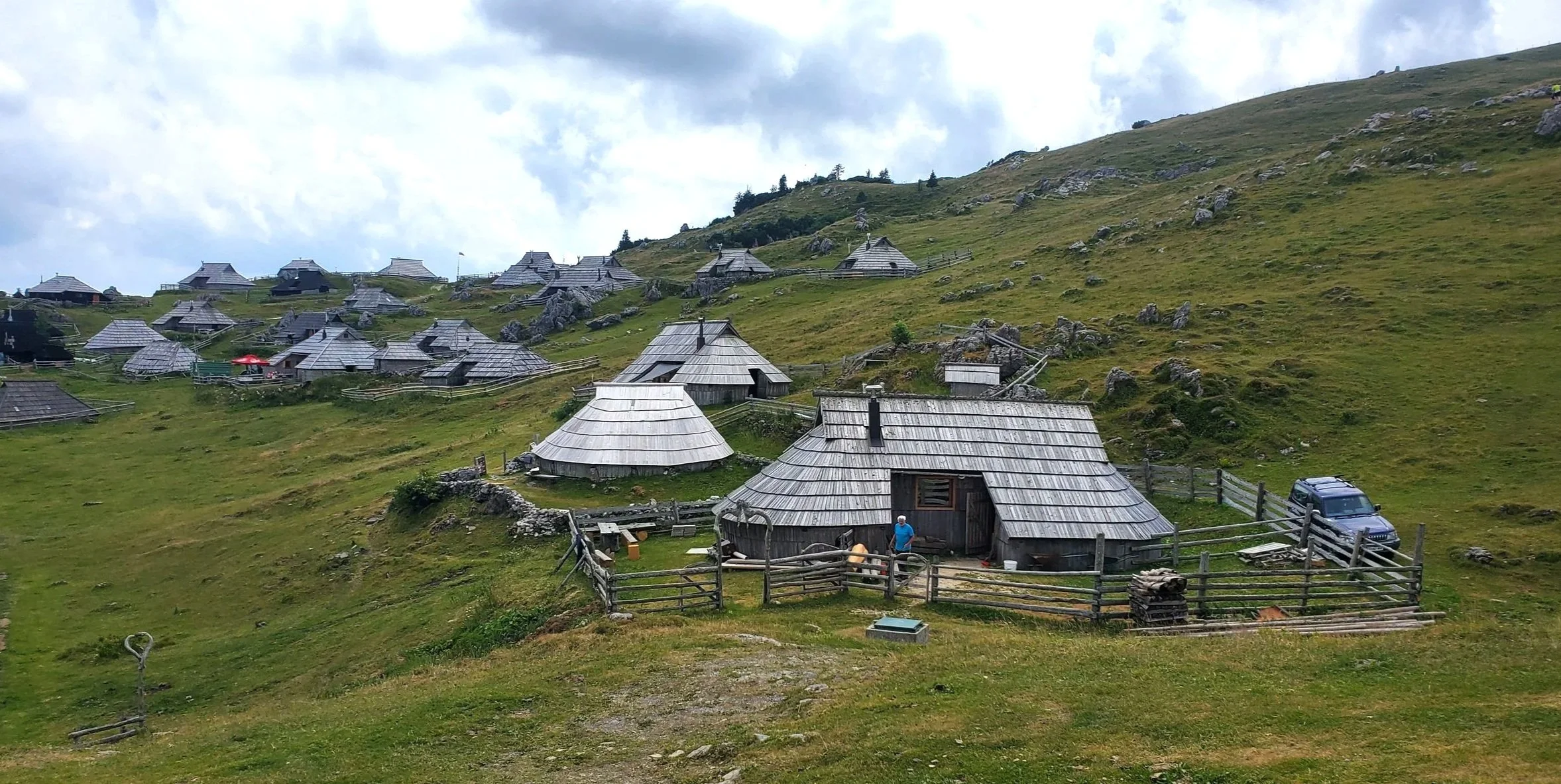
All new dwellings, whether for tourist accommodation or local occupants, must be built in the same style.
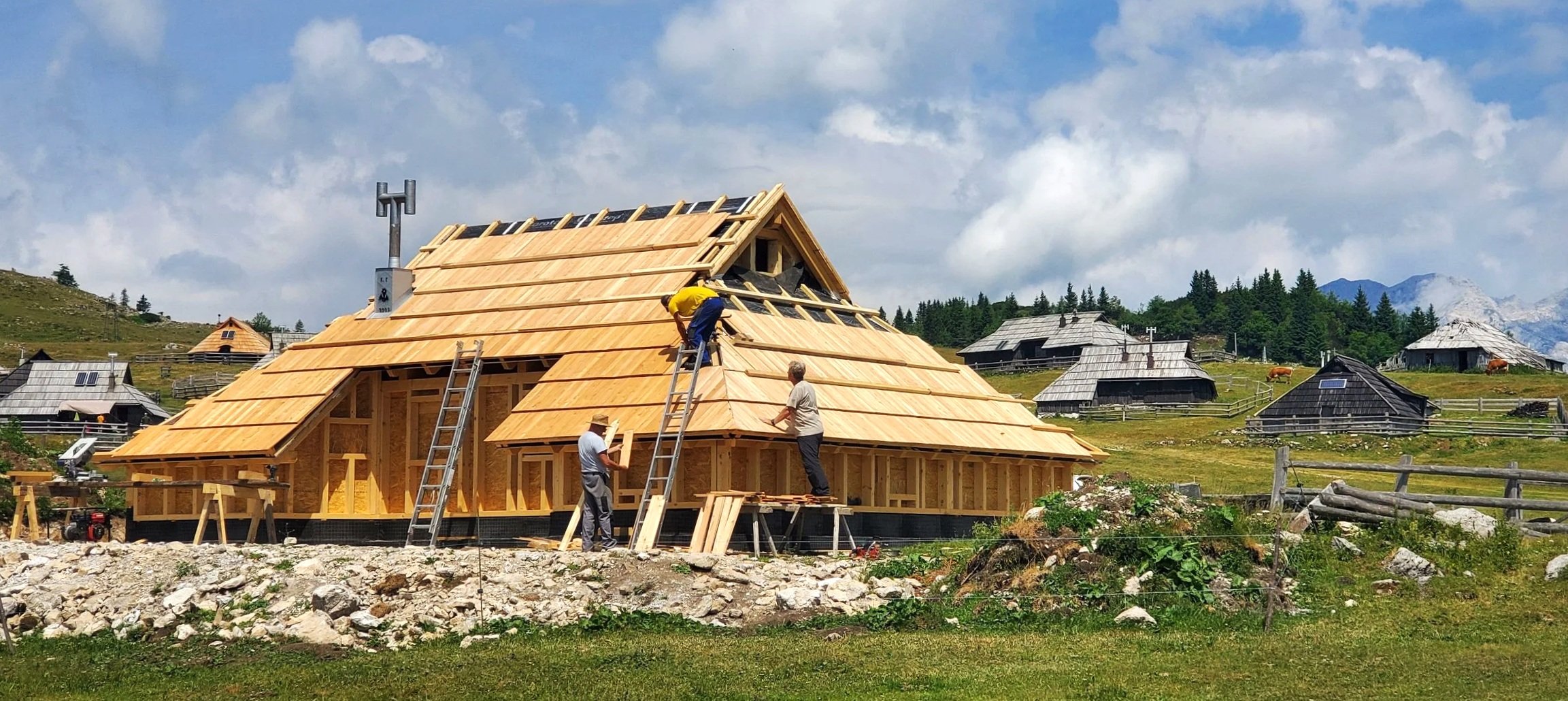
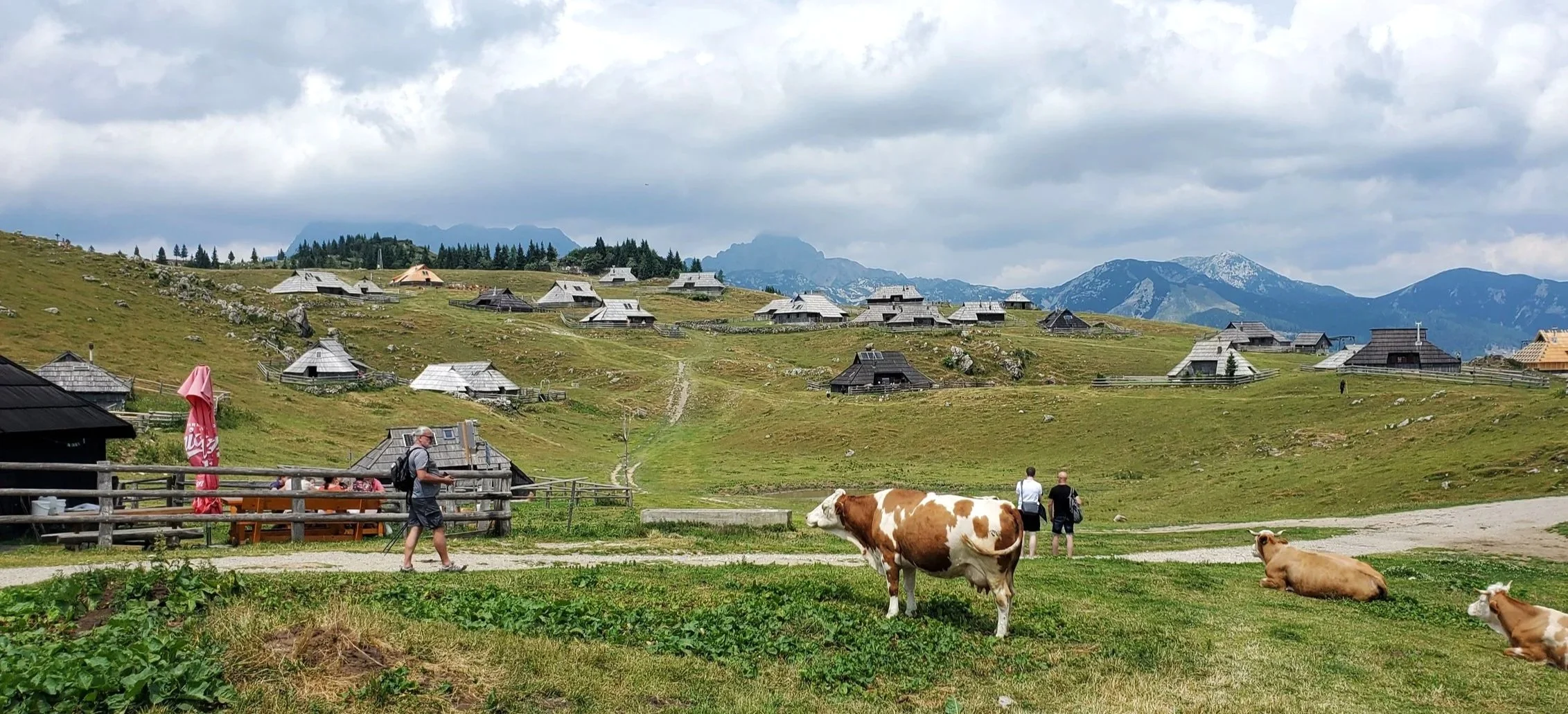
Plenty of cattle.
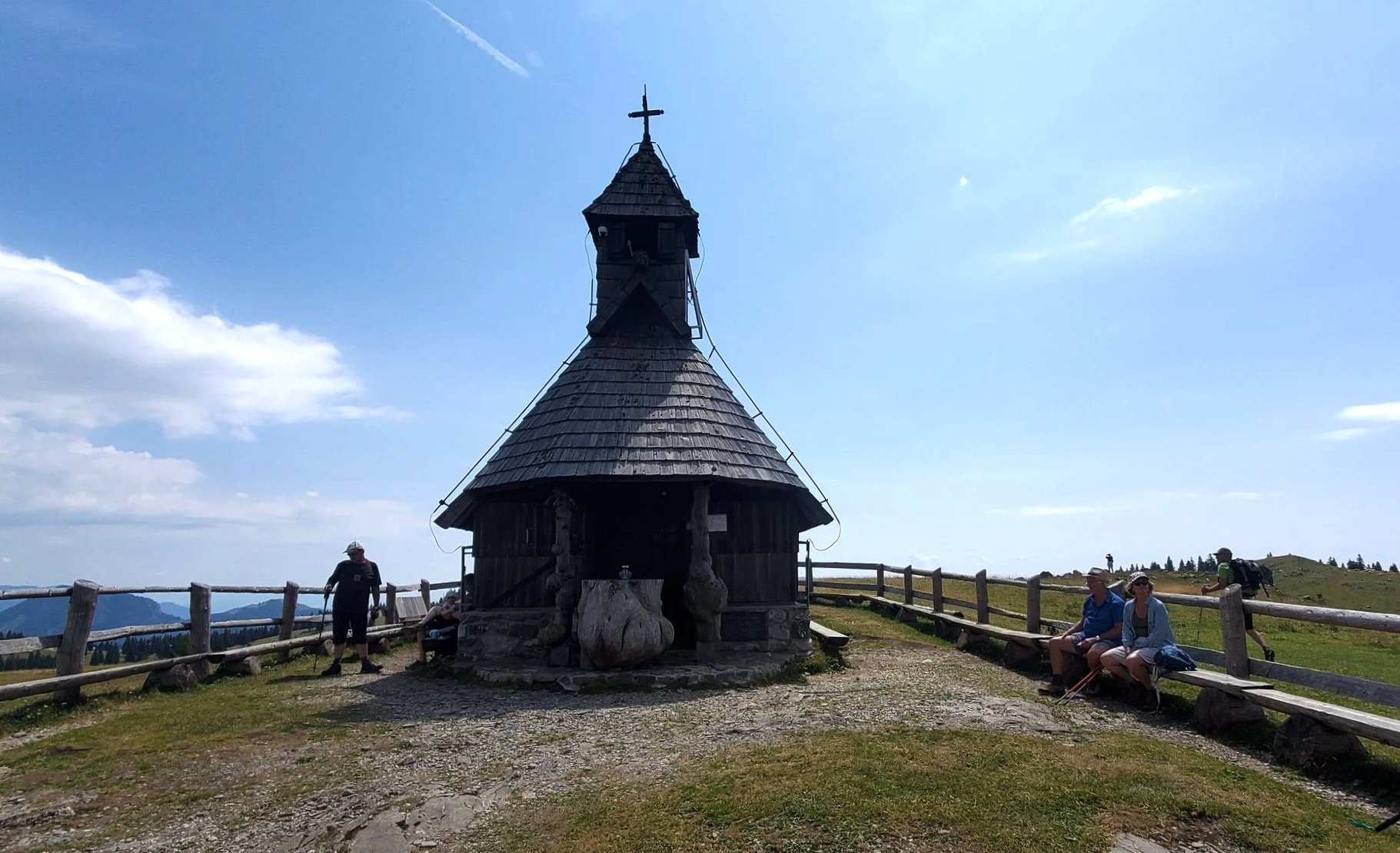
And a church.
Time to go shopping.
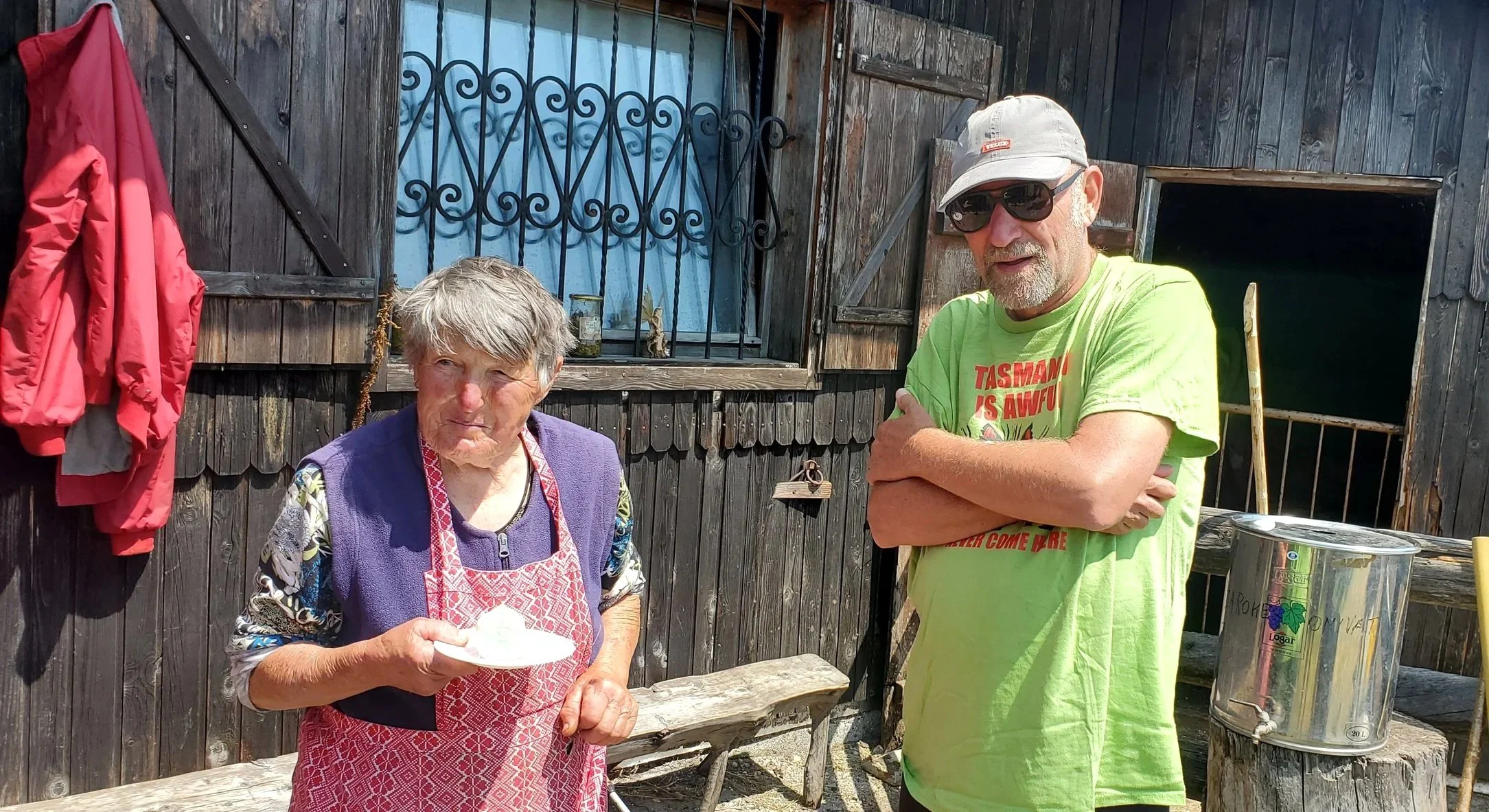
Samo wanted to buy some trnic cheese, a tradition in these parts. It’s made of cottage cheese, cream and salt.
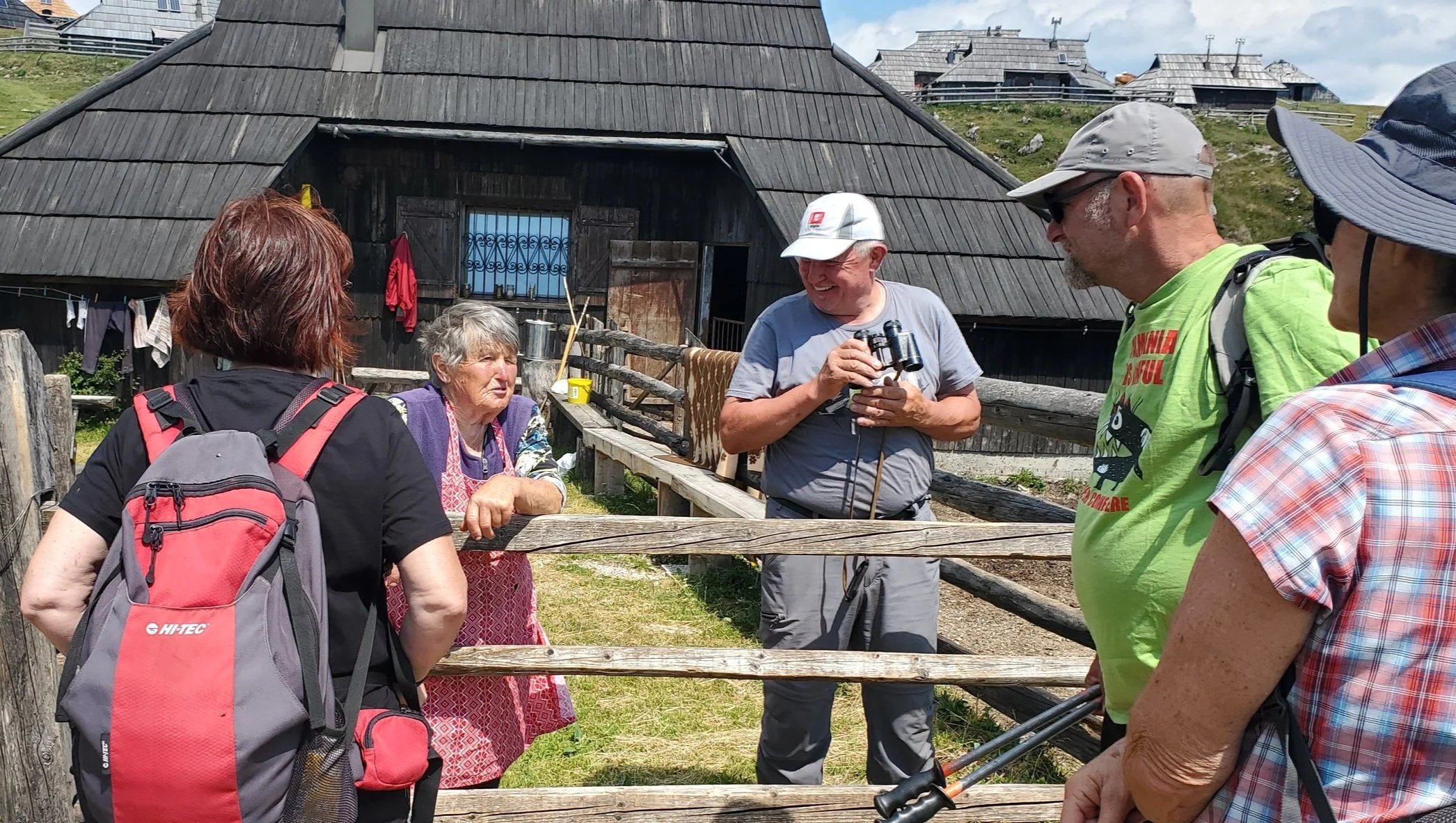
And luckily for us these locals had some for sale.
More walking.
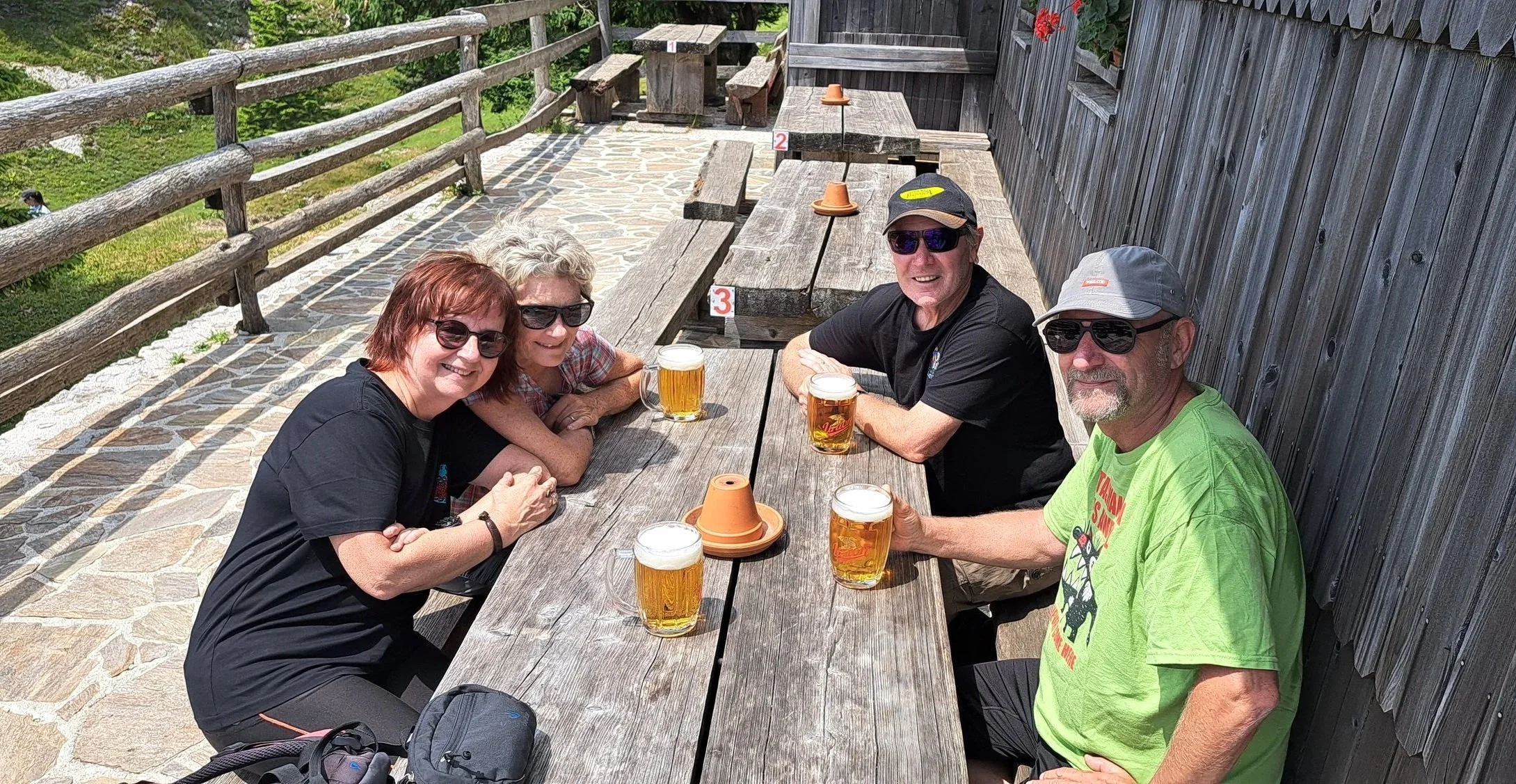
Time for a beer.
It was starting to look a little overcast, so we made our exit down the mountain.
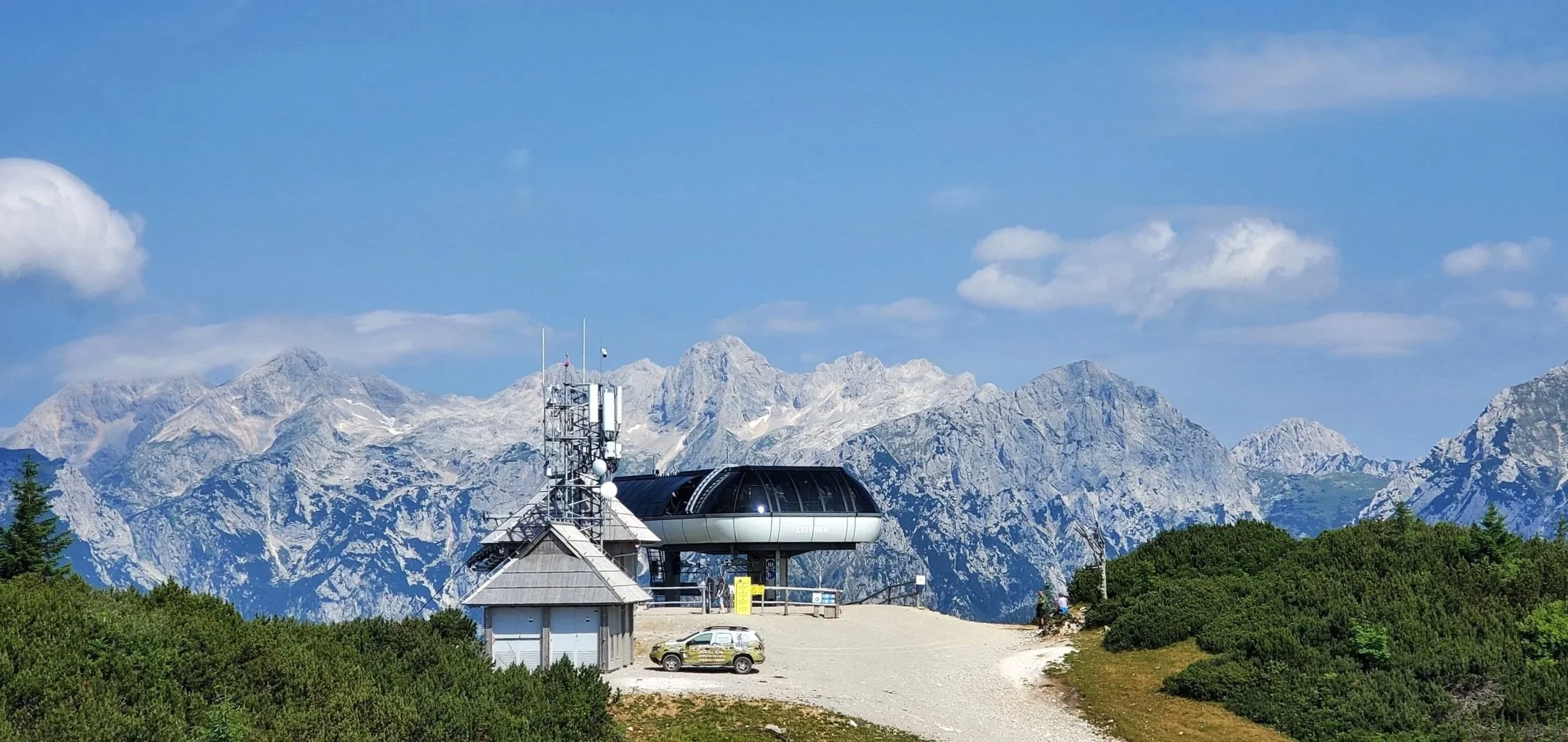
heading back to the cable car station
If you want to know more about Velika Planina here is a link to their website. But it wasn’t time to go home just yet, not by a long chalk.
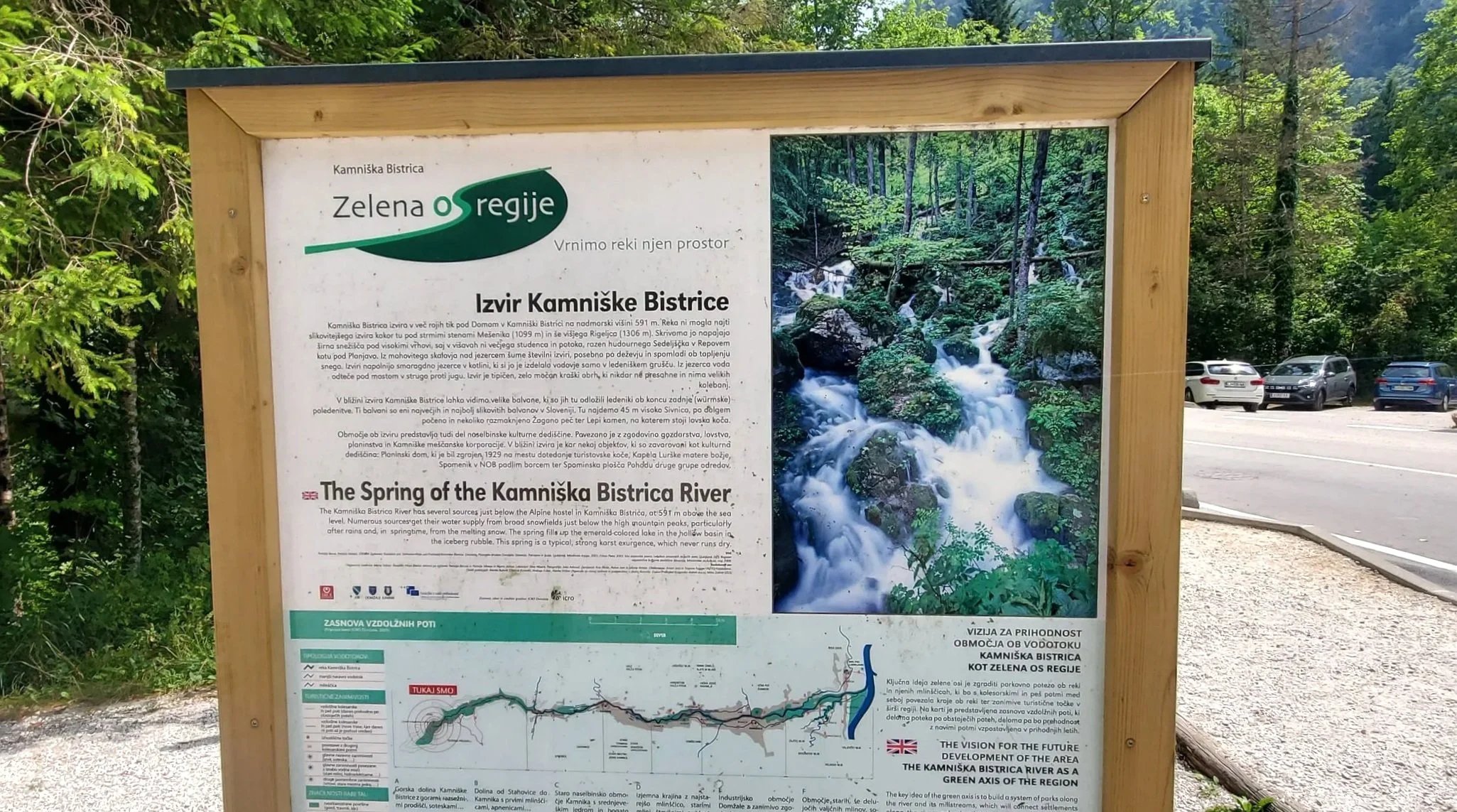
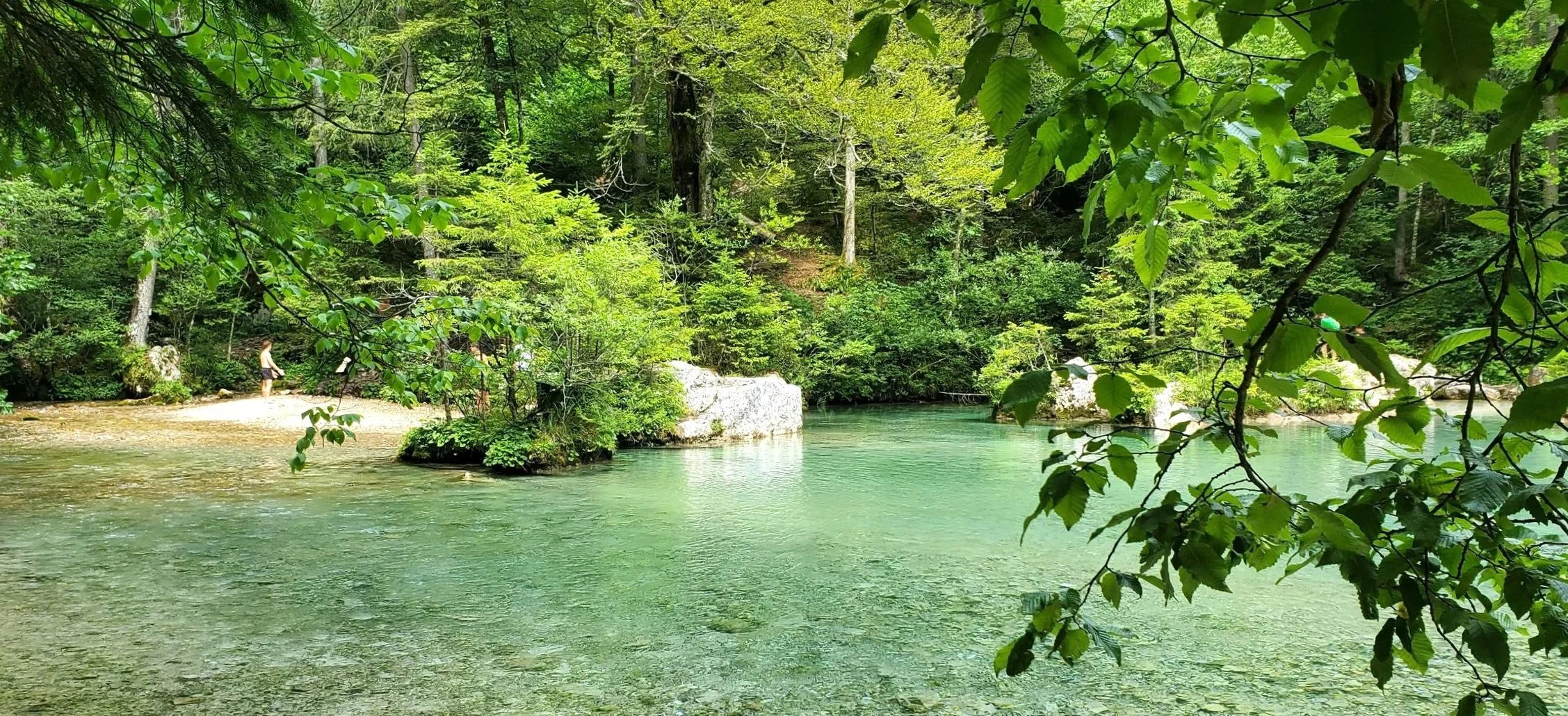
Next stop was a pretty spot on the Kamniska Bistrica River.
Then a nearby gorge.
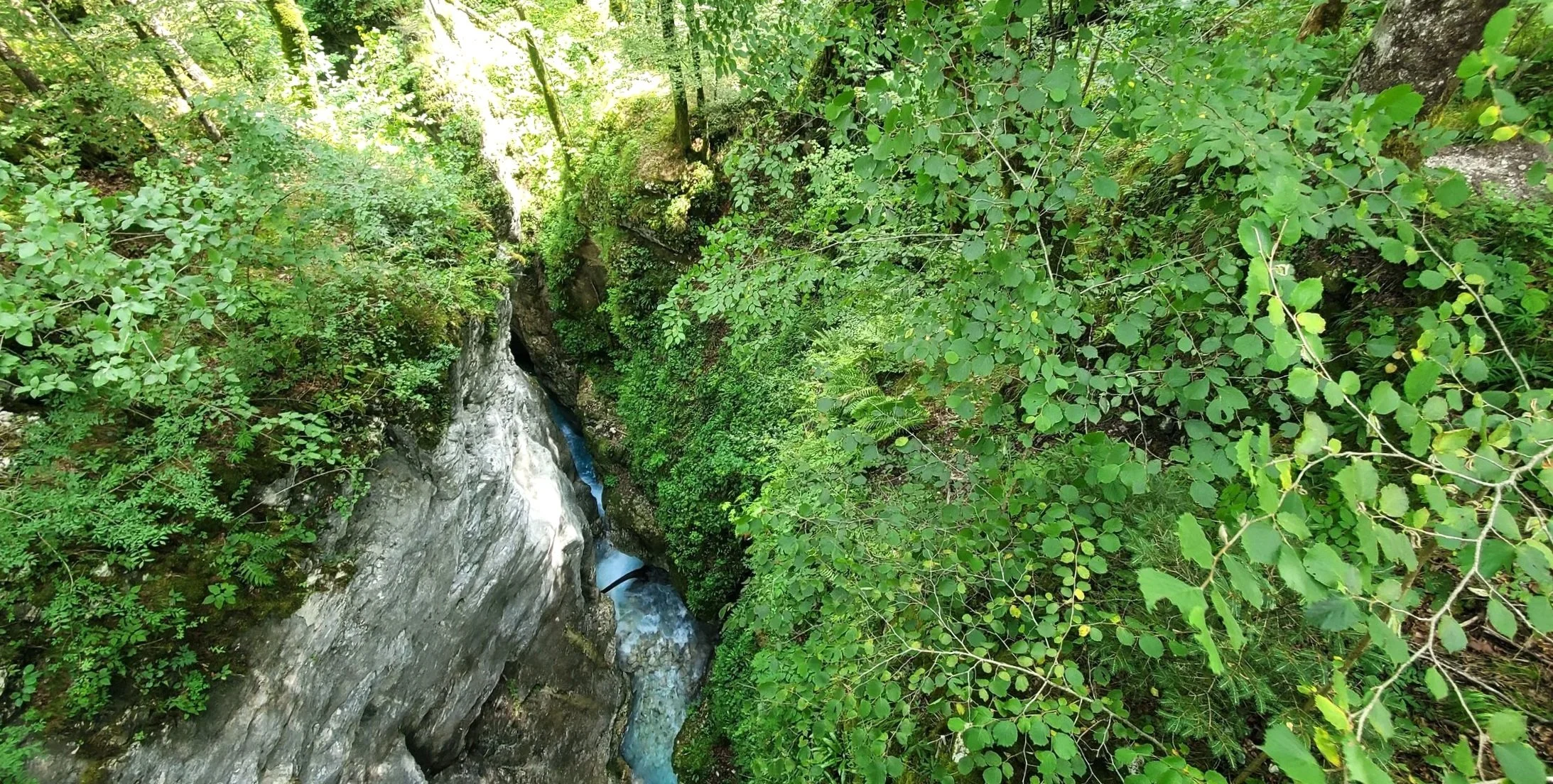
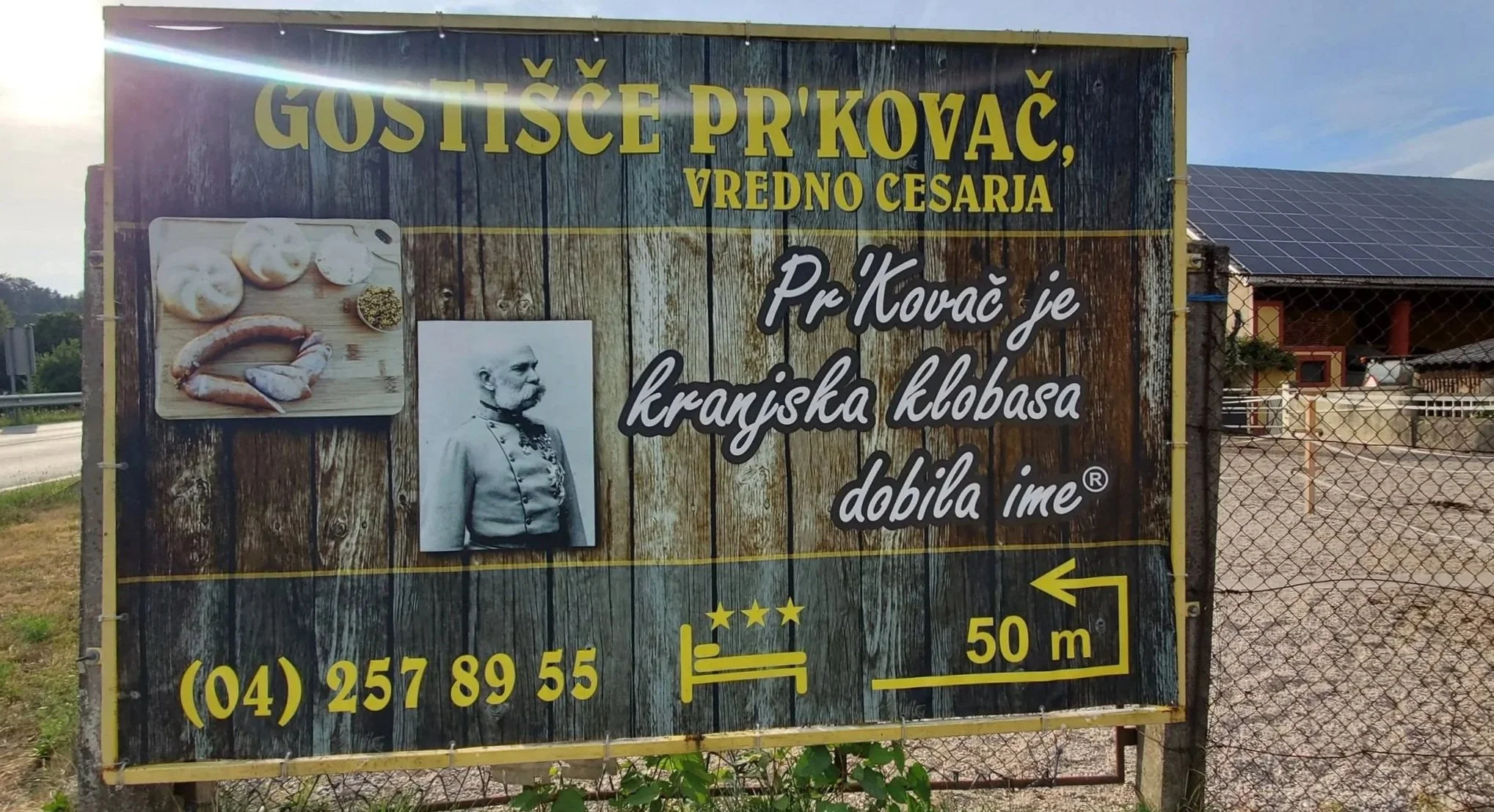
We popped home for dinner, thinking that the day was done, but oh no, we were off again. You’re probably familiar with the kransky sausage. What we hadn’t realised previously was that it gets its name from the town of Kranj!
Apparently, some Austro-Hungarian nobleman back in the days of the A-H Empire stopped in Kranj for lunch and pronounced that the local sausage was most delicious. And so, the kransky was officially born. At least that’s how the story goes. A billboard with the nobleman’s image stands proudly out the front.
Off we went to see the inn where the famous meal was consumed. It still operates, but being a Sunday evening was closed.
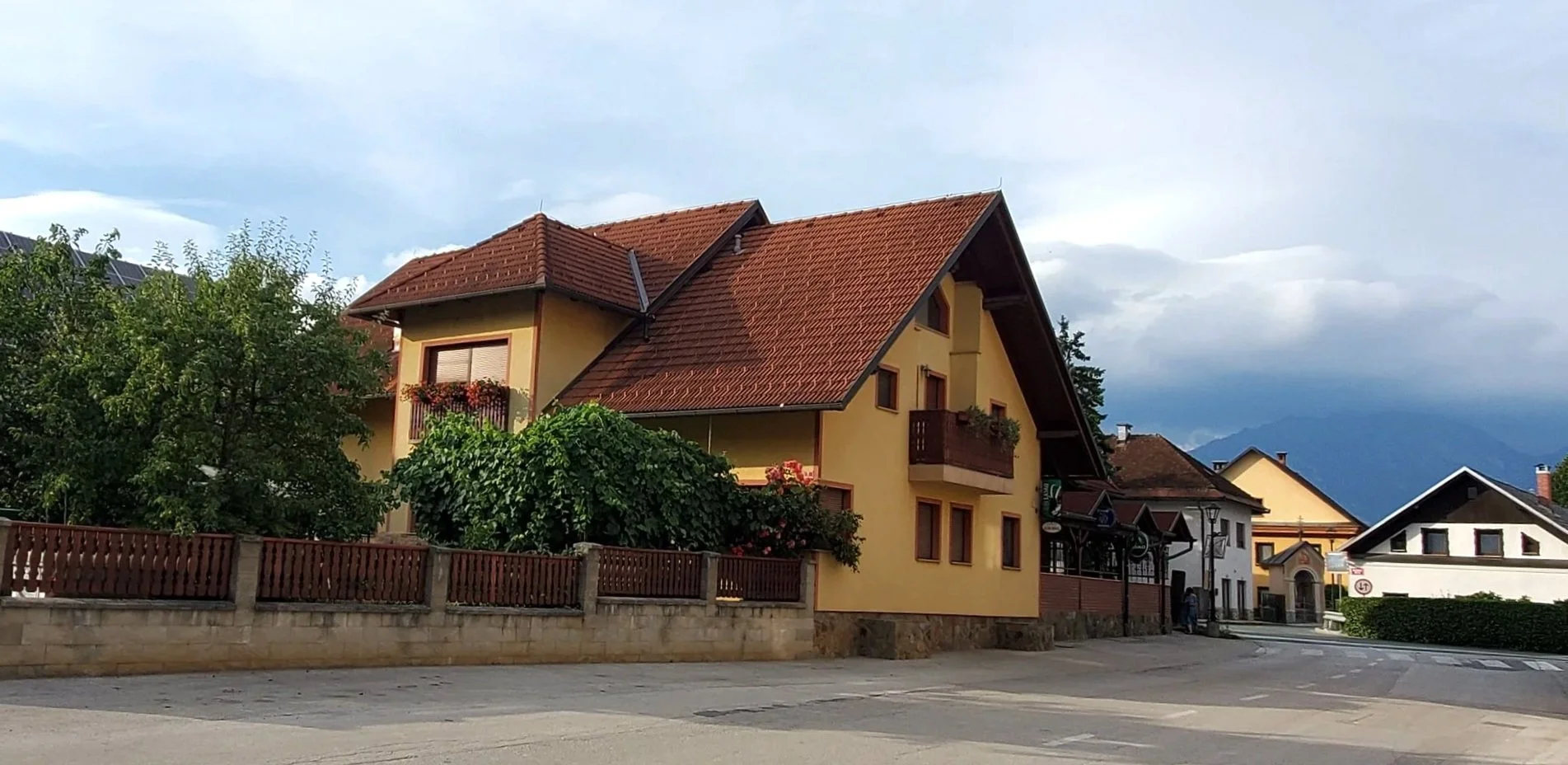
the home of the kransky
Here is Samo recounting the story of the kransky.
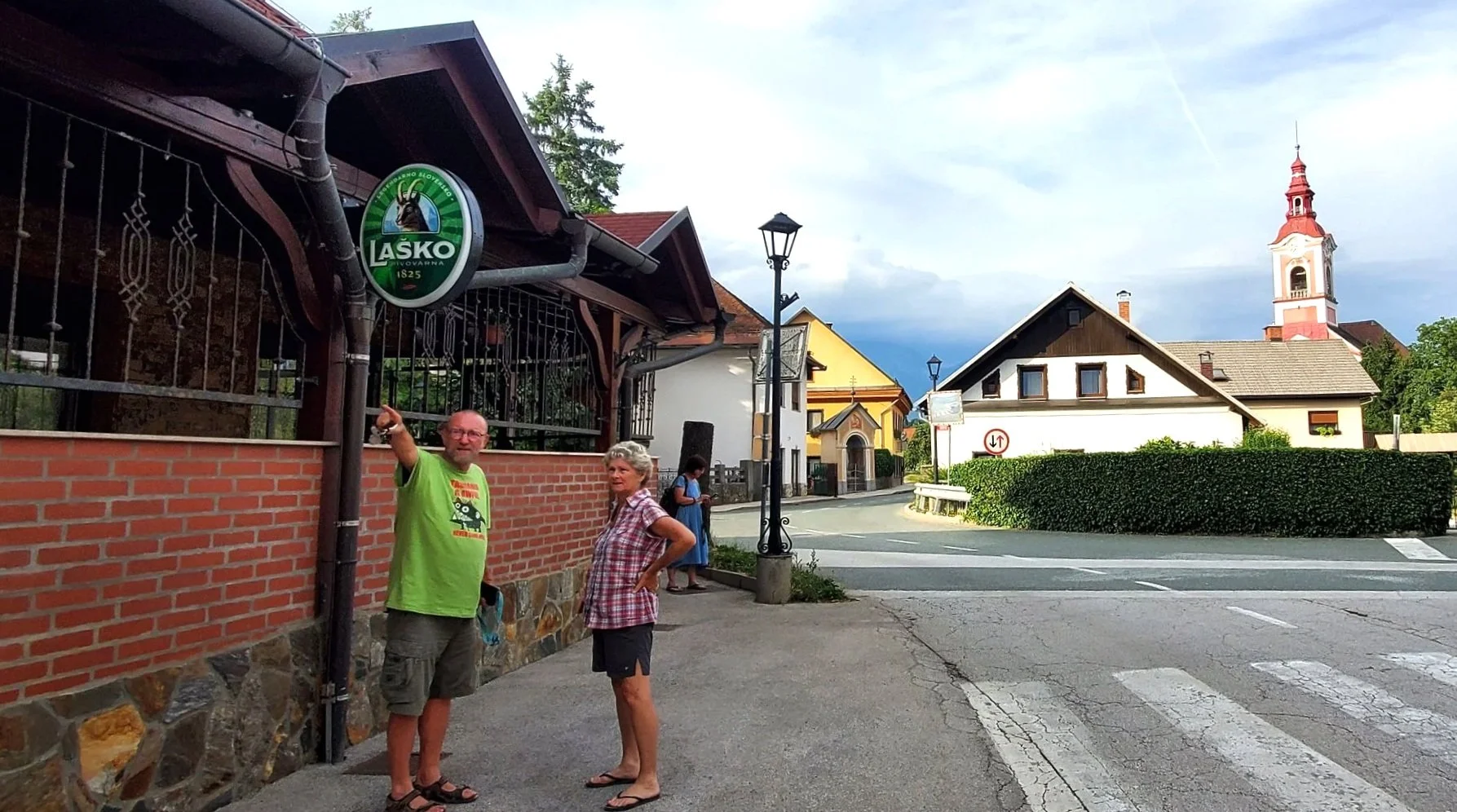
We also called into the site of an upcoming very popular Slovenian music festival known as Drops. Samo and Mircha’s sons are heavily involved in its organisation and running.
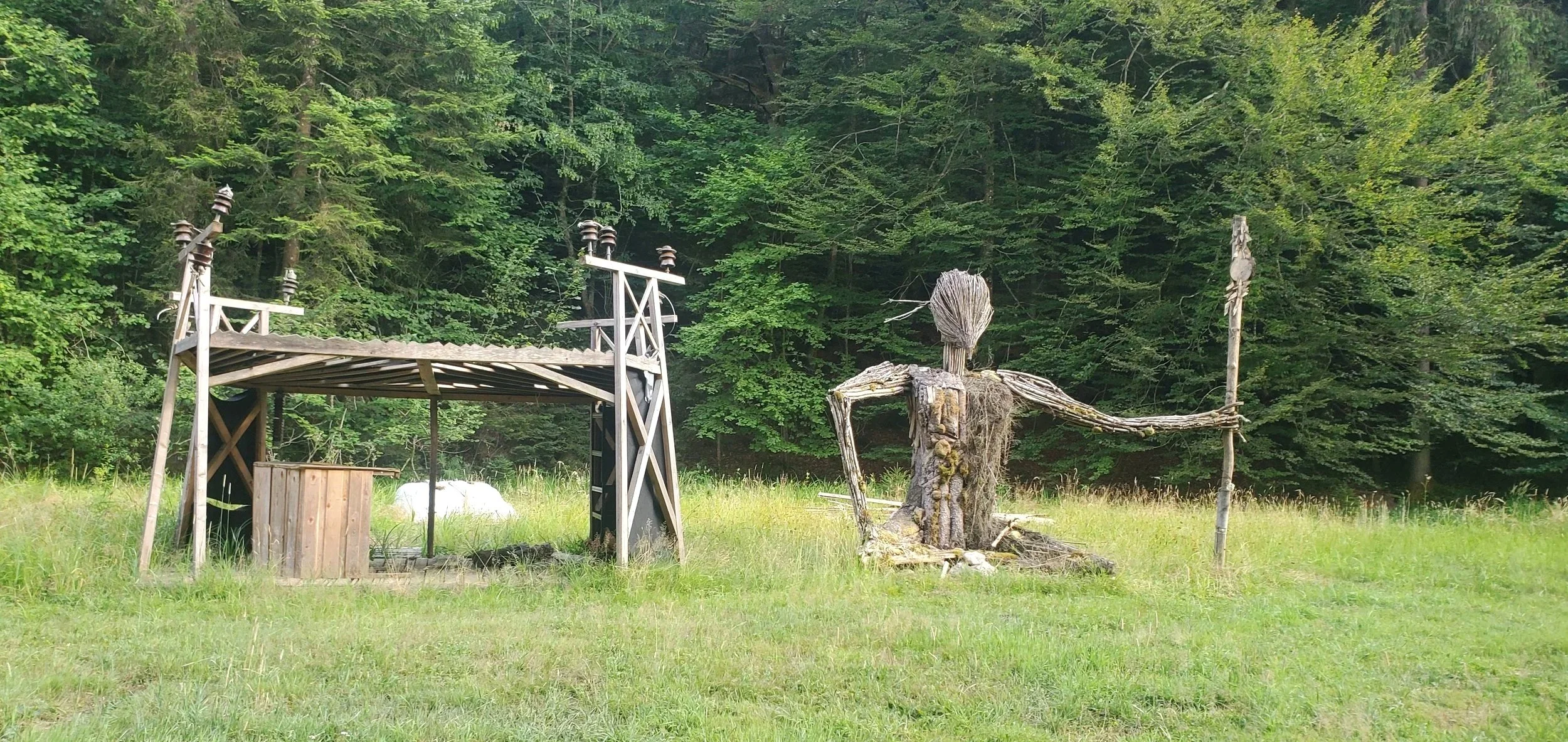
the location for the drops festival
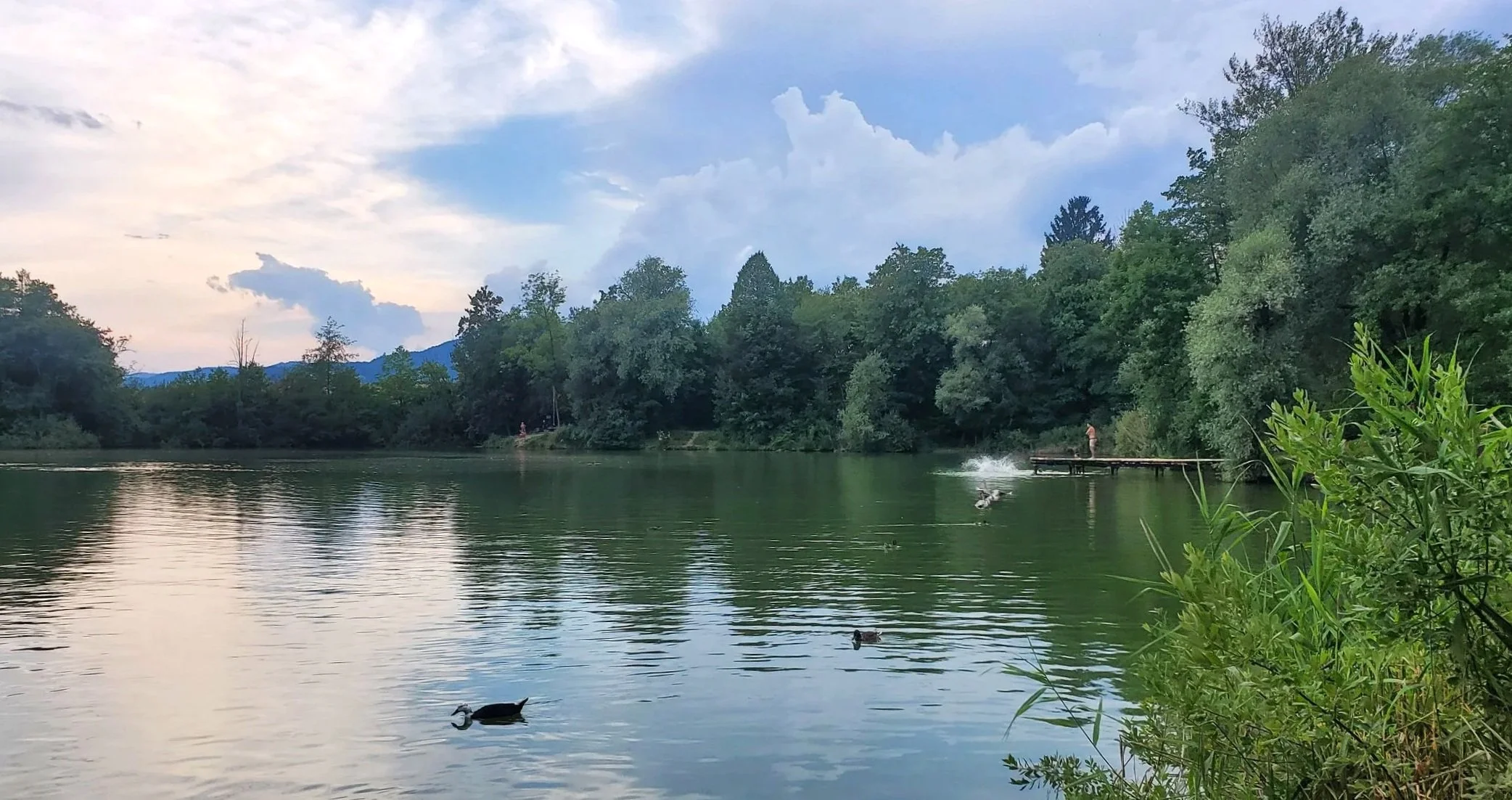
And lastly, we stopped by a pretty, little lake in an old quarry. It was getting late, so we didn’t feel a swim.
Conclusion
It had been another rollicking visit to Slovenia to see our good friends Samo and Mircha.
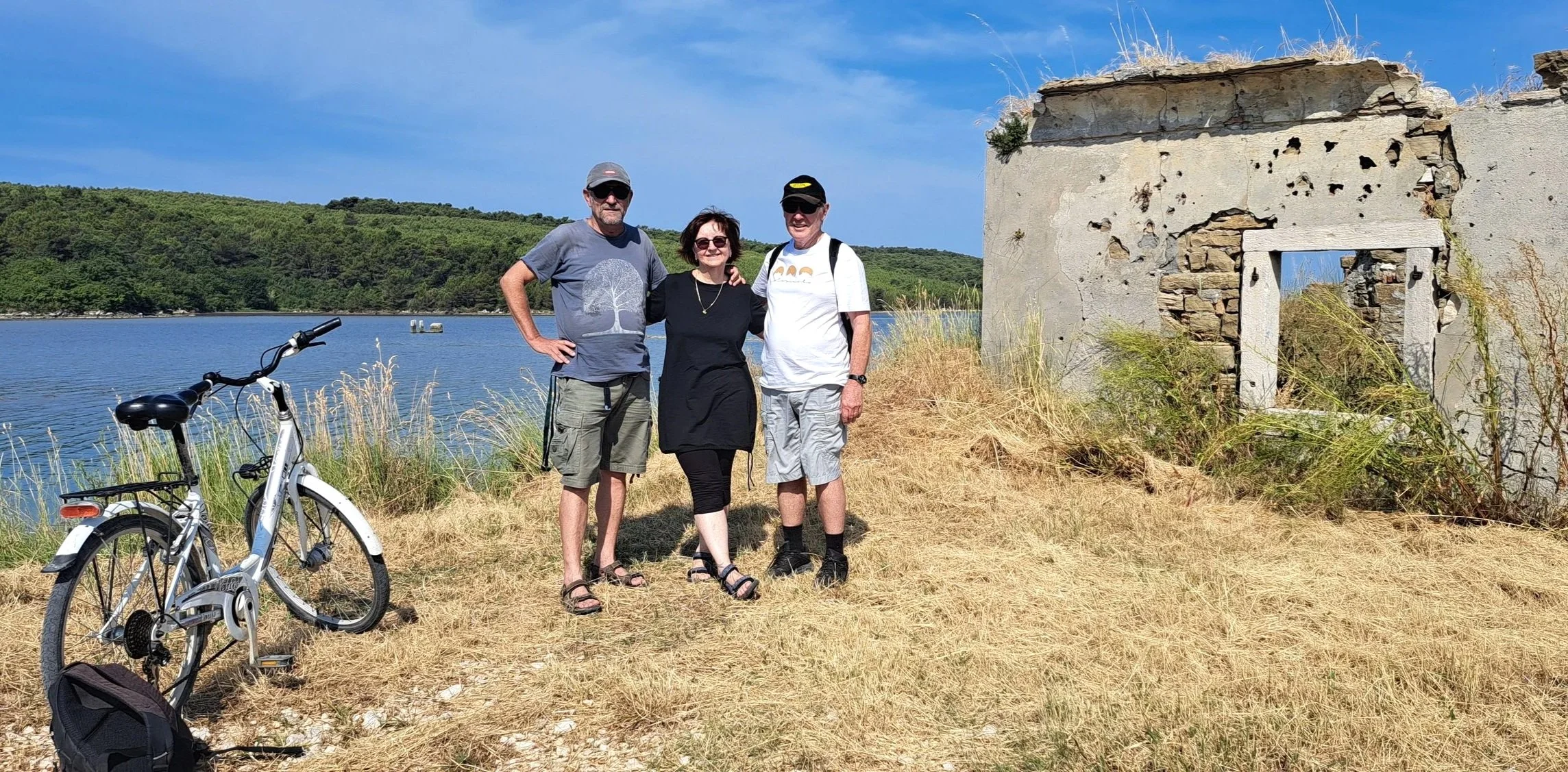
Sadly, it was time to leave, and we left Monday morning for our next destination – Budapest – a 7-hour bus ride away.
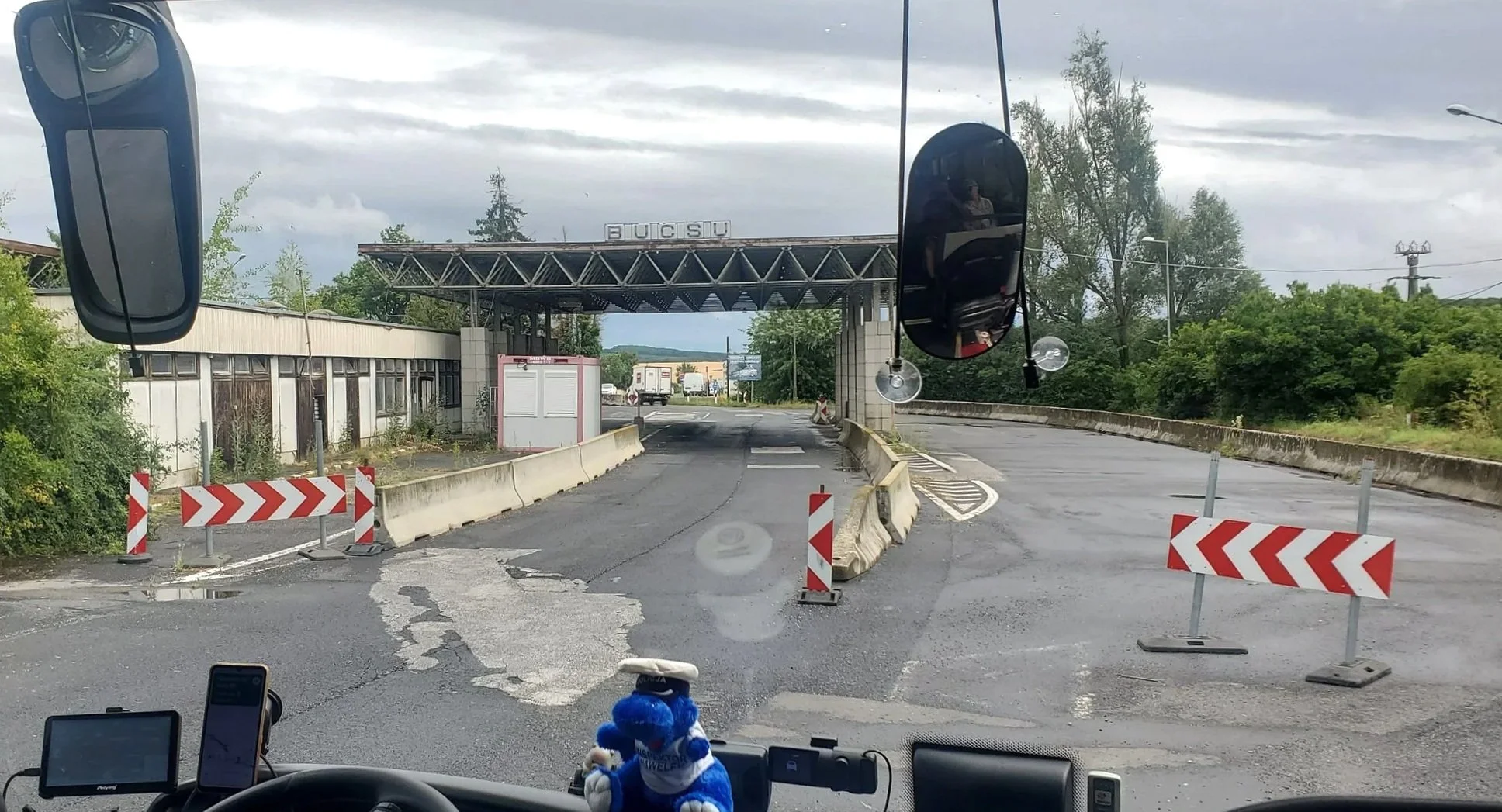
the old border crossing between yugoslavia/slovenia and hungary
Budapest was but a brief stop-over on our way to Moldova, possibly Europe’s least visited country. But to know more you’ll have to wait for Part 5: A Peak into Moldova.
Ken