From the Baltic to the Black Sea: Helsinki to Istanbul. Part 6: Transylvania, the Danube Delta, and a Beach in Bulgaria
/
Introduction
The last leg of our trip from Helsinki to Istanbul took us to a couple of places we’d longed to visit in Romania: Transylvania and the Danube Delta. Being July, it was hot, so we decided that our last stop in Eastern Europe should be a beach on the Black Sea, in Bulgaria. It was then just a short flight to Istanbul then home. Here’s how the trip concluded.
Transylvania
We took an early flight from Chisinau to Bucharest, Romania, where we picked up a hire car and drove 3 hours north to the city of Brasov in Transylvania. Transylvania is known, of course, for Dracula and other ghoulish stories. What is less well known is its natural beauty, with vast forests and Carpathian Mountain vistas. In addition, there are many medieval castles and history galore.
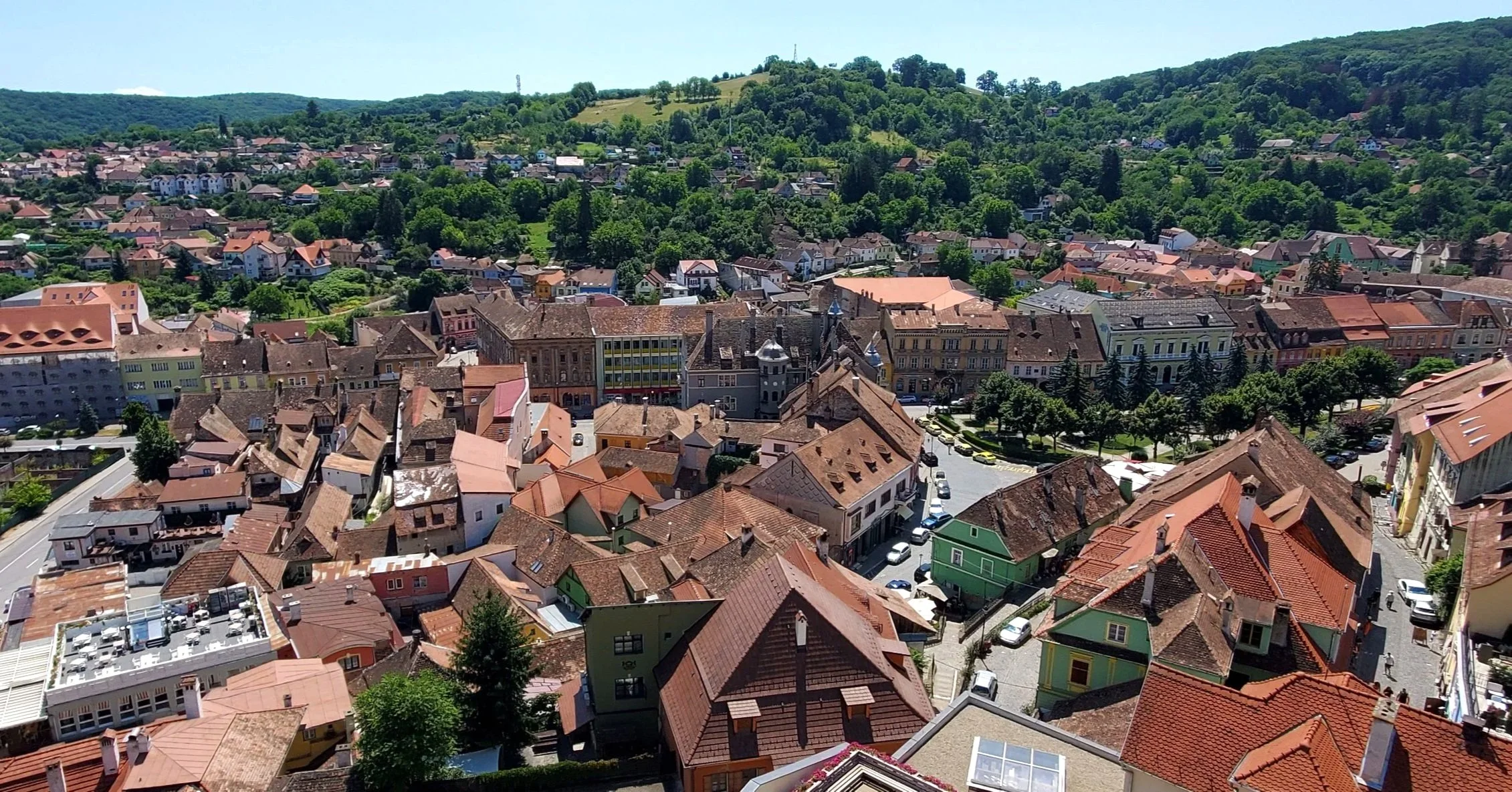
the rooves of Sighișoara, transylvania
After checking into our hotel, we headed into town. Central Brasov is an easy and pleasant place to stroll with its cobblestone pedestrian-friendly streets and lots of outdoor cafes and restaurants.
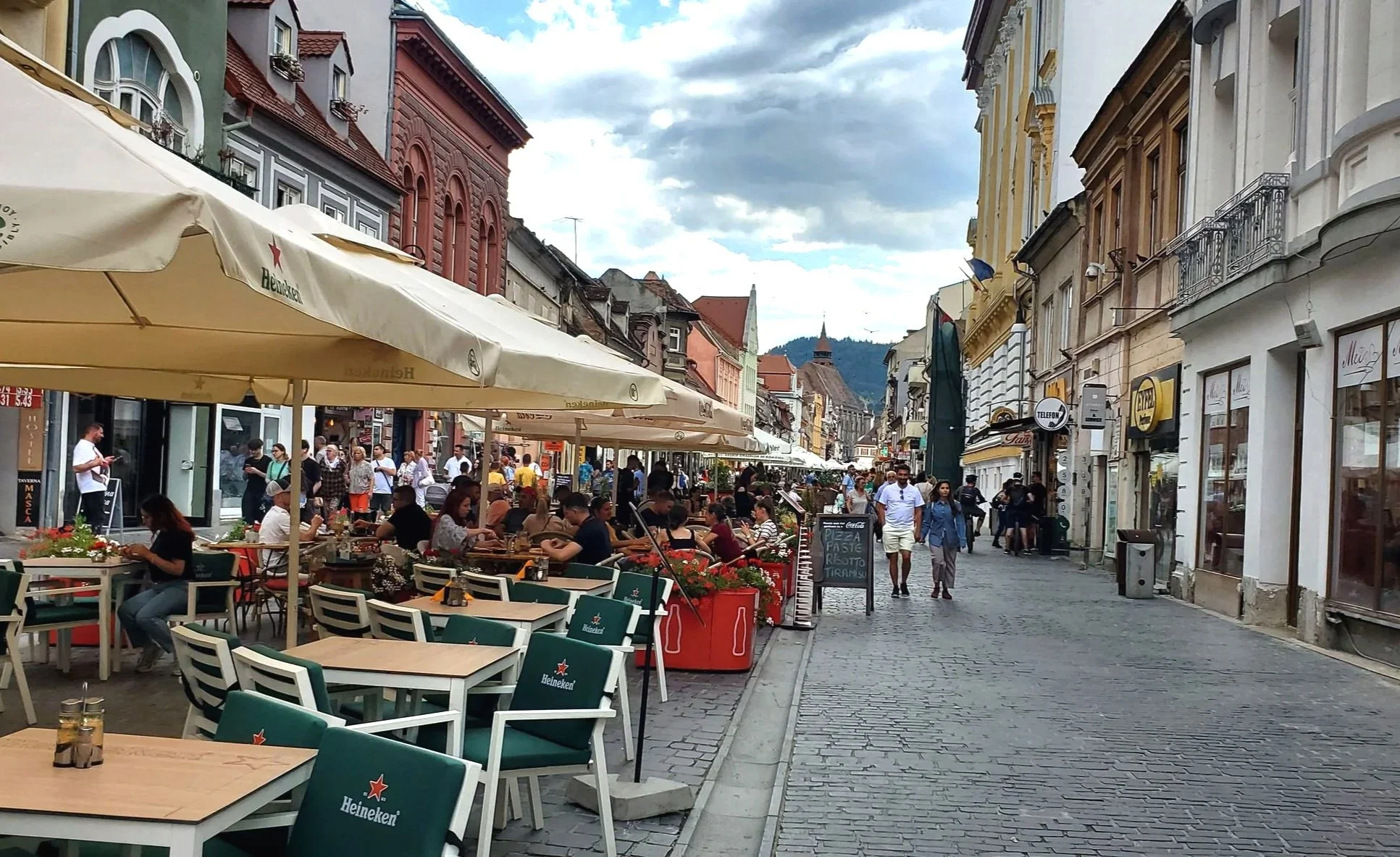
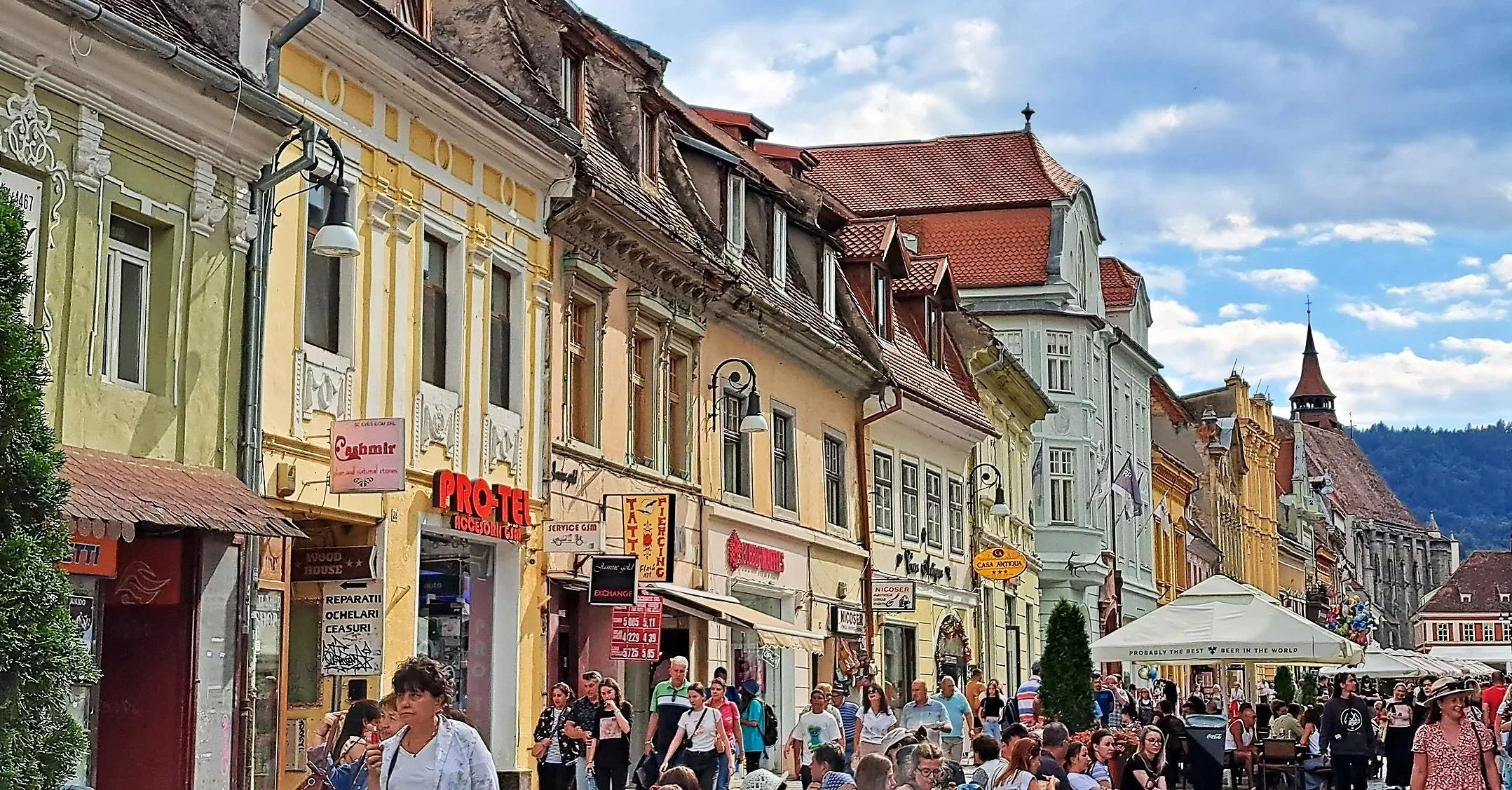
Colourful baroque buildings line the streets.
The central square is Piata Sfatului.
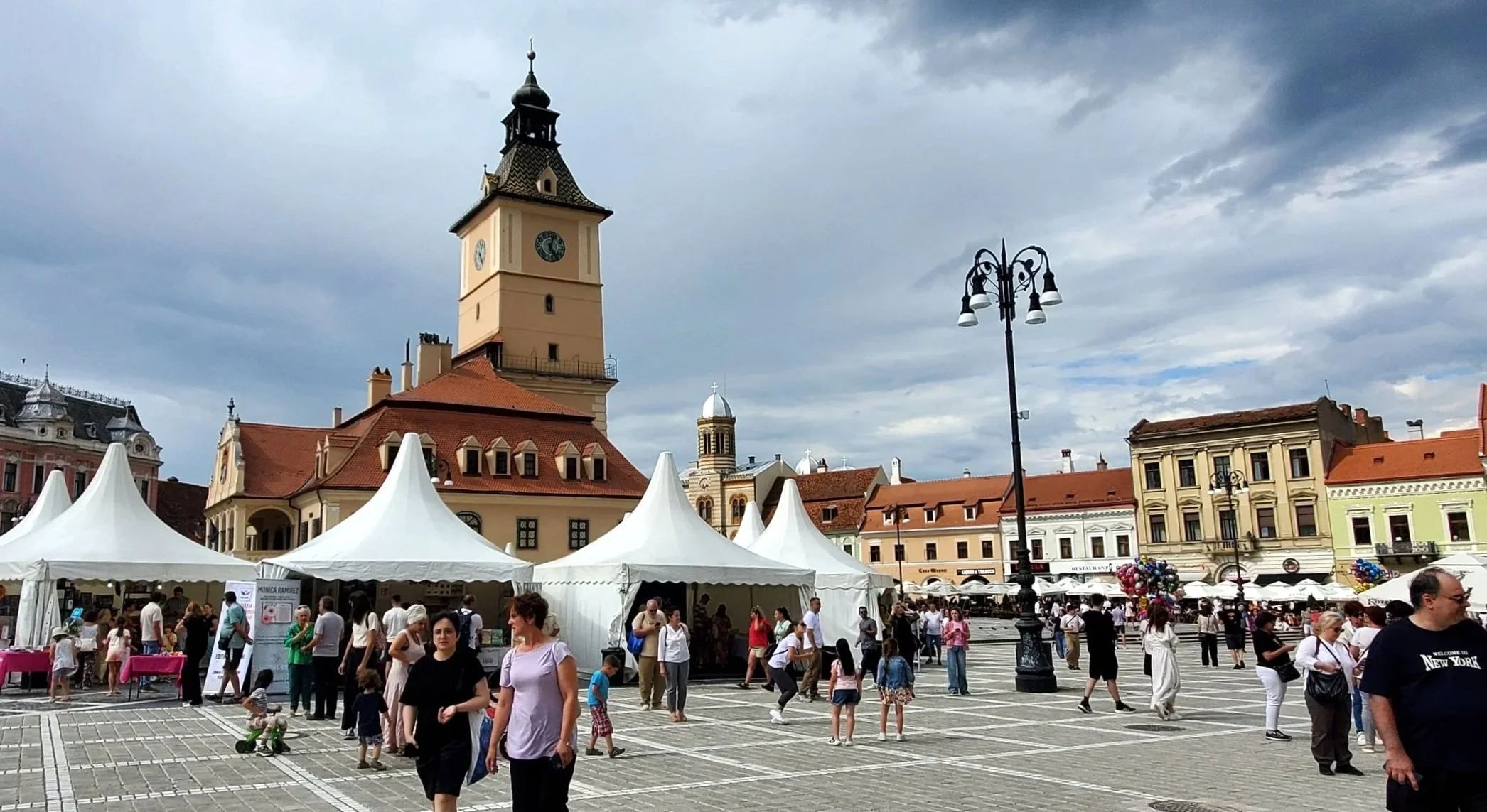
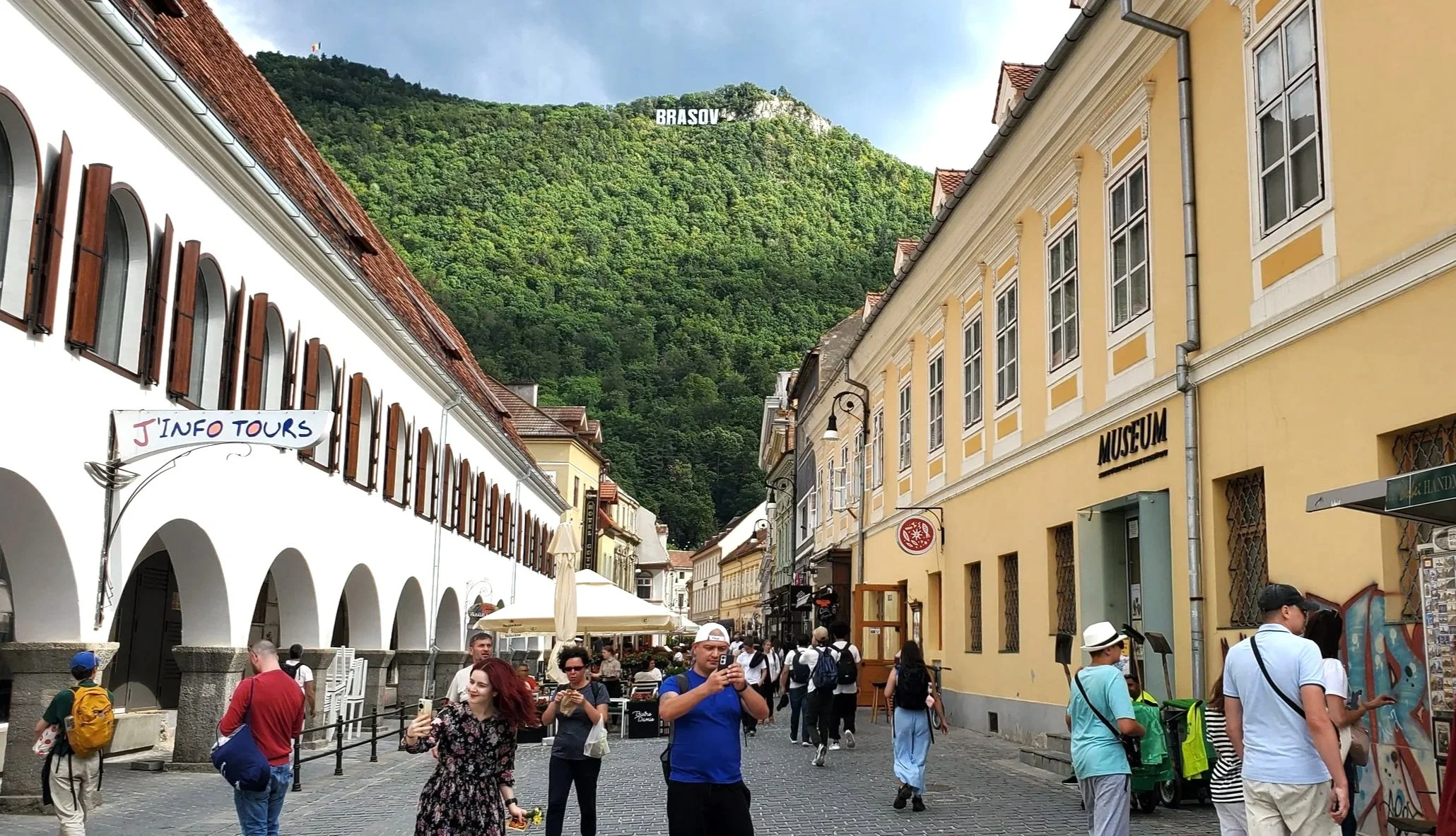
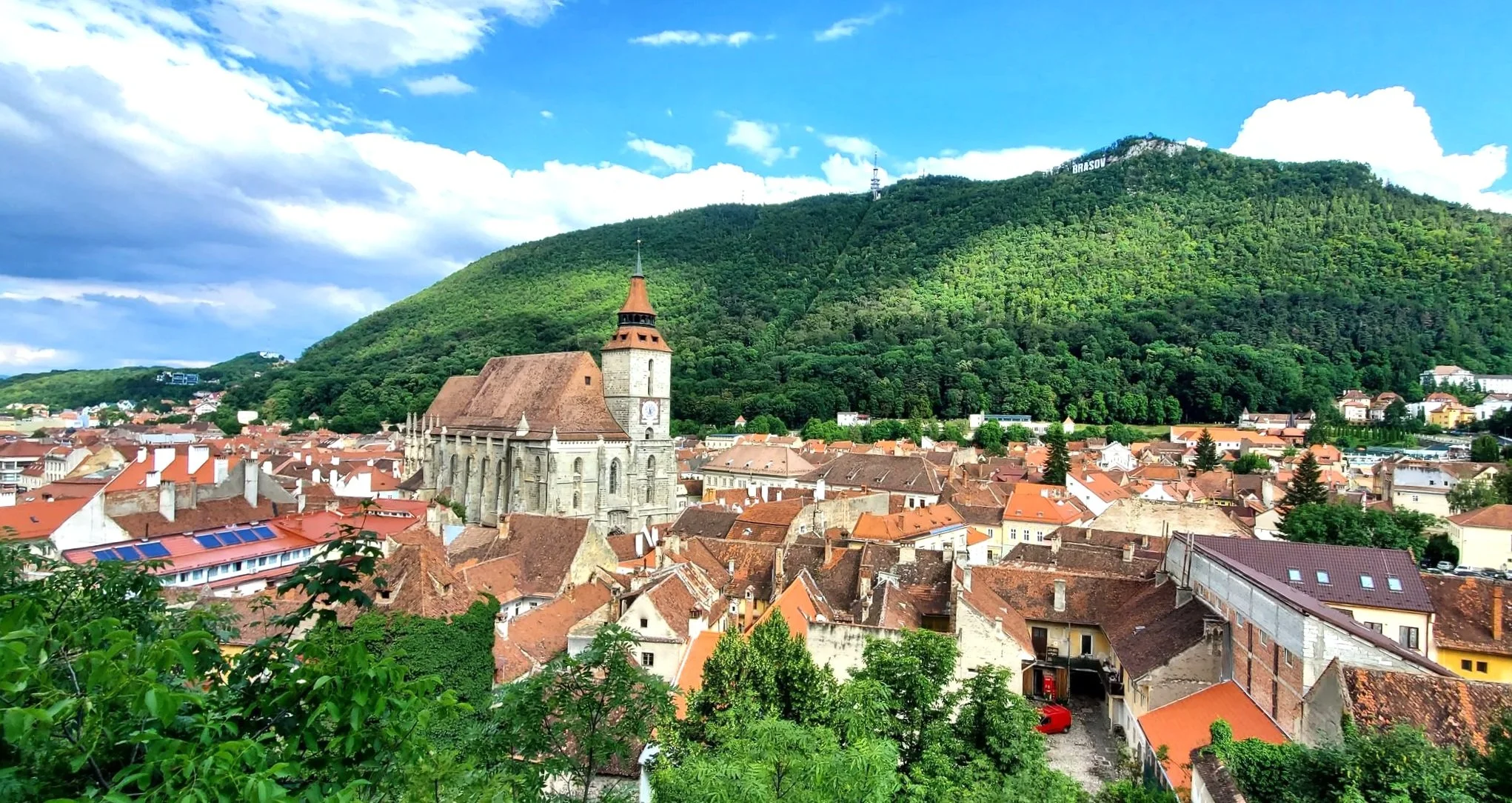
From here you can see Brasov’s ‘Hollywood-style’ sign high up on Mt Tampa.
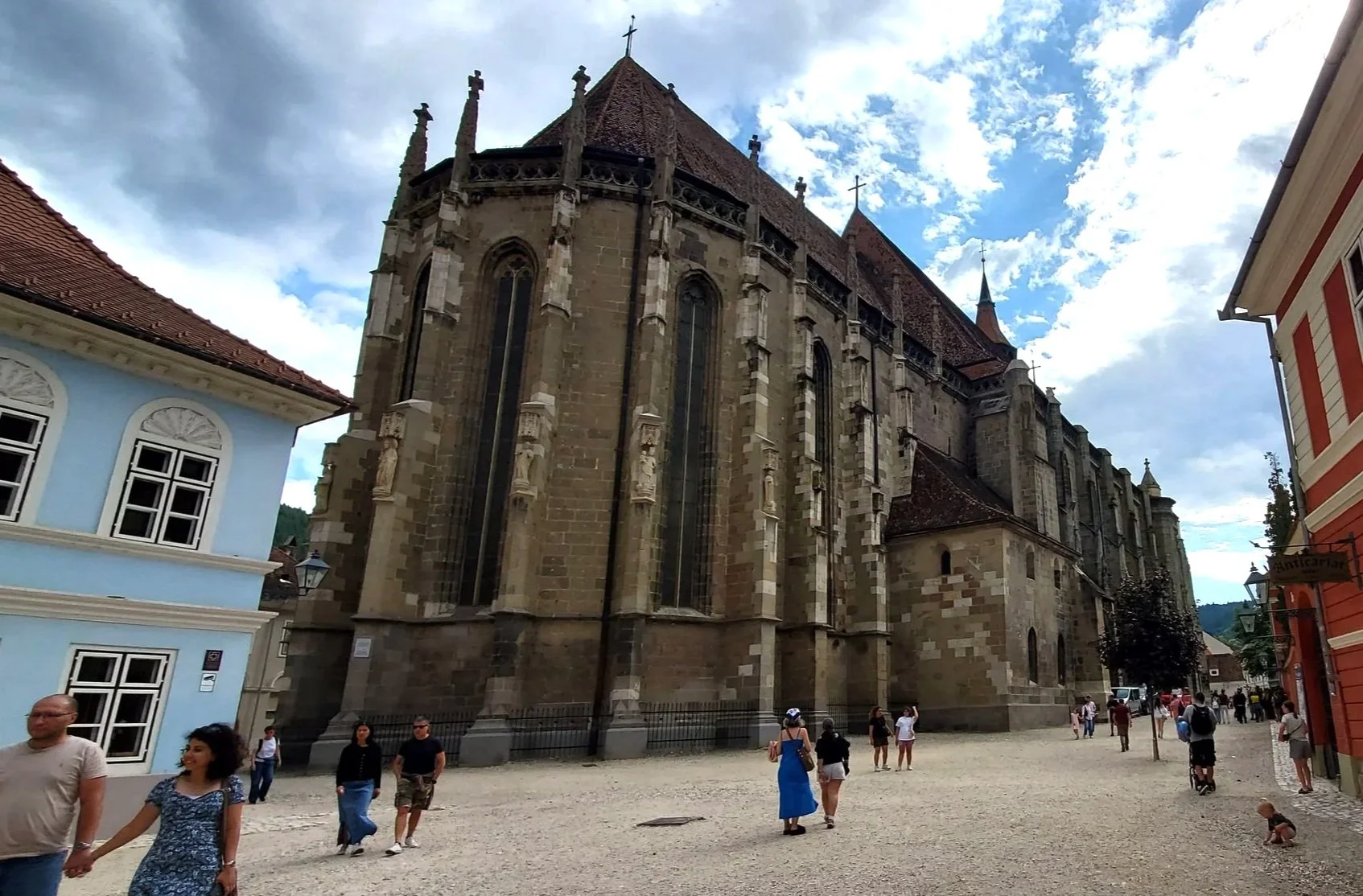
Just off the square is the Black Church.
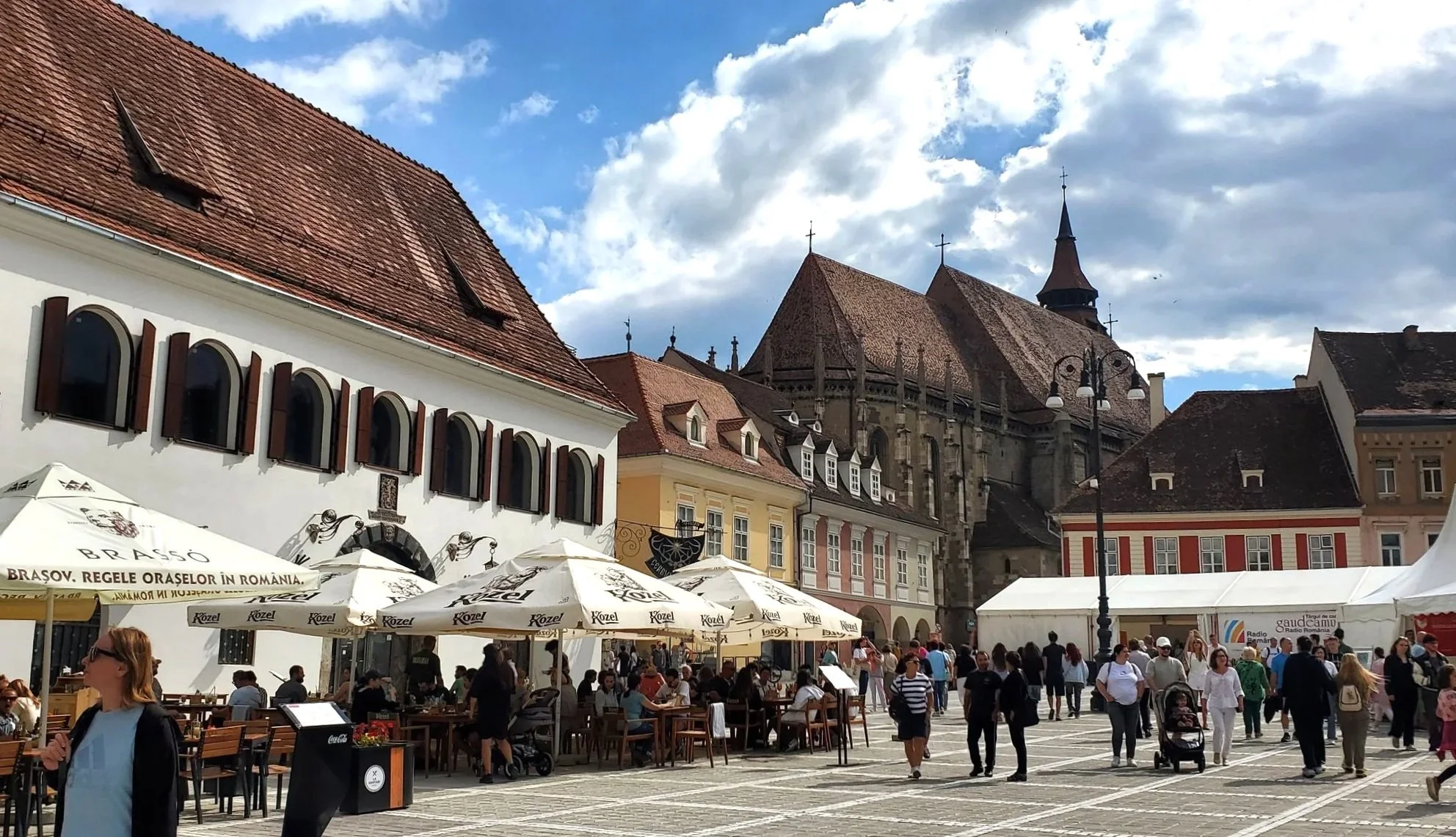
This is Romania’s largest Gothic church. It was built between 1385 and 1477 and is German Lutheran.
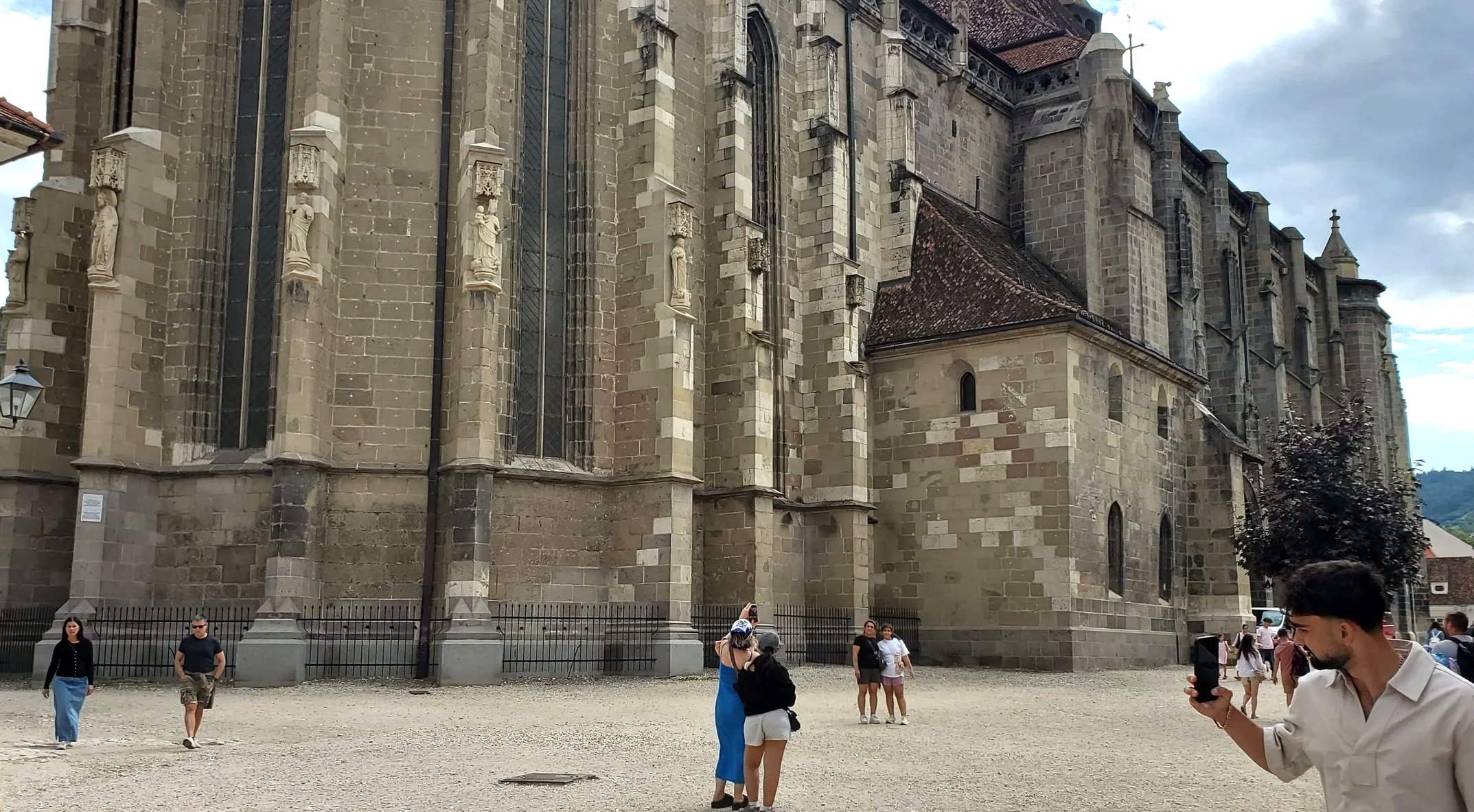
It gets its name and charred colour from Brasov’s Great Fire of 1689.
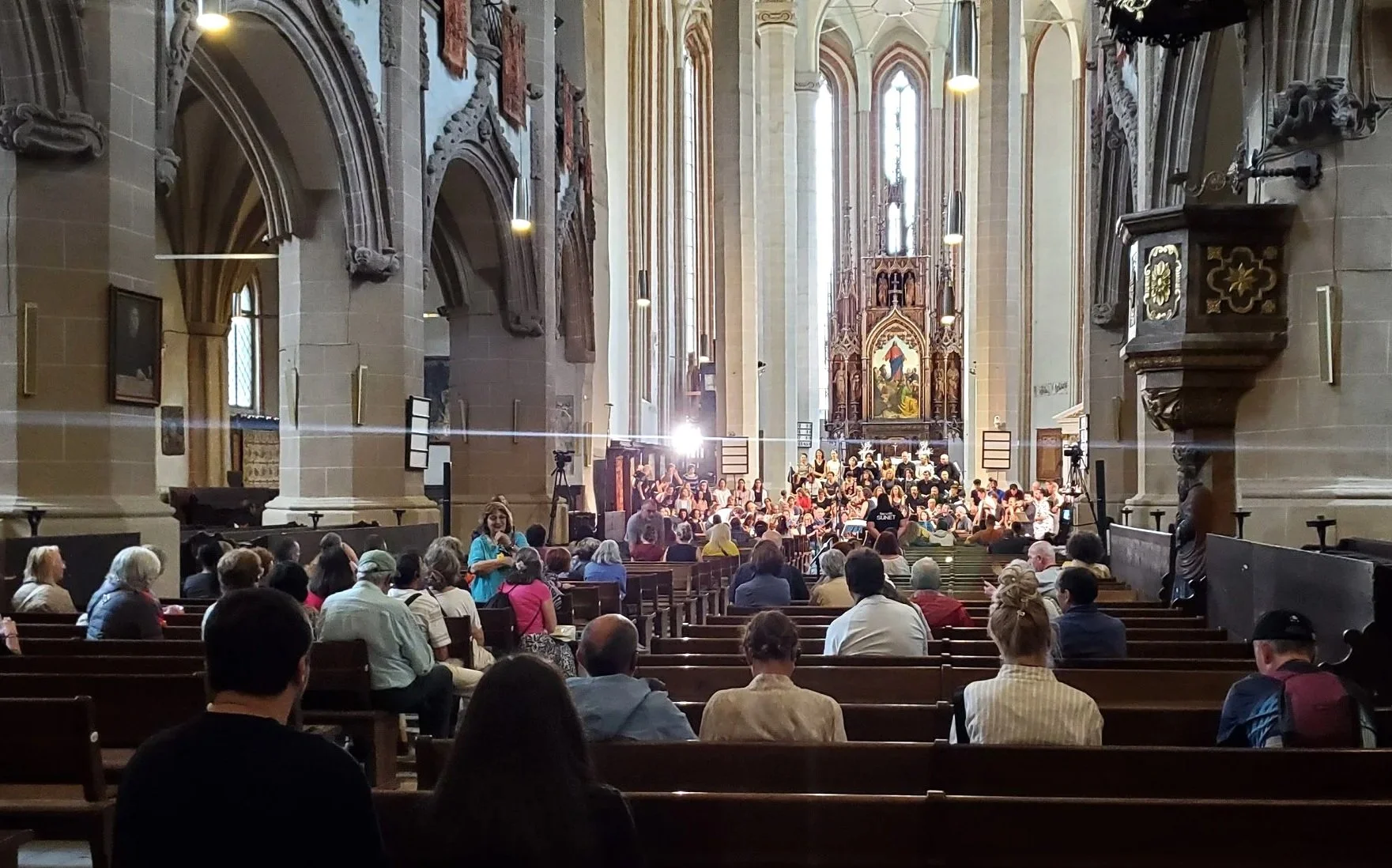
We were lucky to visit when a choir was rehearsing for an upcoming performance.
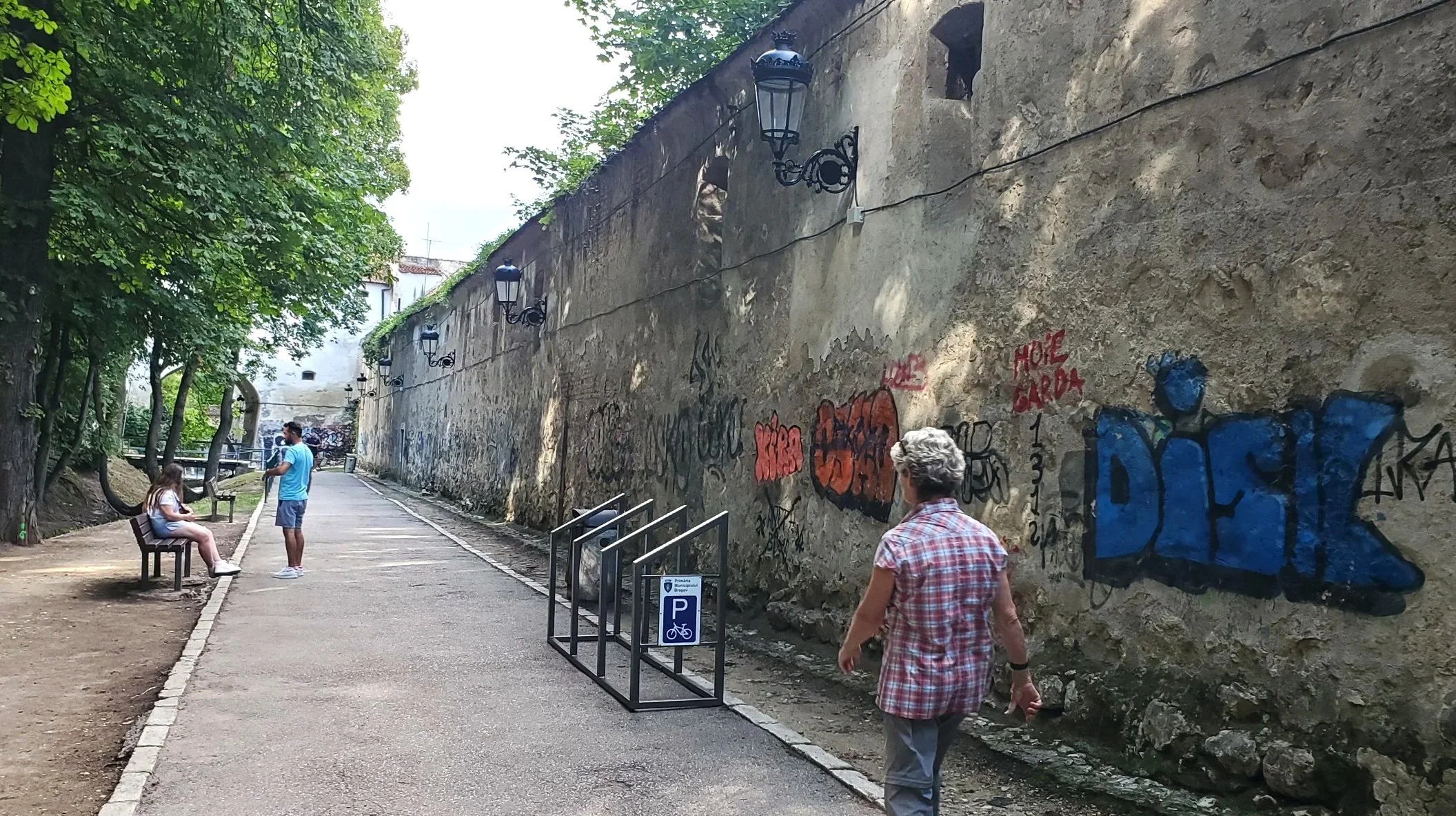
Some of the town’s old walls and other fortifications are still standing.
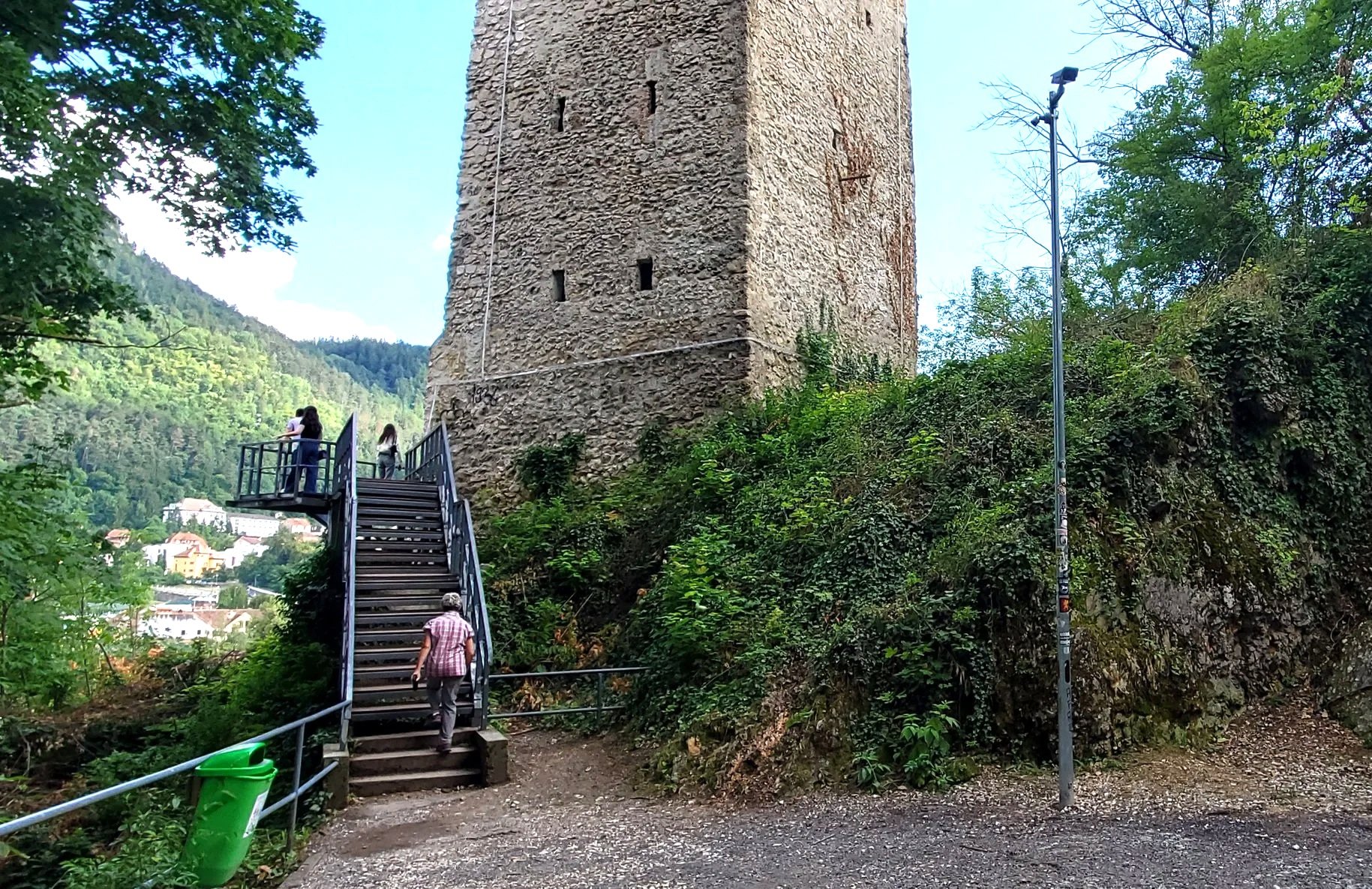
We called in to the Black Tower which was part of the fortifications.
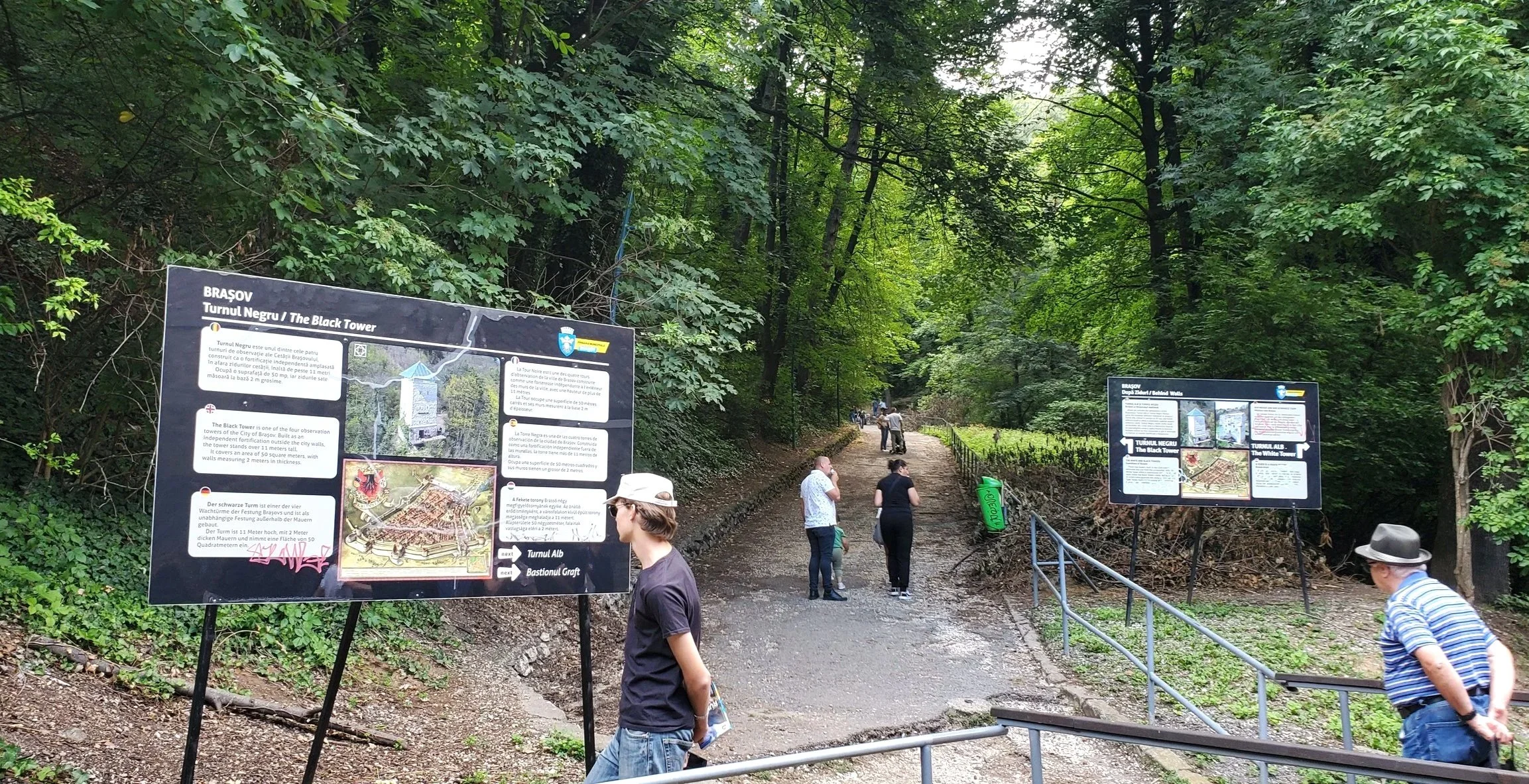
This is one of four observation towers built outside the walls.
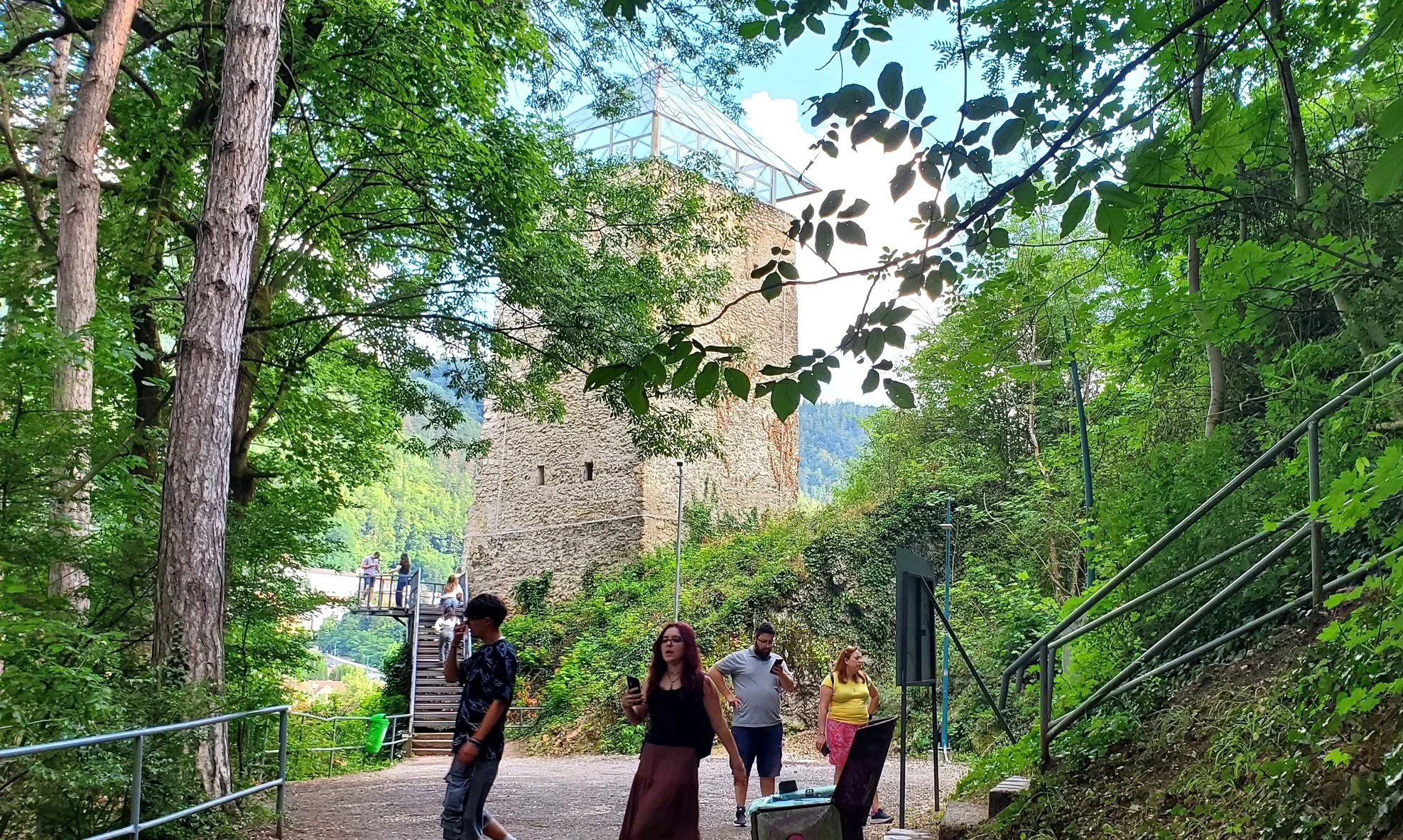
The tower is 11m tall.
Our hotel, Casa Cranta, sits on a hill with excellent views of the roofs of the town. St Nicholas Cathedral dominates the skyline, with Mt Tampa and the Brasov sign as a backdrop.
Sighișoara
Two hours drive north of Brasov is Sighișoara. It is much smaller than Brasov (28,000 vs 275,000). There is a lot to see packed into a small area.
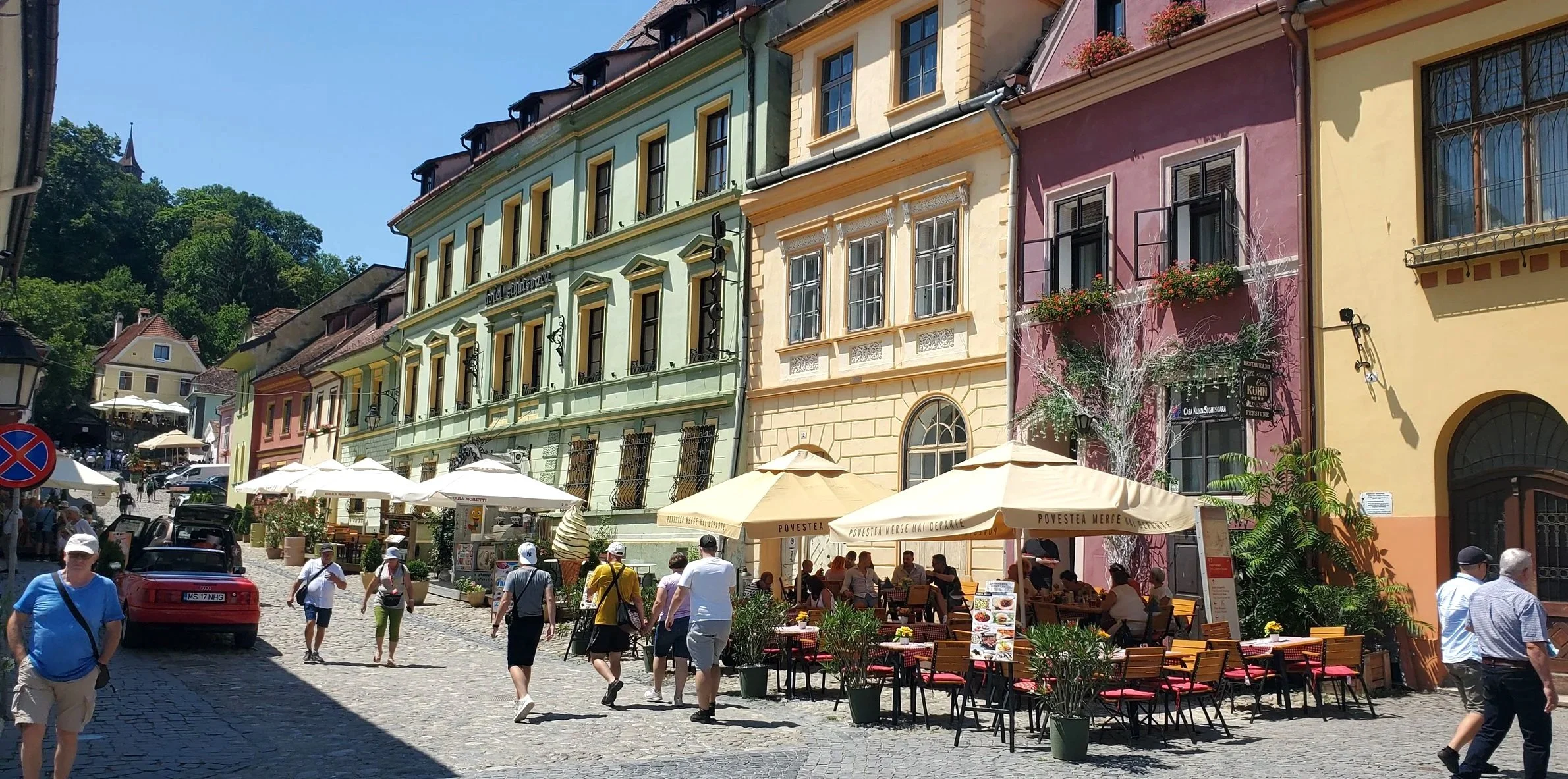
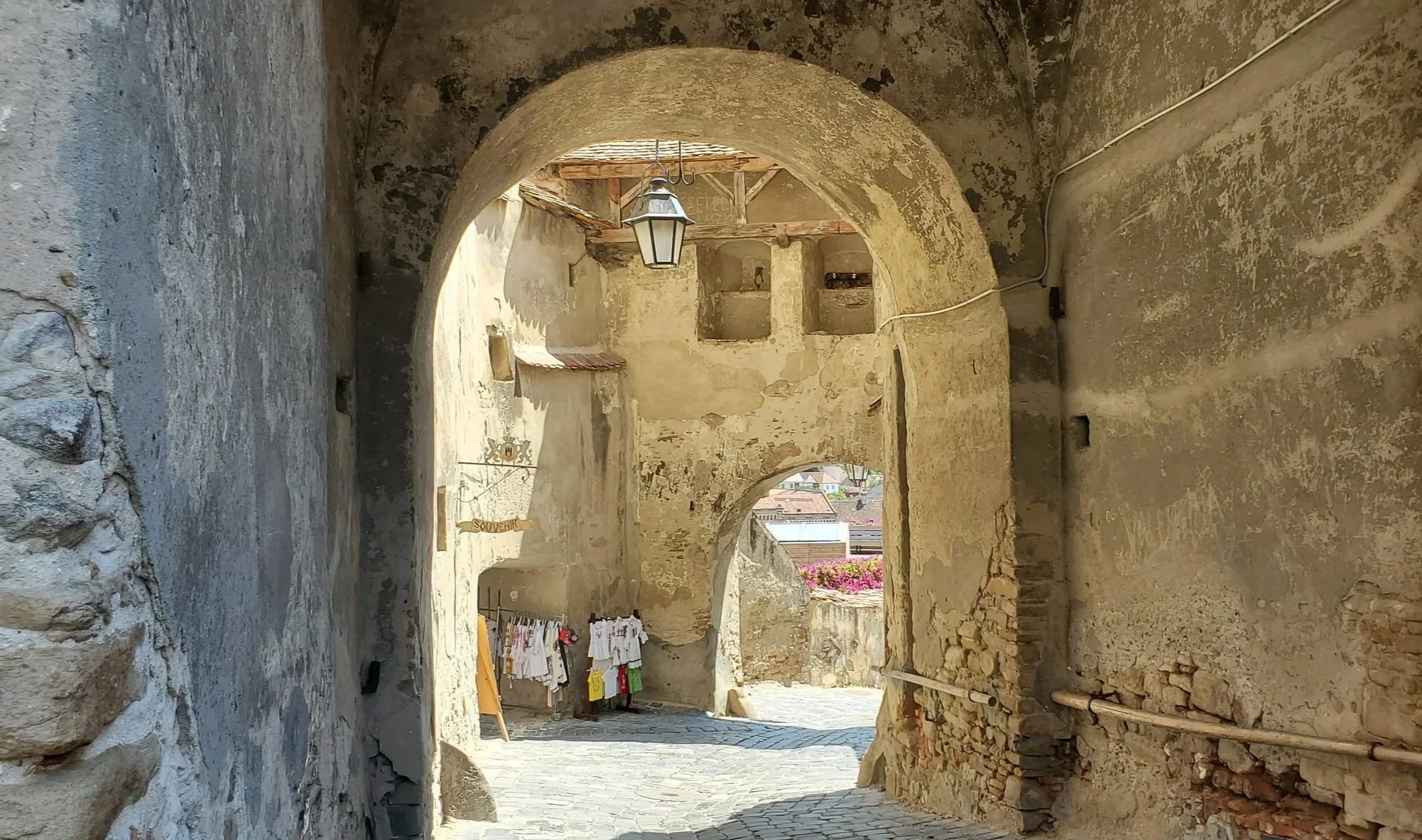
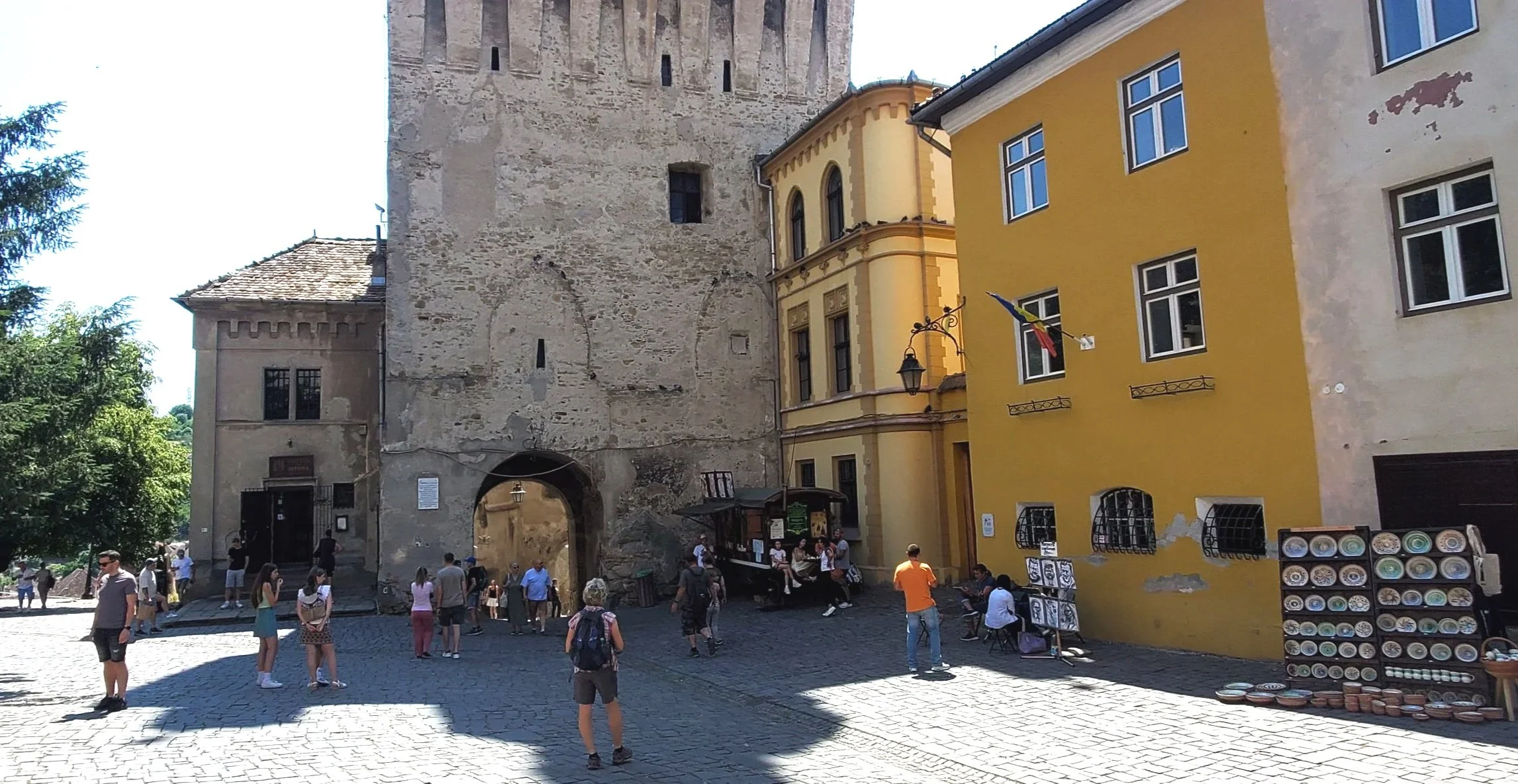
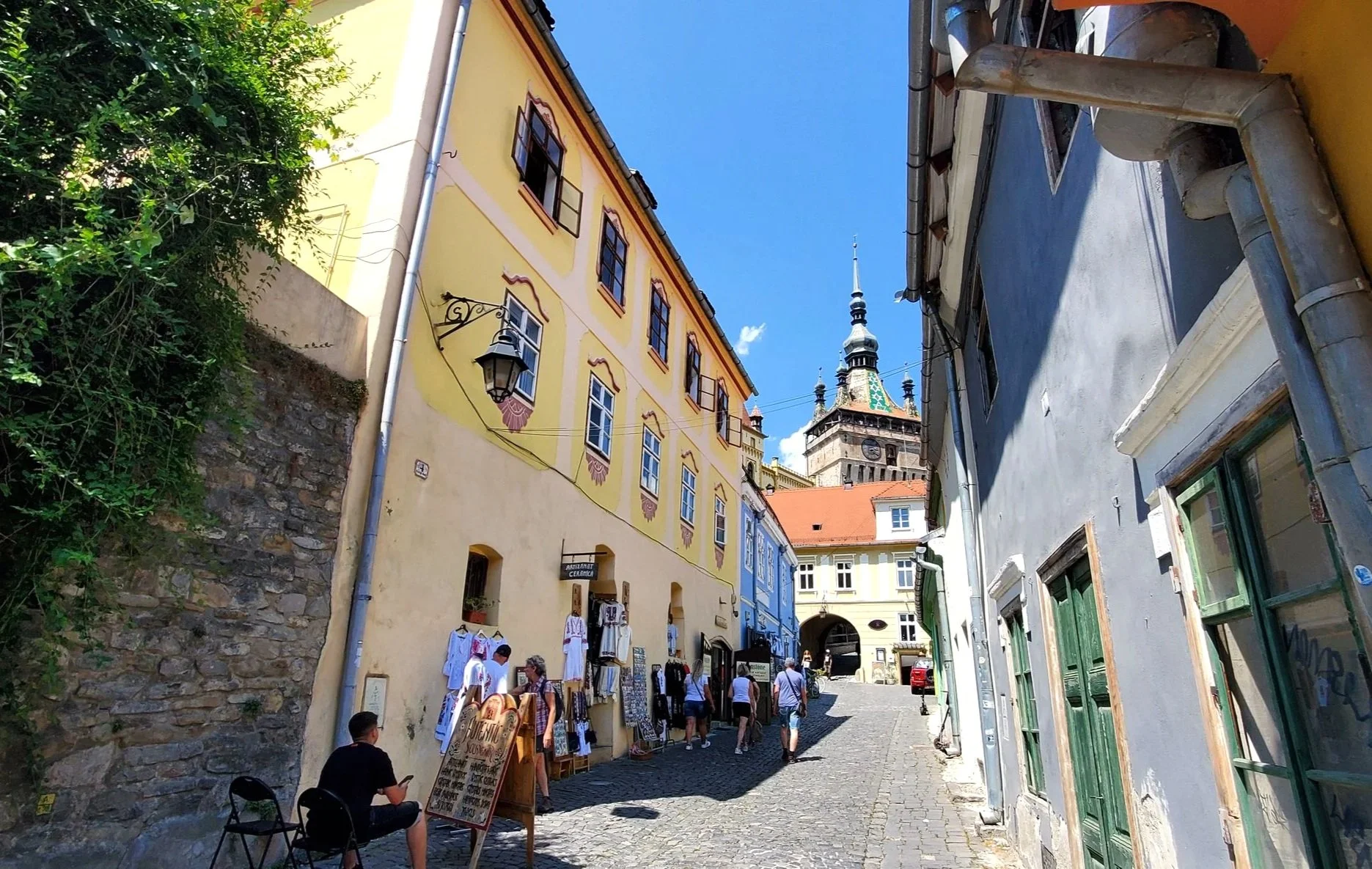
The UNESCO-Protected old town has wonderful, atmospheric cobblestone streets.
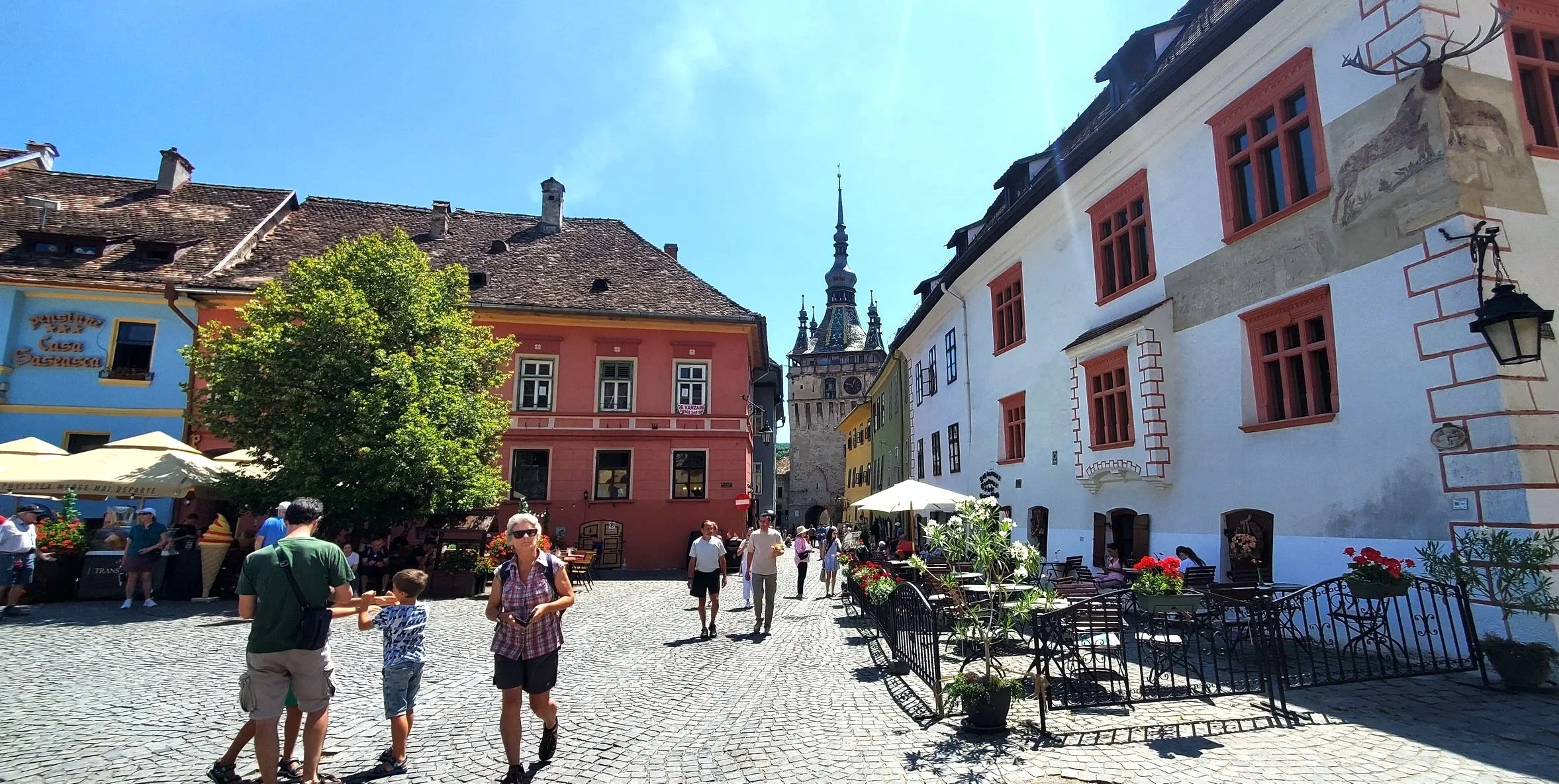
Its medieval buildings lie within its citadel surrounded by protective walls and numerous watchtowers.
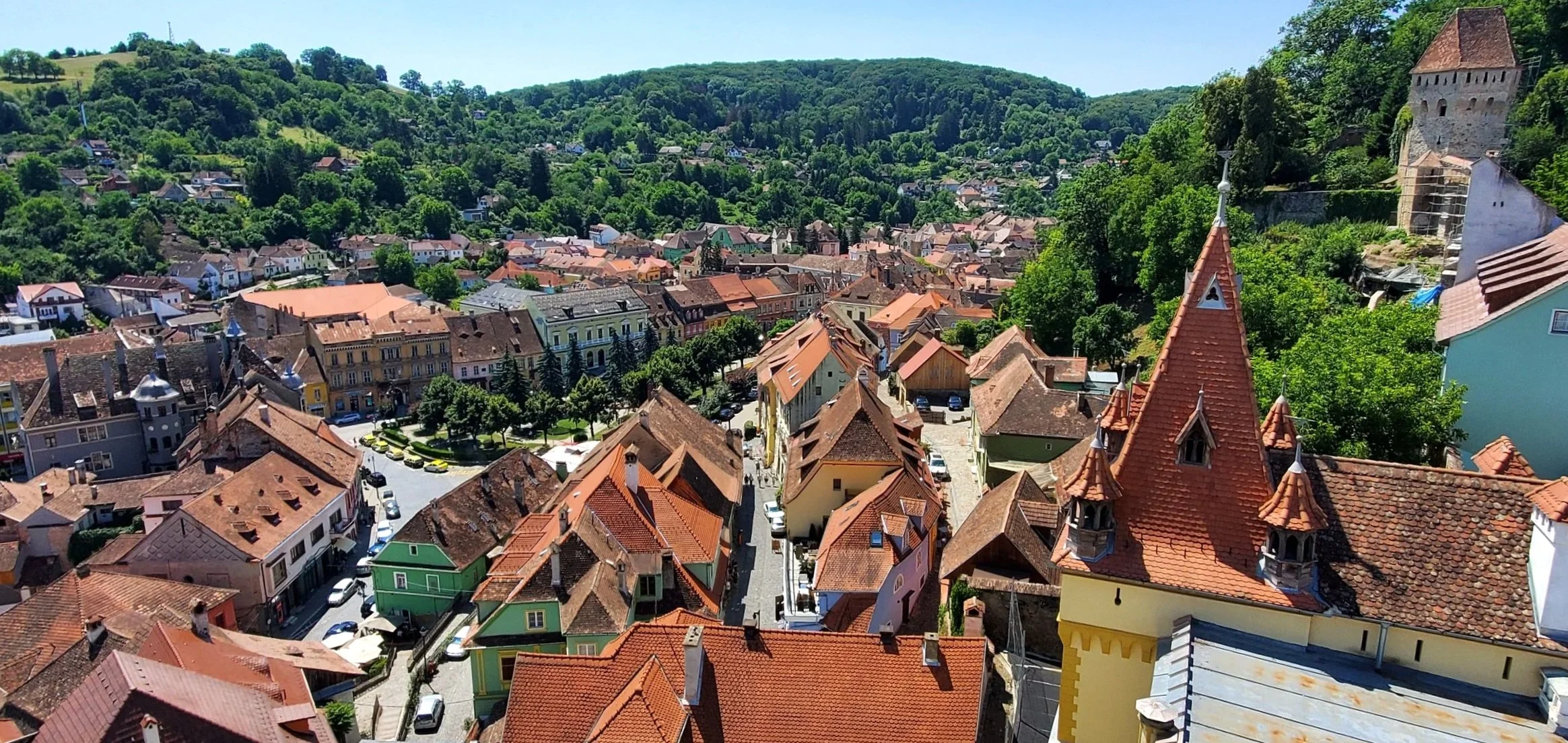
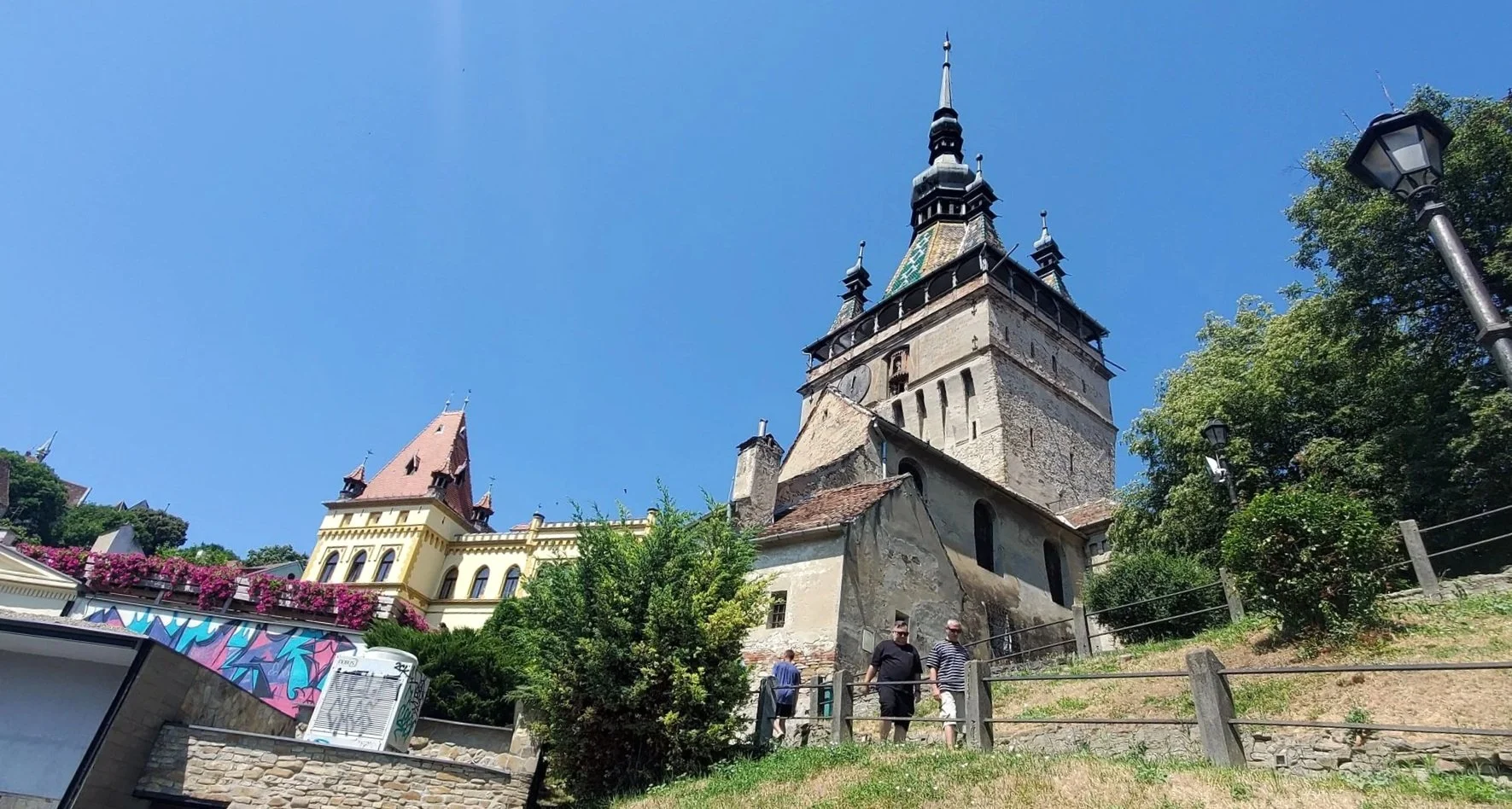
A highlight of any visit is the 14th century Clock Tower.
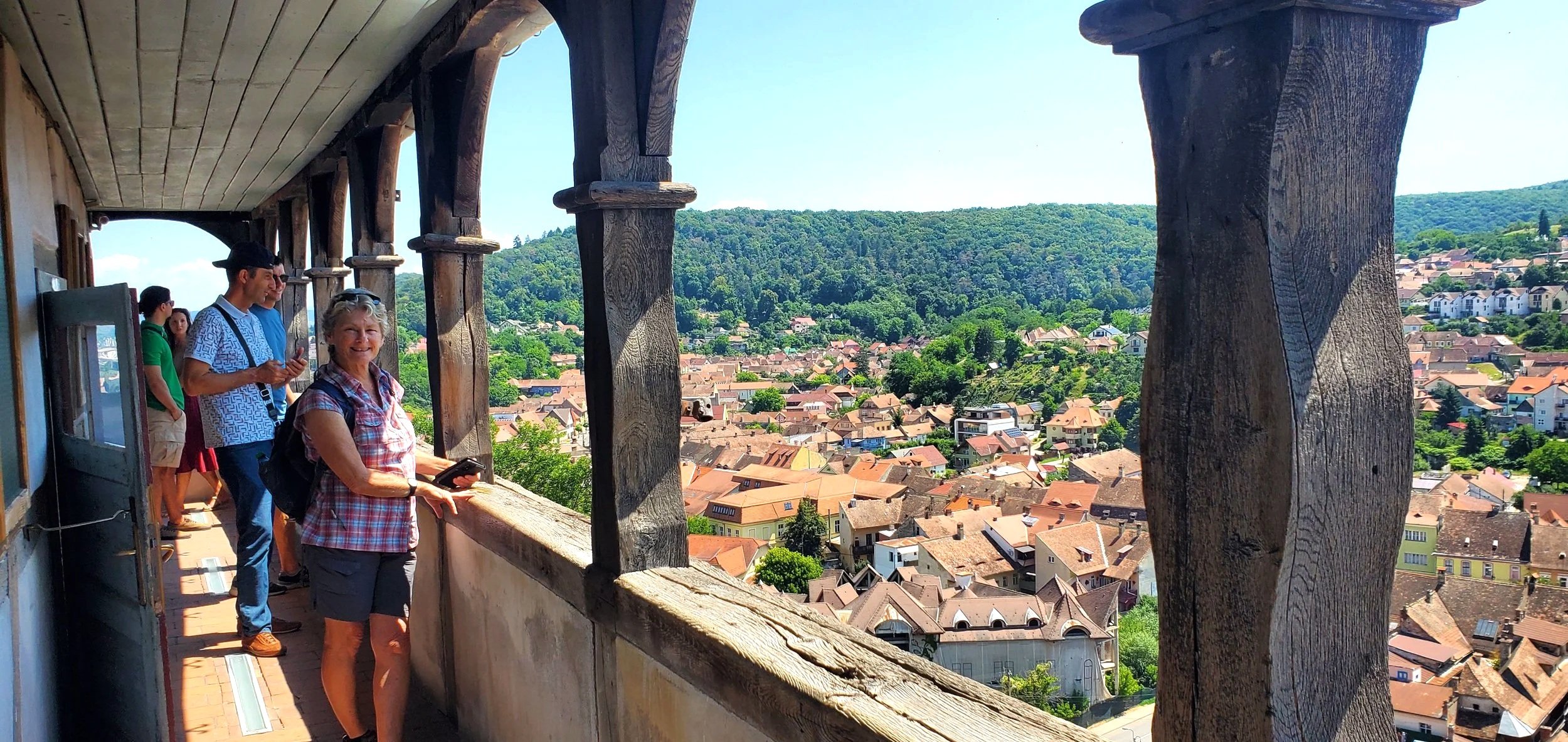
There are panoramic views from the top balconies.
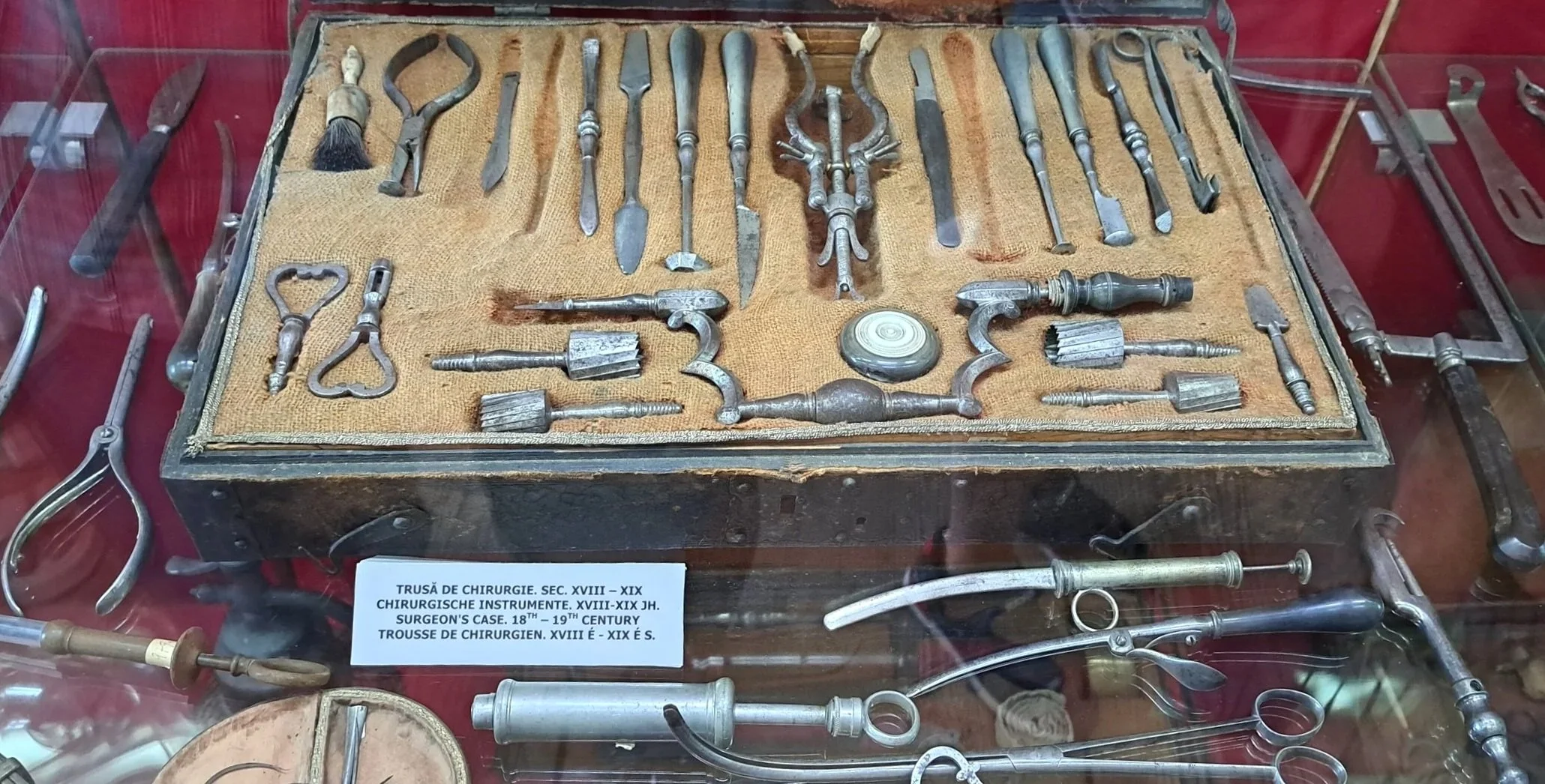
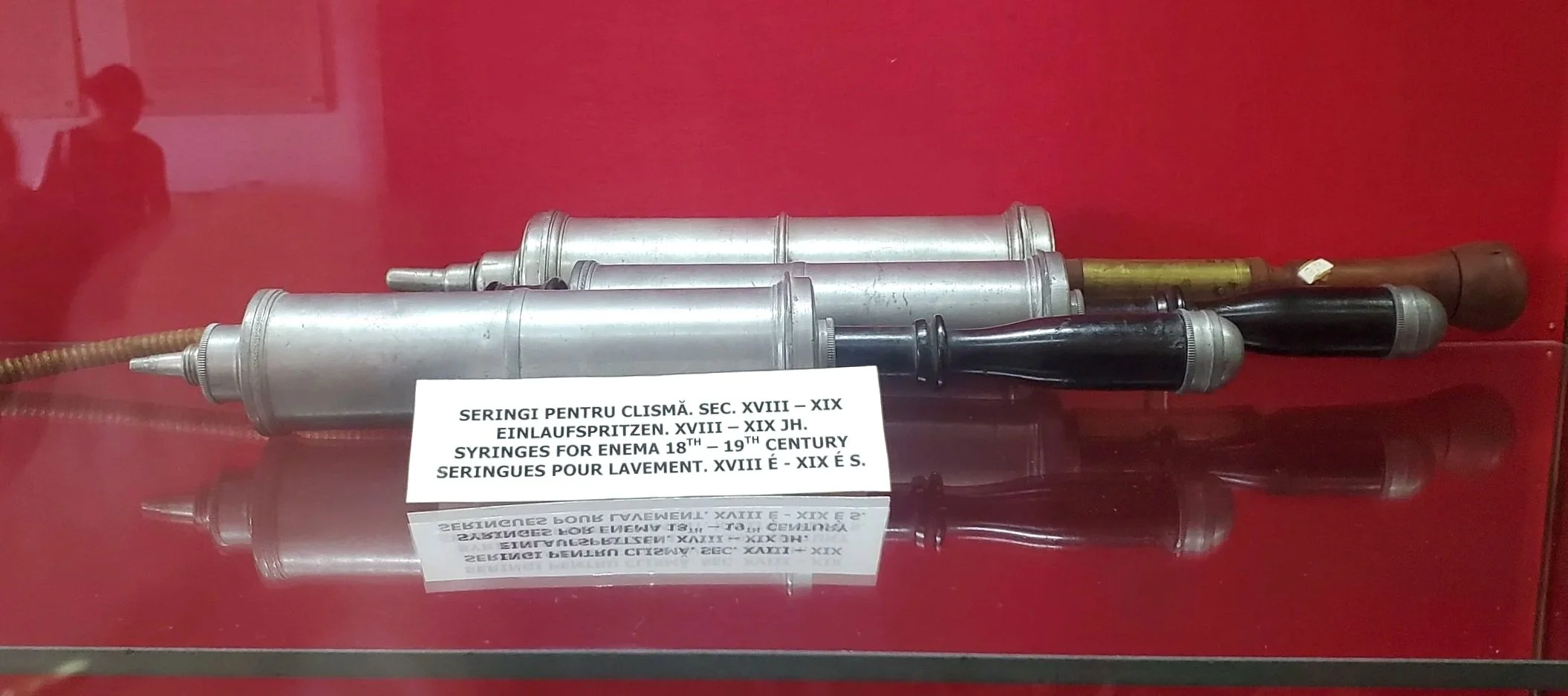
Inside is a museum.
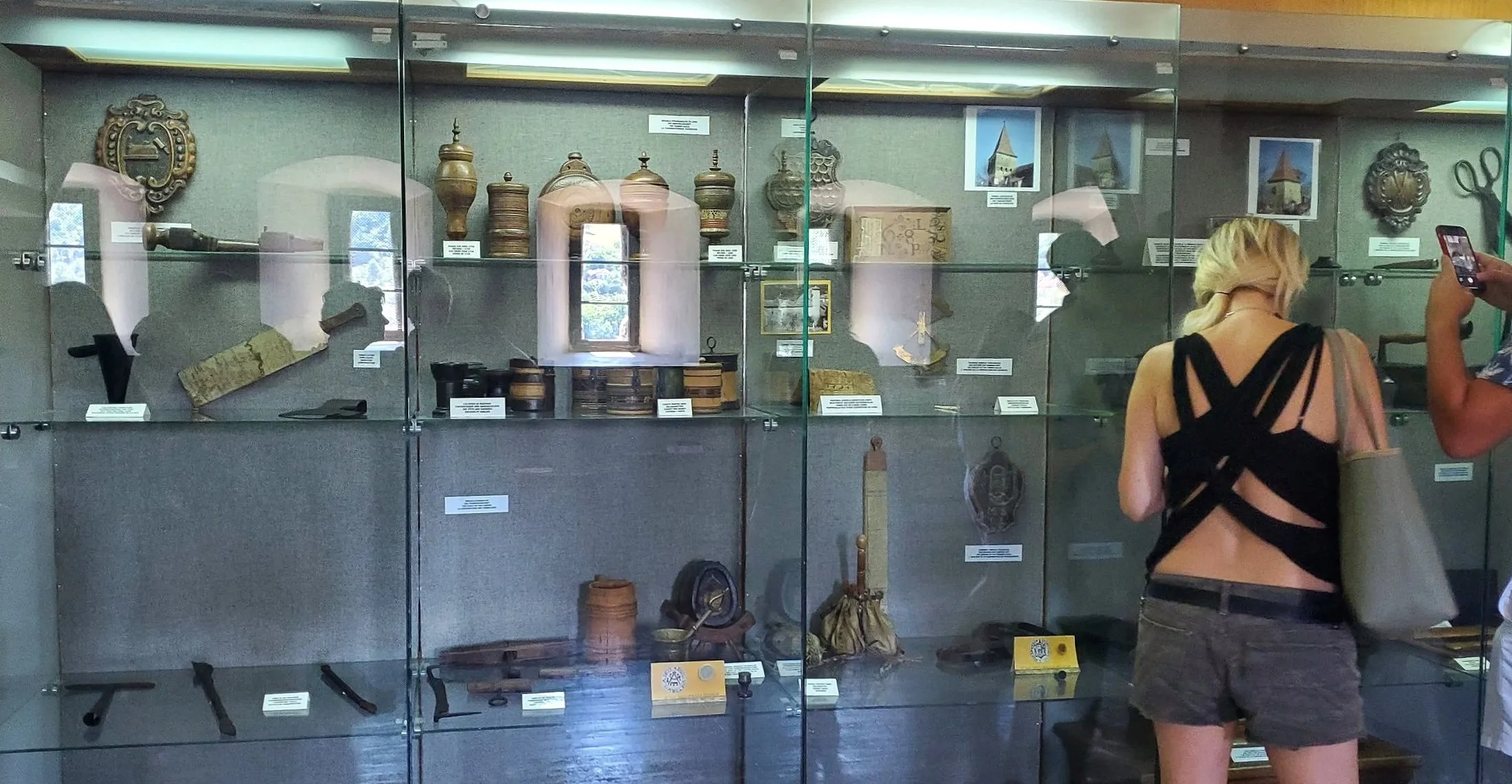
With some quirky exhibits.
The town is also the famed home of Vlad Tepes aka Vlad Dracul aka Vlad the Impaler aka Dracula. He was a 15th century Wallachian prince with something of a blood-thirsty reputation.
The house where he was supposedly born is a museum and restaurant.
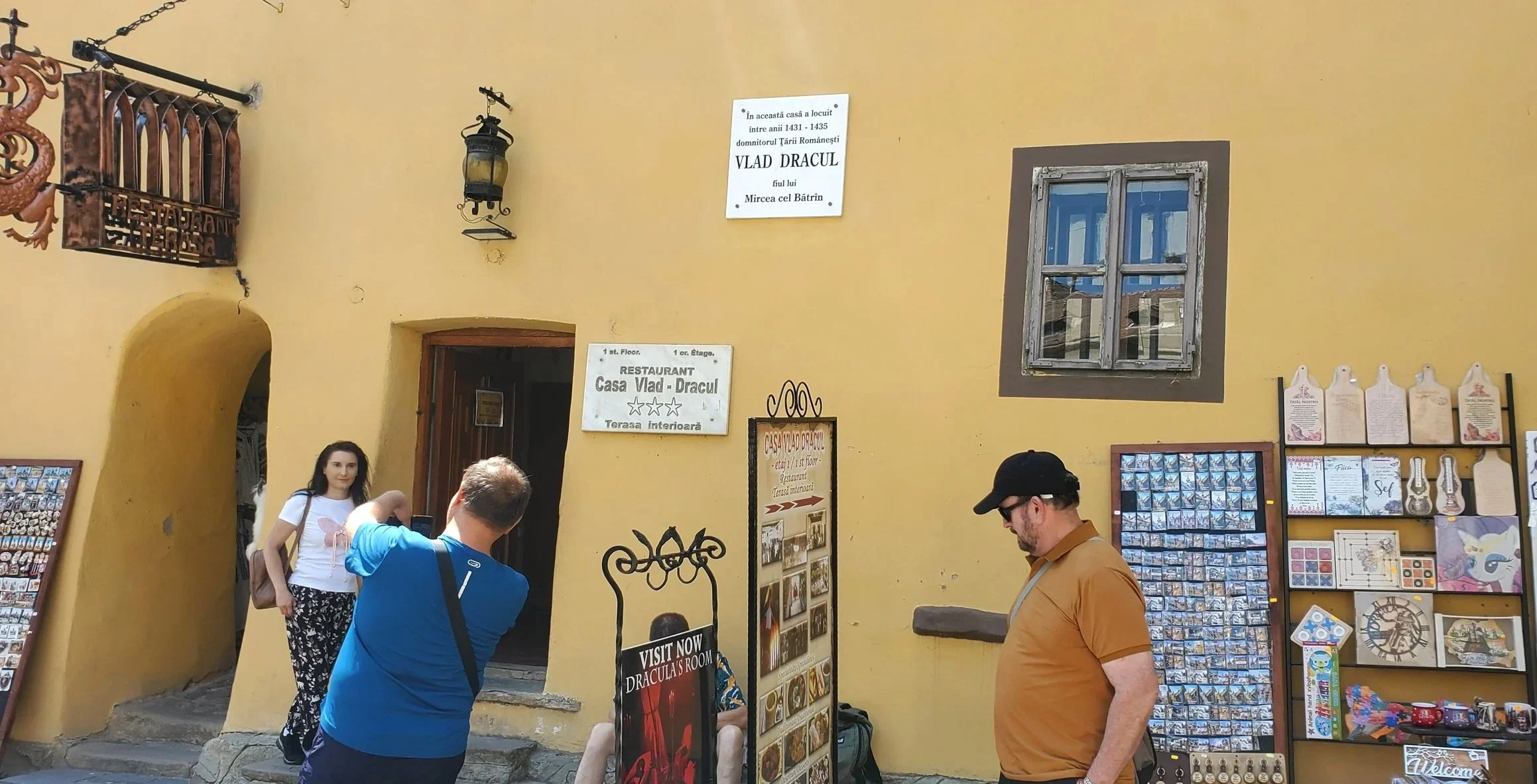
His myth has spawned a massive souvenir industry in the town.
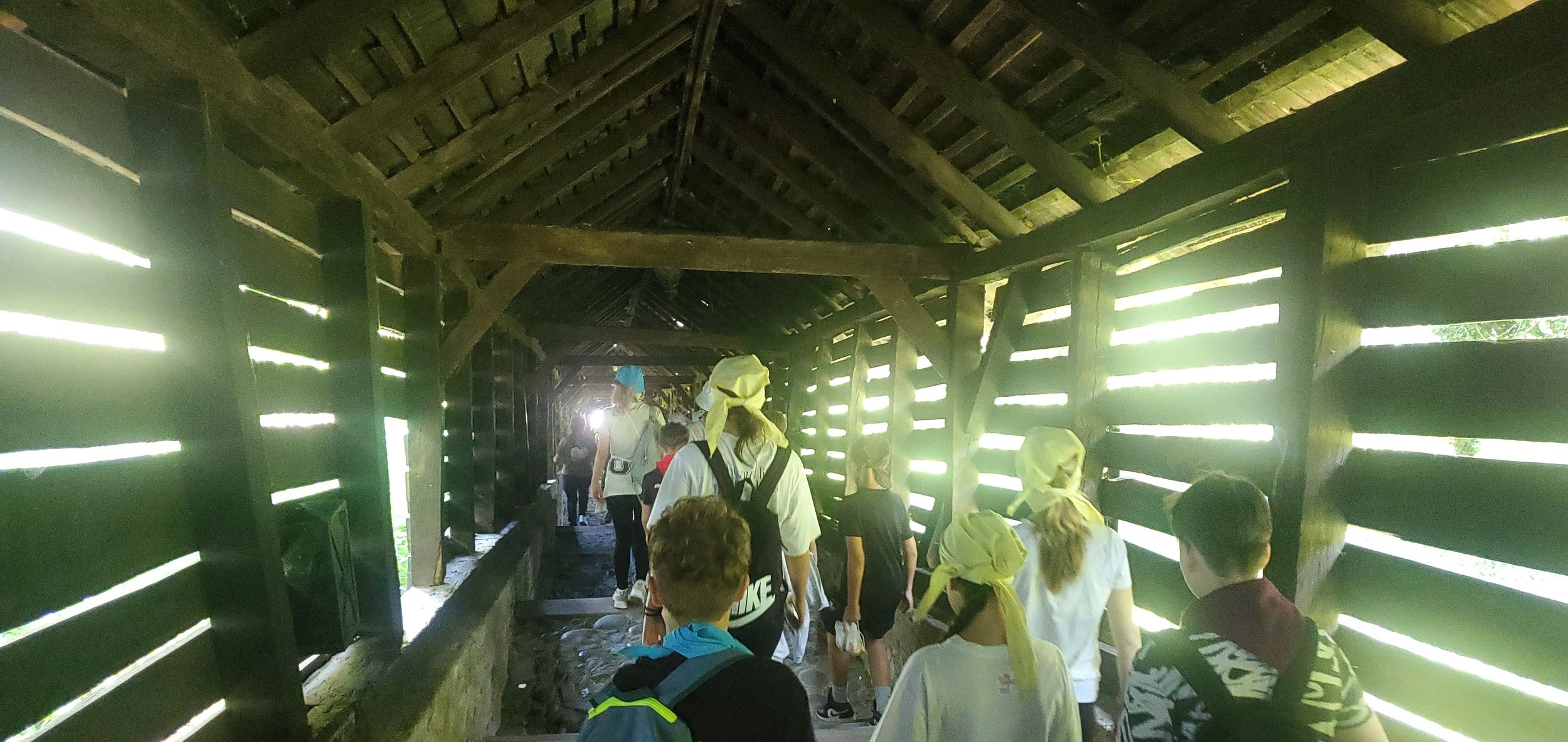
A 175-step covered stairway, built in 1642, is an unusual feature of the town.
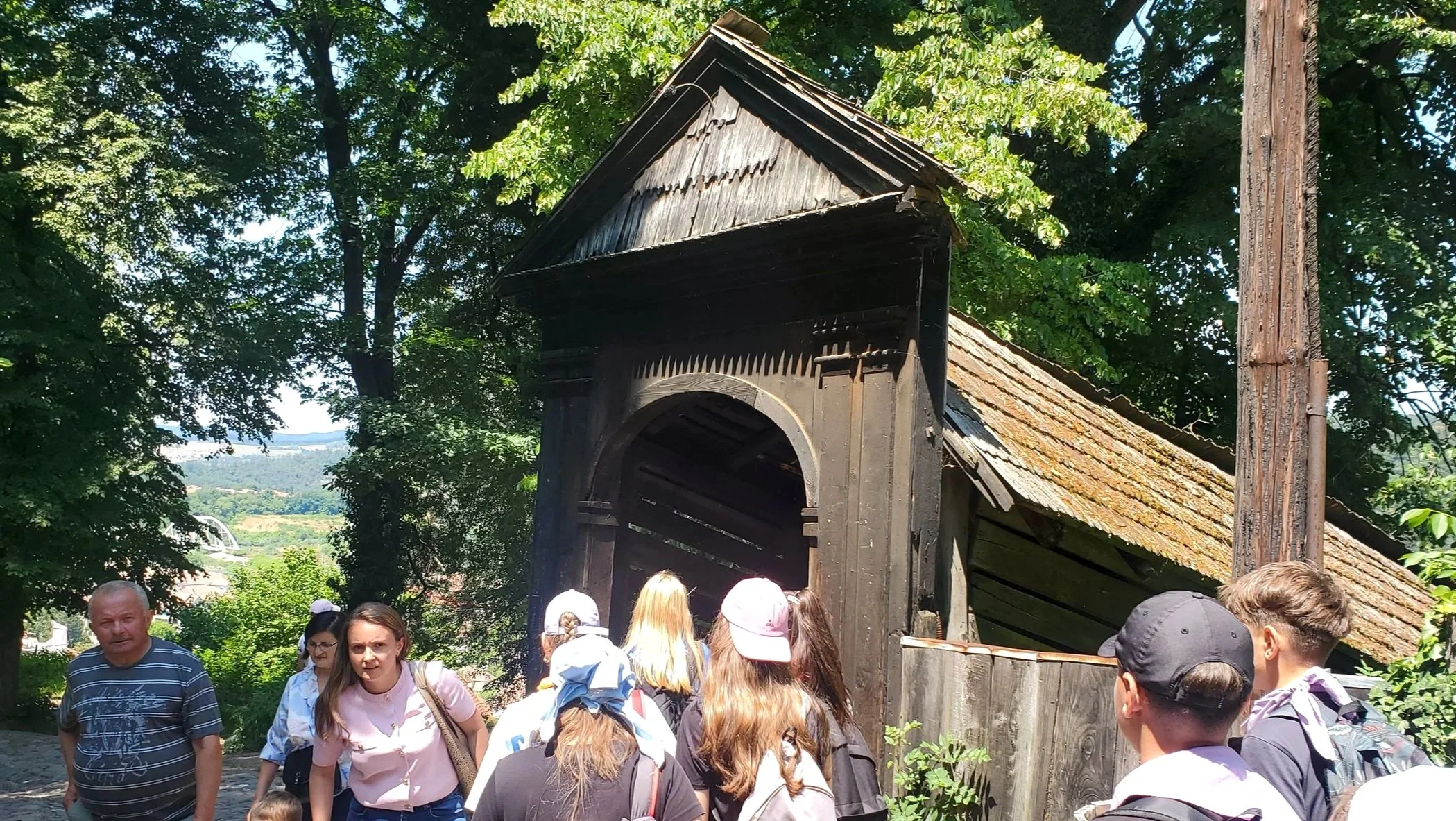
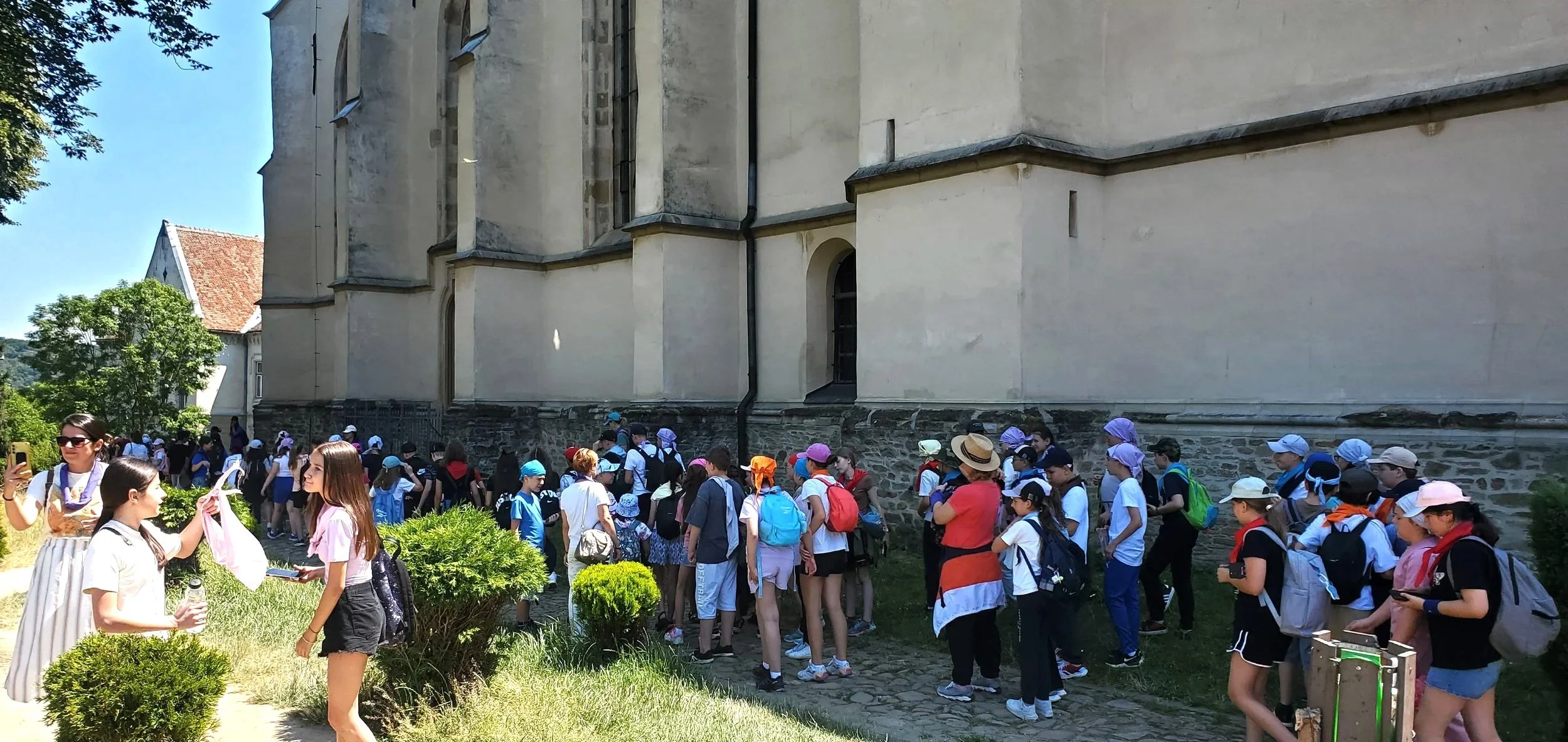
A large school group were experiencing the walkway along with us.
Bran Castle
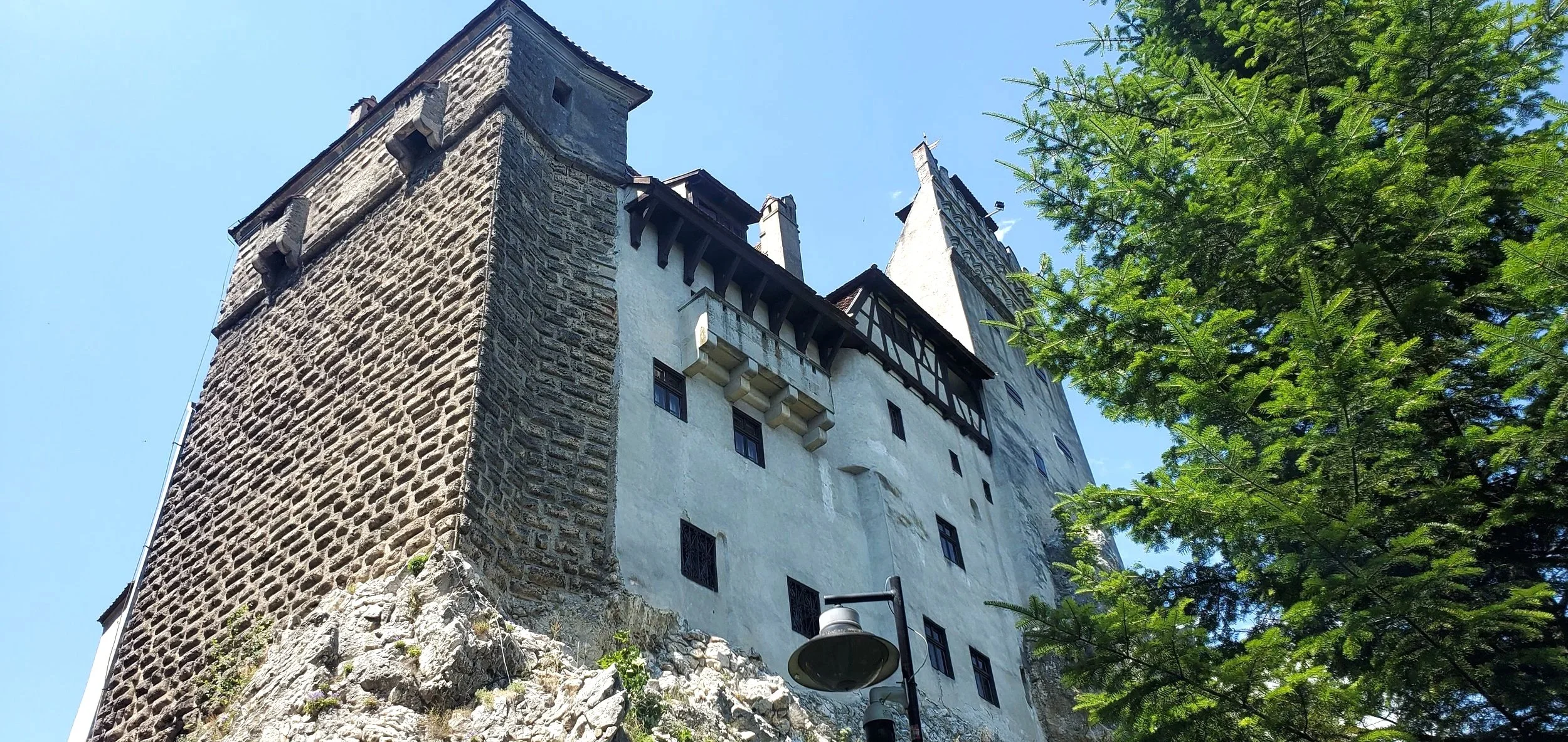
Bran Castle is considered a must-visit for Transylvanian tourists. It presents itself as ‘Dracula’s Castle’. However, a cursory examination of history reveals that Vlad Tepes probably didn’t even visit the castle, let alone live there. It also was not the inspiration for Bram Stoker’s Dracula. But don’t let these killjoy details dissuade you from going. It’s an impressive castle, if nothing else.
Not surprisingly the castle is surrounded by souvenir shops and cafes.
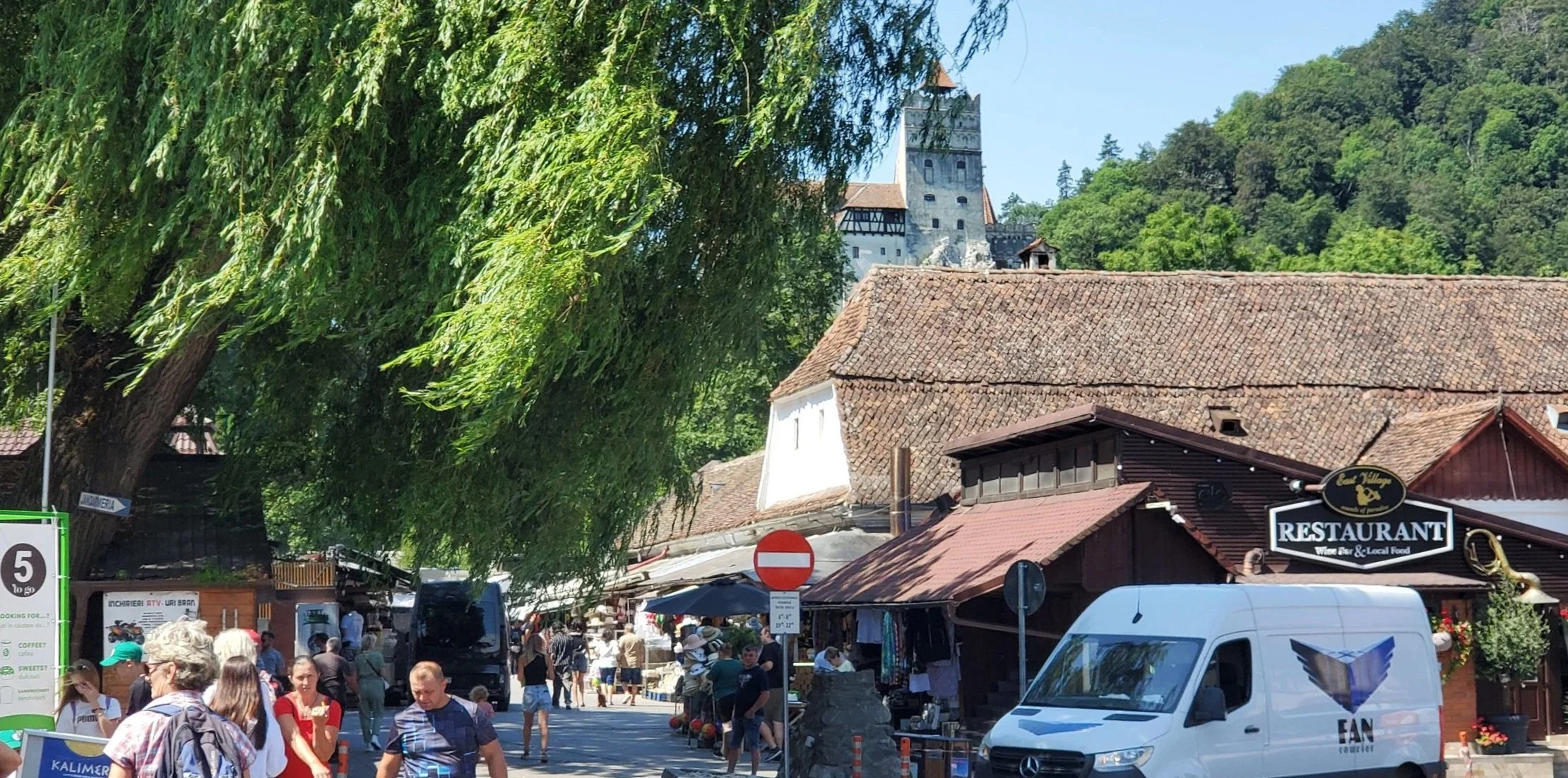
The ‘Dracula’s Castle’ tag brings in large numbers of punters.
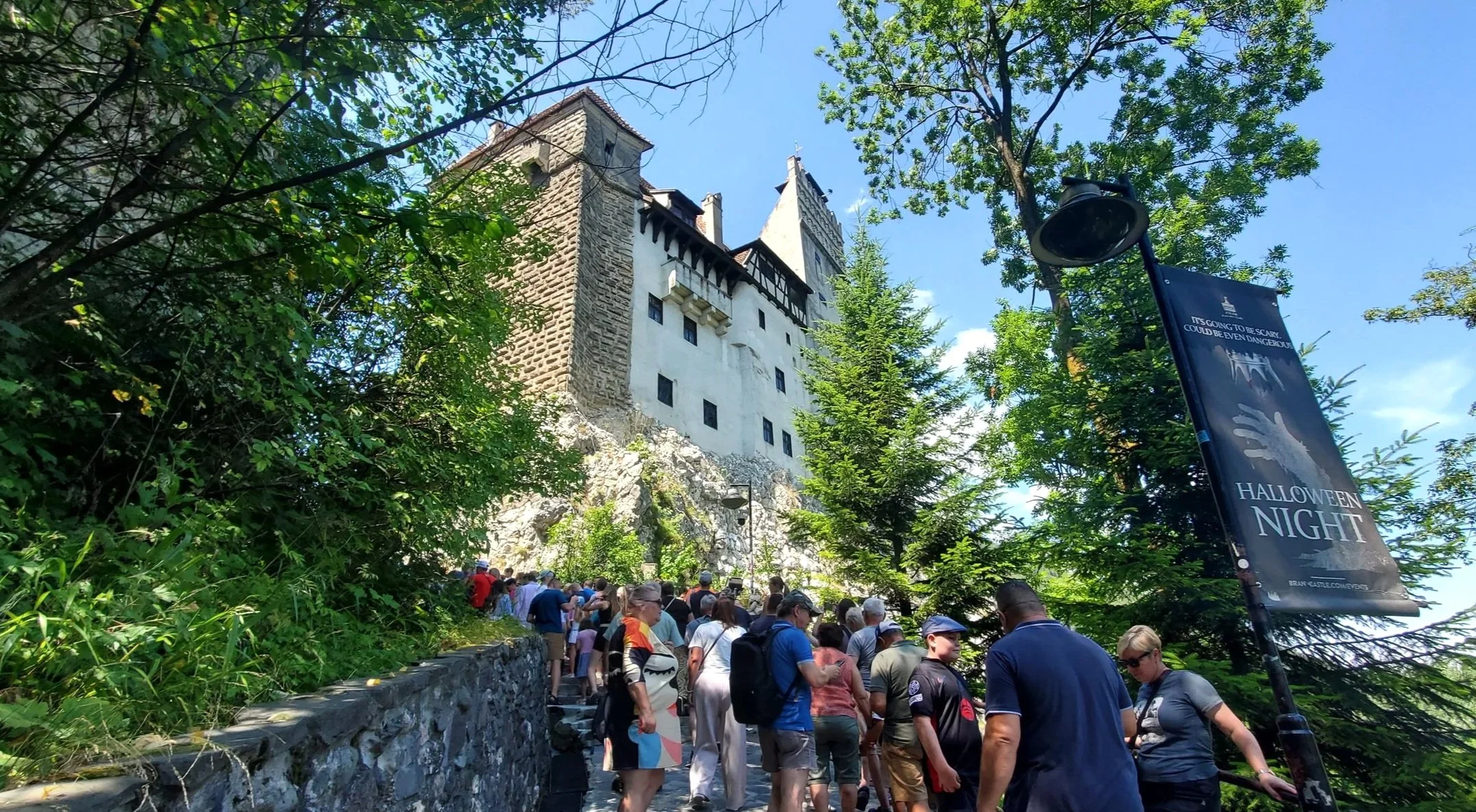
Unfortunately, management of said visitors leaves a bit to be desired with long, slow-moving queues. It took us ages to get up the long path to the castle, then an interminable time to get up the final steps and into the castle proper.
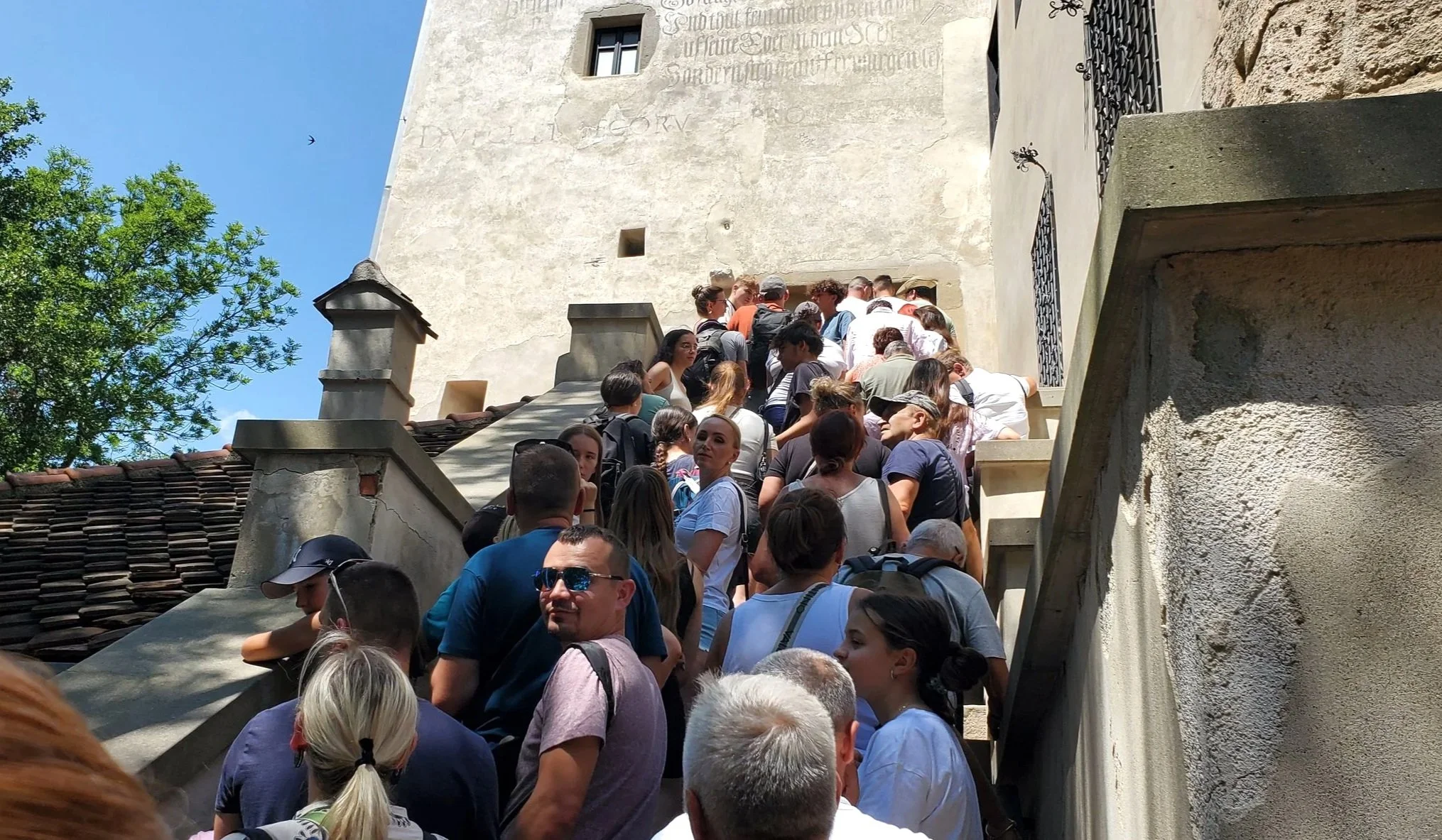
Once in, you can manoeuvre around the various levels and rooms, though there is a marked route you’re expected to follow.
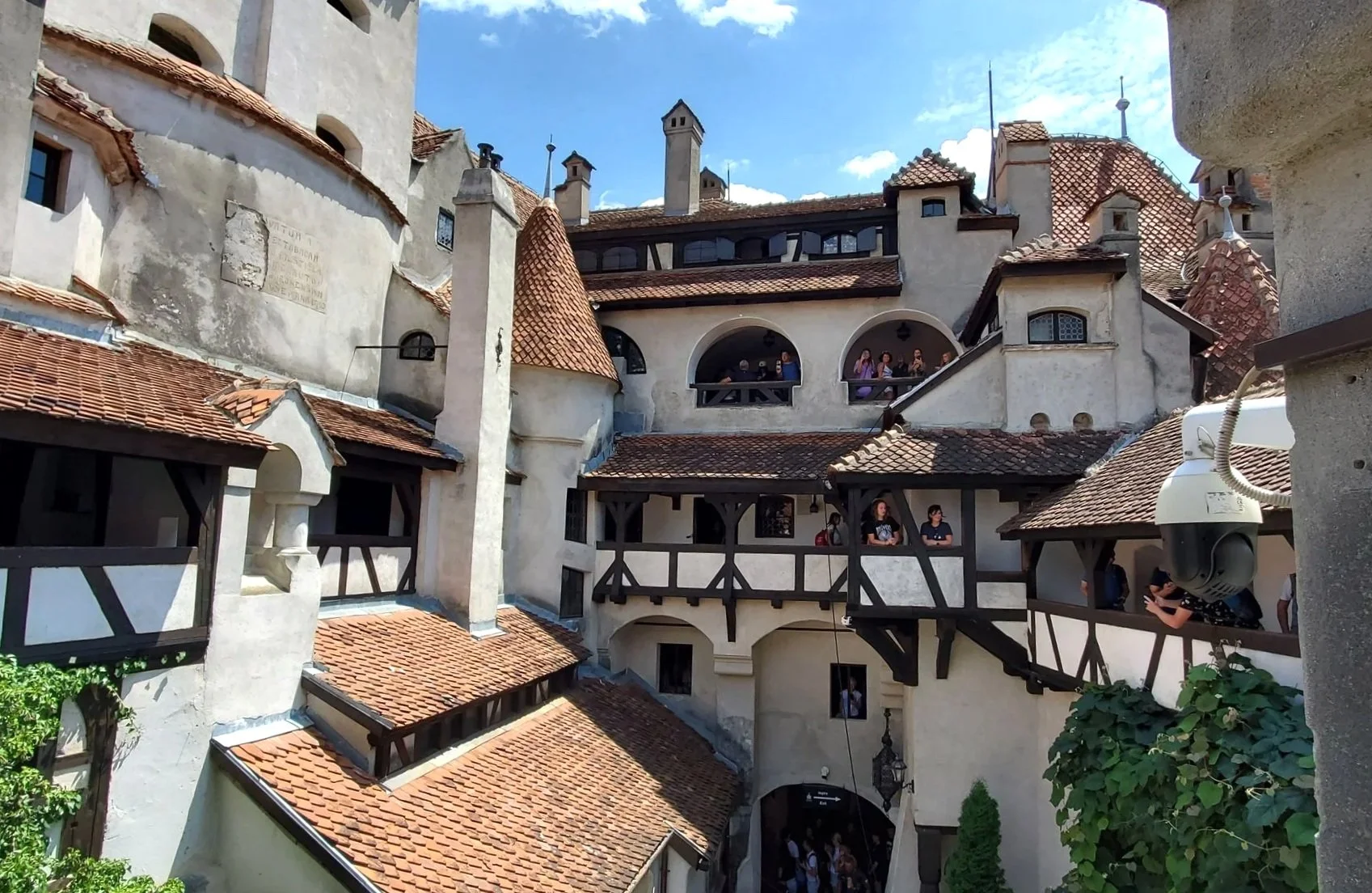
Popping out on balconies overlooking the central courtyard gives some good photo ops.
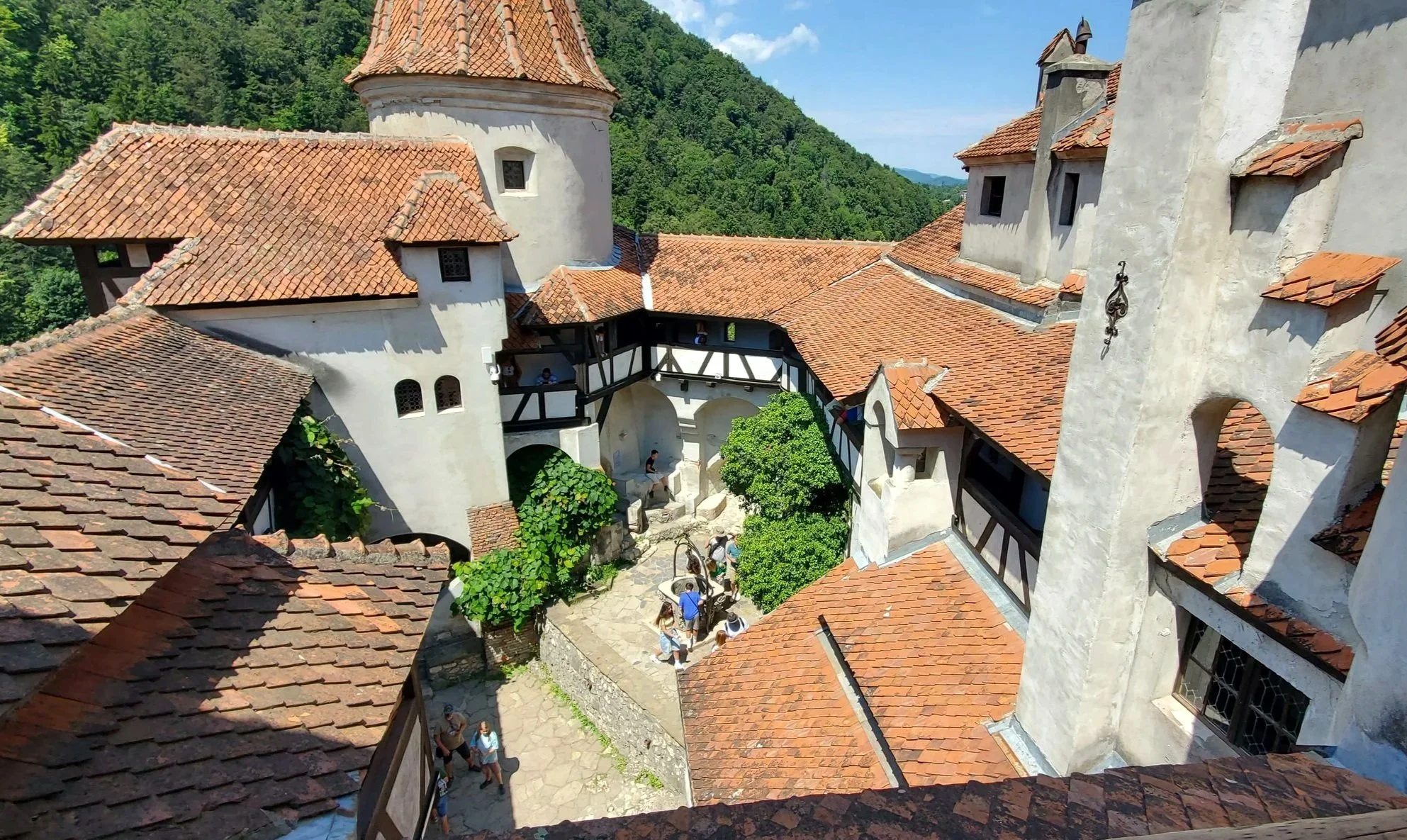
There are also views beyond the castle.
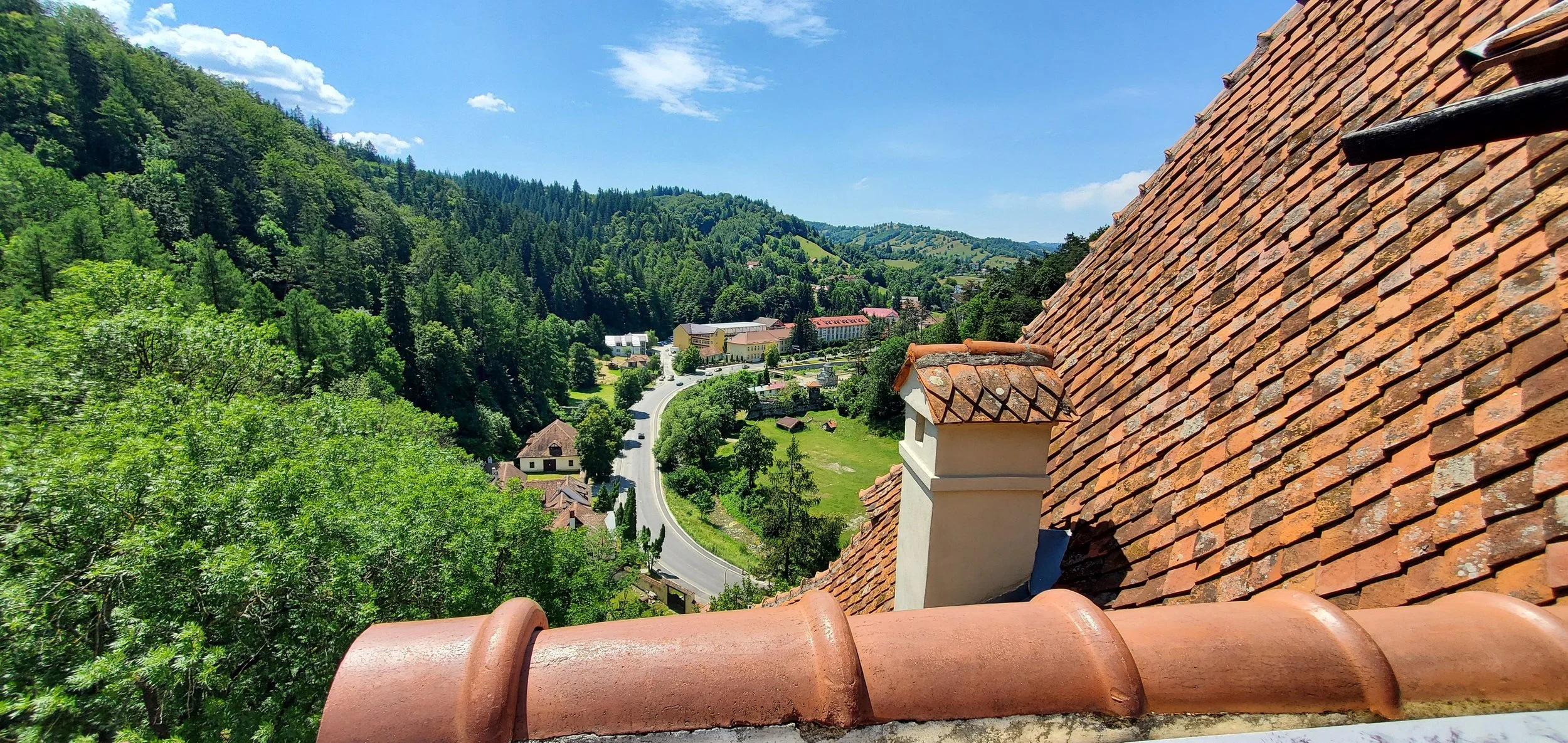
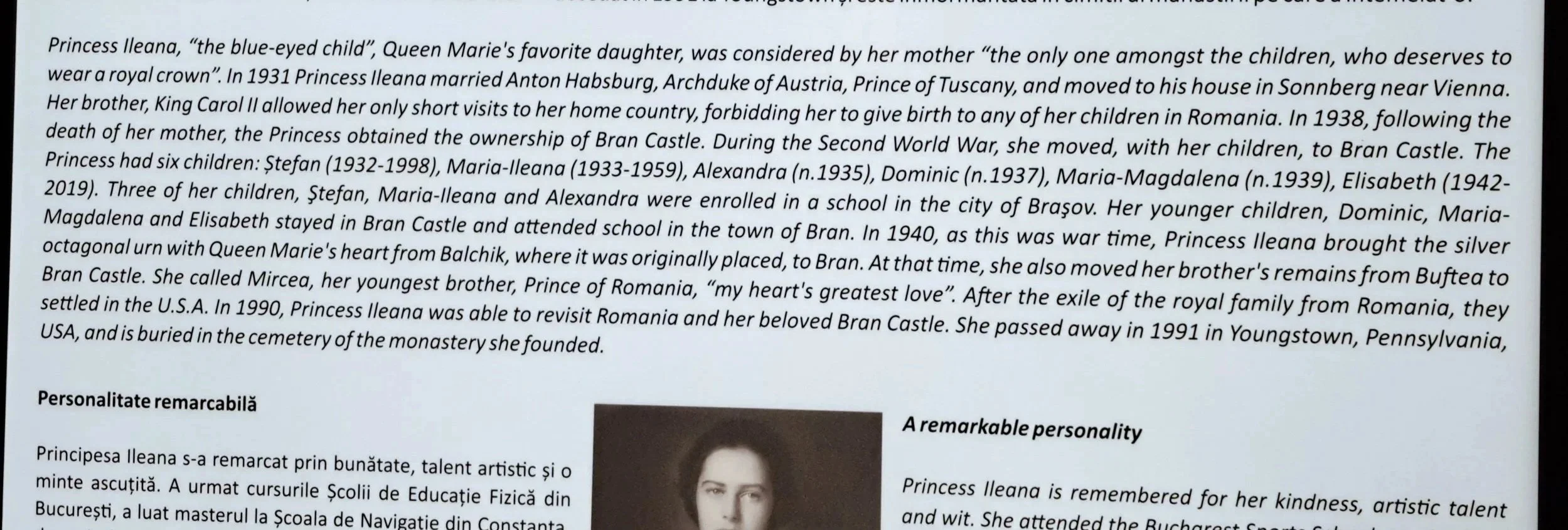
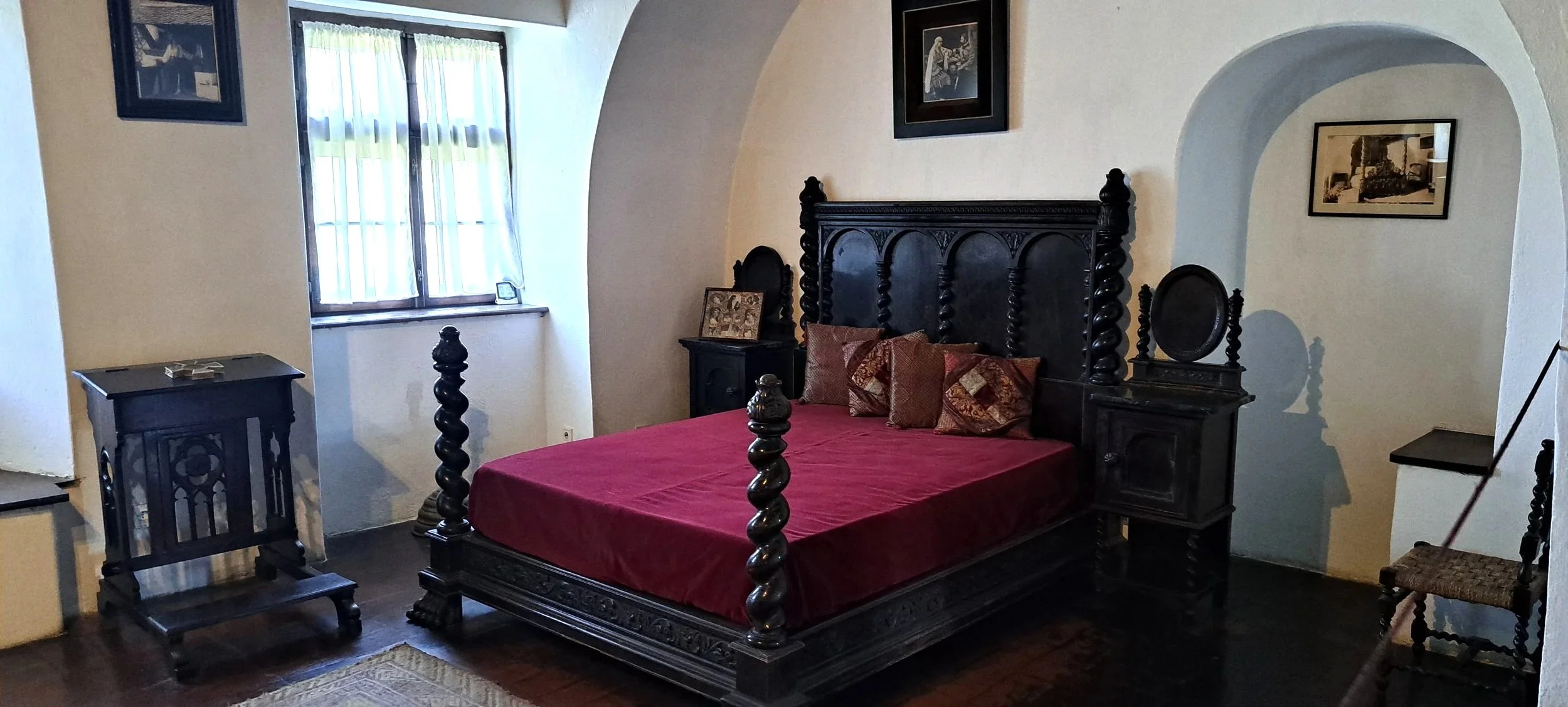
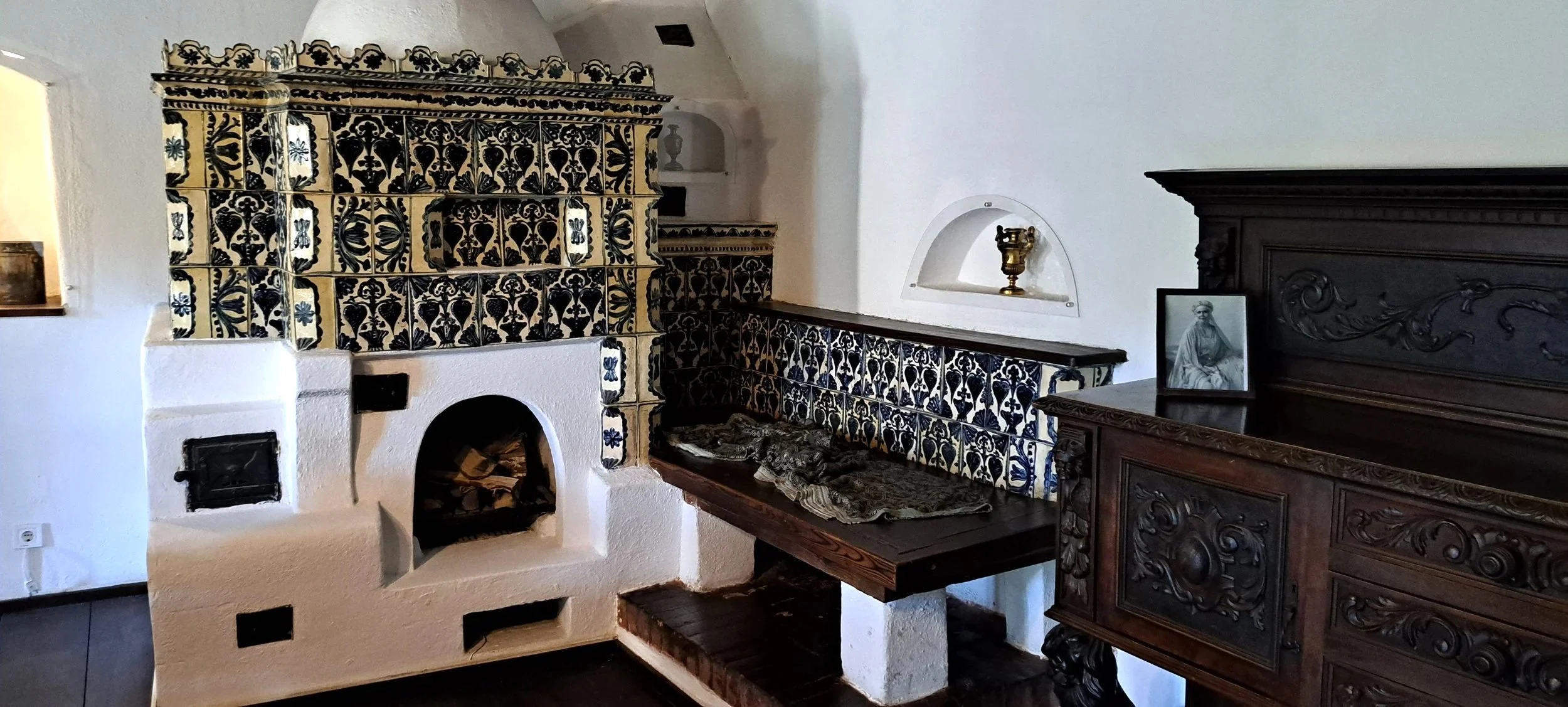
Bran Castle was, in fact, home to various Romanian royals, and that’s what most of the historical information and displays reference.
There are pleasant parklands surrounding the castle.
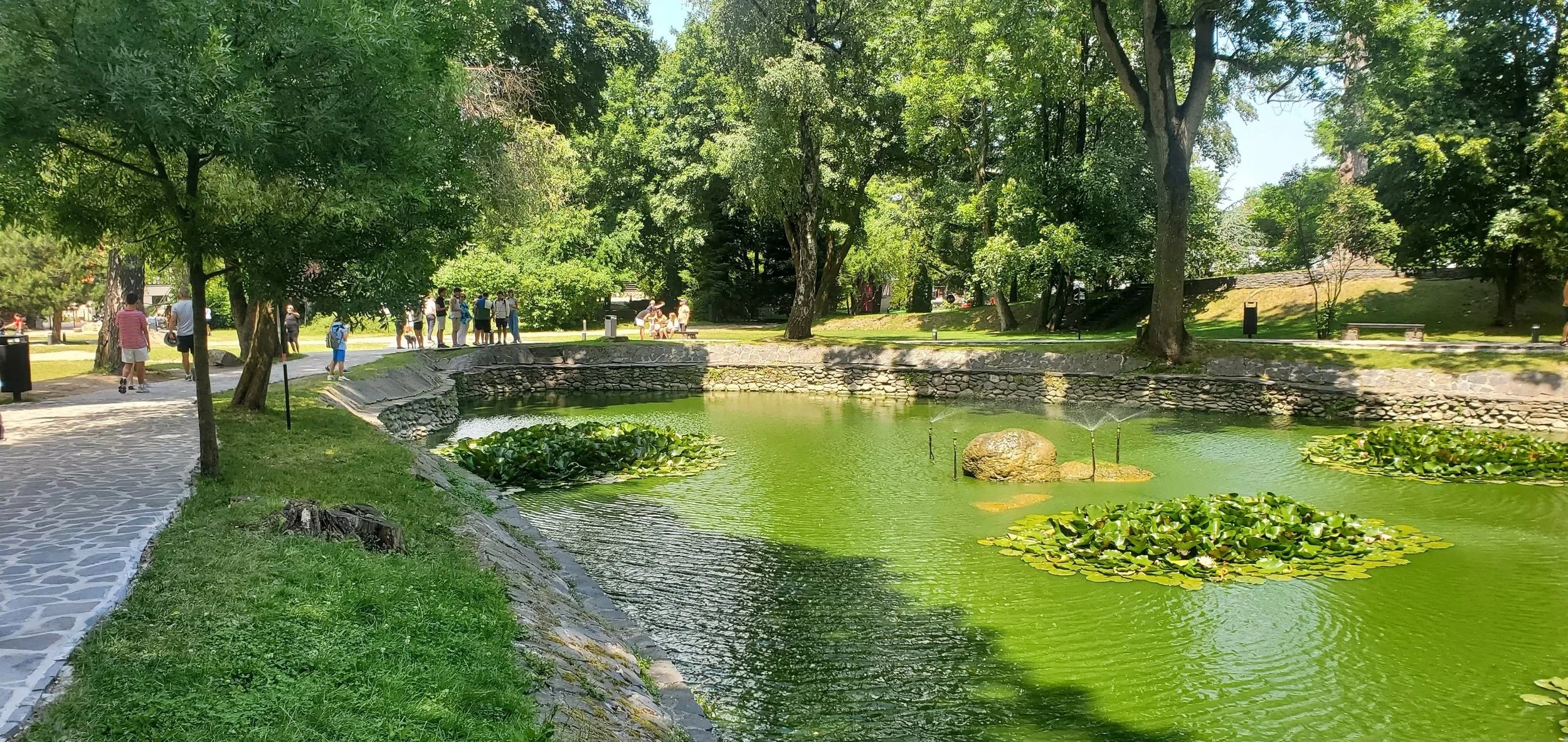
And a small lake.
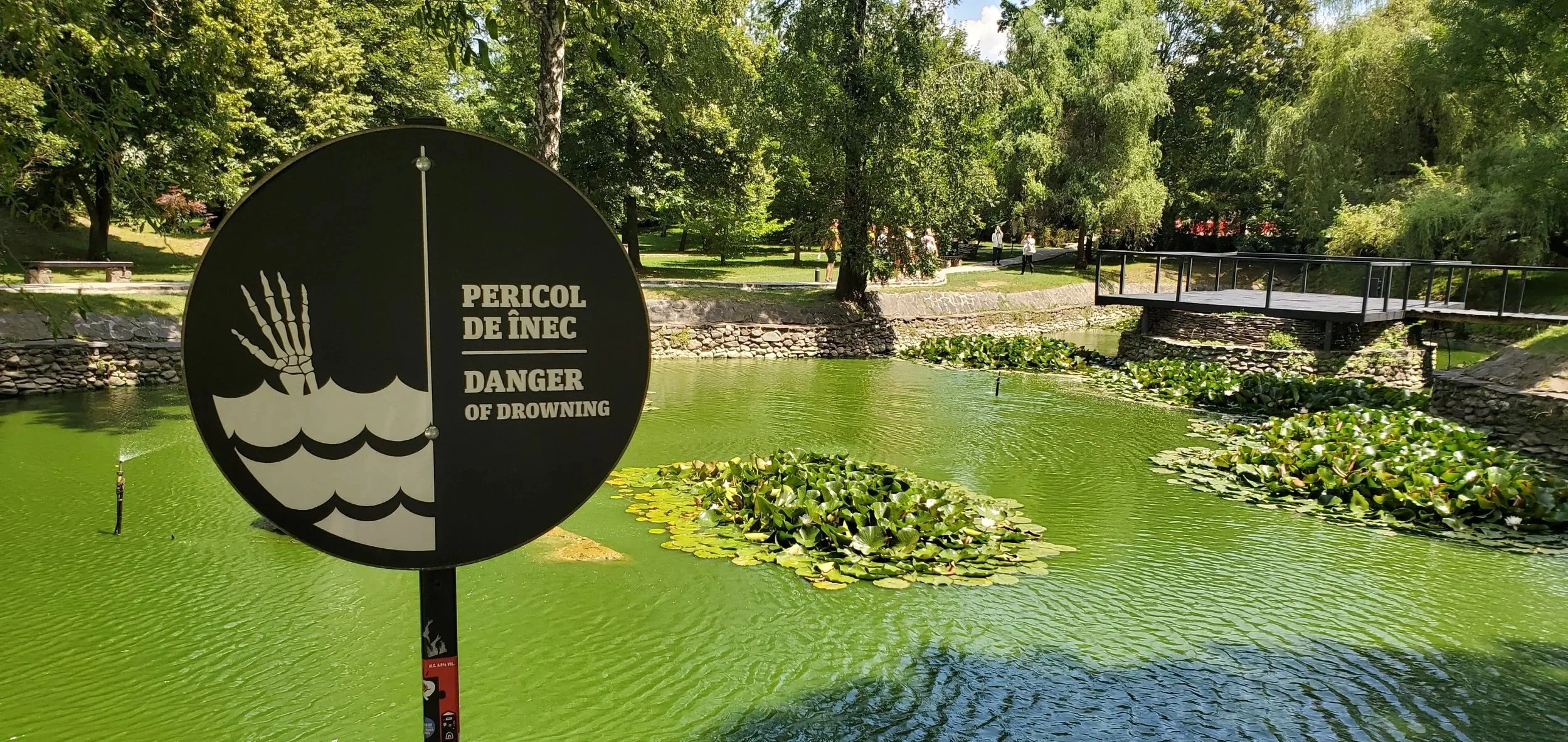
With good views back to the castle.
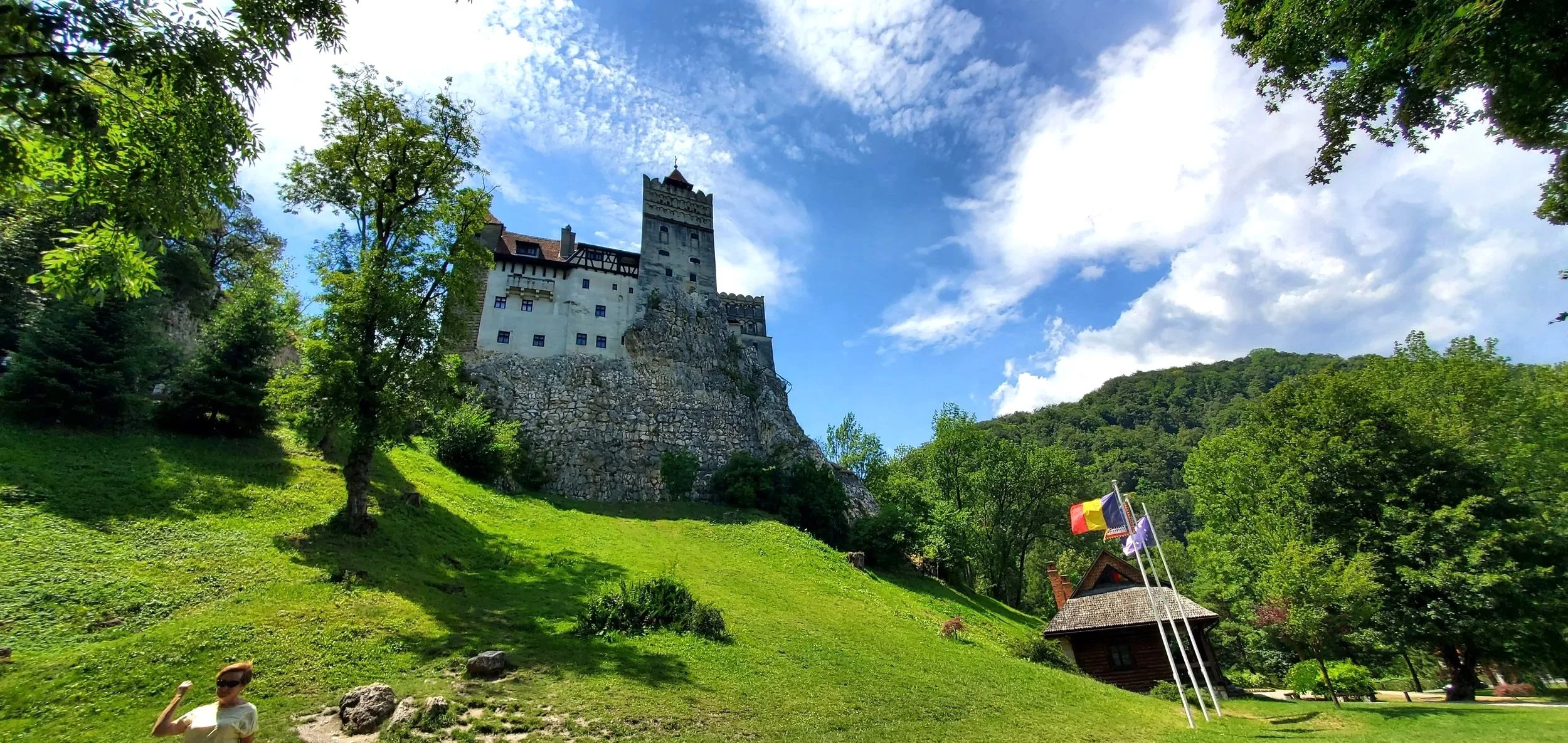
It’s worth a visit but be prepared for the hype and the crowds, especially in peak season (we went in the July summer holidays).
Danube Delta
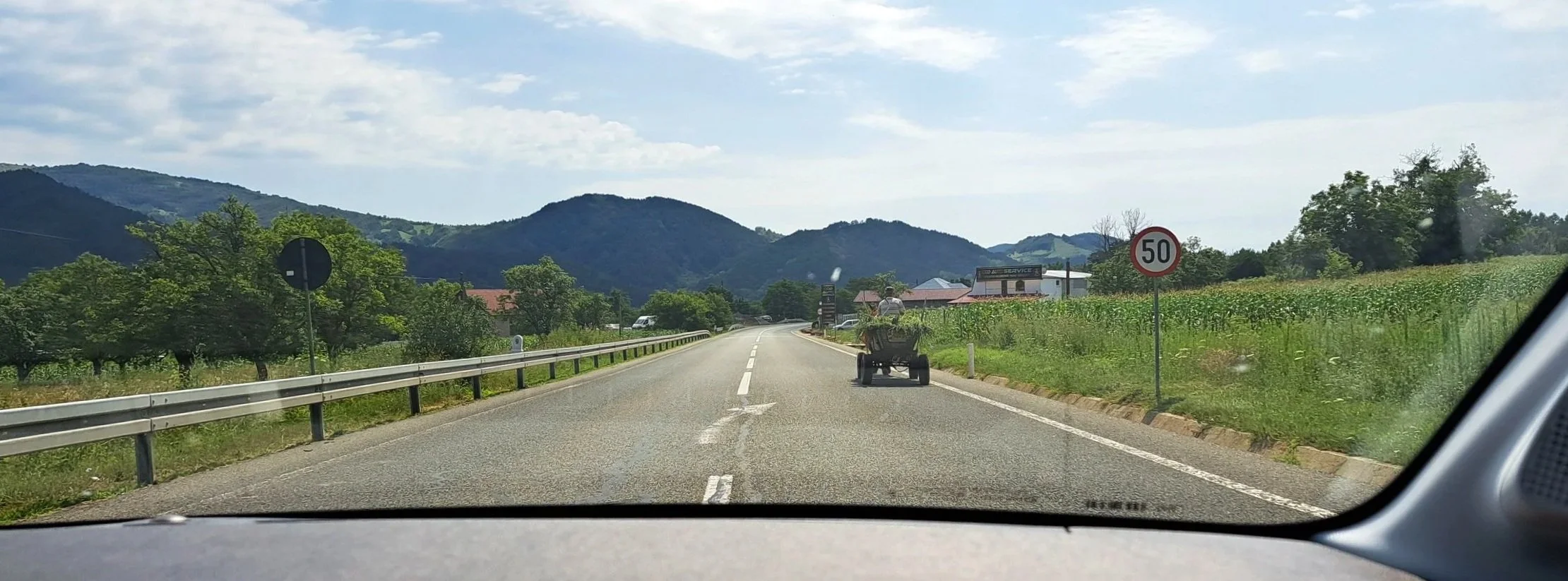
From Brasov we drove to Tulcea, the main town on the Danube Delta, a distance of 382km, just over 5 hours.
The Danube Delta is Europe’s largest river delta and is a UNESCO-listed World Heritage area. It empties into the Black Sea, predominantly in Romania with part in Ukraine. It contains massive wetlands and floating reed islets.
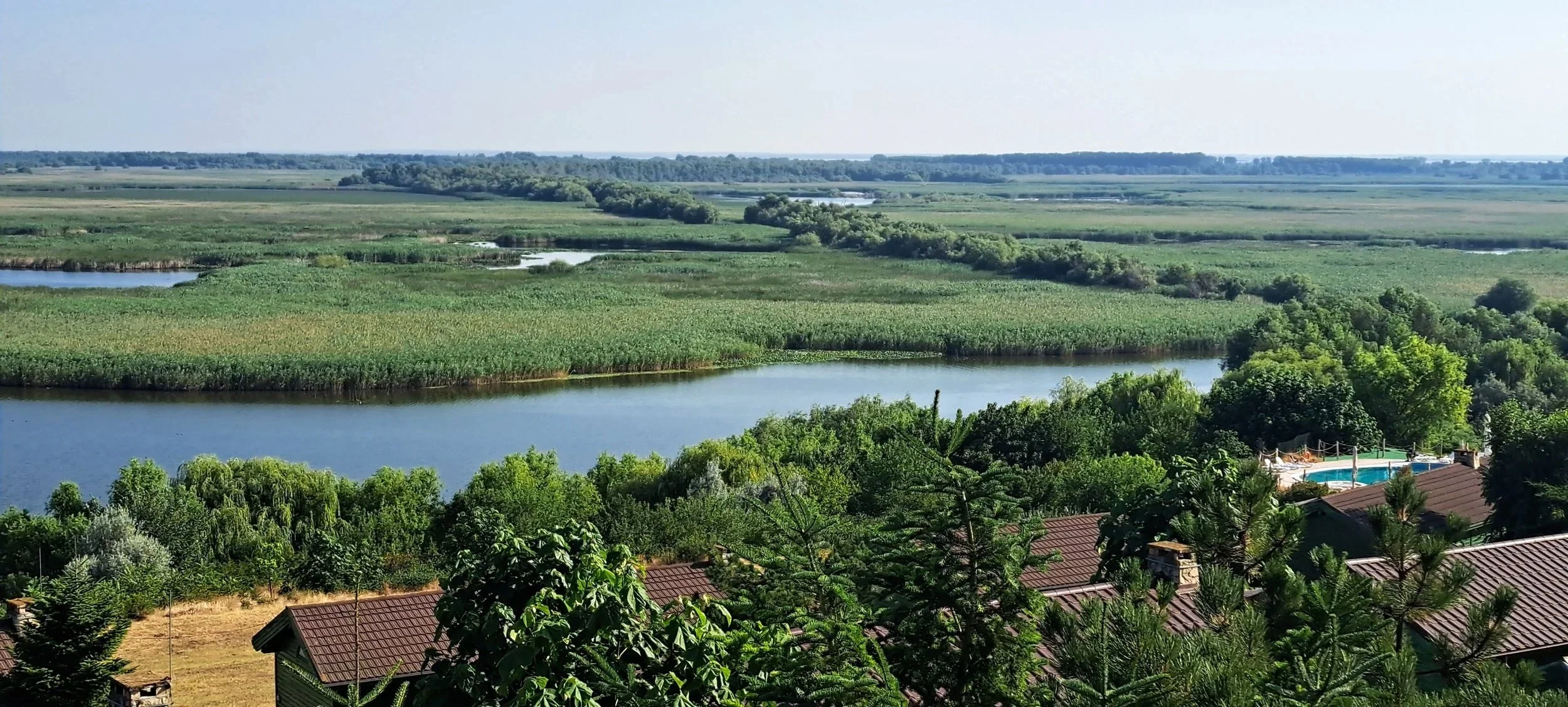
We stayed just out of Tulcea at the Danube Nature Resort at the village of Somova.
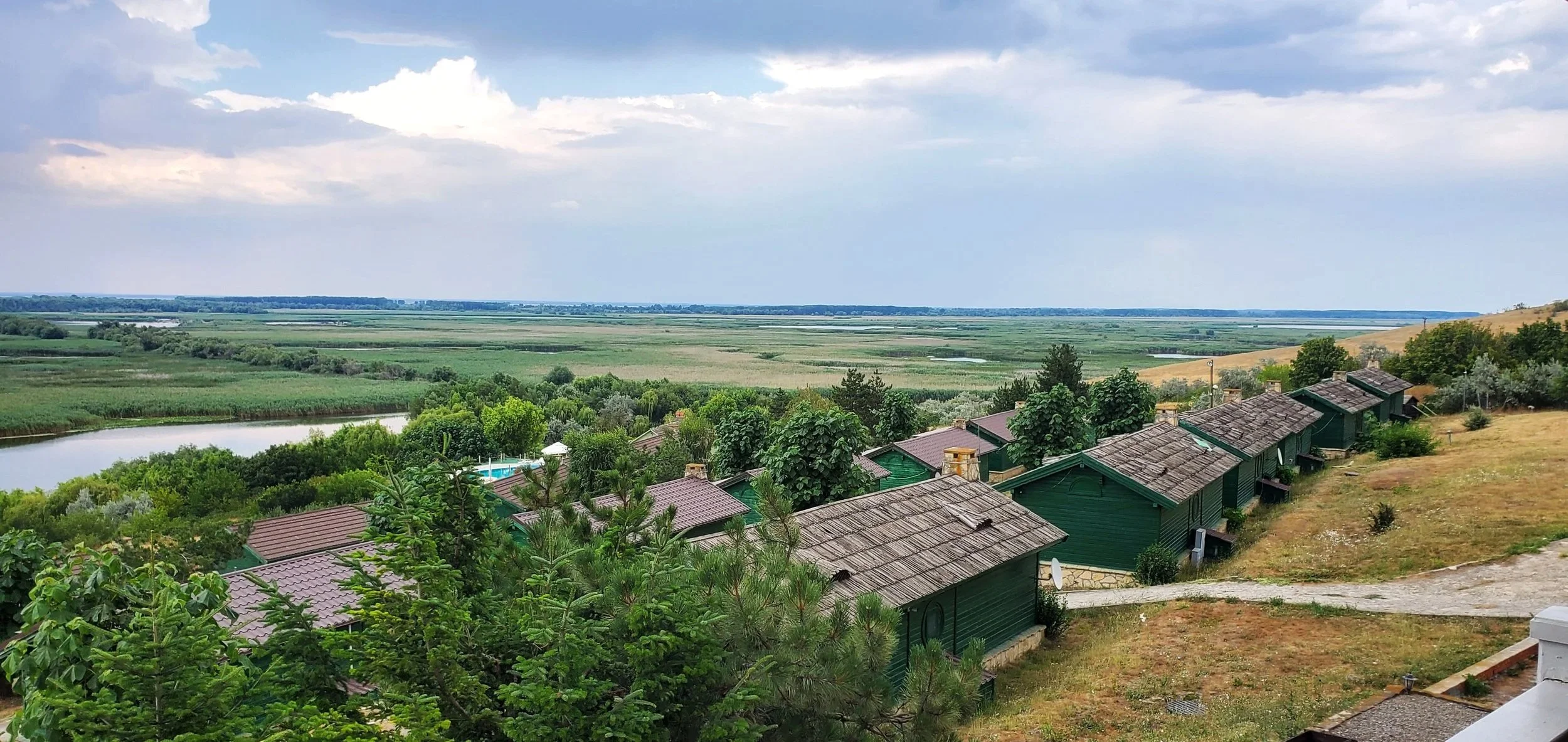
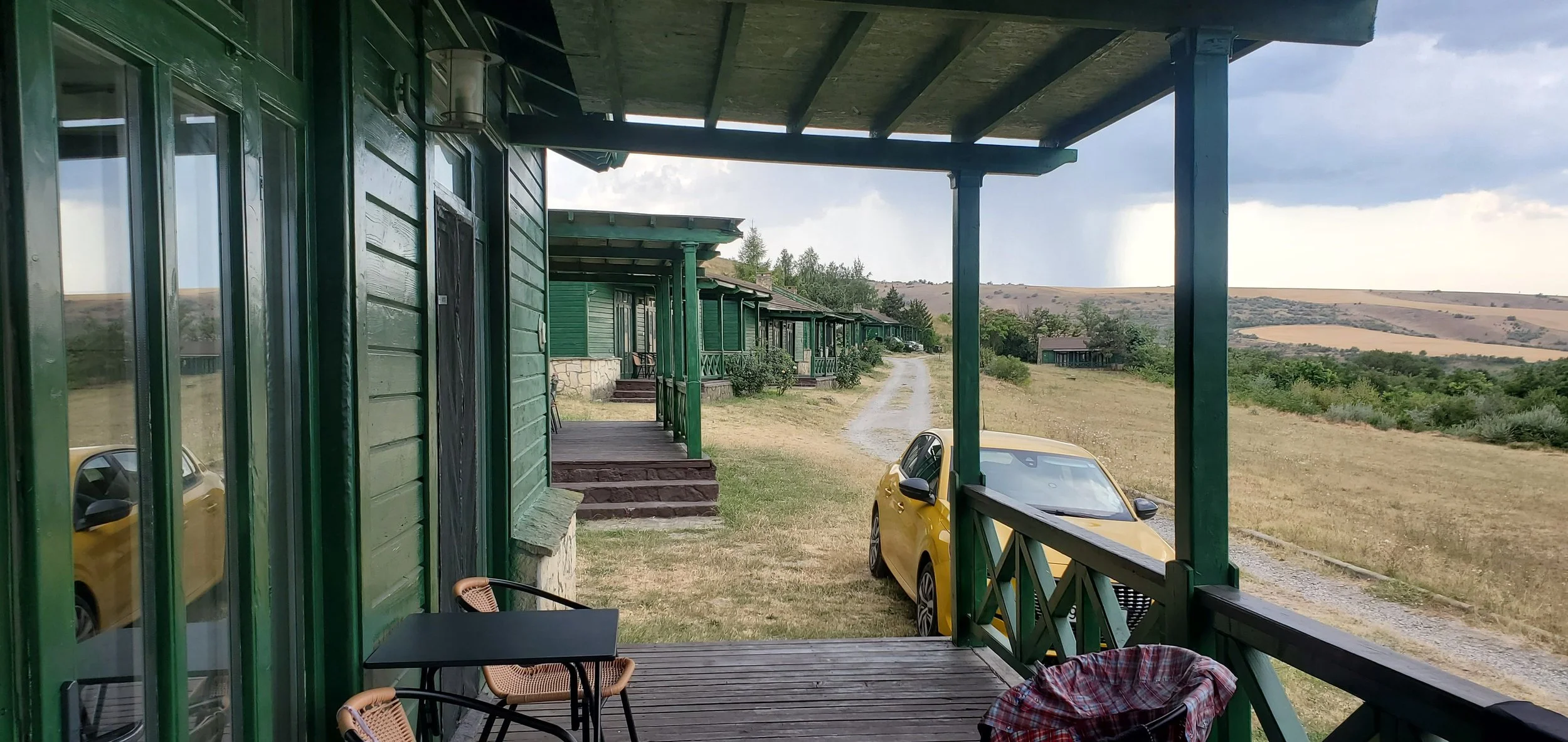
danube nature resort
We had a pleasant little cabin with good air con (daily temperatures in the mid to high 30s).
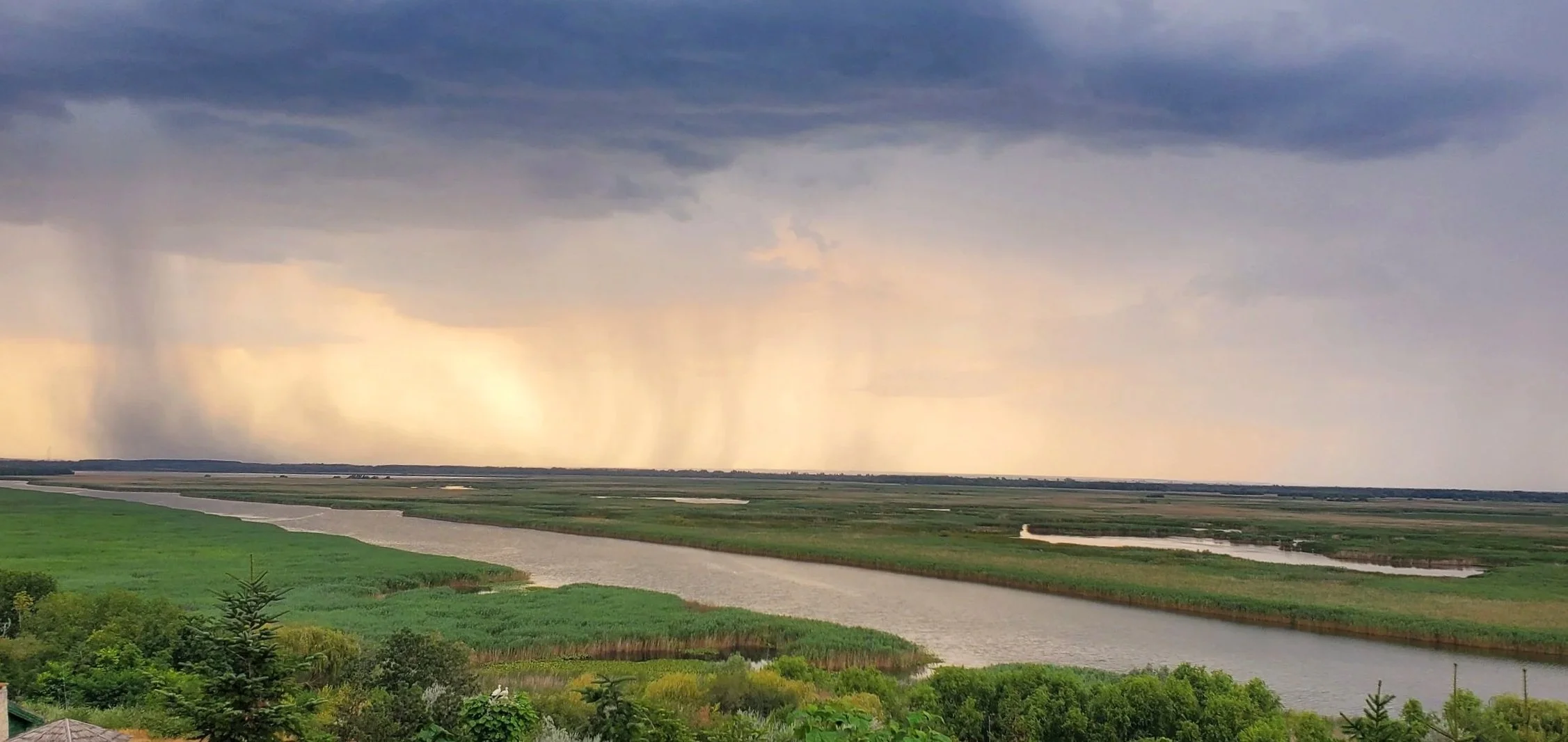
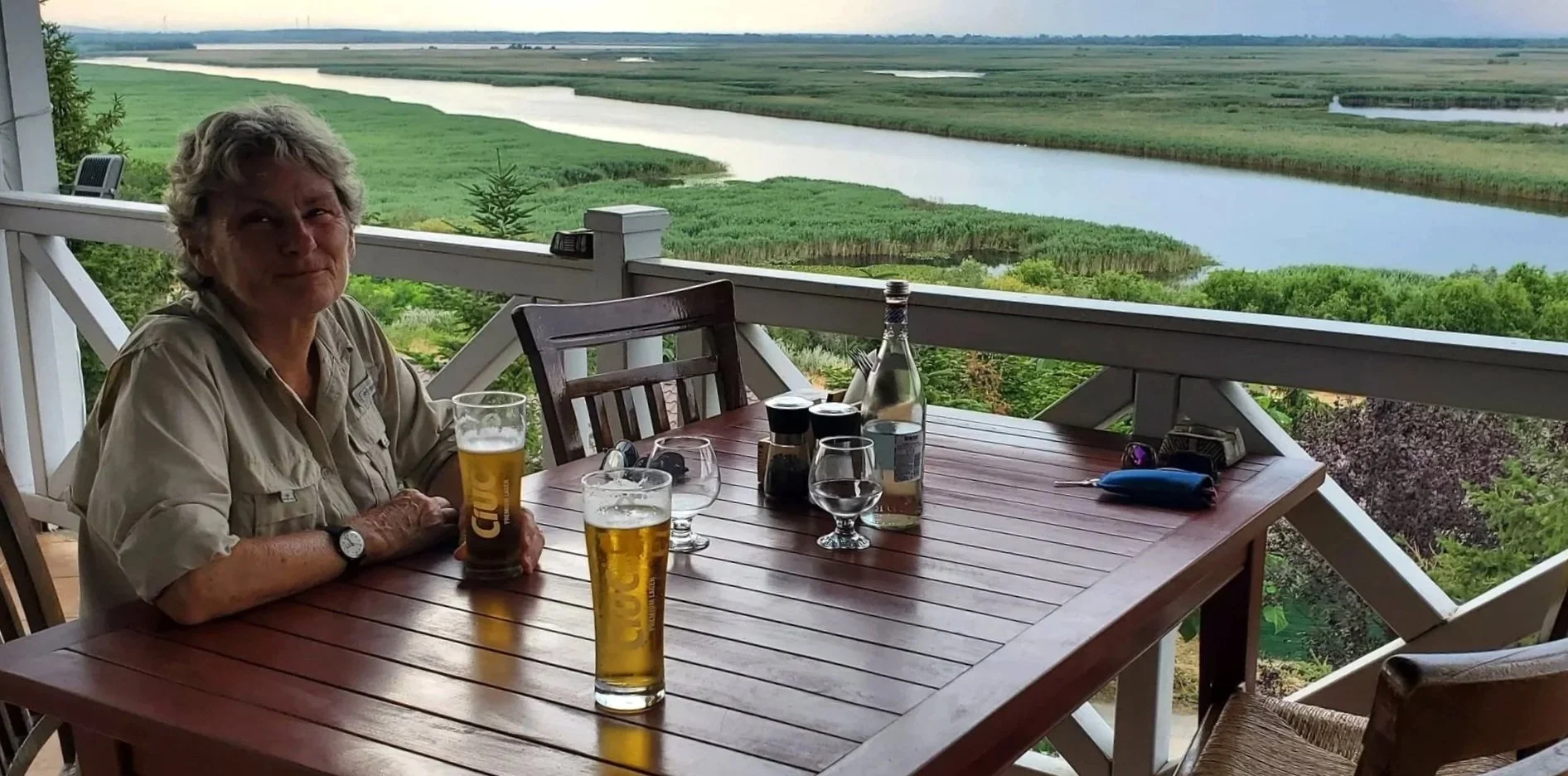
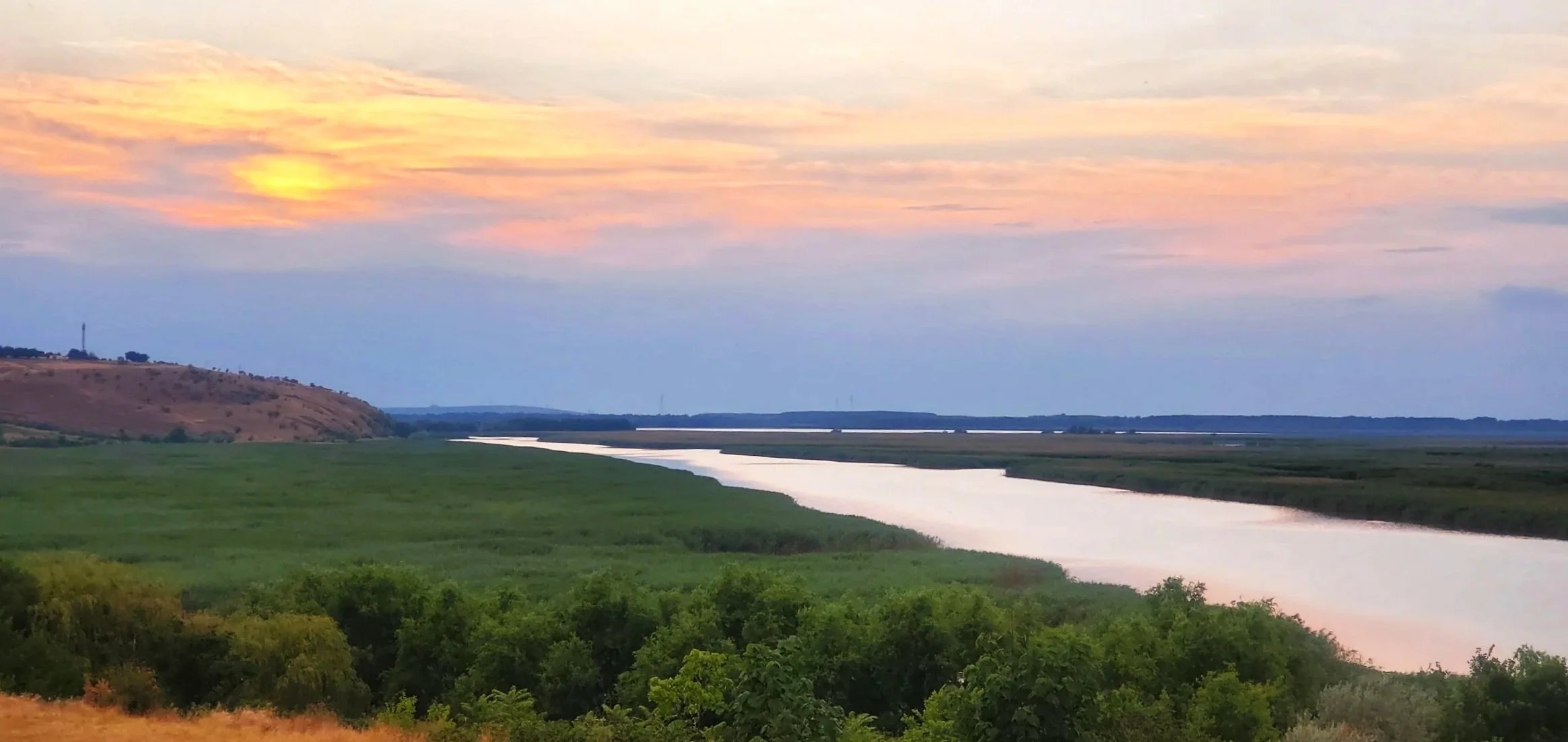
From the balcony of the resort’s restaurant, we enjoyed fabulous views of the delta wetlands.
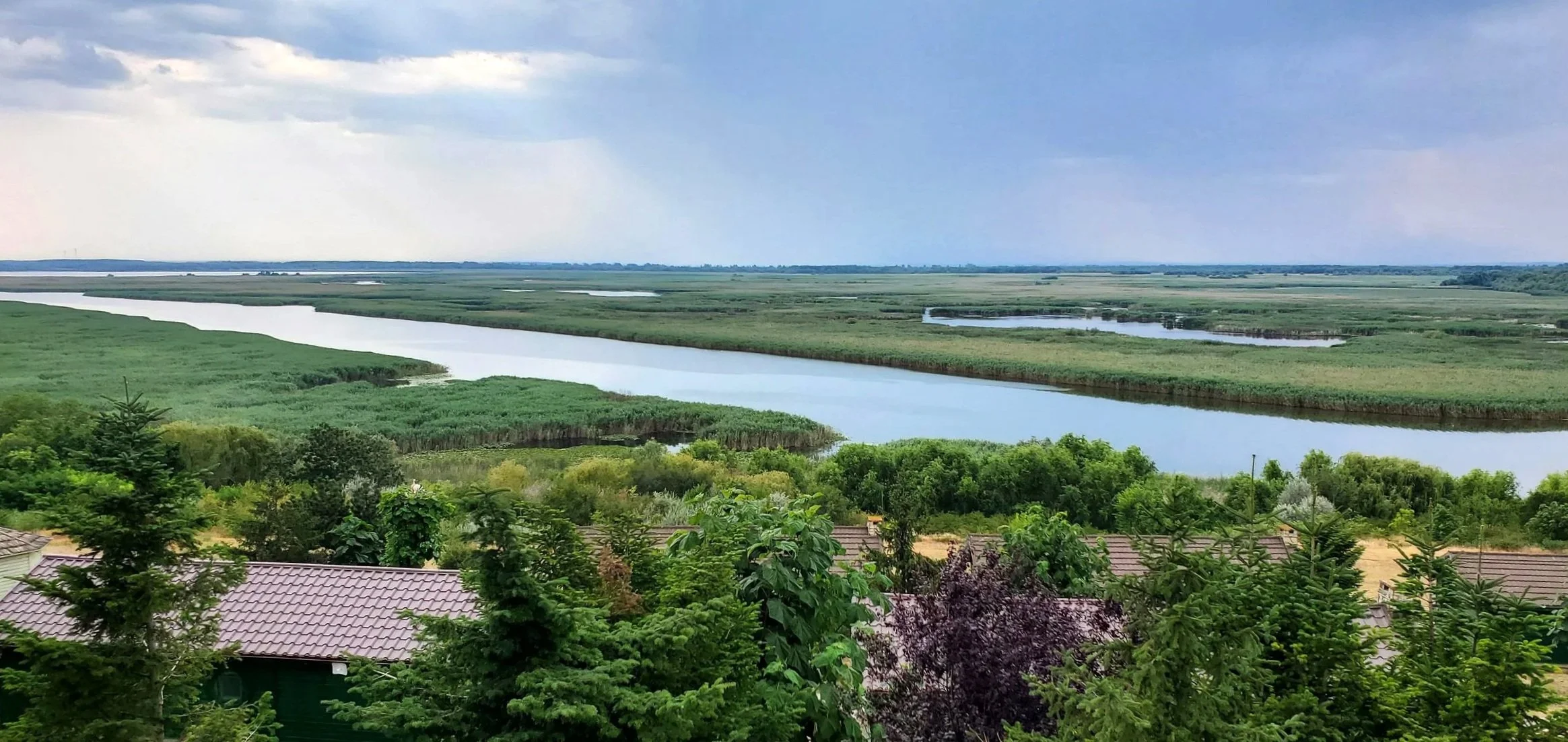
This included spectacular summer thunderstorms.
The occasional cleansing ale.
And great sunsets.
The Delta has over 300 species of birds. We were keen to spot a few.
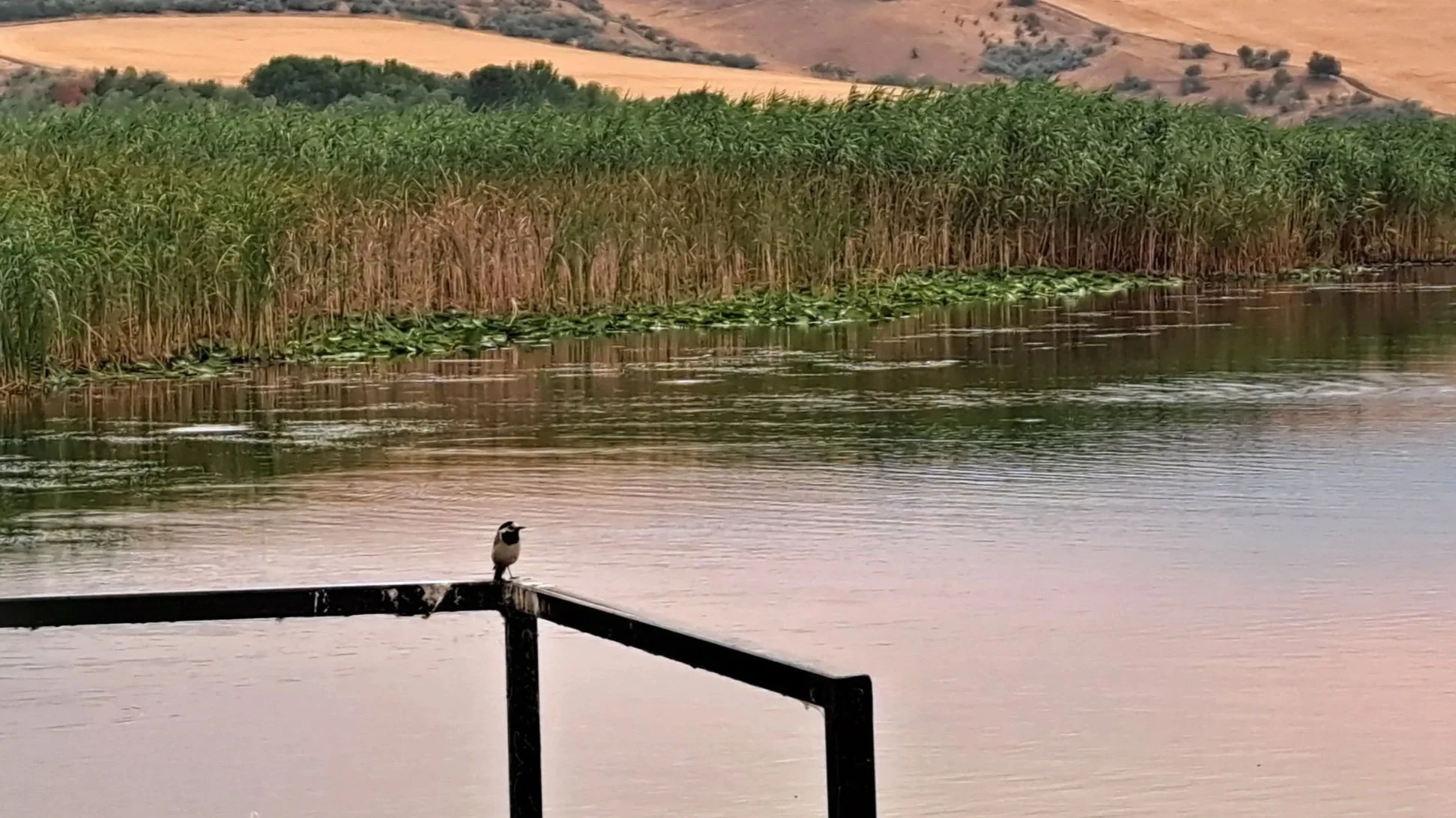
one small bird, but it was a start
We signed up for a half-day boat trip leaving in the morning from Tulcea and heading towards the river mouth.
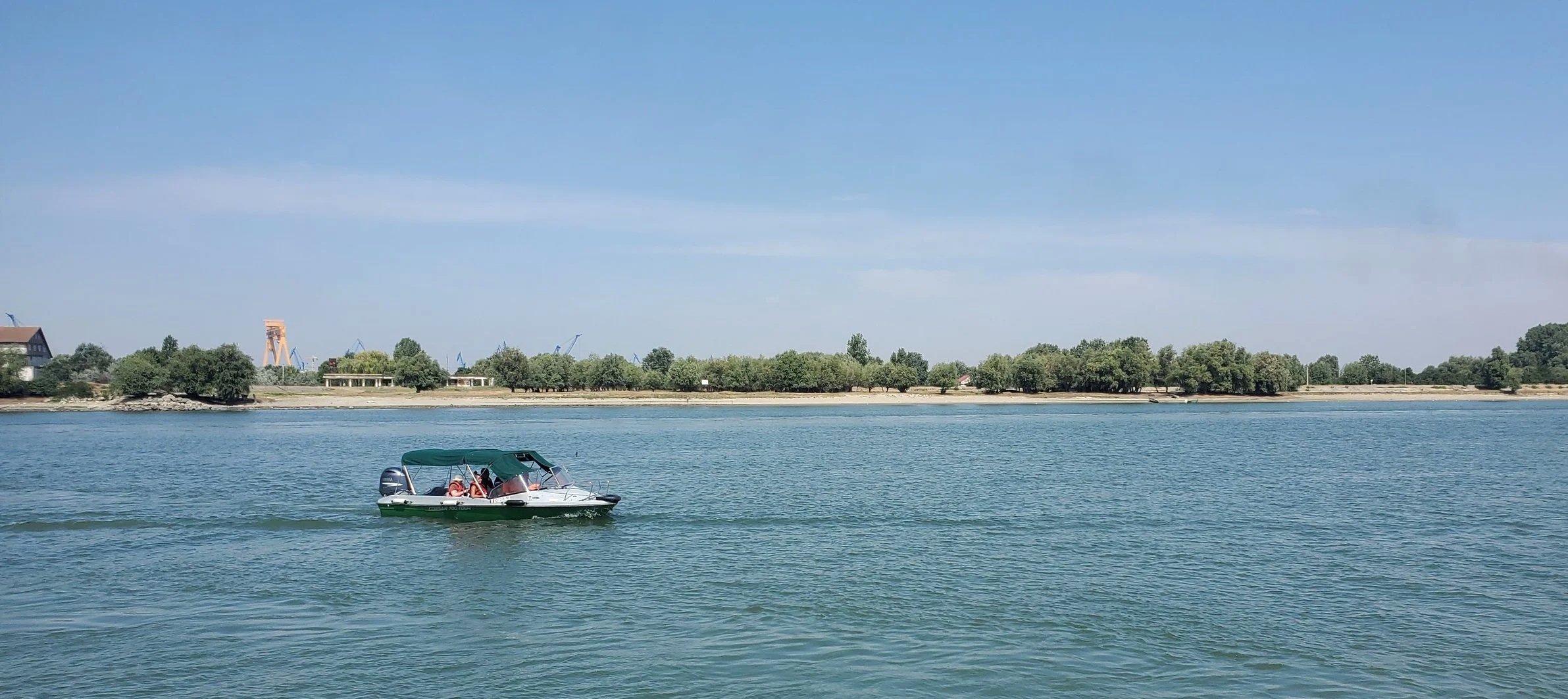
off we go
Tulcea is an important port with a busy waterway.
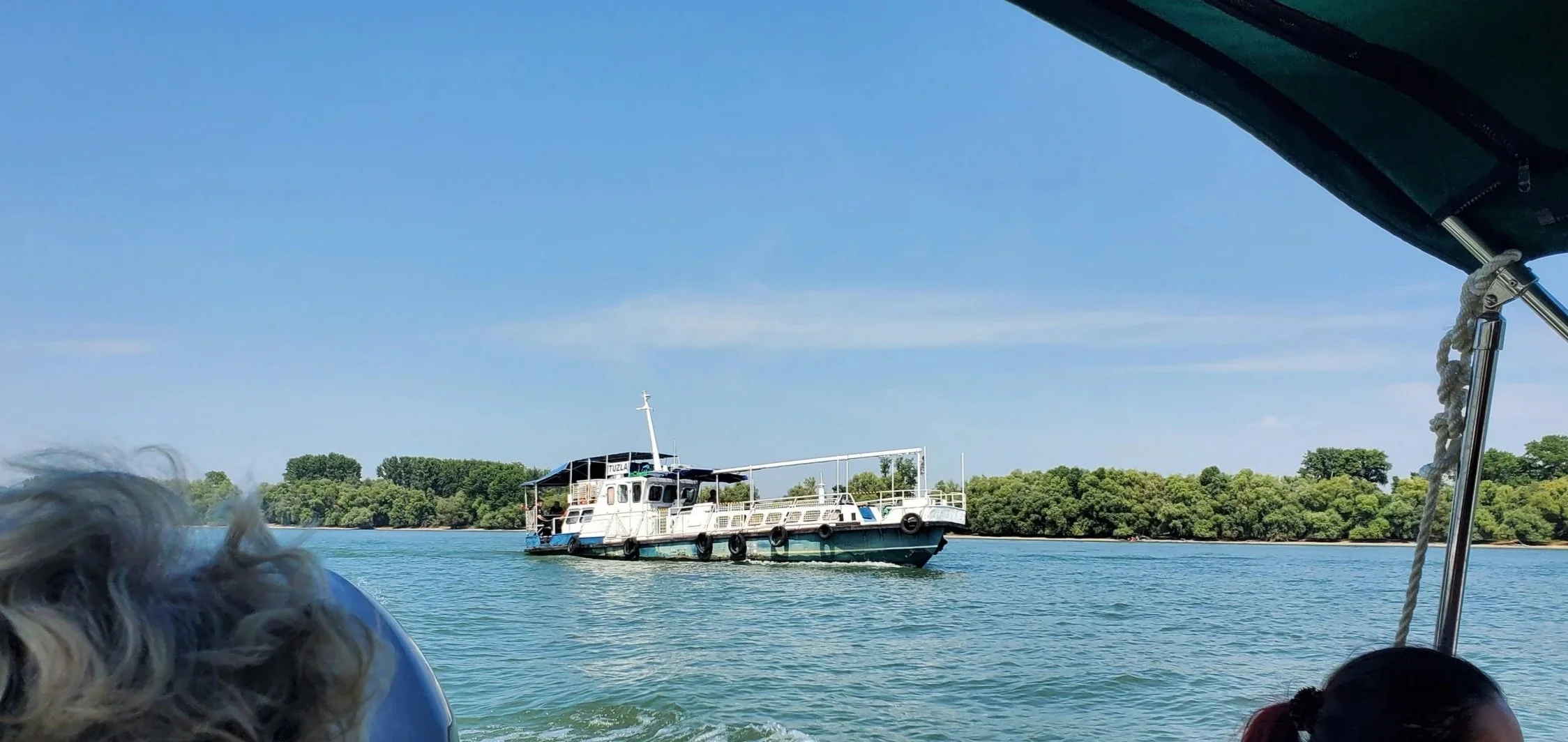
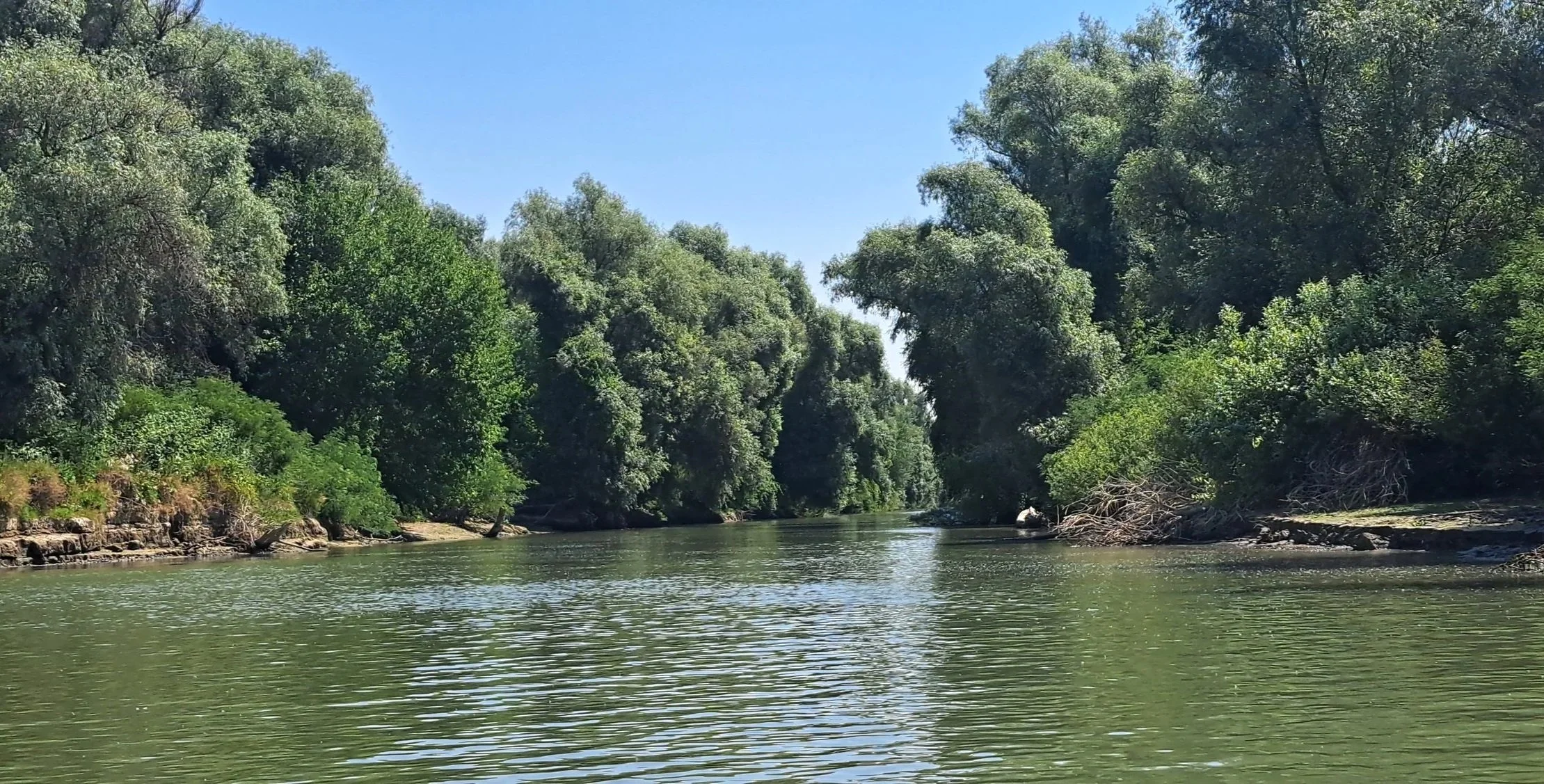
After passing shipping in the main channel, we eventually entered to maze of narrow channels that are characteristic of the Danube as it gets closer to the Black Sea.
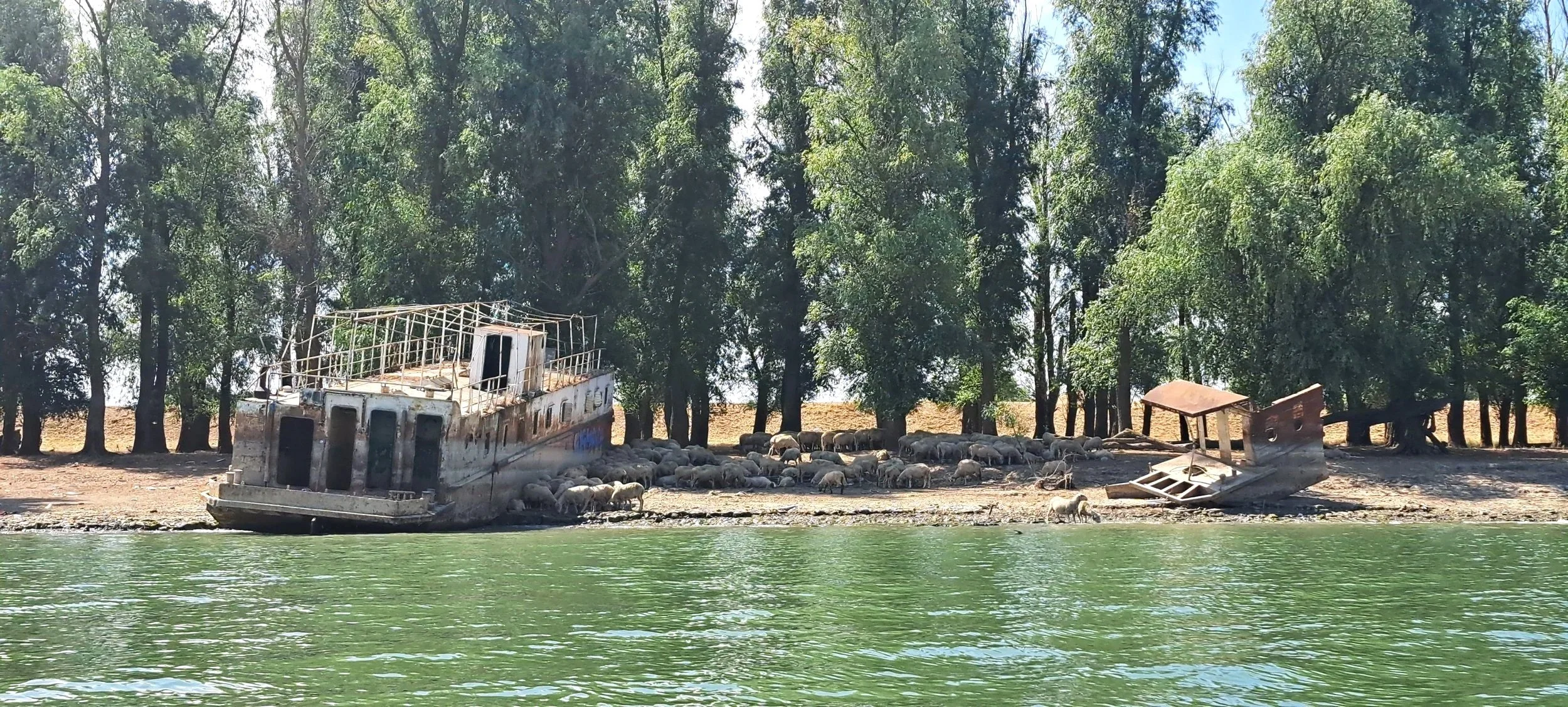
We passed some local sheep looking for shade.
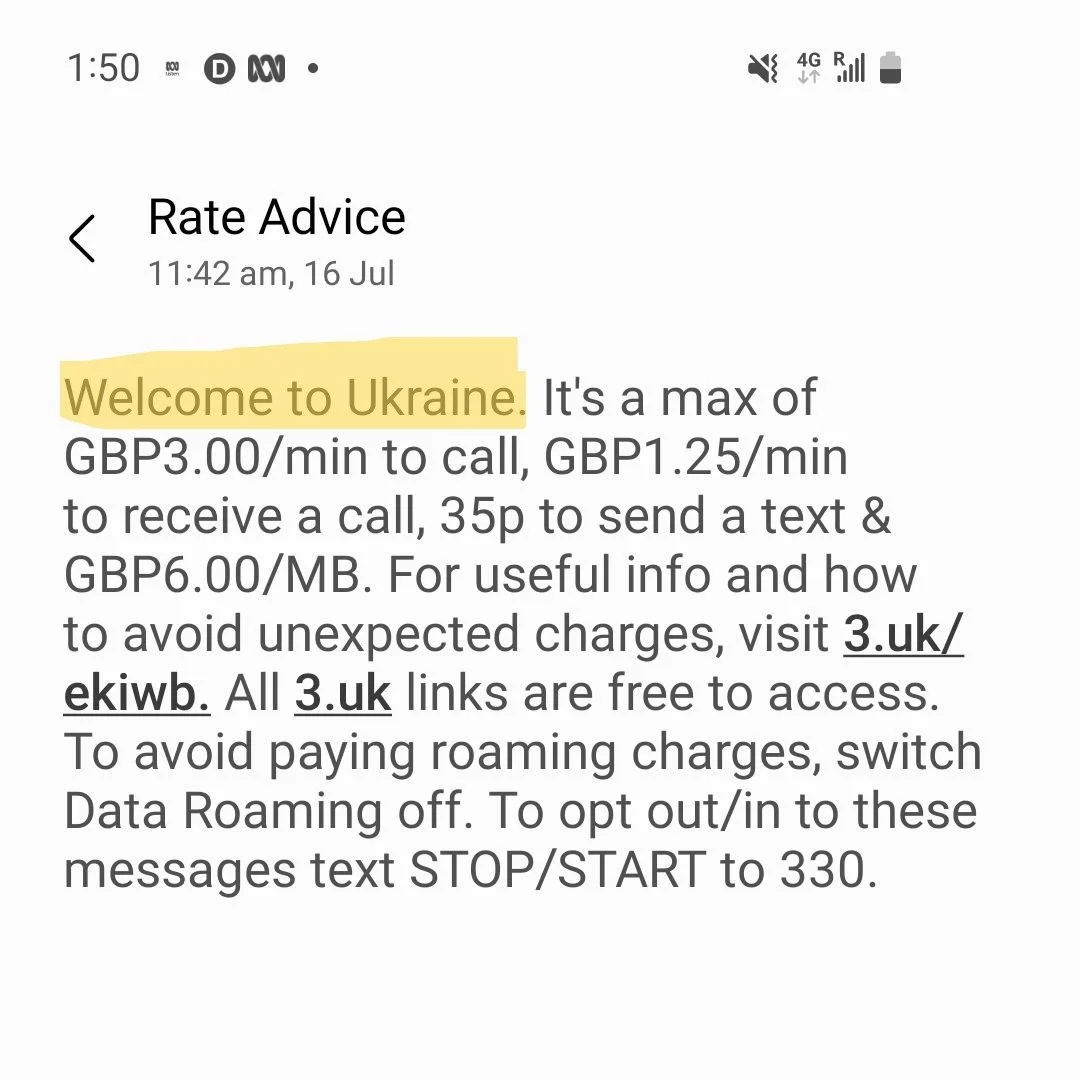
At one point we were within 2km of the Ukraine border and my phone’s travel sim announced that we had arrived in the war-ravaged country.
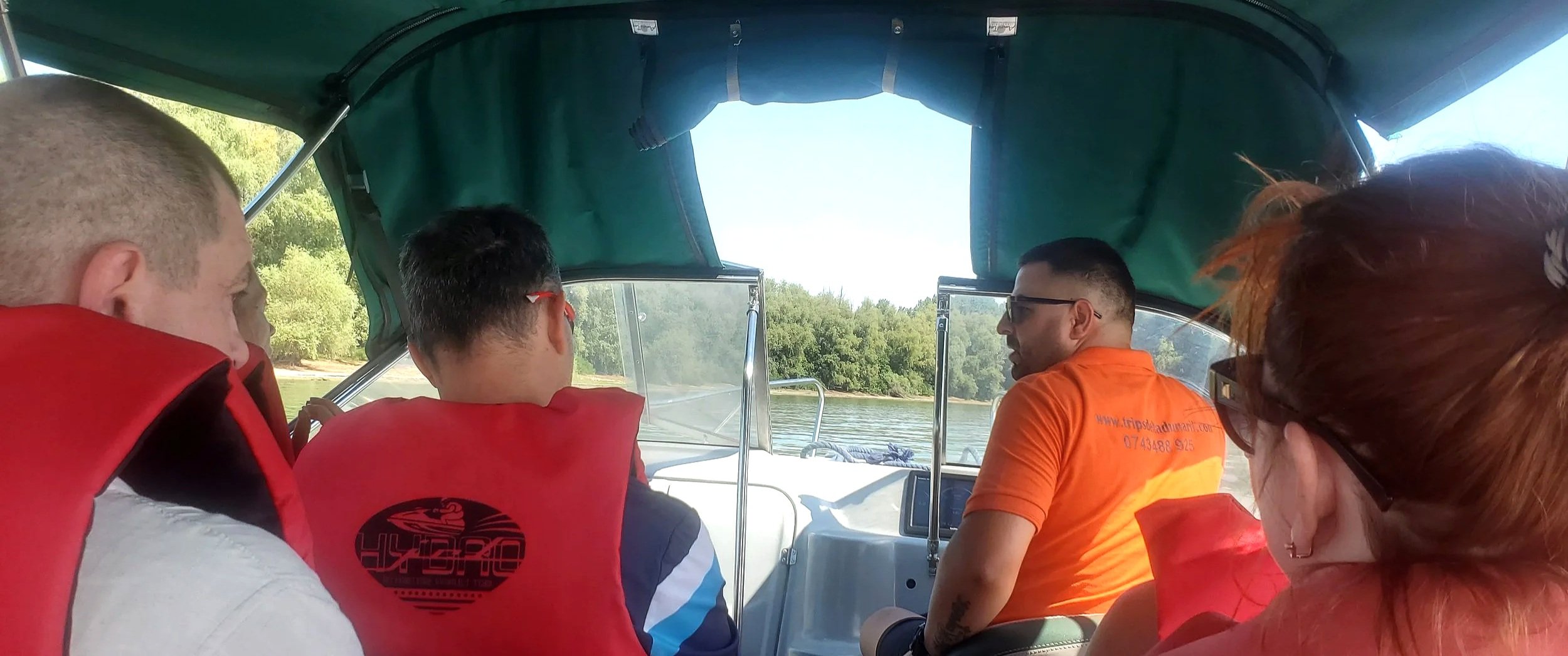
Our pilot navigated the complex web of channels expertly.
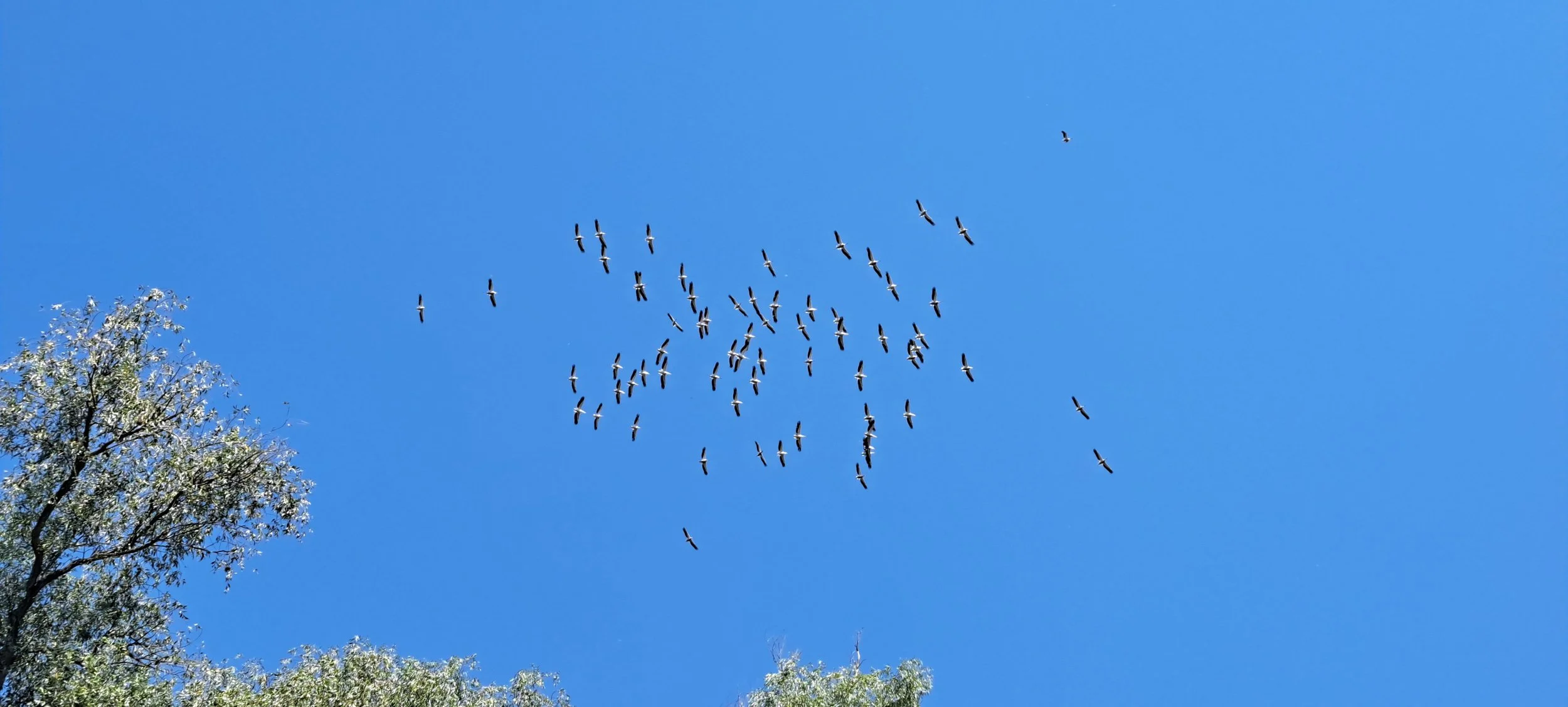
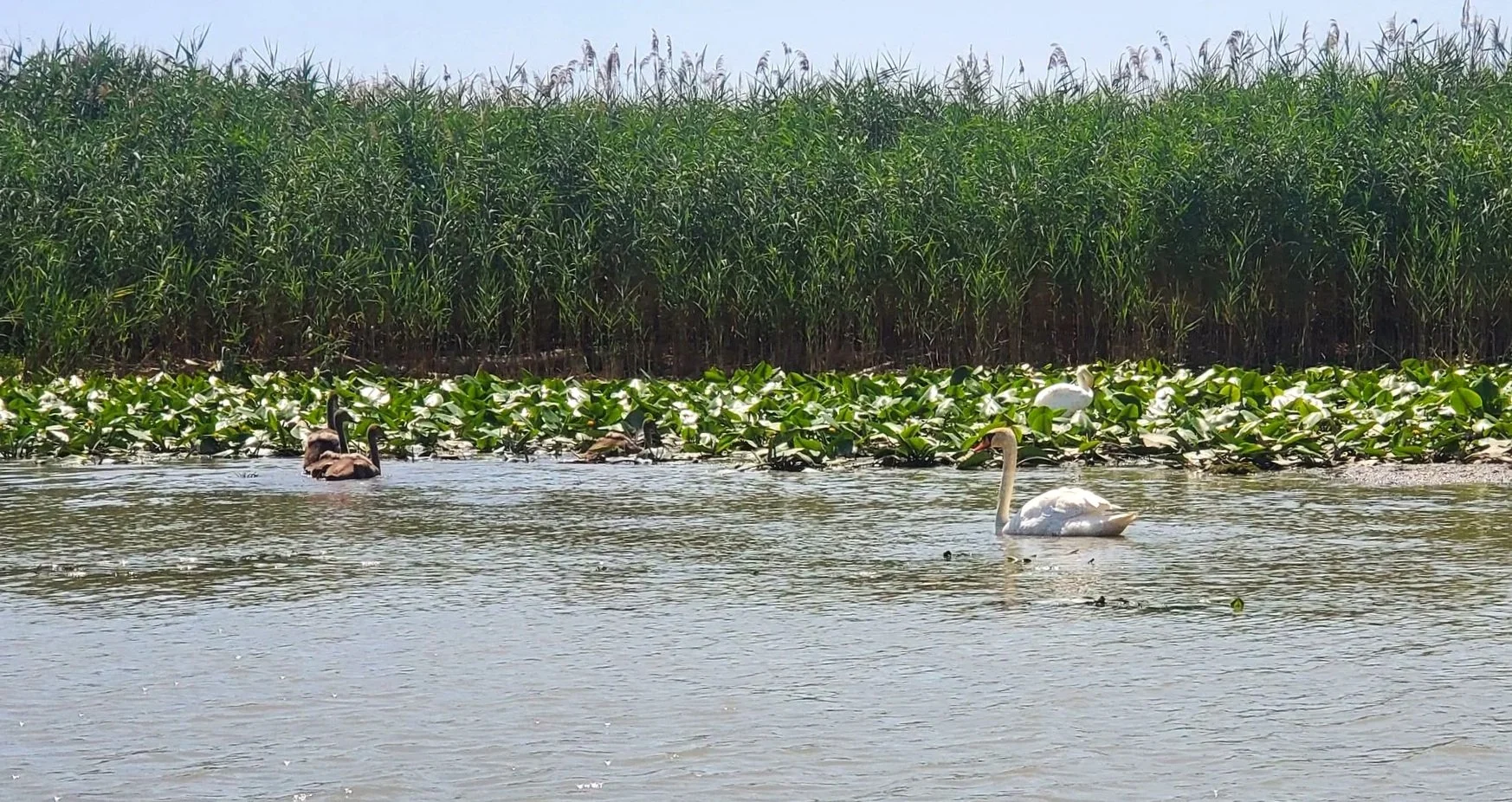
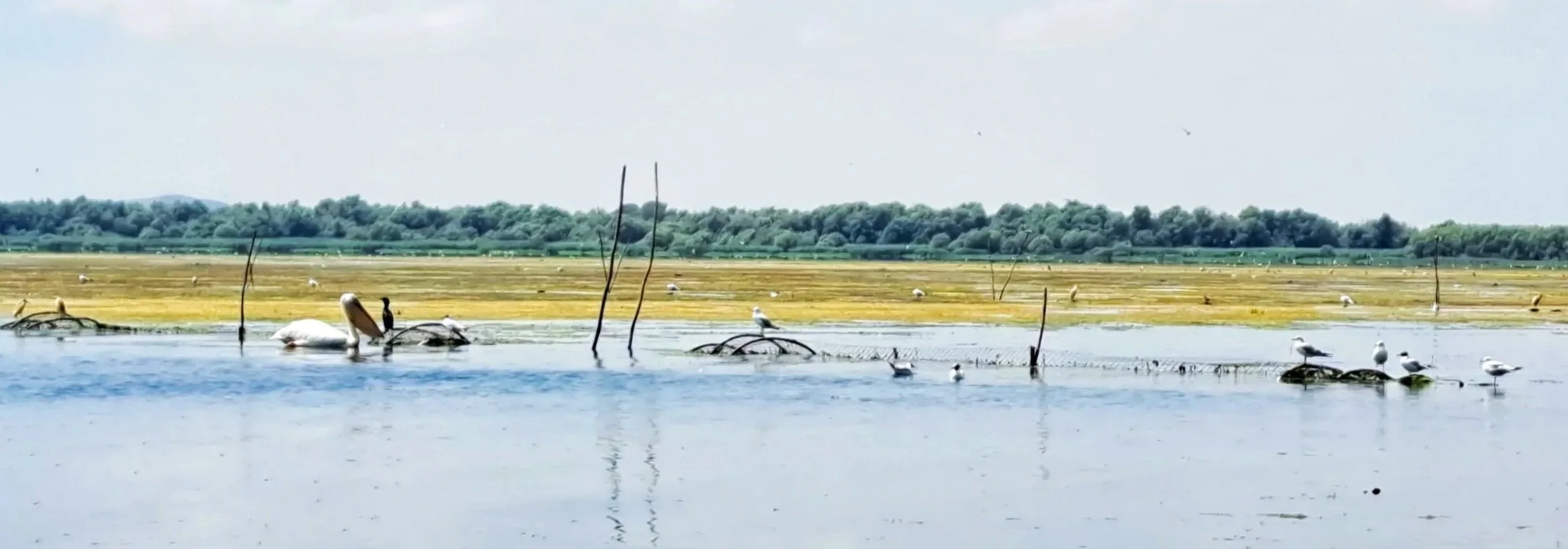
There was lots of birdlife spotted.
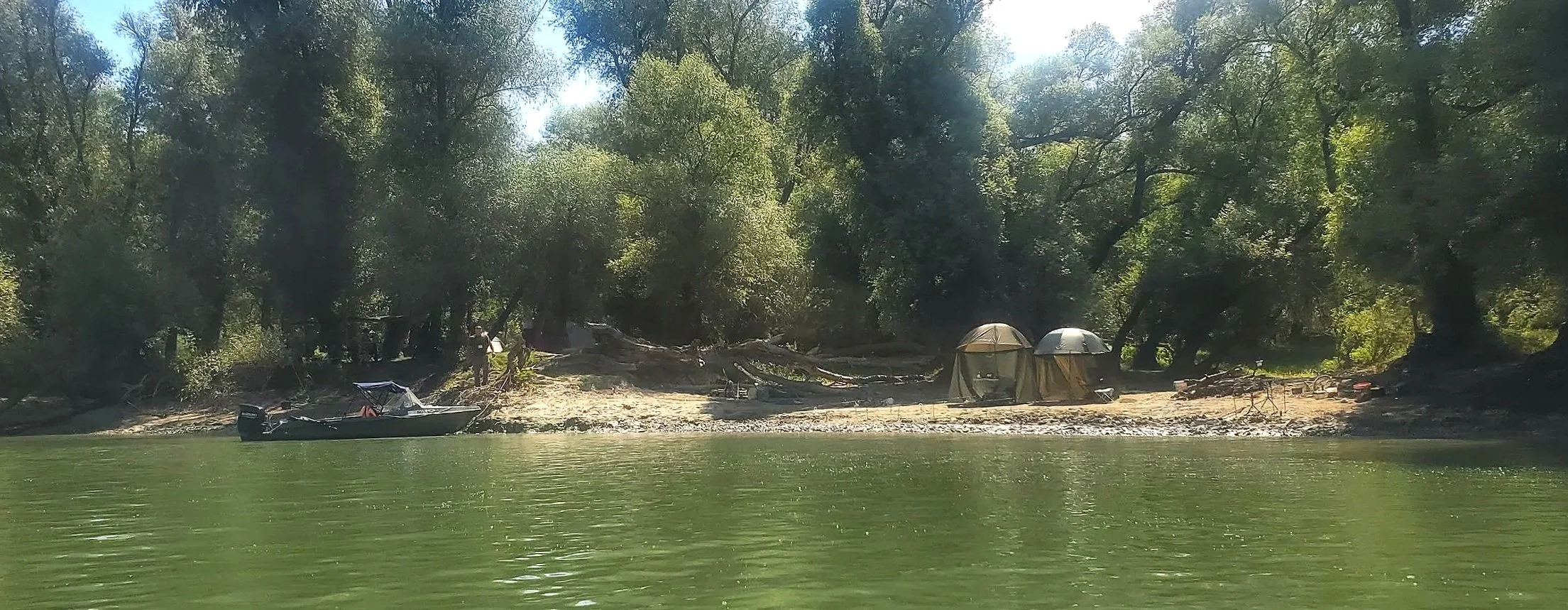
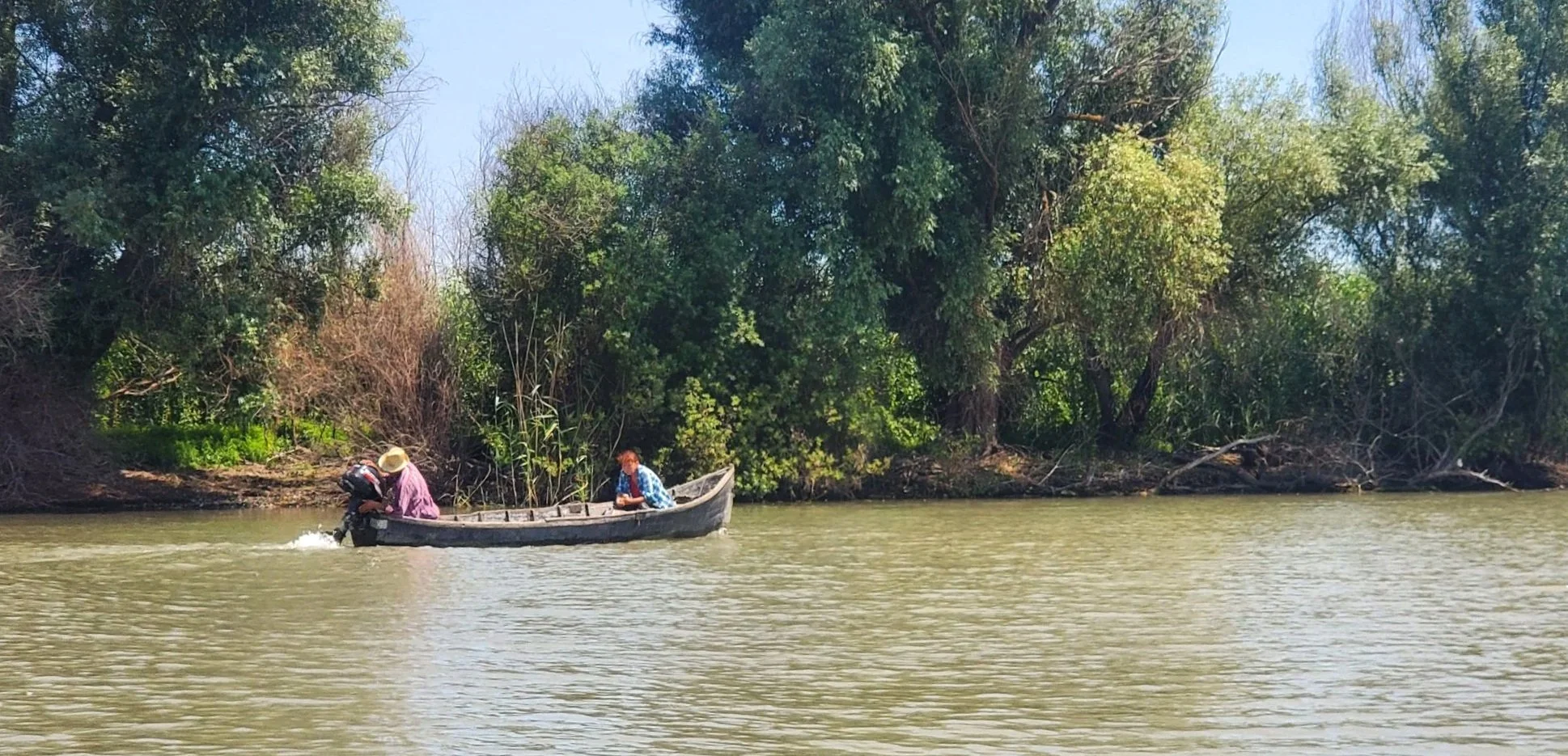
And locals fishing and camping.
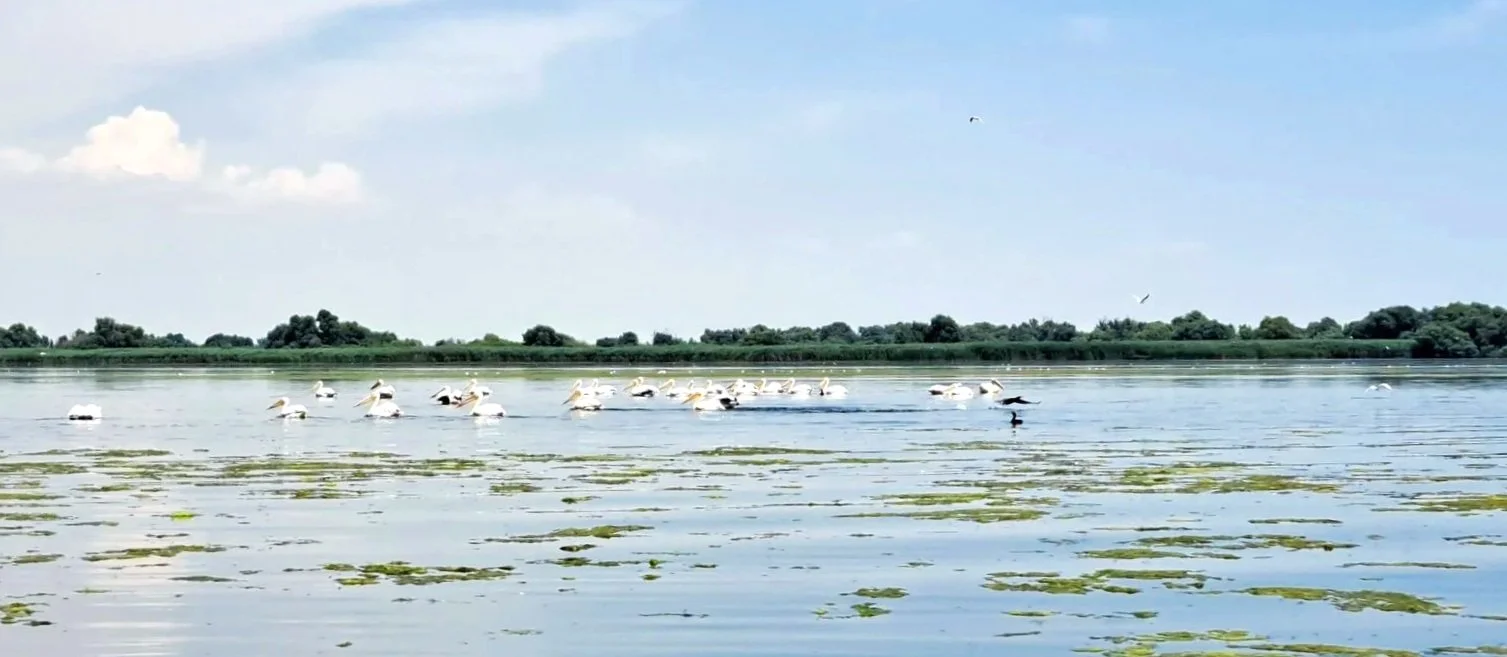
Eventually we entered a wide lake.

More birds.
Our destination was Mila 23 (Mile 23), a delta village. It gets its name from its distance from the Black Sea port of Sulina. Nowadays it’s a popular day-tripper tourist destination. It has a population of around 450.
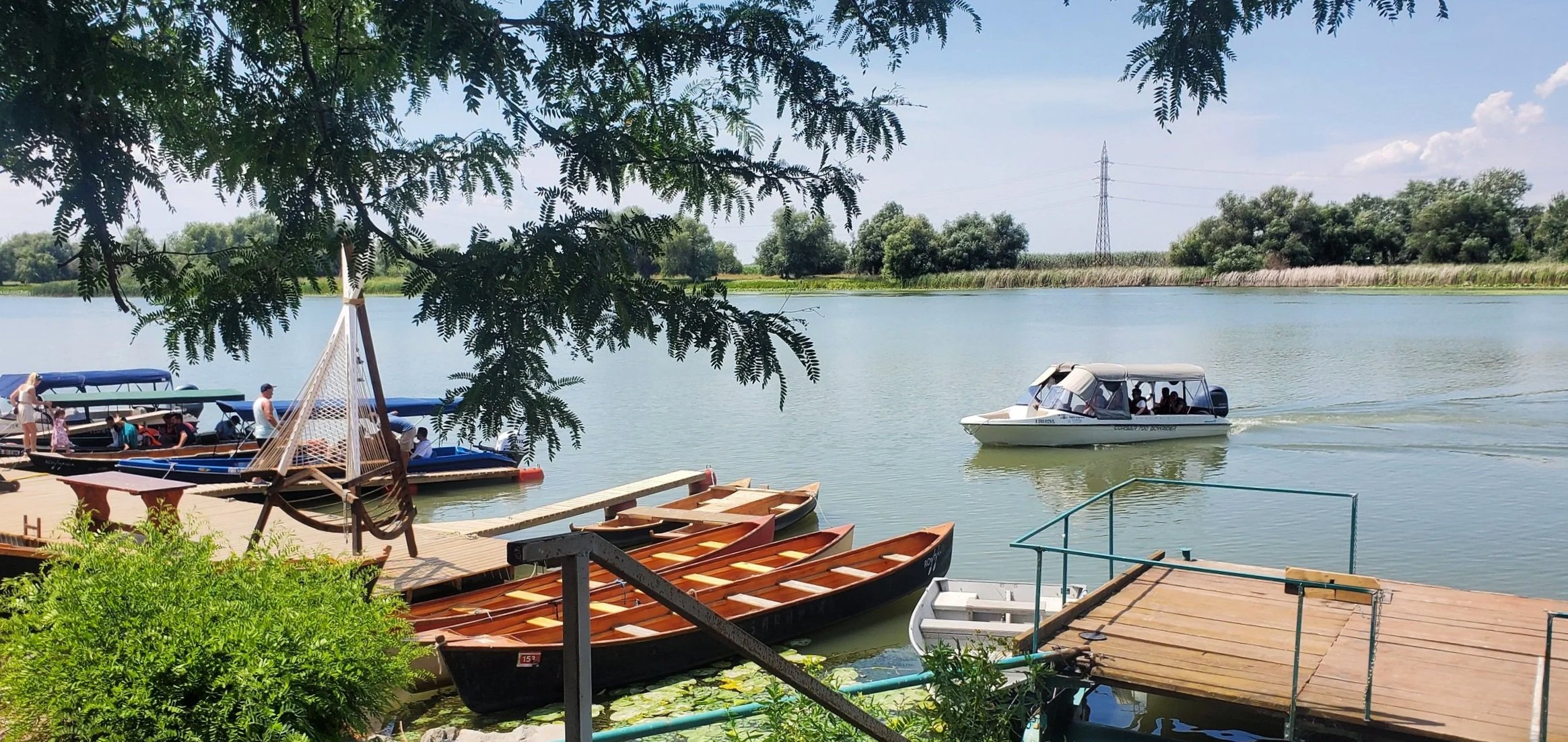
mila 23
It has a museum with an unexpected tower dedicated to a local rower.
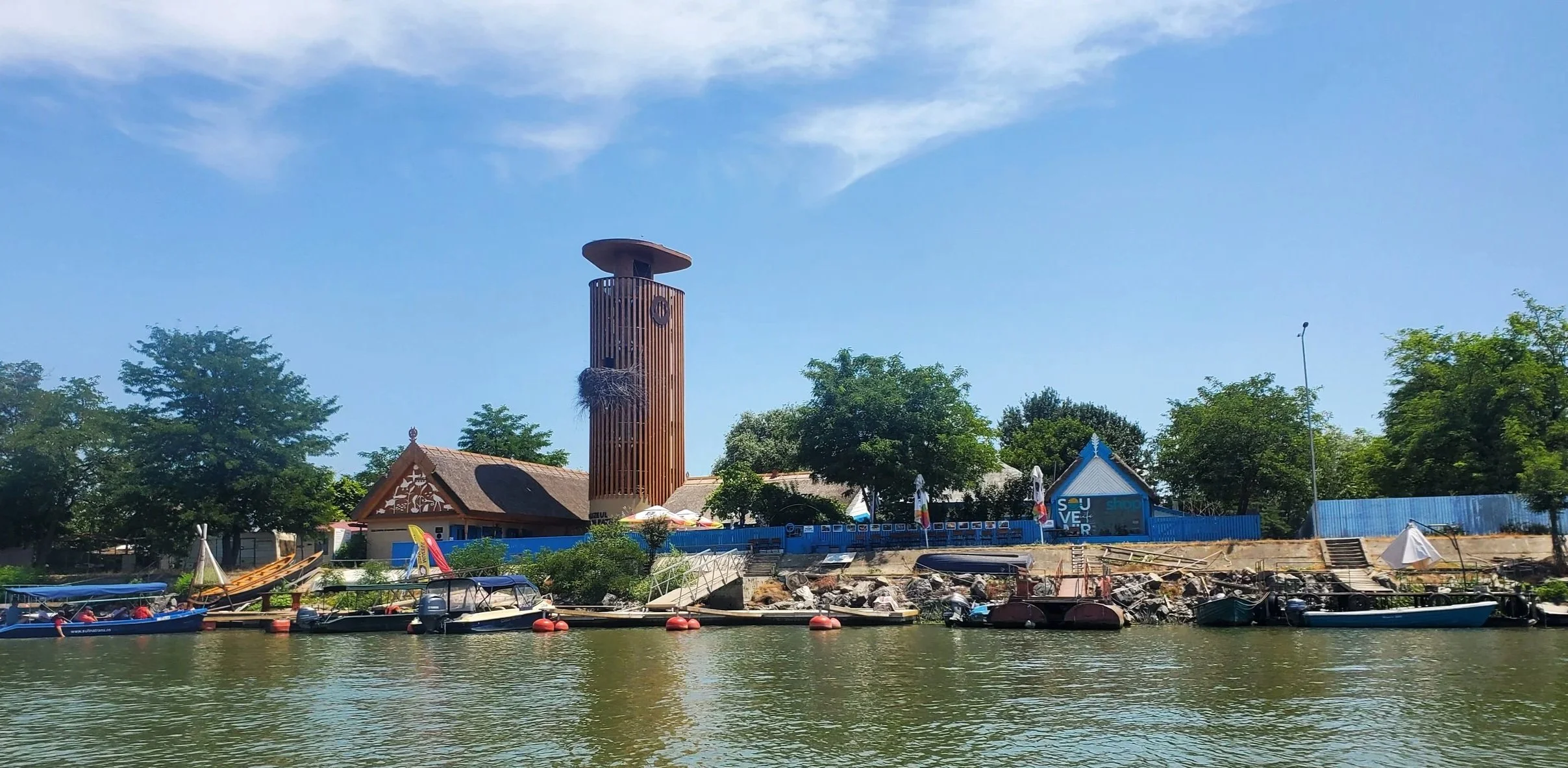
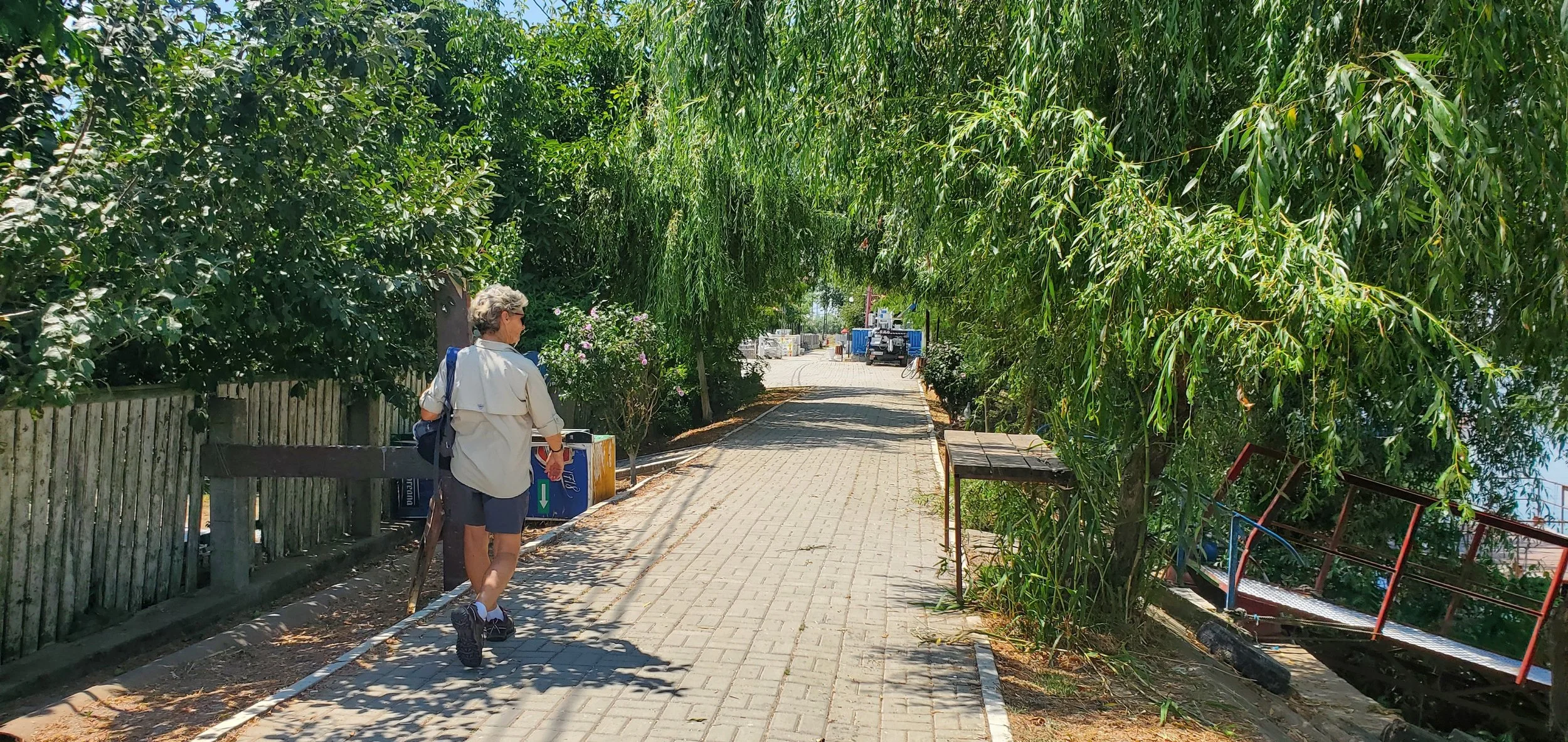
We took a brief wander around the village taking in the delta vibe.
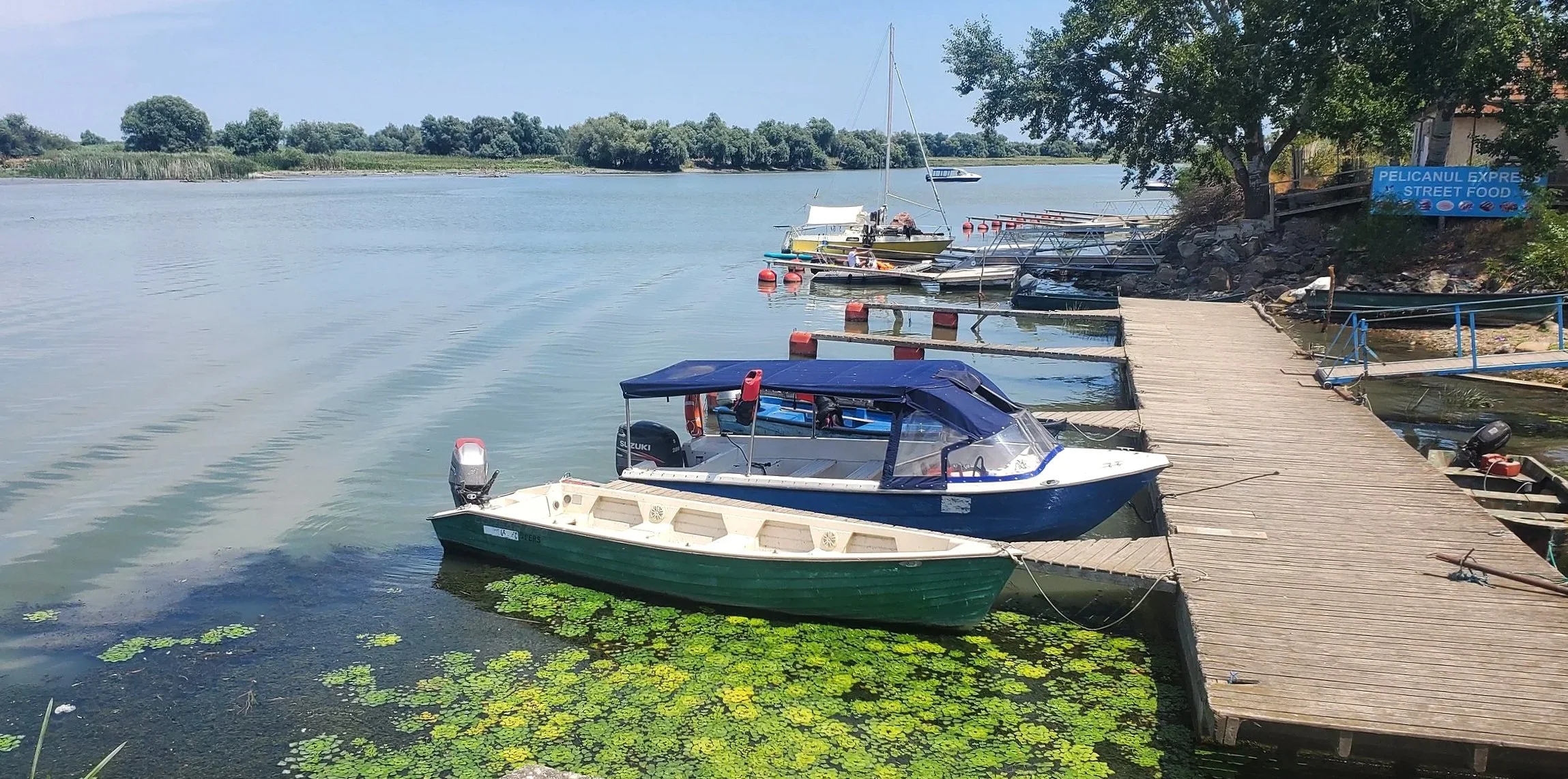
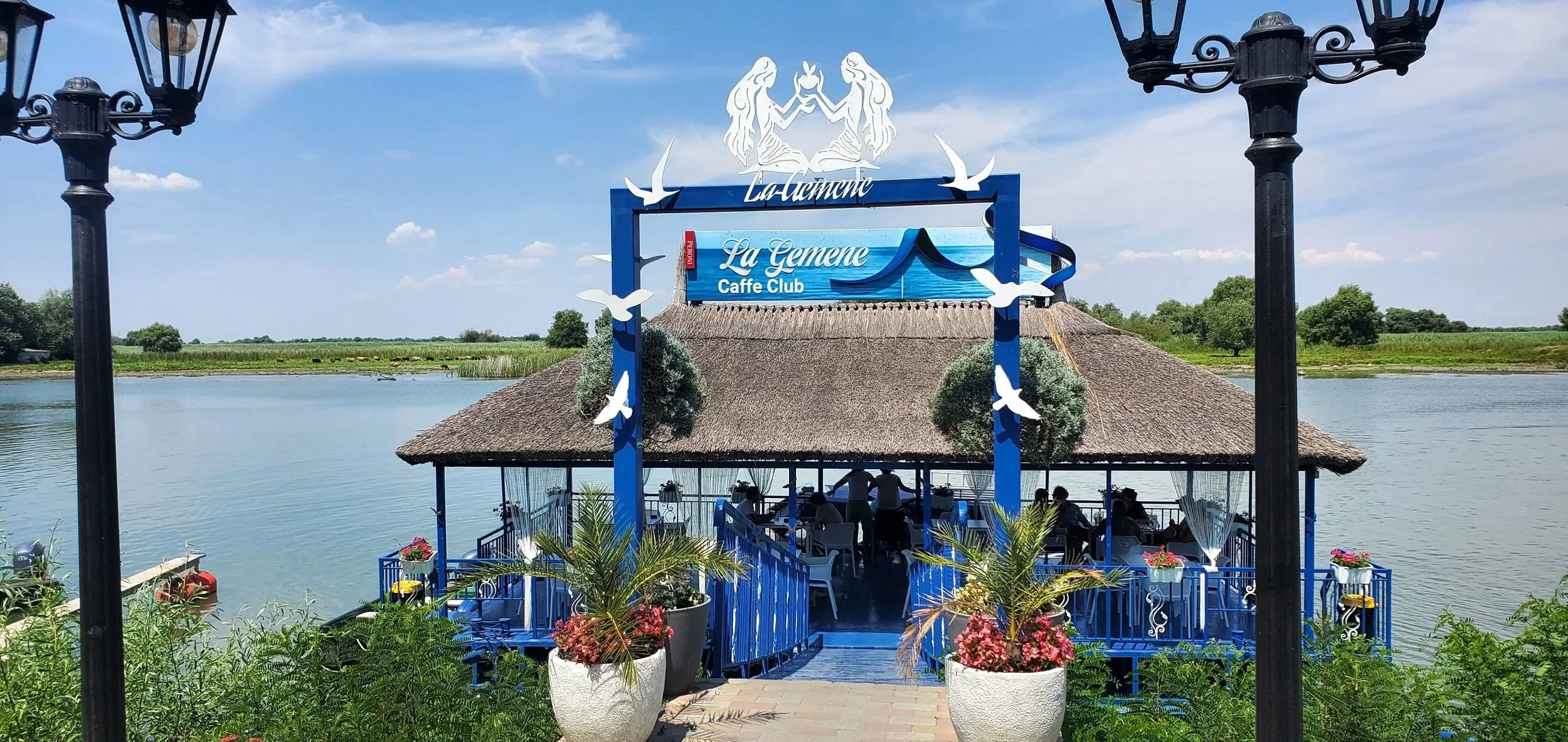
There are a couple of cafes in town, which, on this hot summer’s day, provided welcome shade and refreshments.
We spent an hour or so there before heading back to Tulcea and then our accommodation.
A Beach in Bulgaria
When planning the trip we decided to finish with a beach break. With Istanbul as our end point we chose to go to a Black Sea beach town in Bulgaria. We did some research and concluded that our best bet was the northern Bulgarian coast avoiding the big resort towns of Varna and Burgas further south.
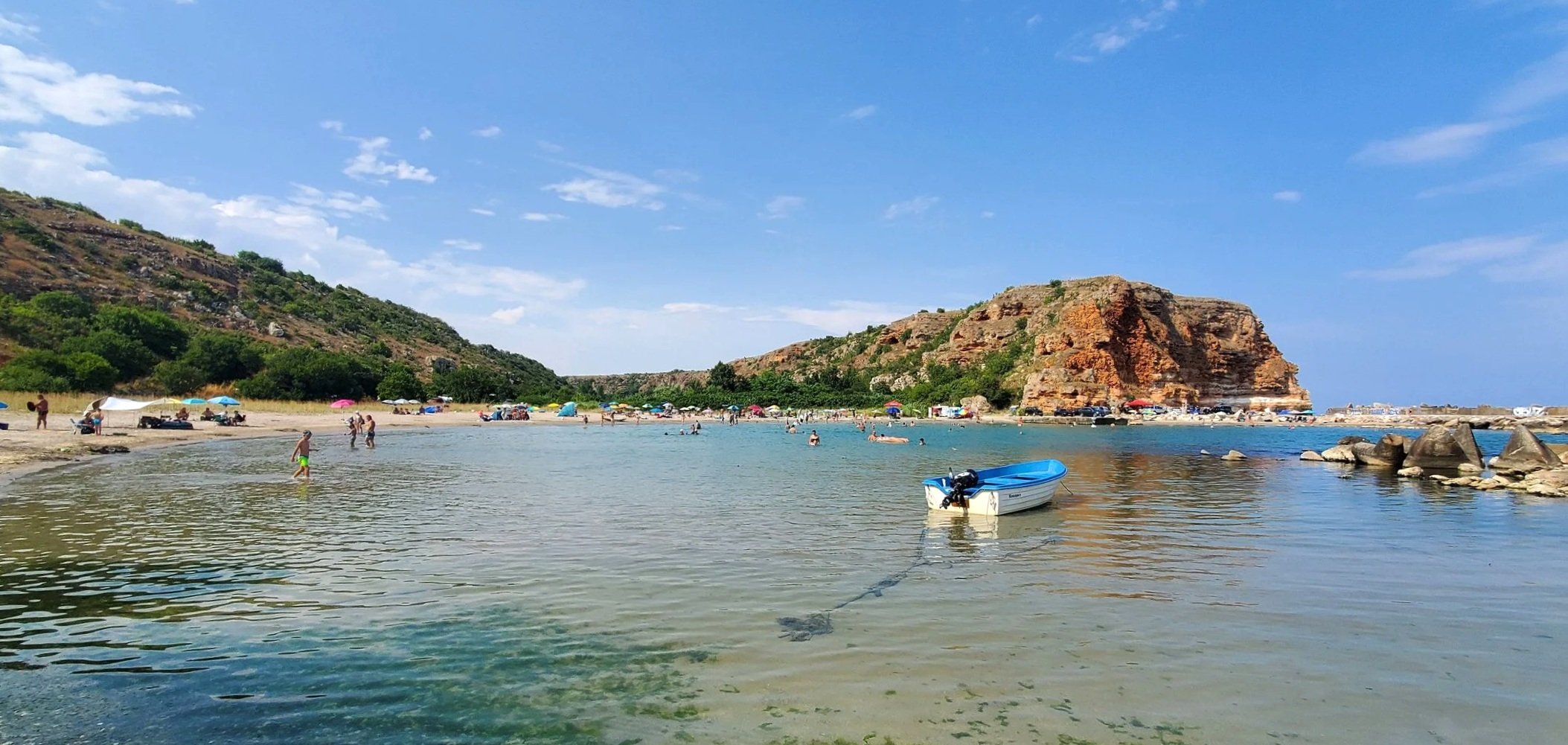
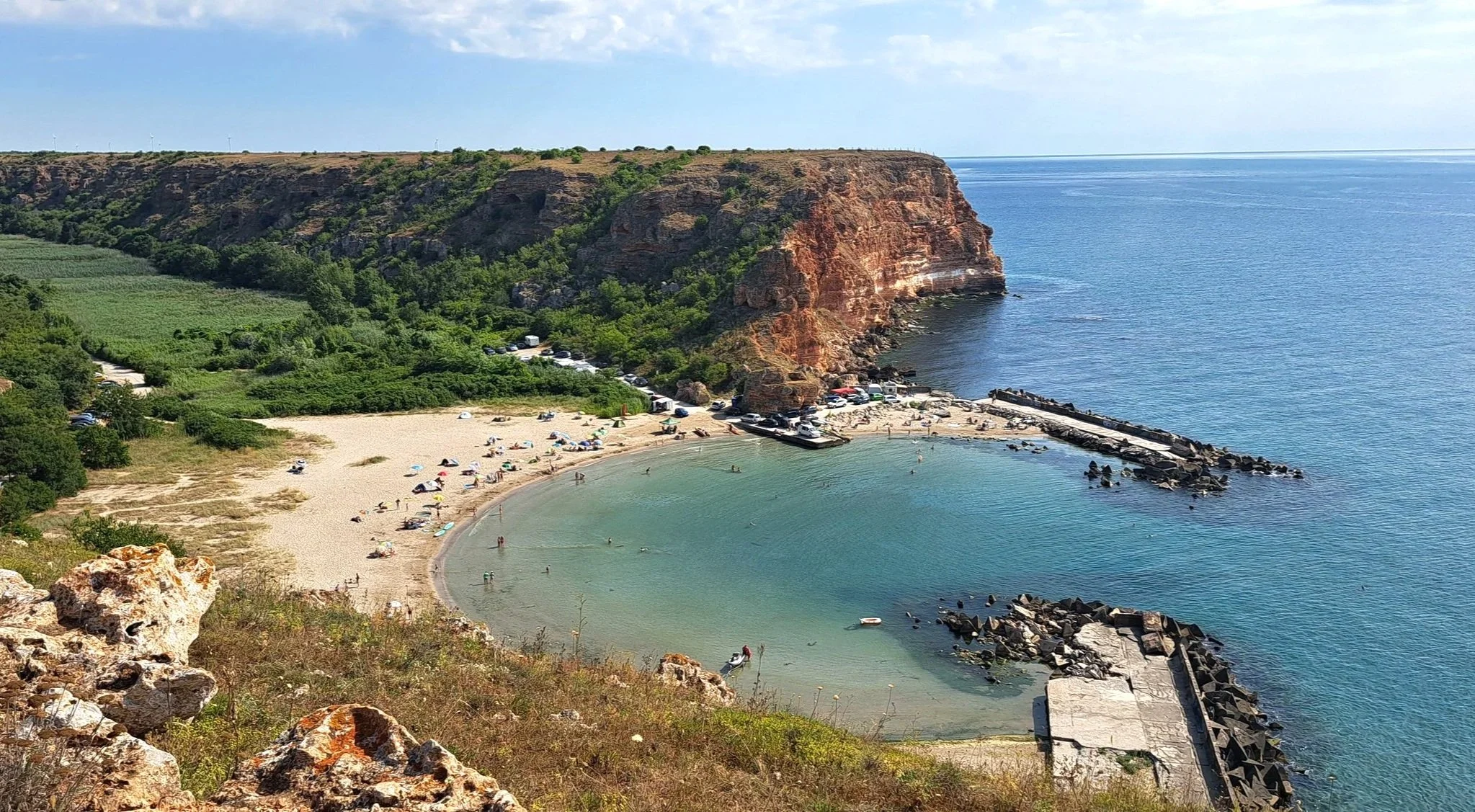
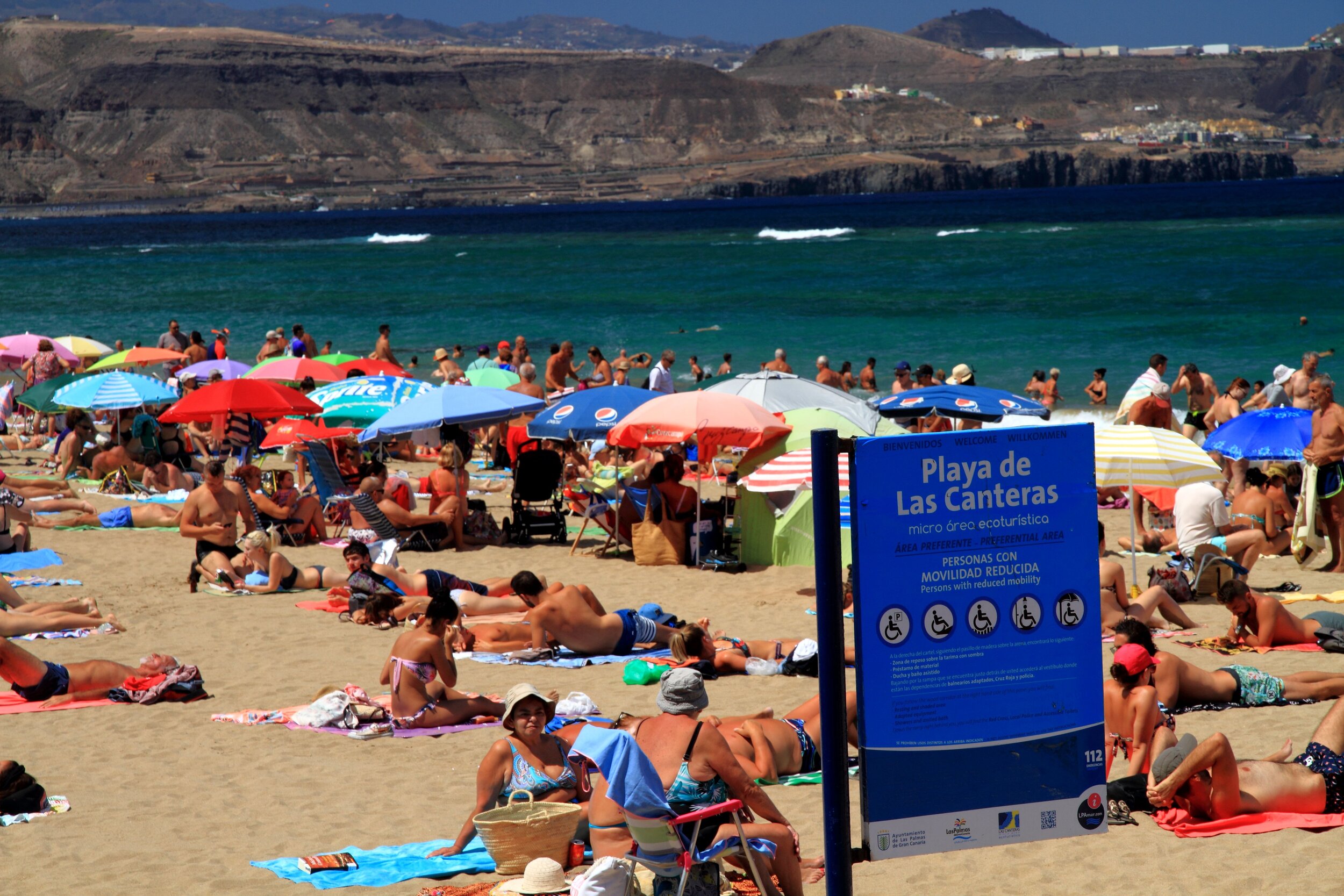
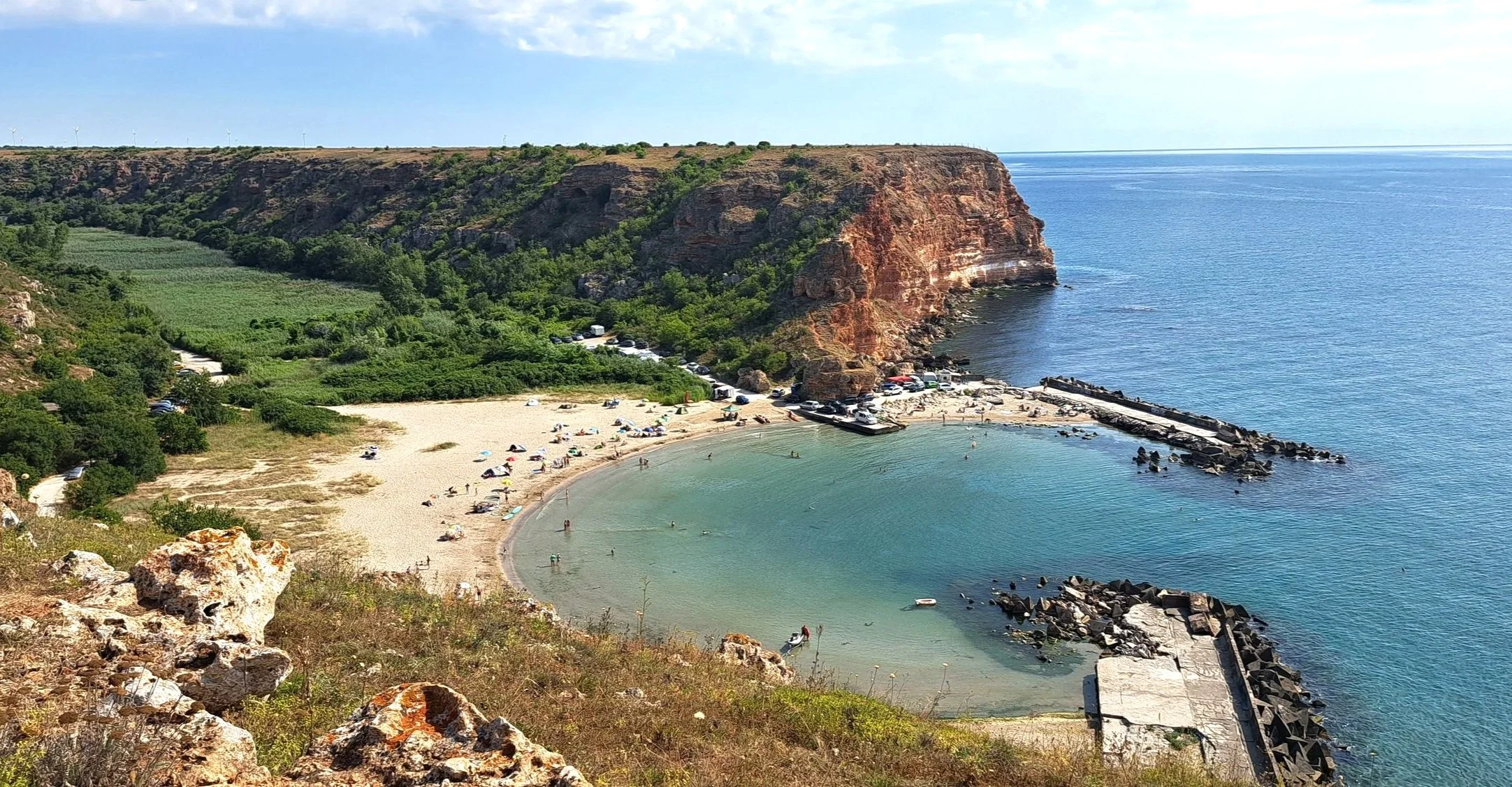
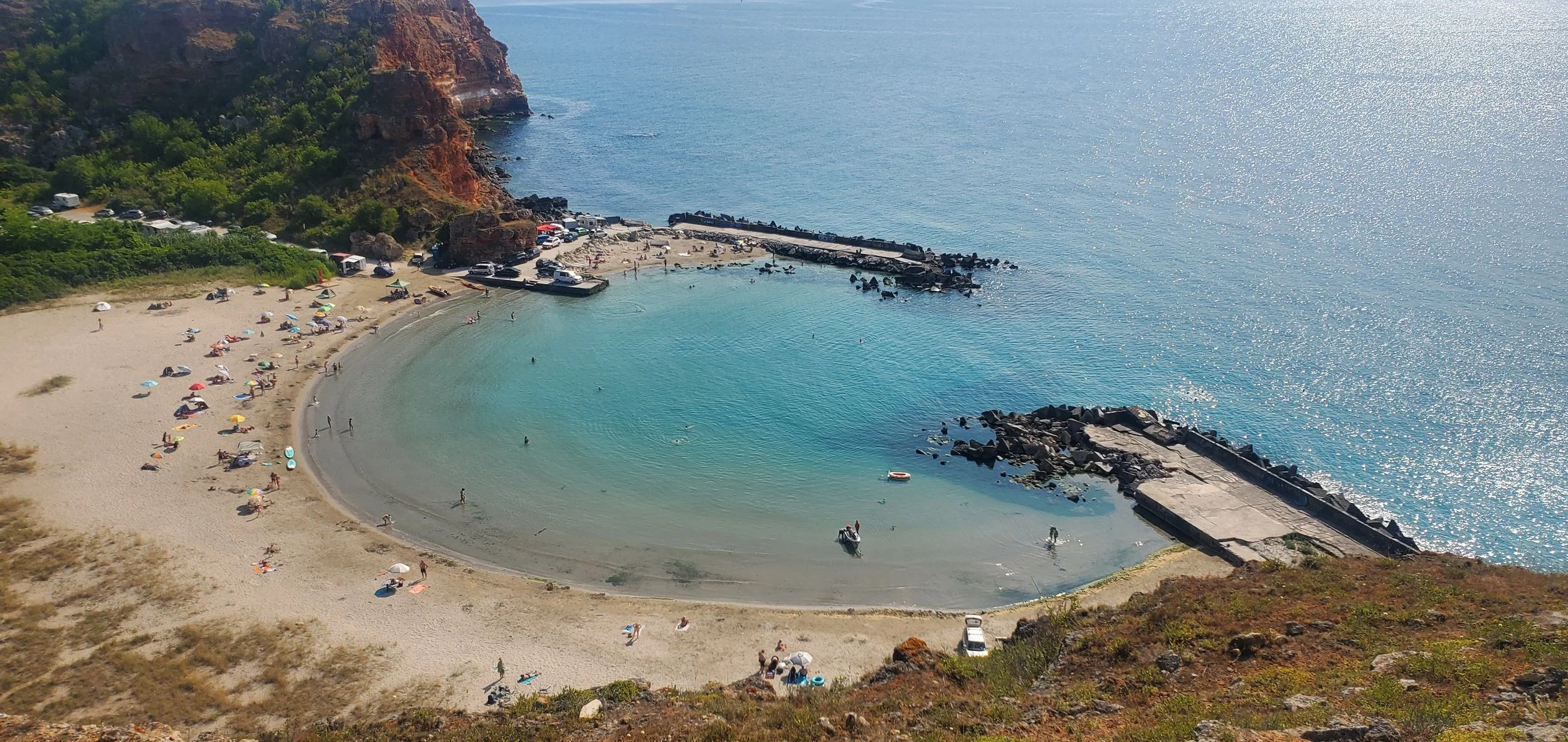
We chose the slightly obscure town of Bulgarevo with its proximity to one of the country’s most scenic beaches, Bolata Beach. It is a pretty crescent shaped beach 4km from Bulgarevo.
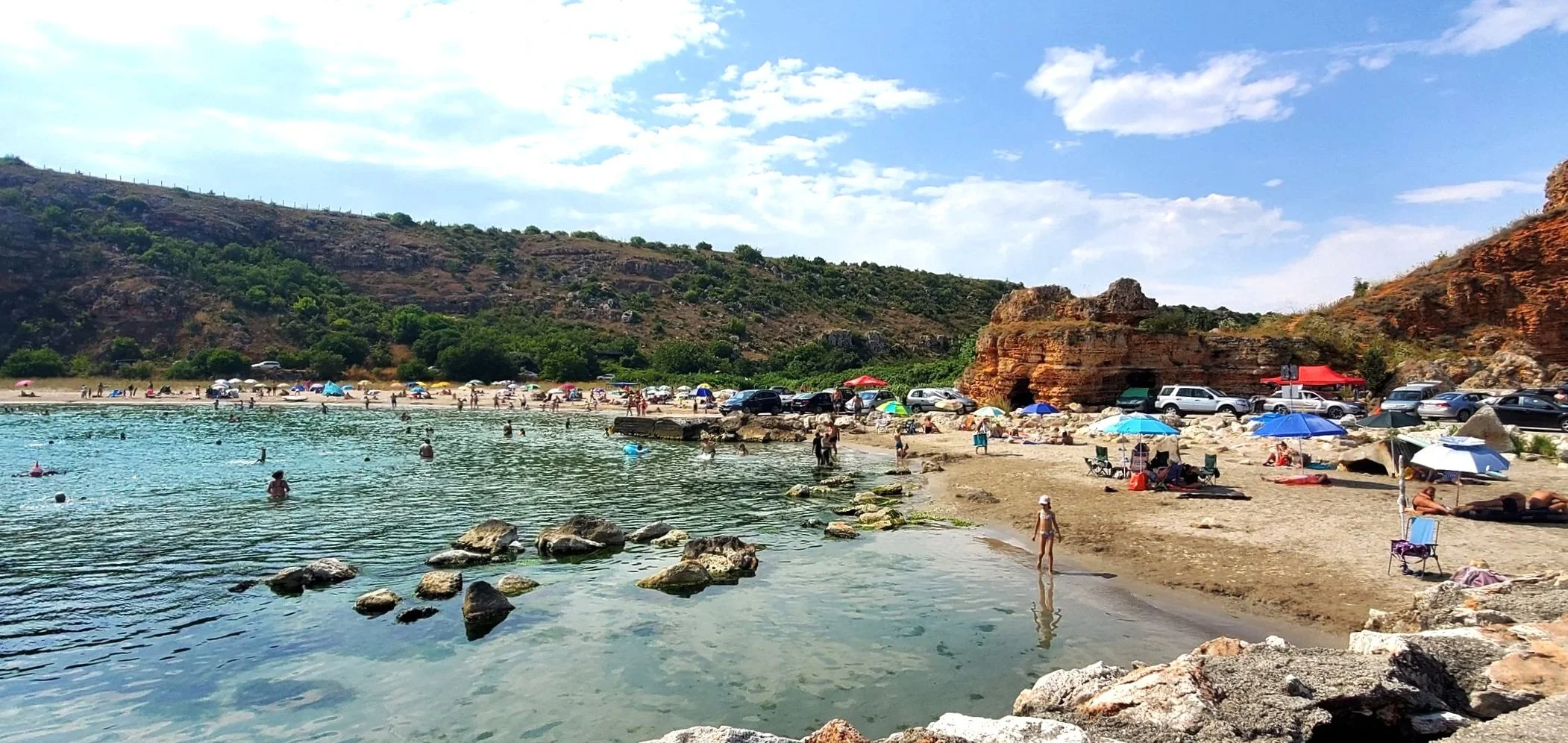
Being summer it was very popular, but fortunately not overwhelmingly so.
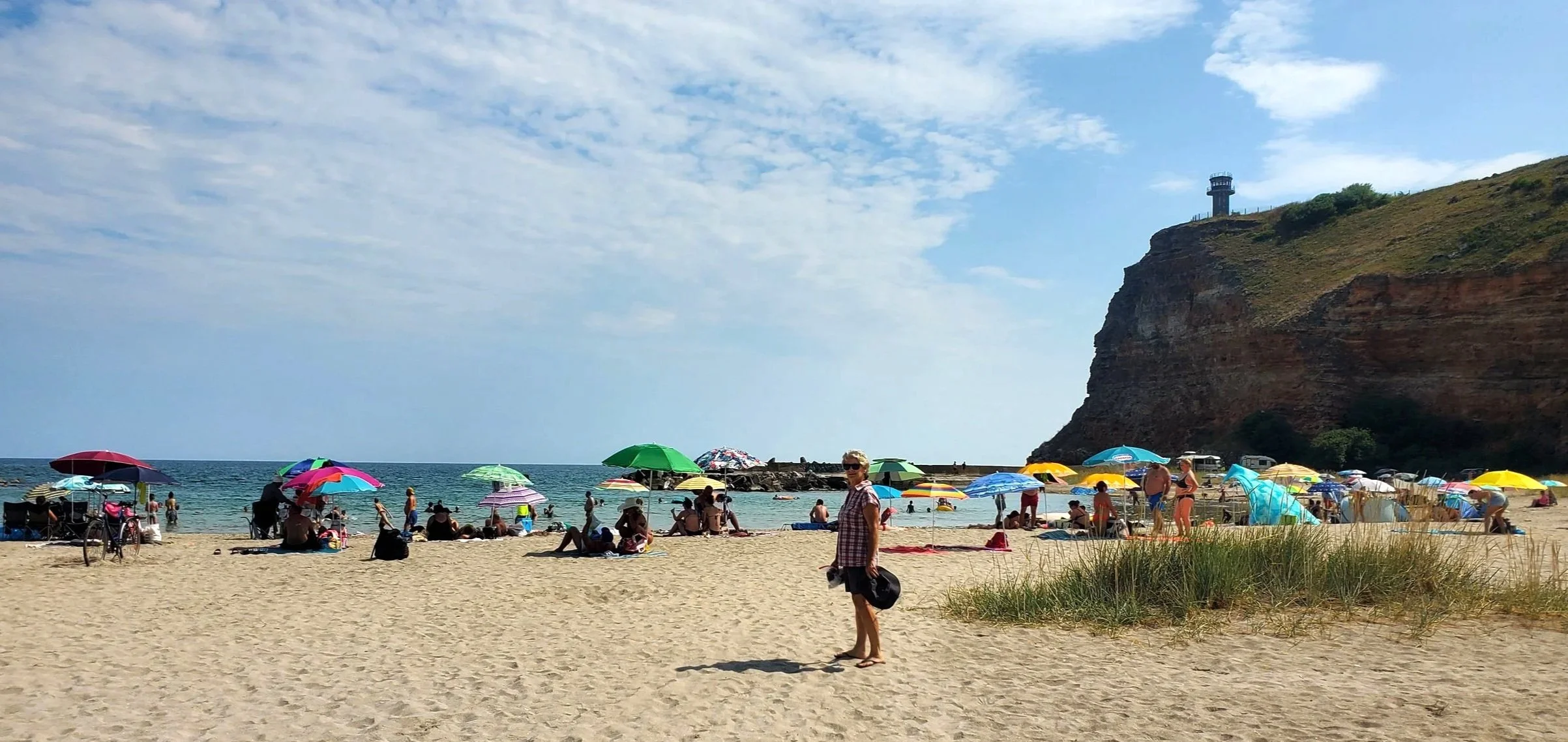
The cliffs above the beach present some great photo ops.
We stayed at the cryptically named Golden Flake Guest House with friendly and helpful host Peter.
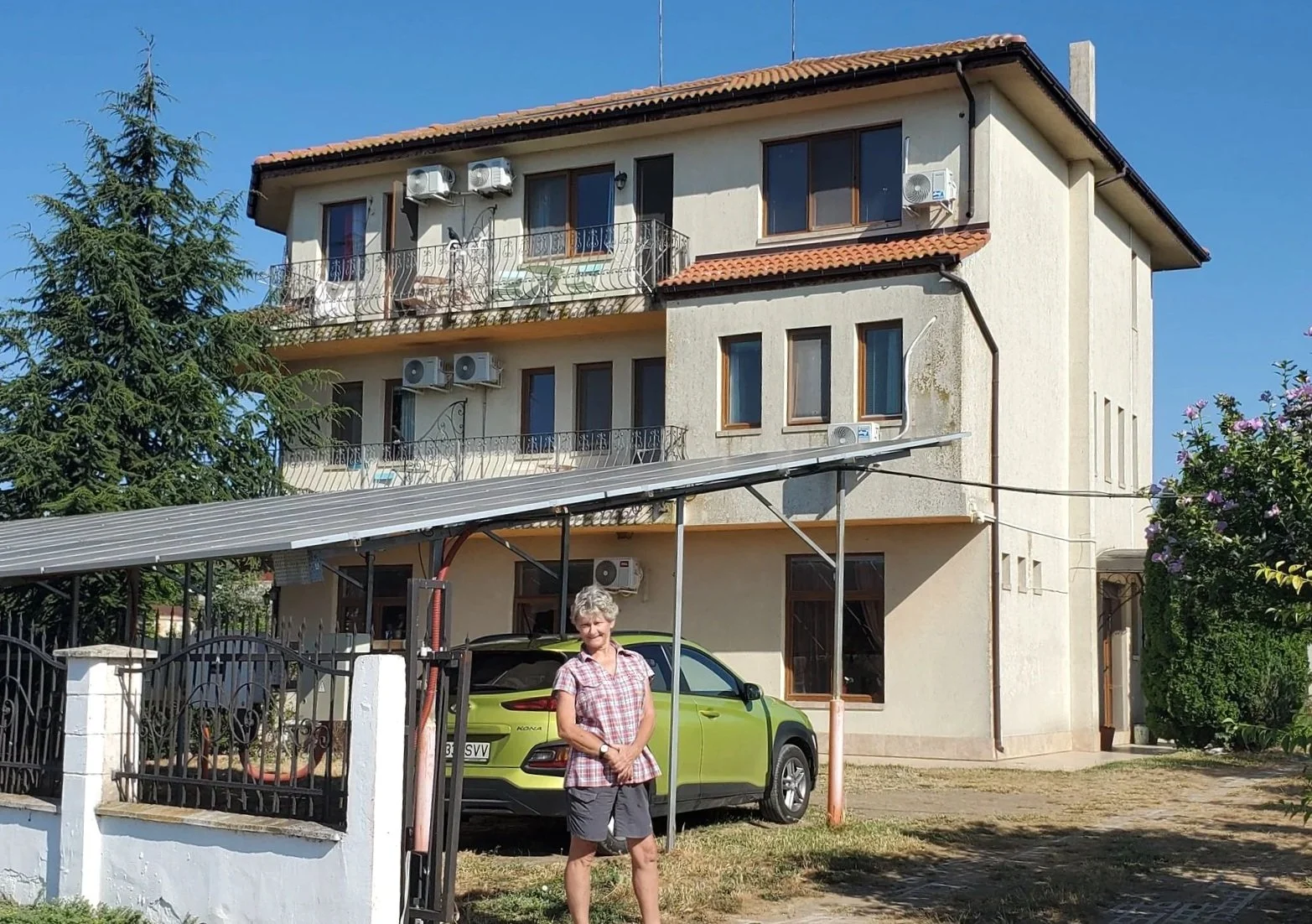
golden flake guesthouse
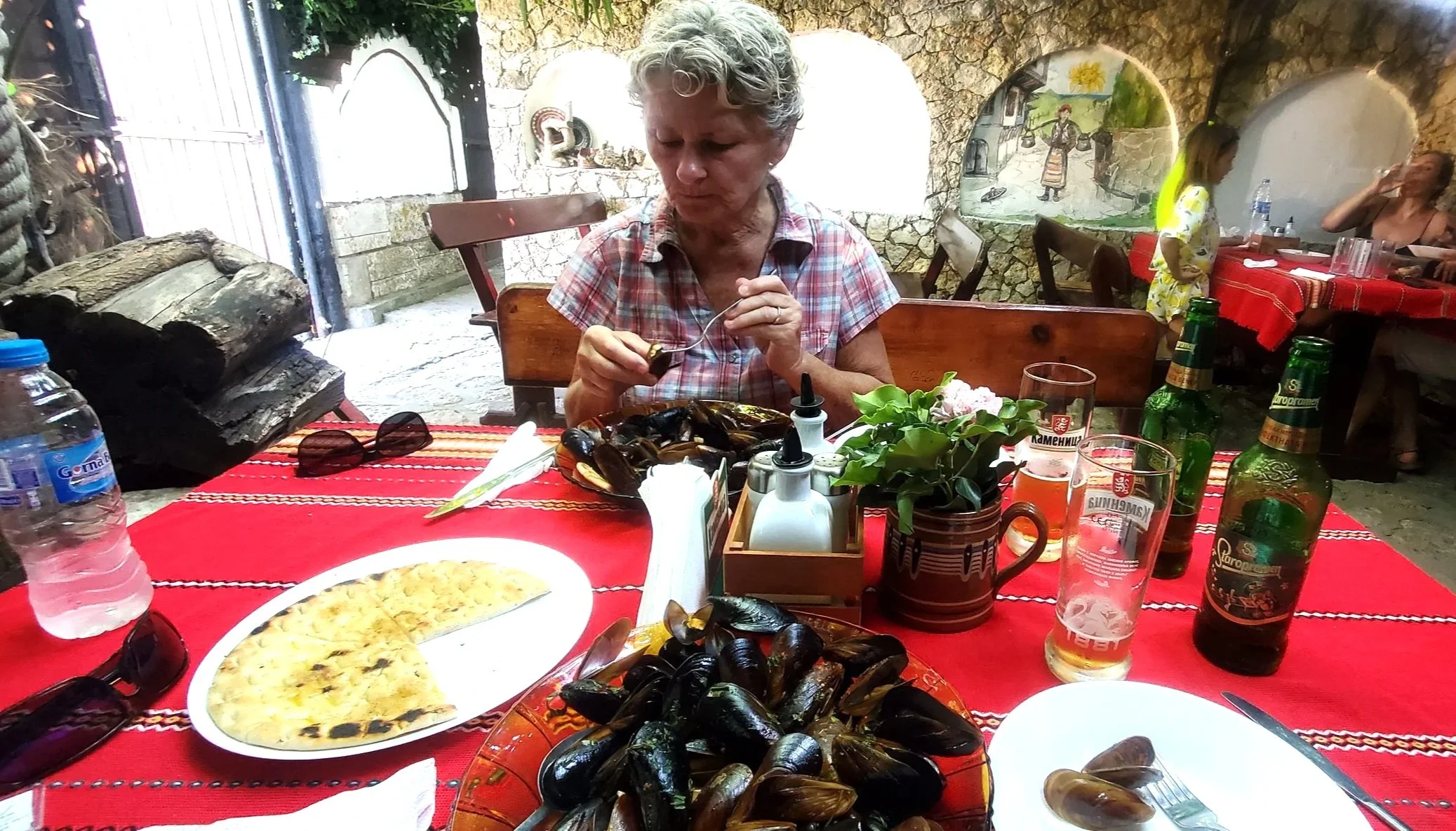
He recommended a nearby local tavern for dinner. Their excellent mussels are a local specialty.
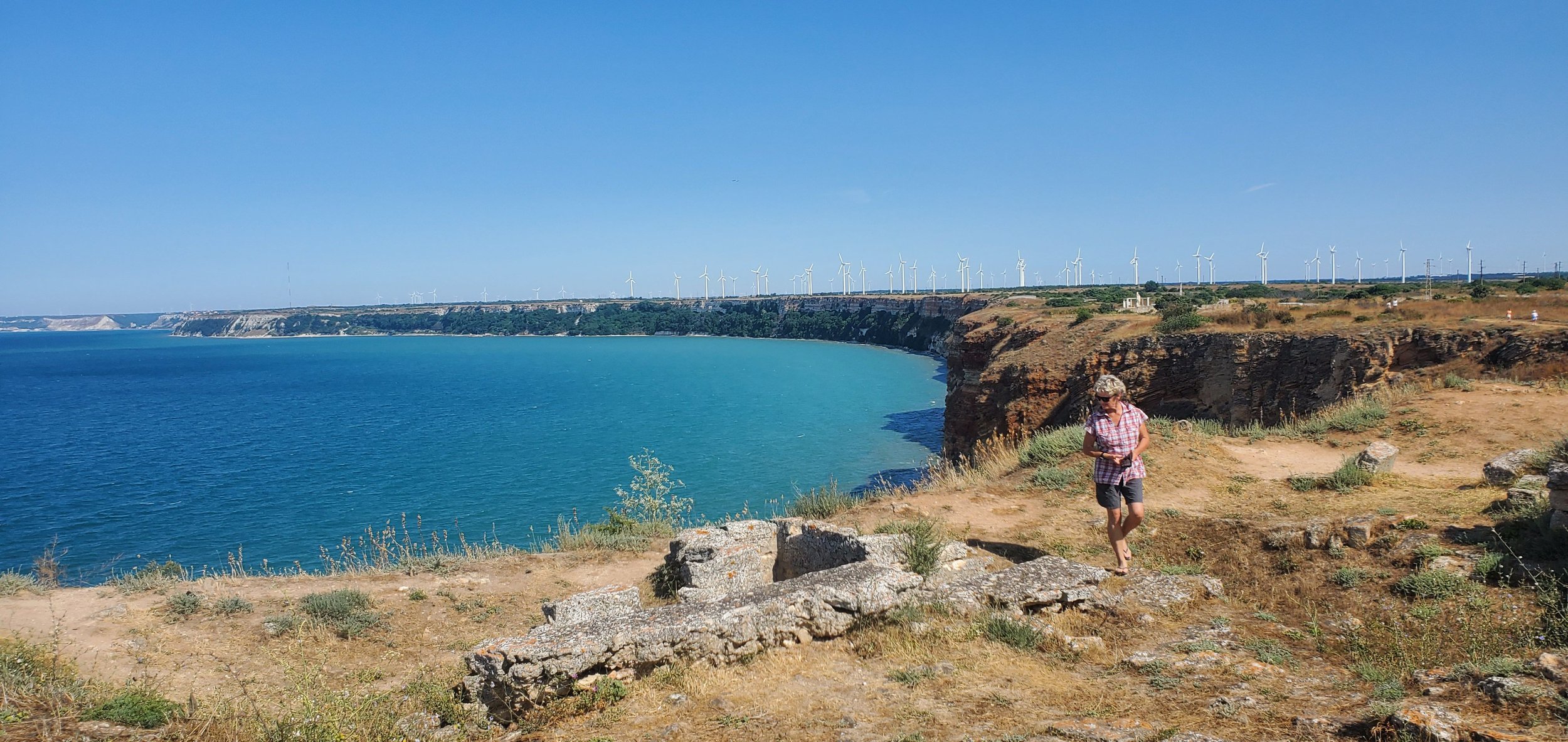
What surprised us about this region was its complex, multi-layered history. We visited nearby Kaliakra Cape. From here there are spectacular cliffs and views of the Black Sea.
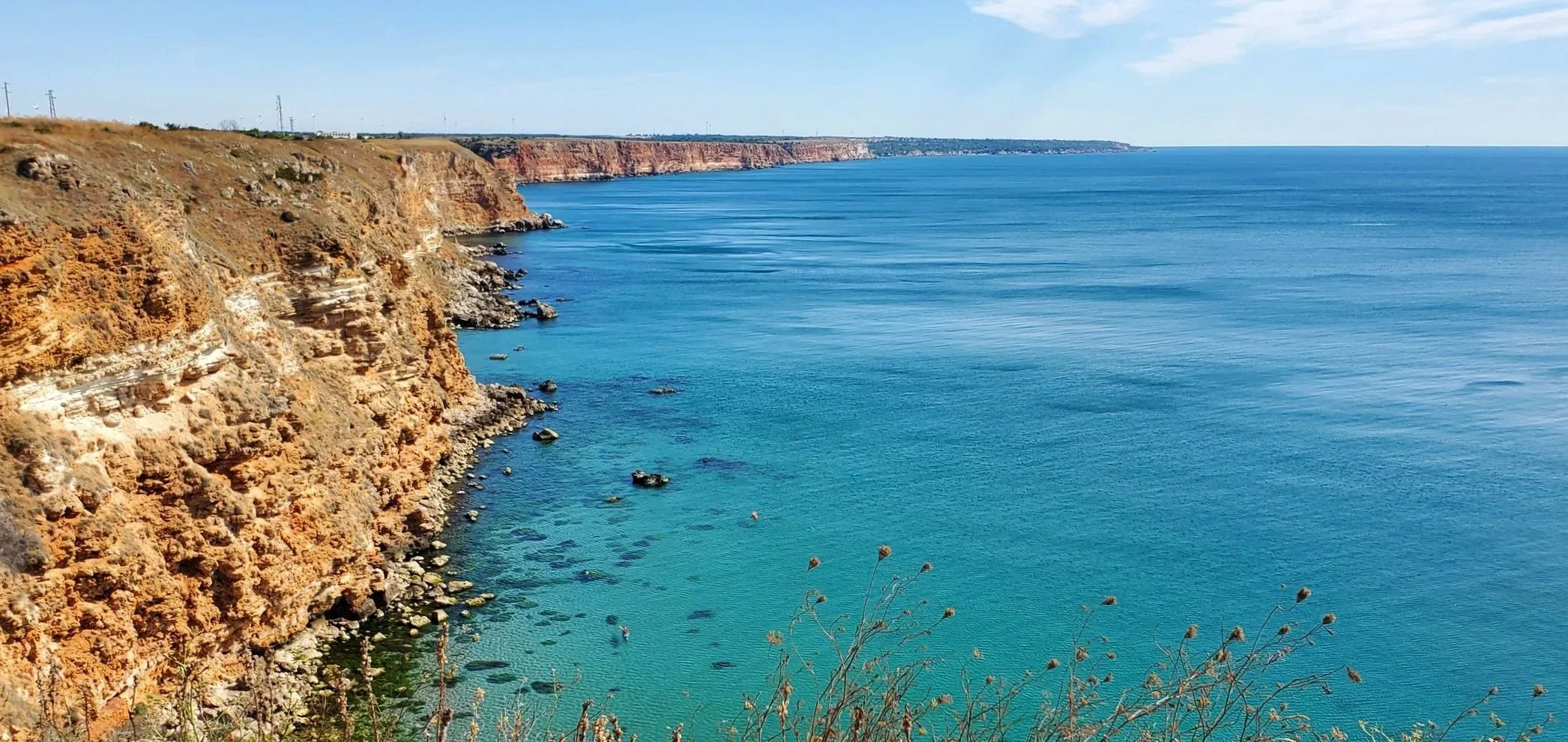
Here there is a structure called the 40 Maidens Monument which commemorates when 40 young local women tied their braids together and jumped off the cliffs to escape capture by the Ottoman Turks during Bulgaria’s struggle for independence in the 19th century.
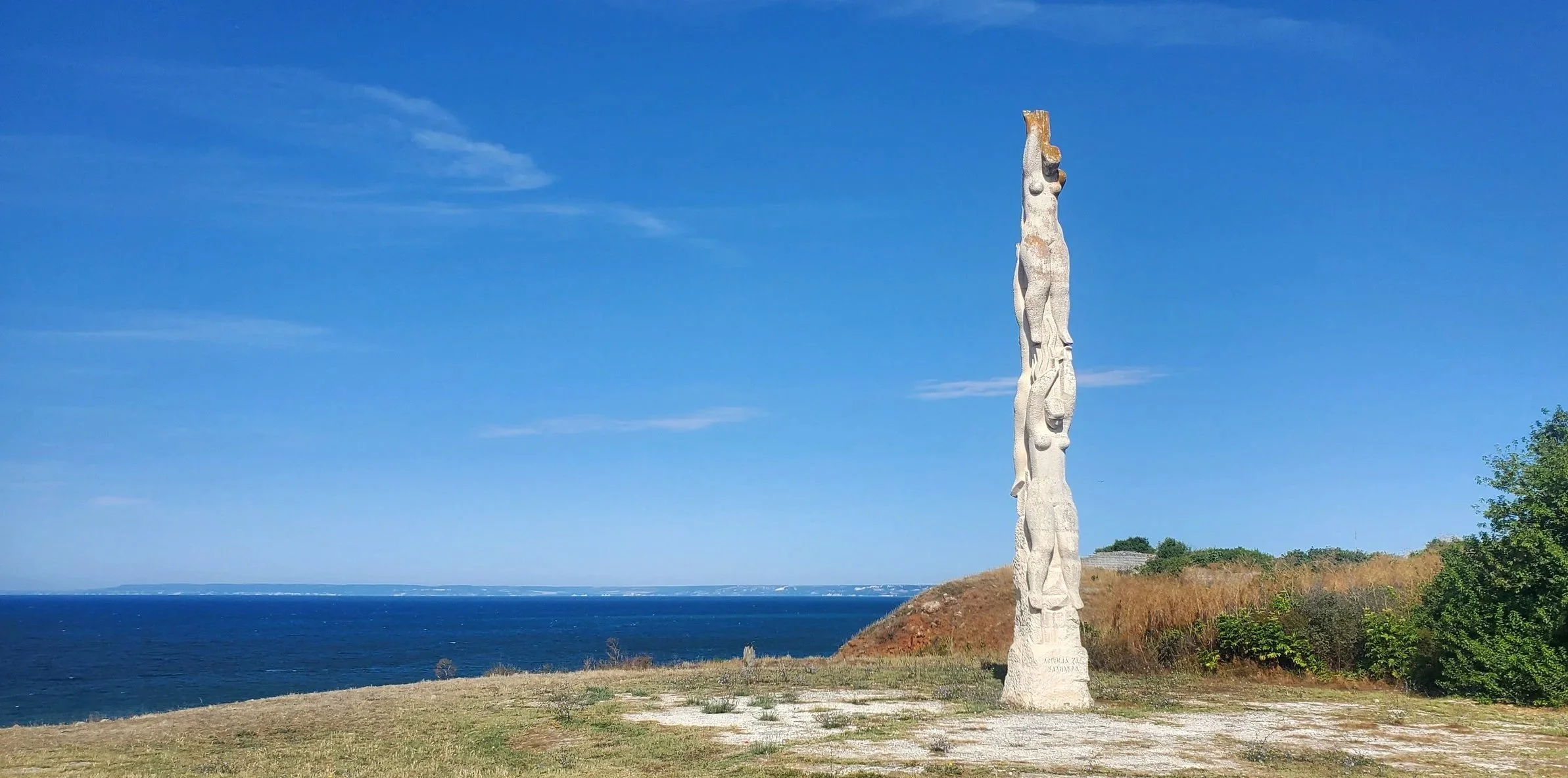
forty maidens monument
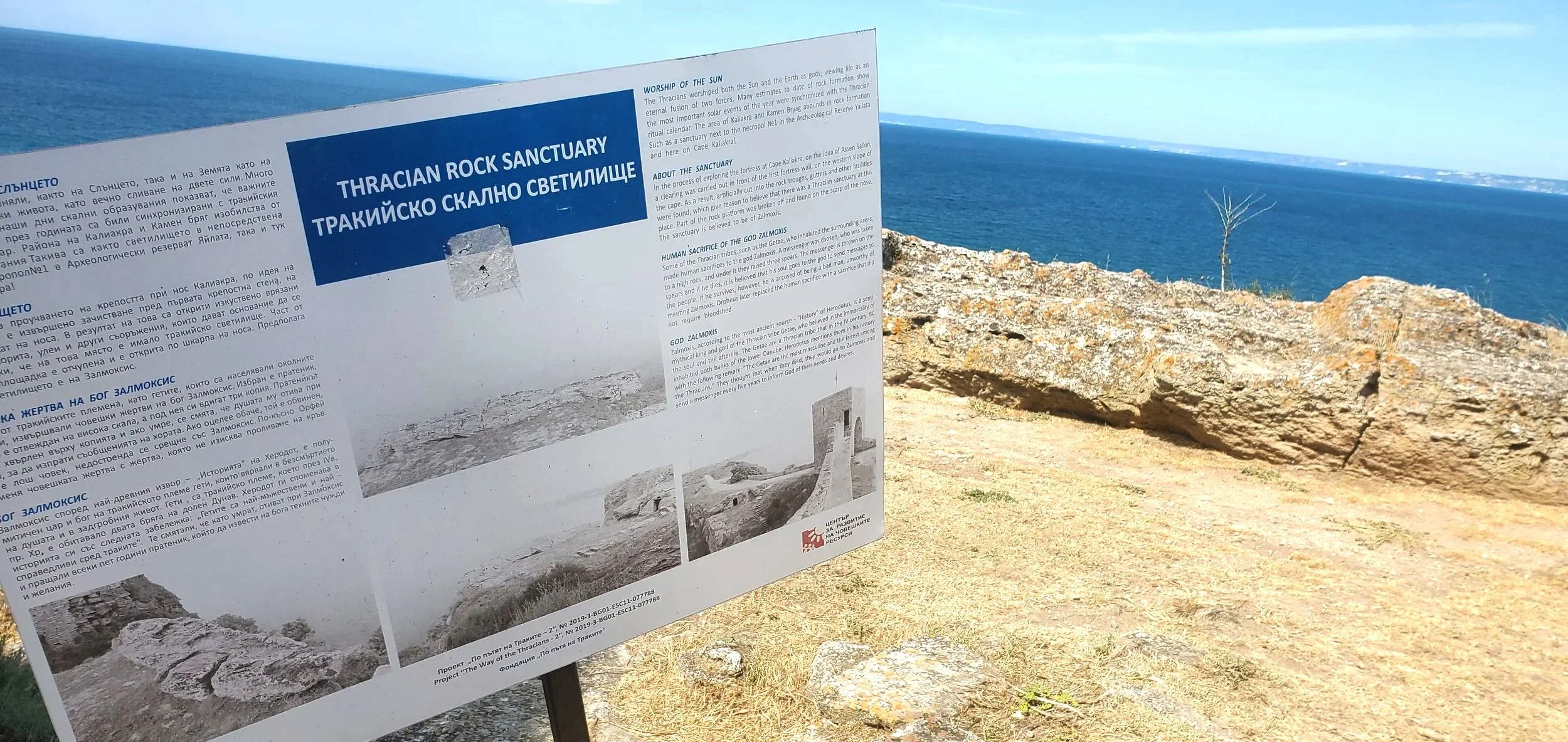
Kaliakra has extensive archaeological ruins, many adjacent to its fortress which dates from as far back as the 4th century BCE.
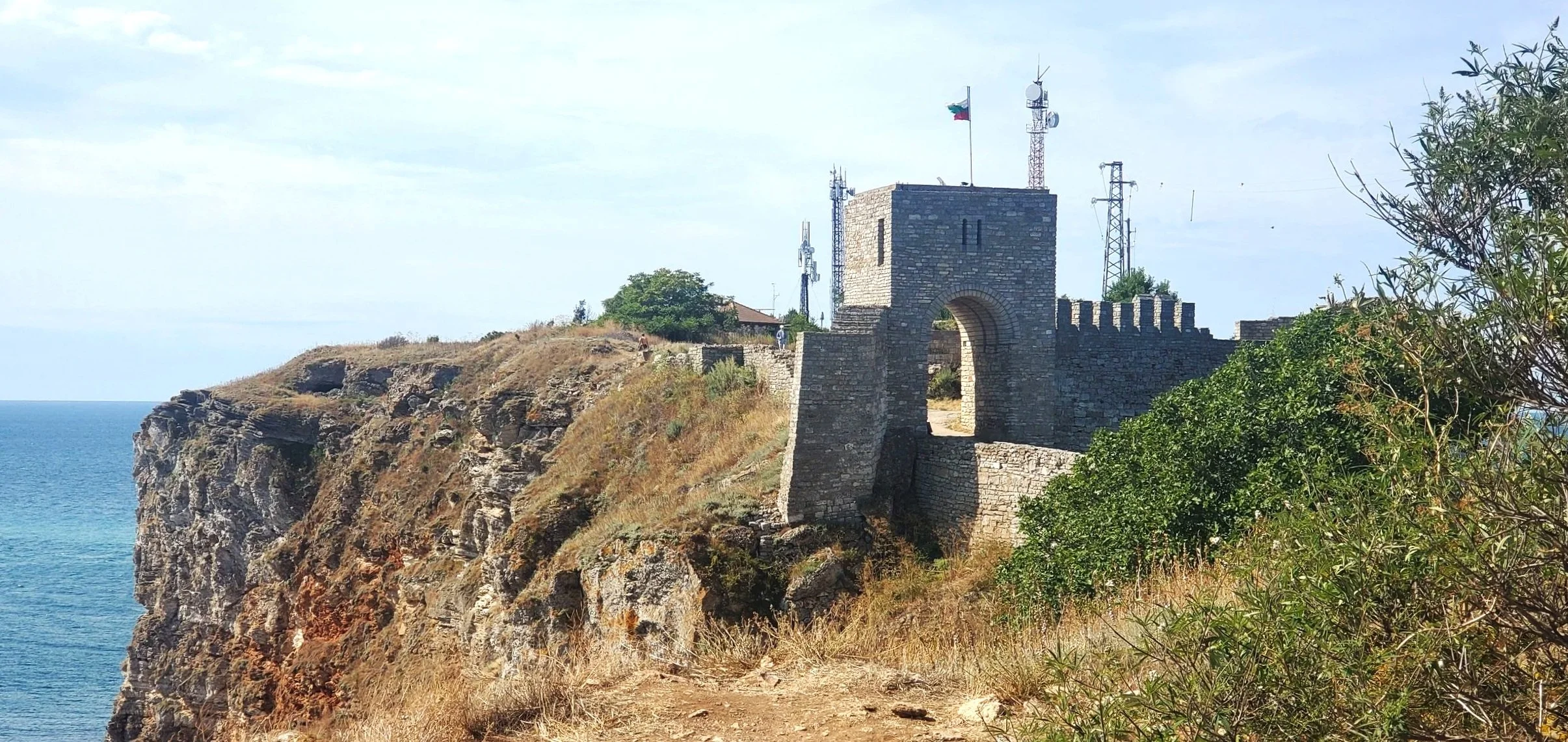
the fortress
There are Thracian, Greek and Roman ruins, as well as more recent Bulgarian sites.
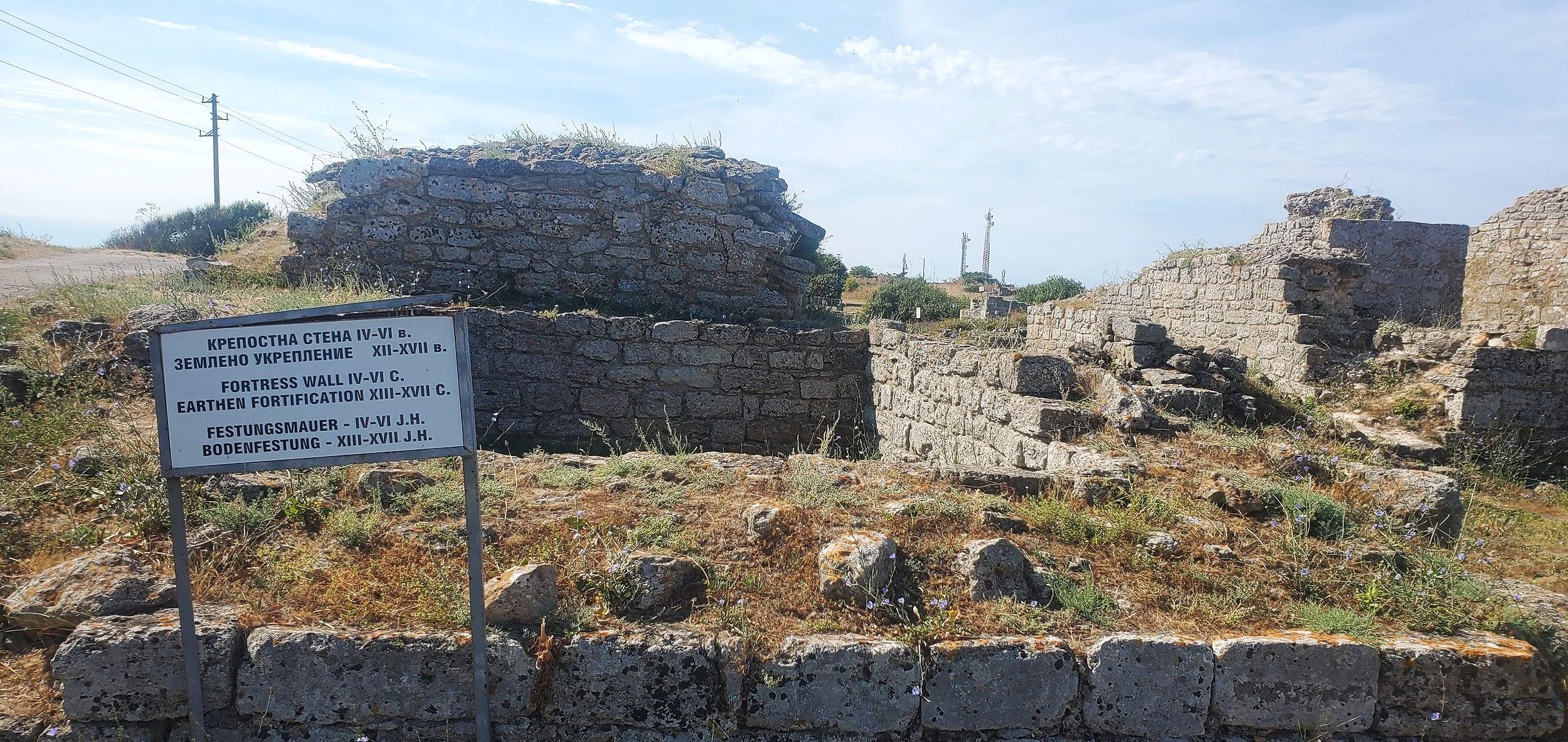
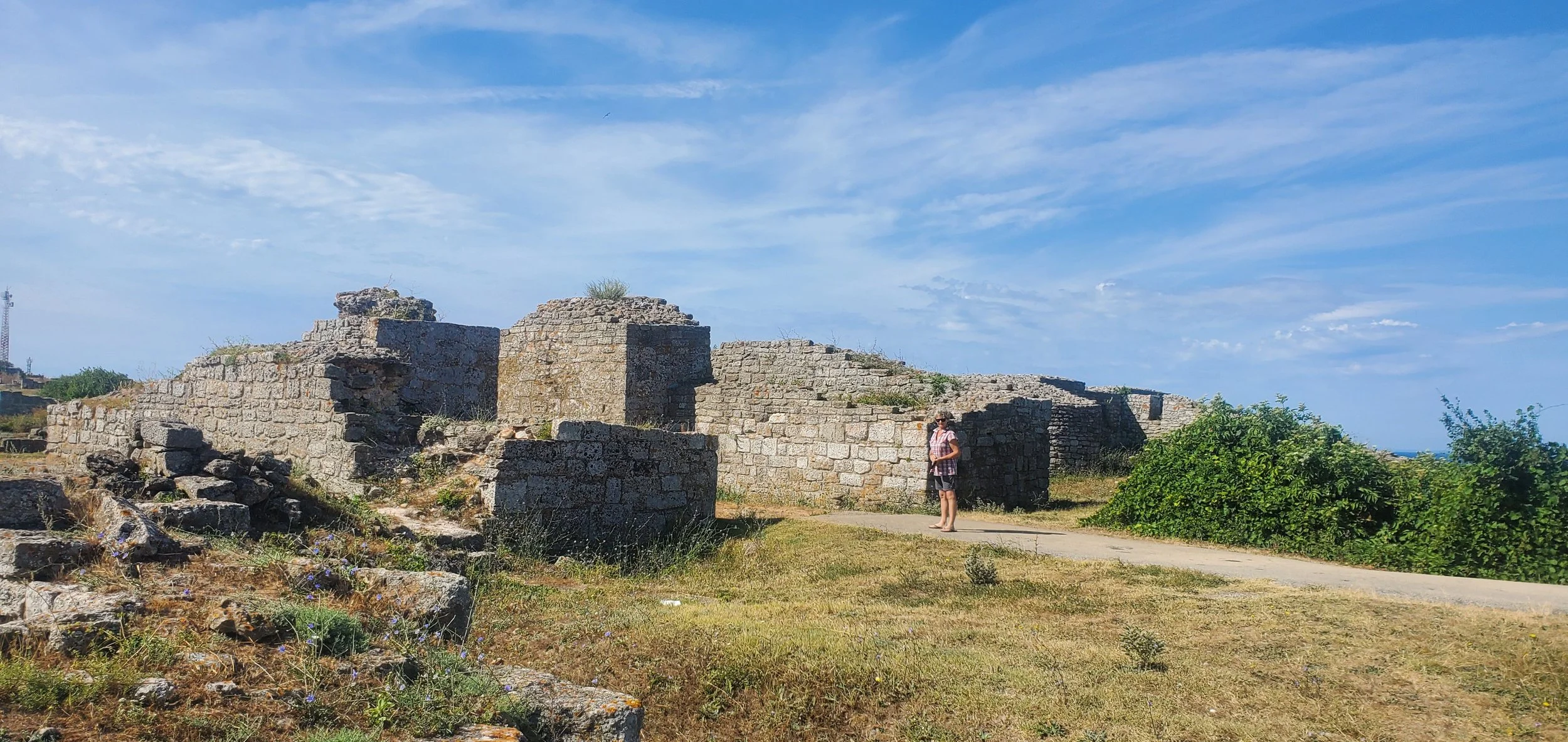
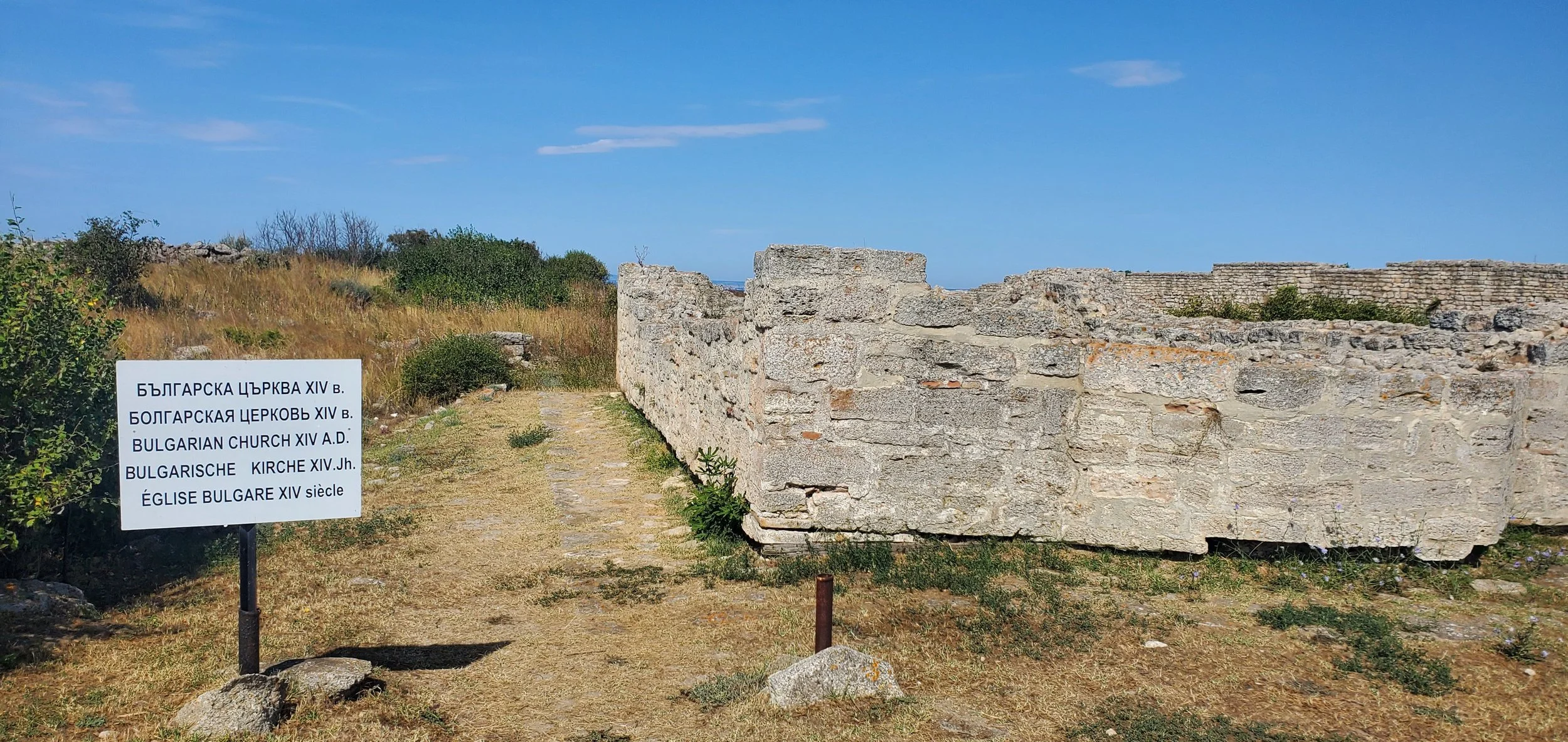
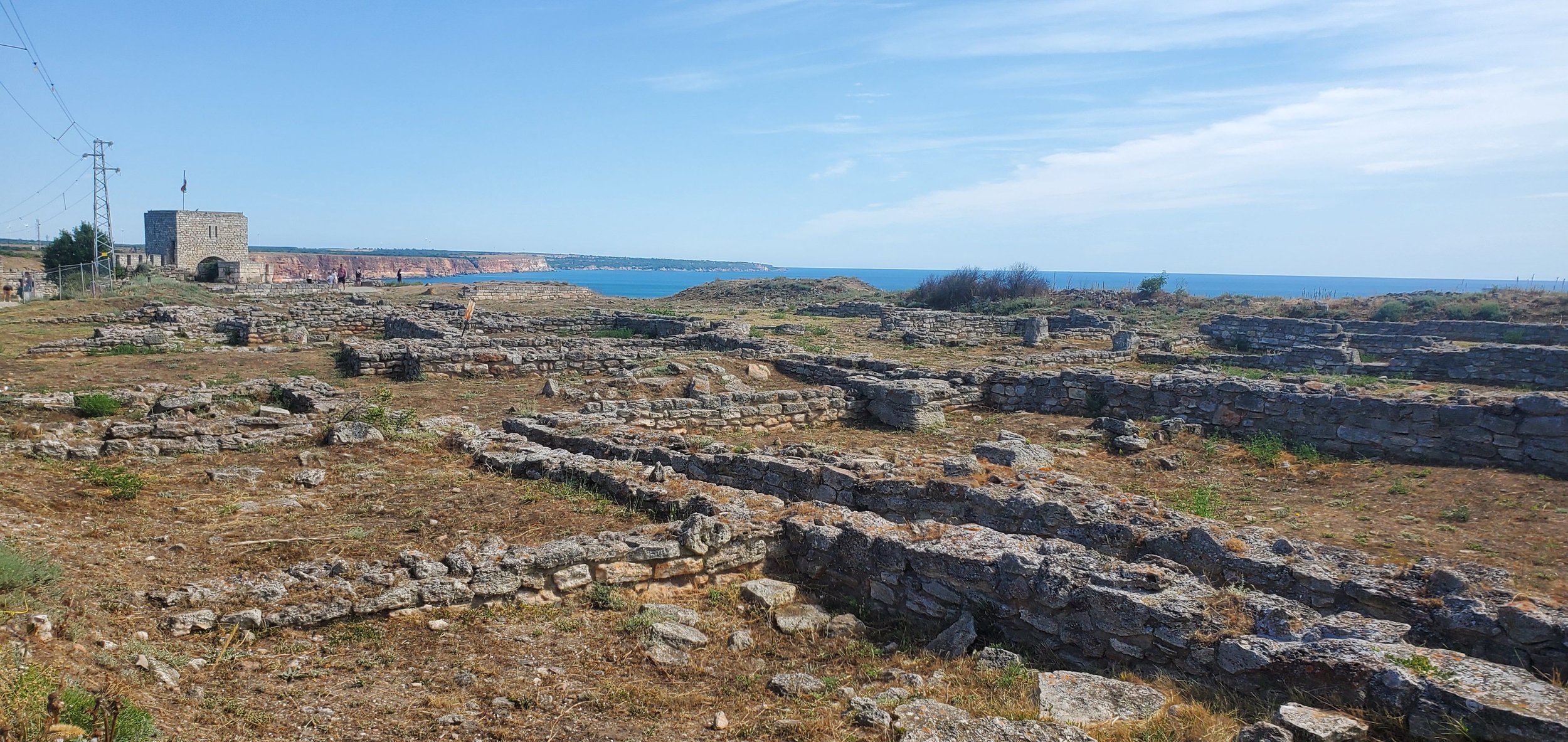
The current fortress structures date from medieval times.
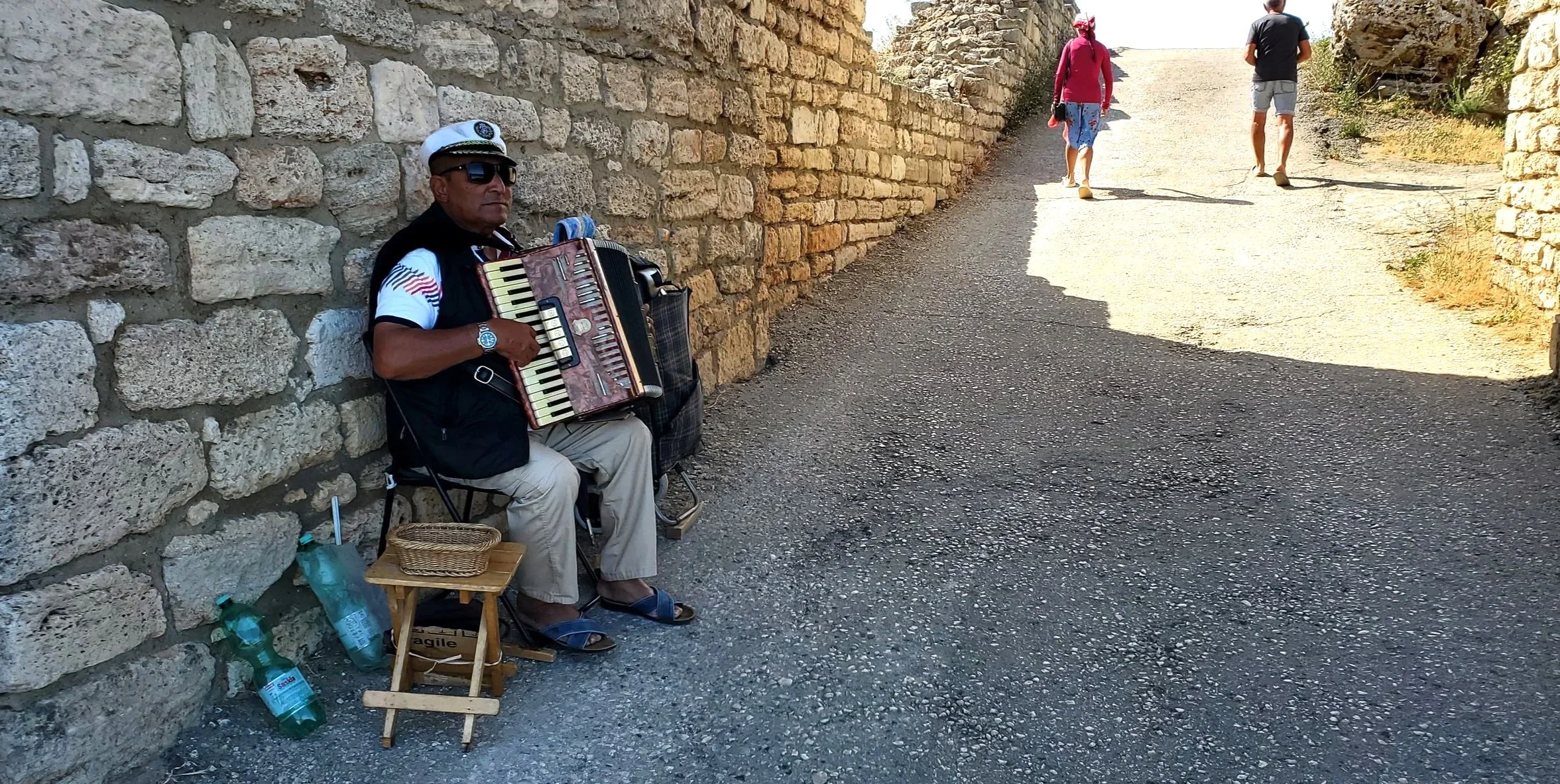
busker at the fortress entrance.
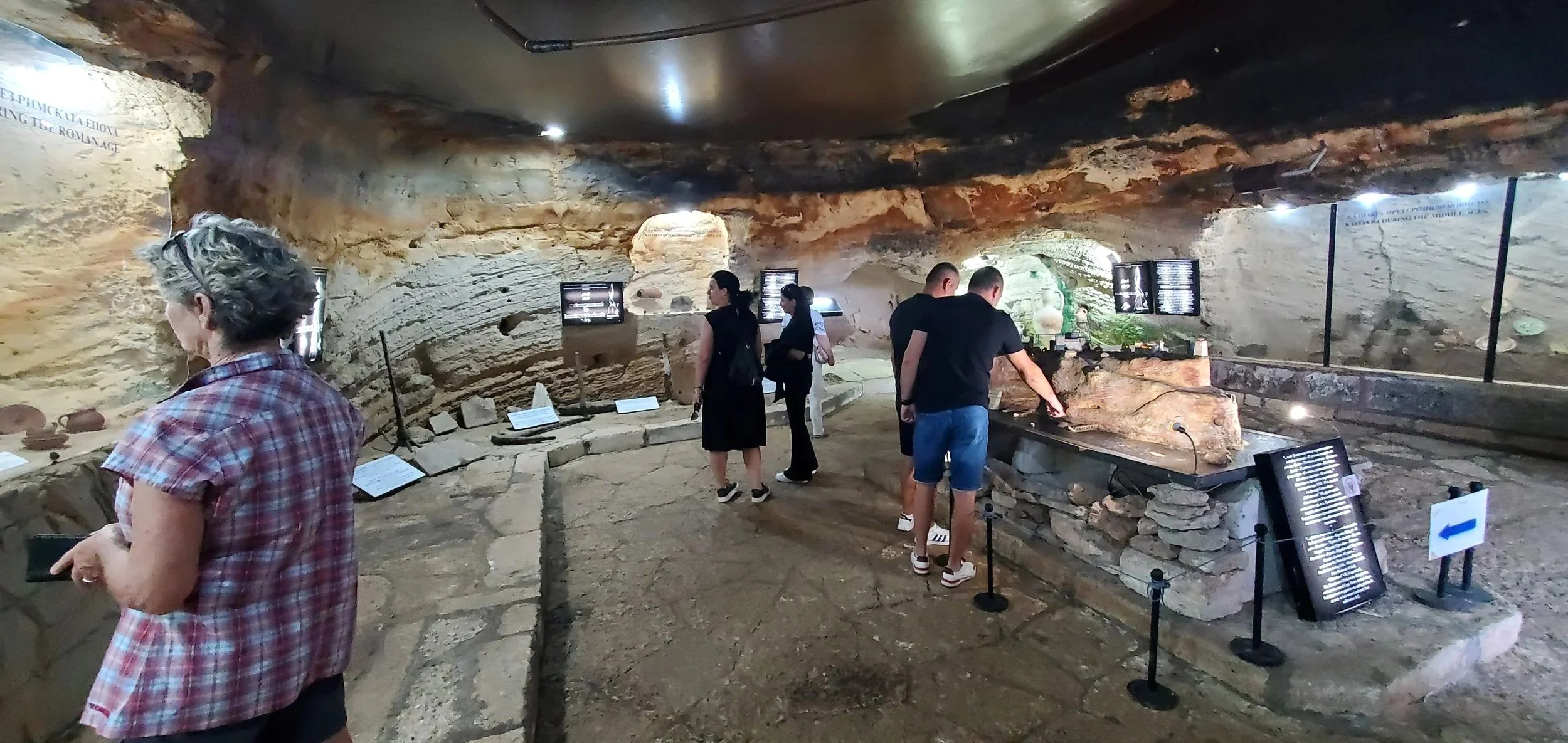
It contains a small museum.
From Kaliakra we drove to nearby Adora Beach for a swim.
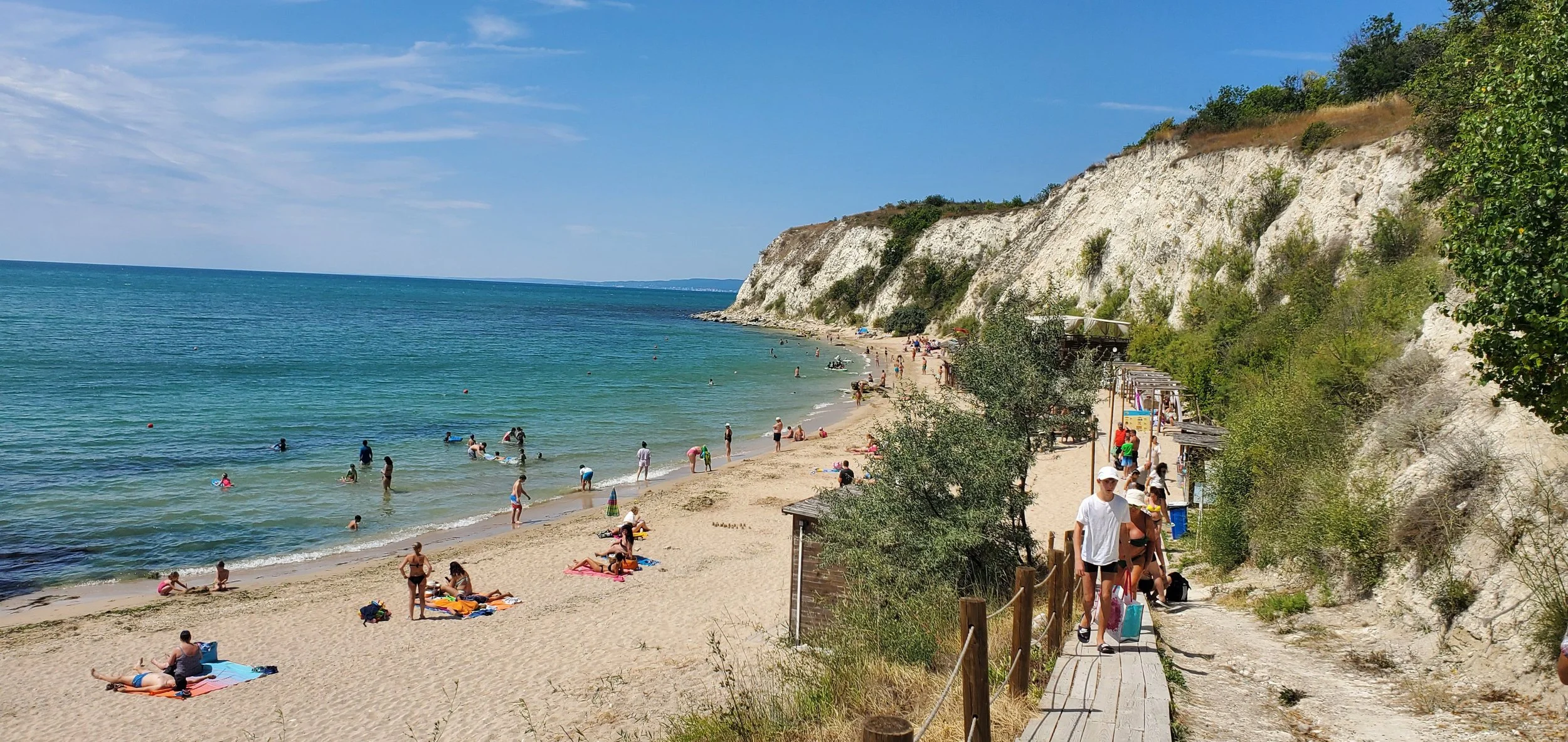
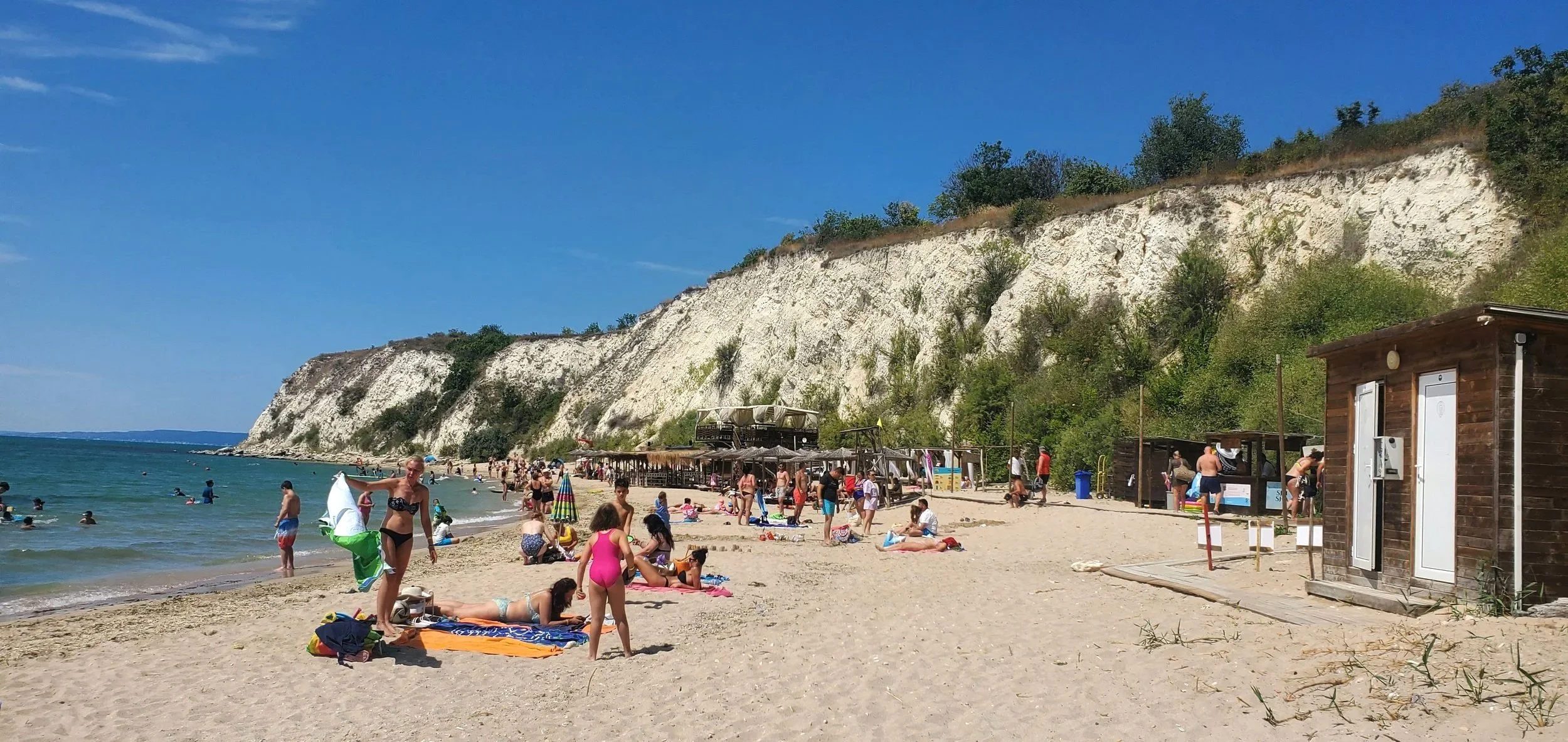
Pleasant and not overly crowded.
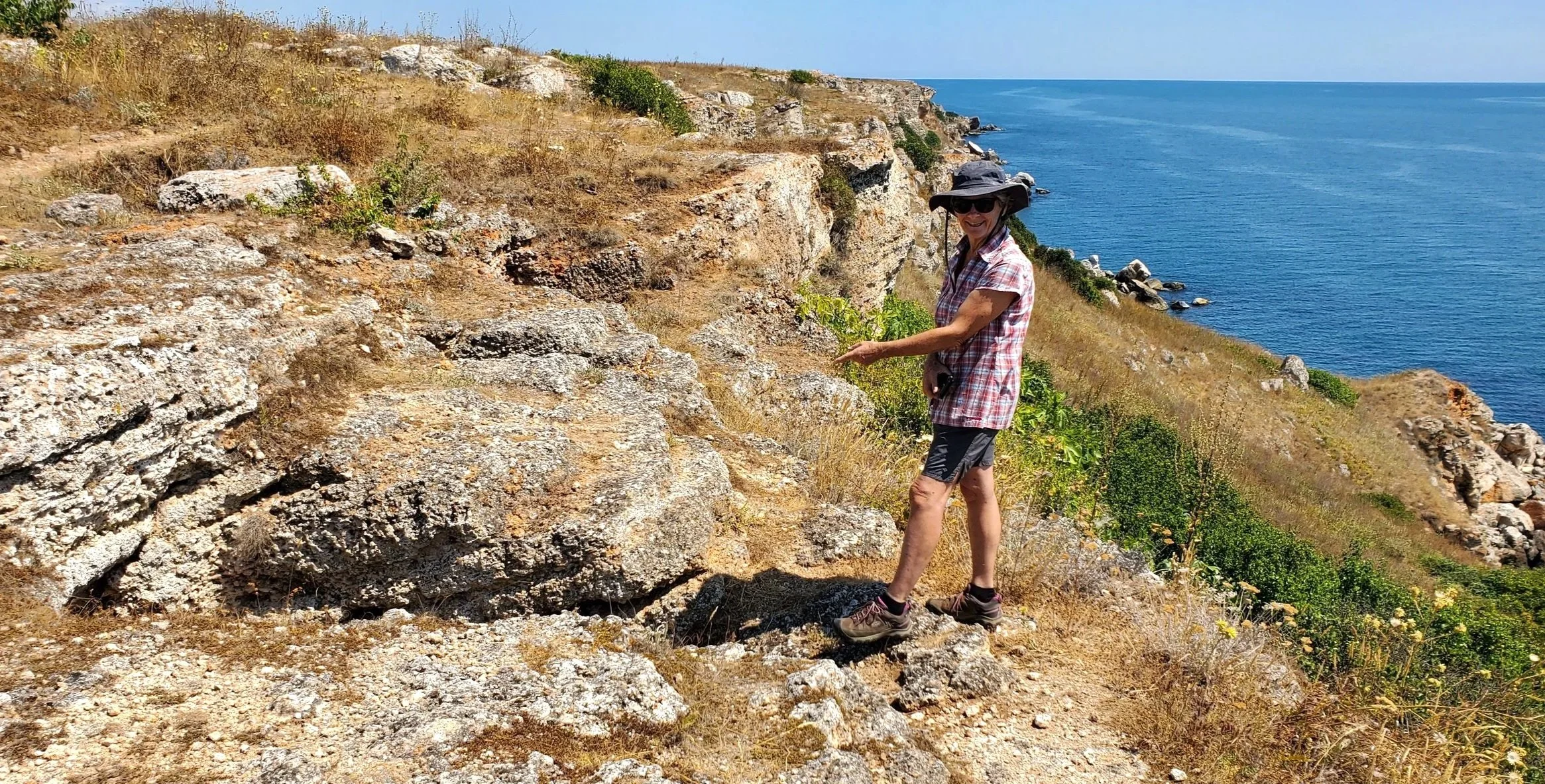
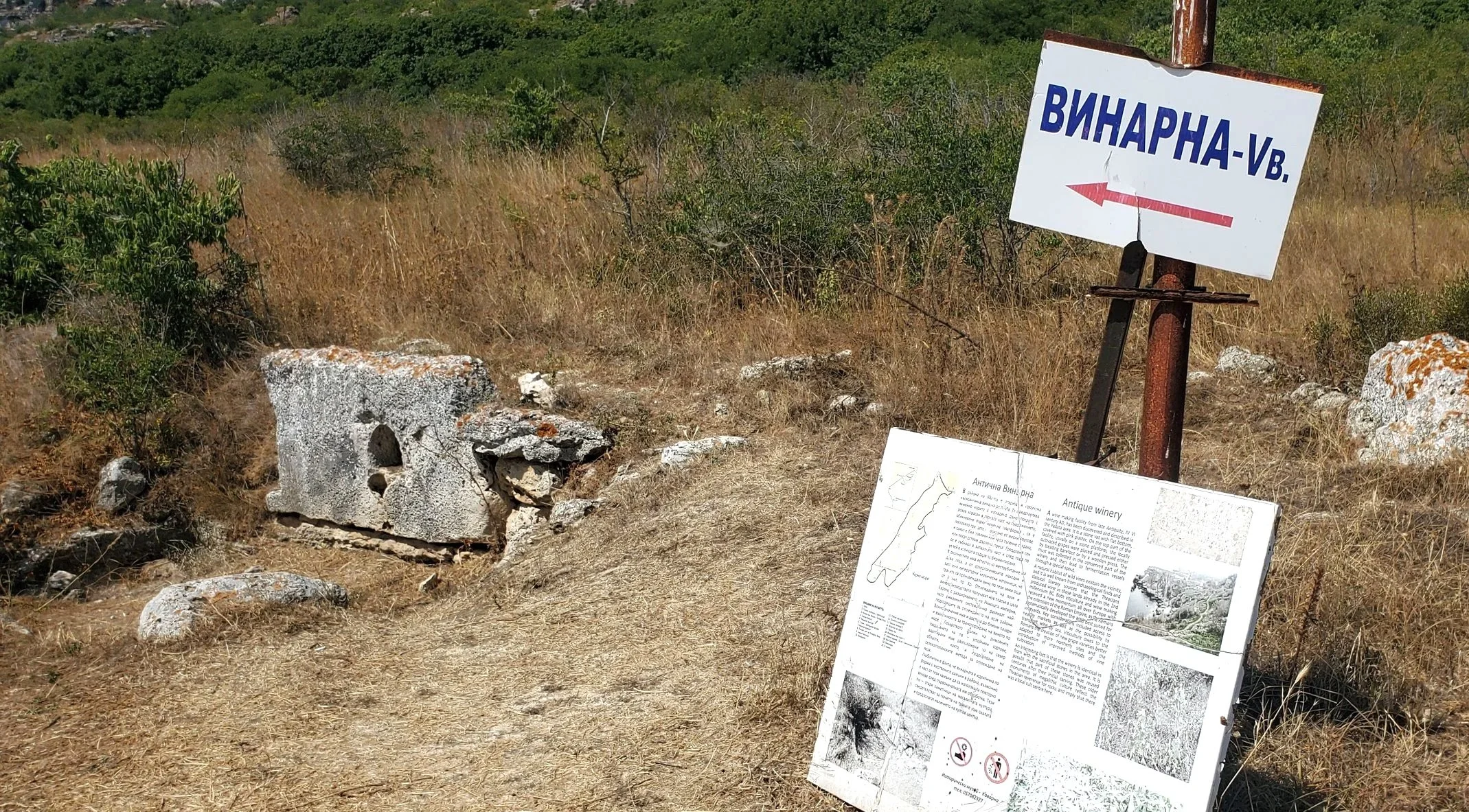
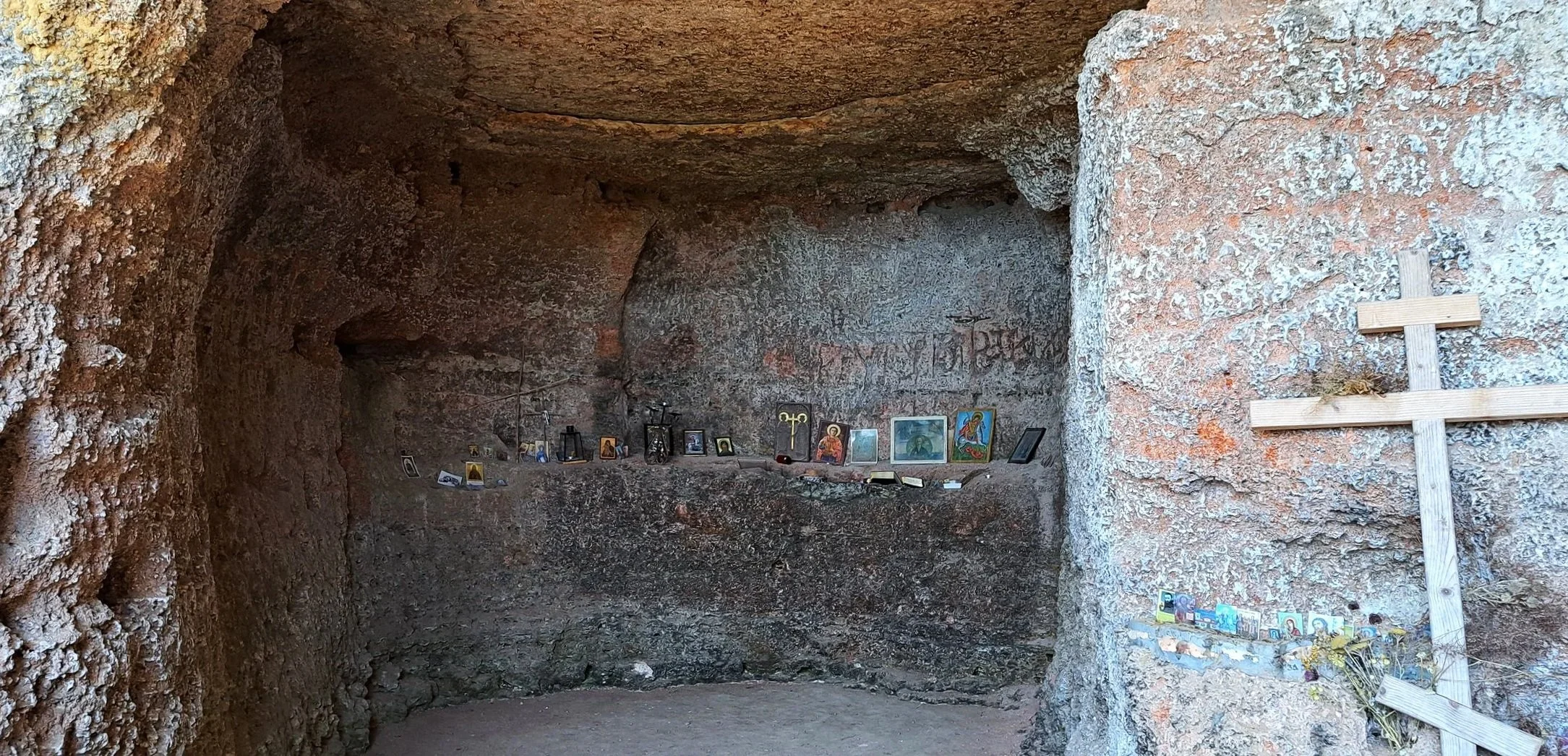
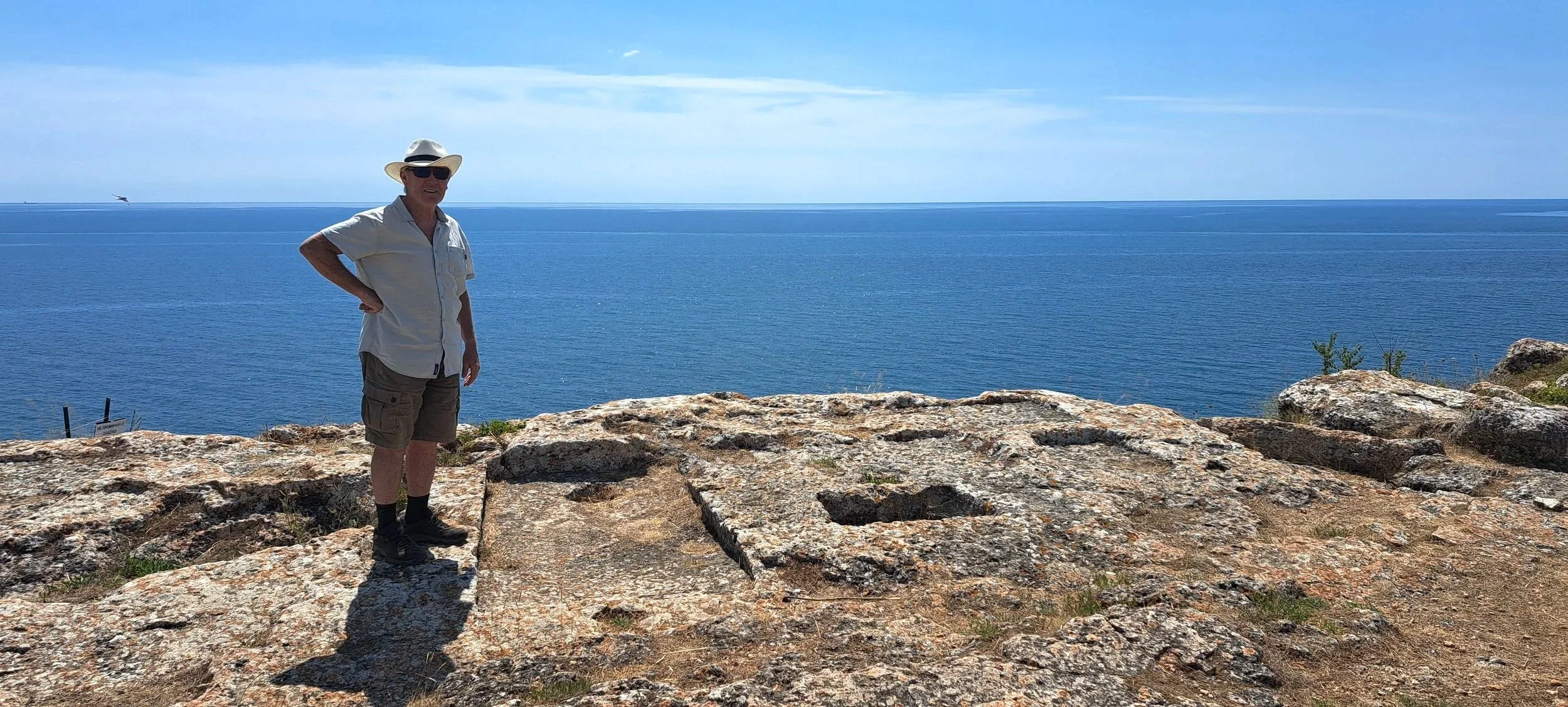
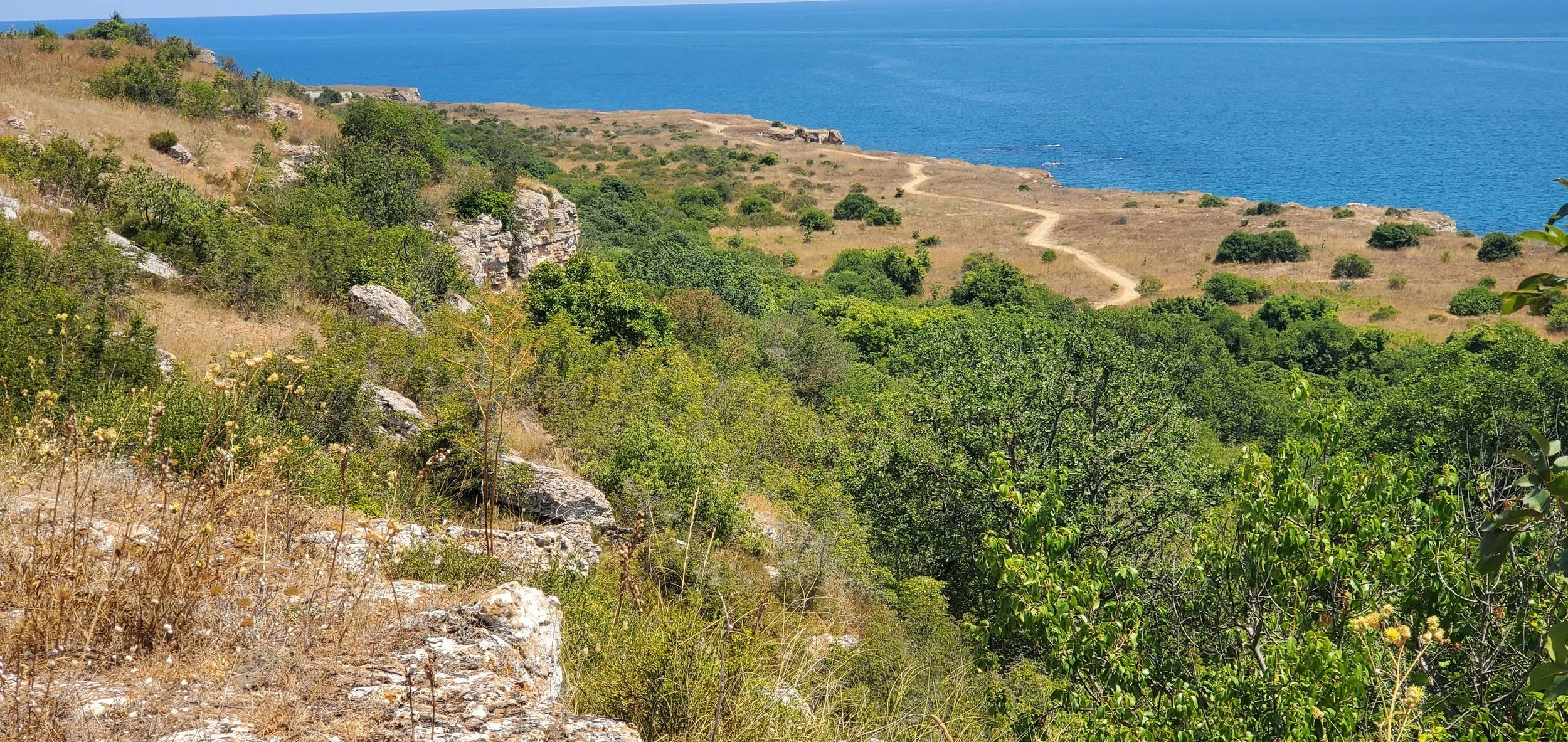
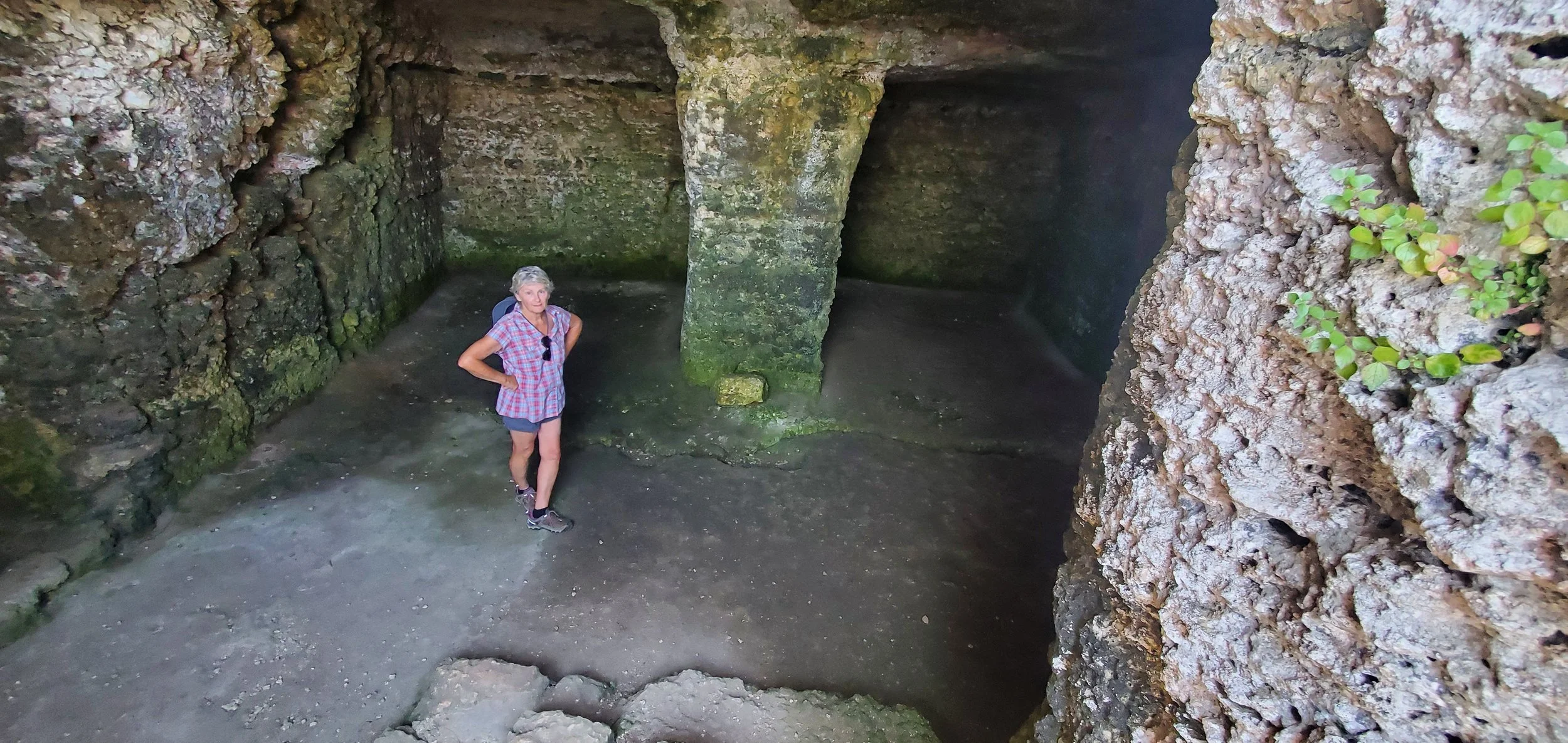
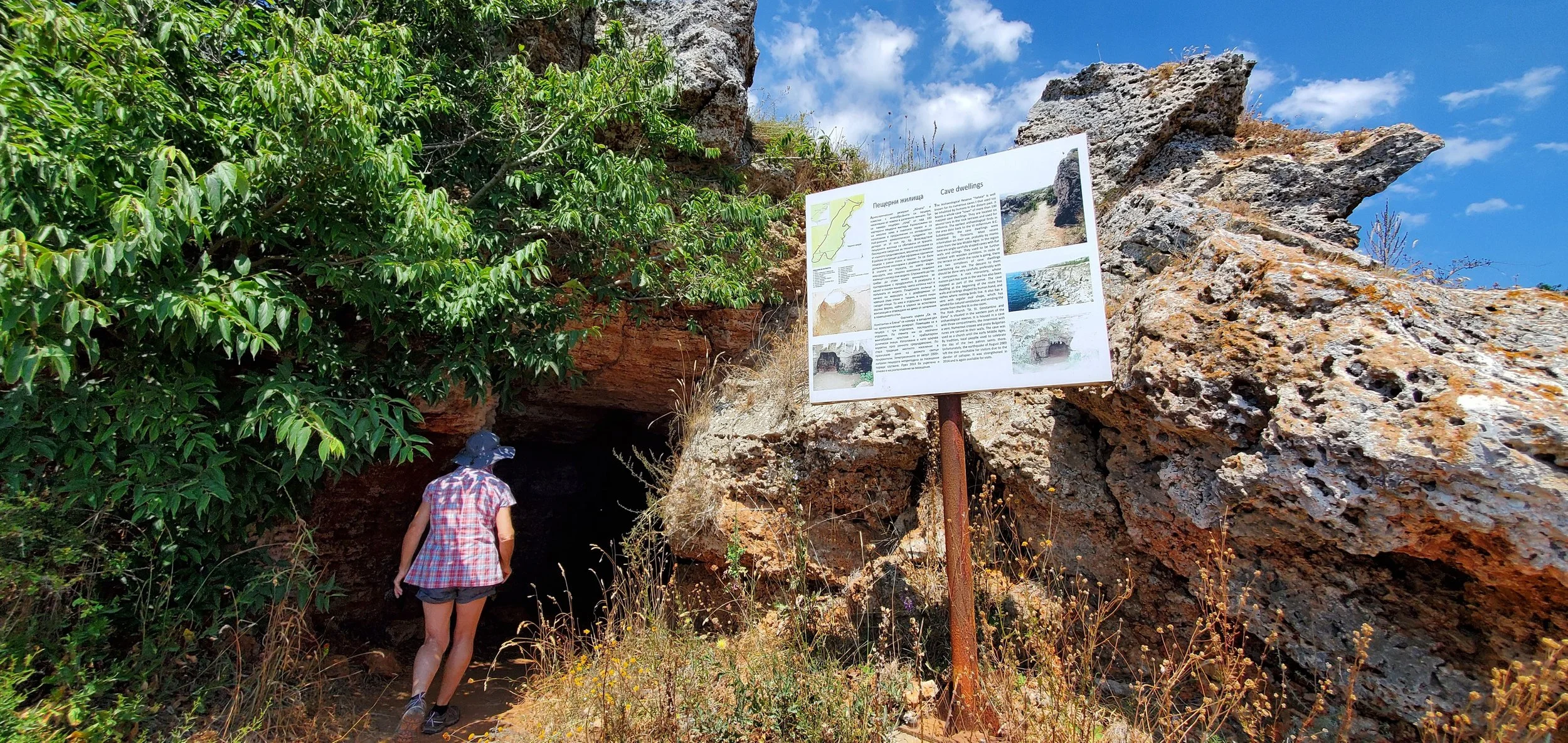
During our few days around Bulgarevo we also visited the Yaialta Archaeological Park. It has a cave city of ‘101 apartments’ and was settled in the 5th century BCE.
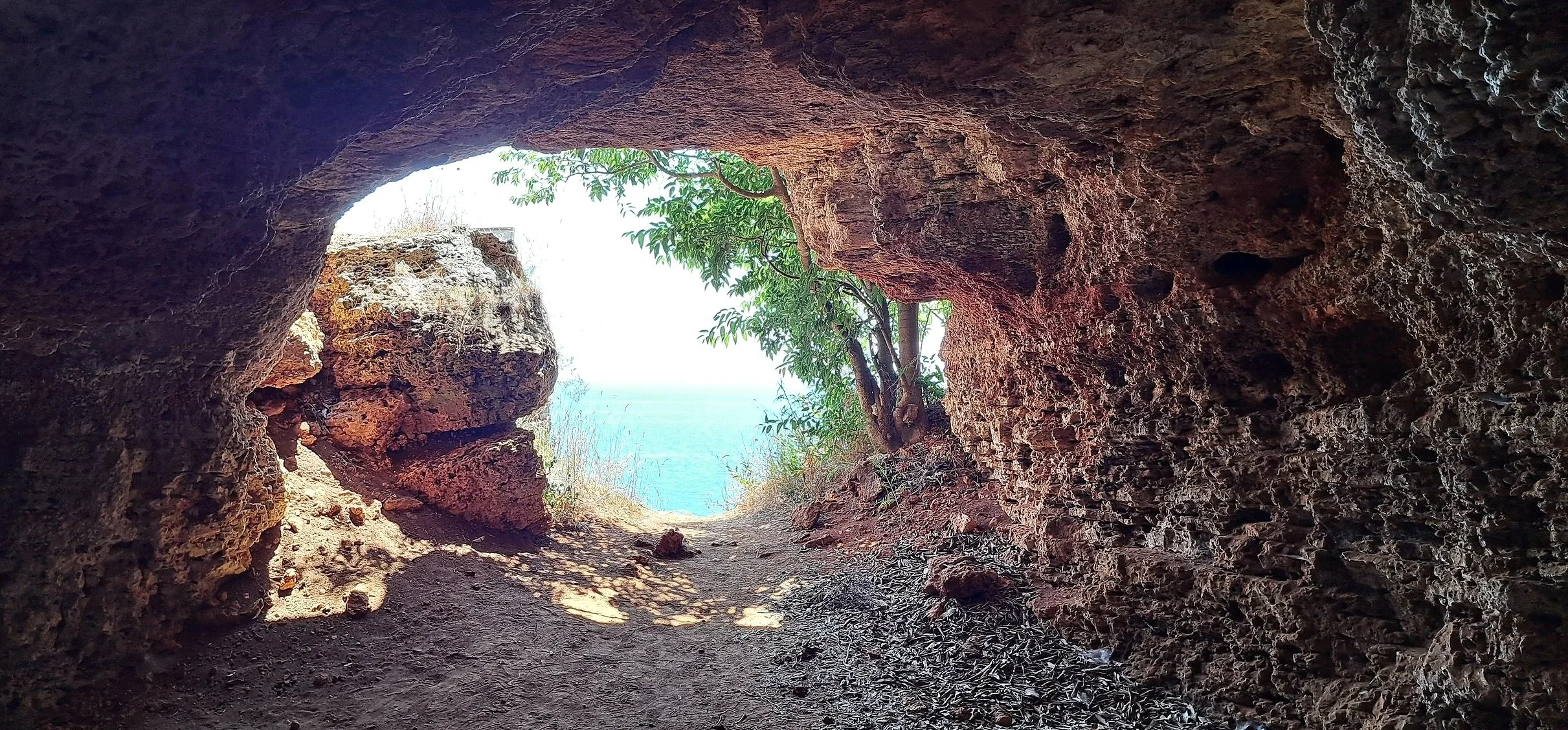
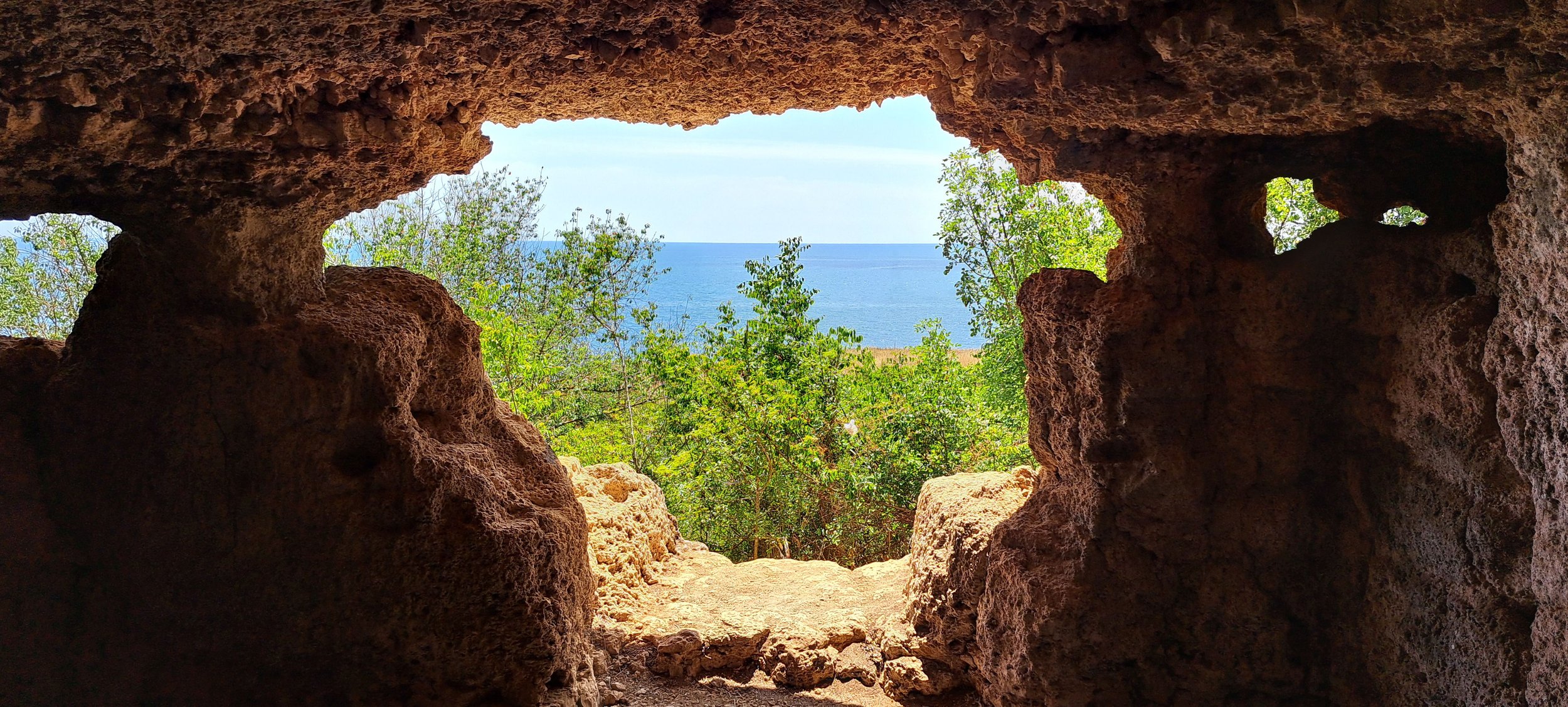
looking out from a cave dwelling
From here there are more spectacular views.
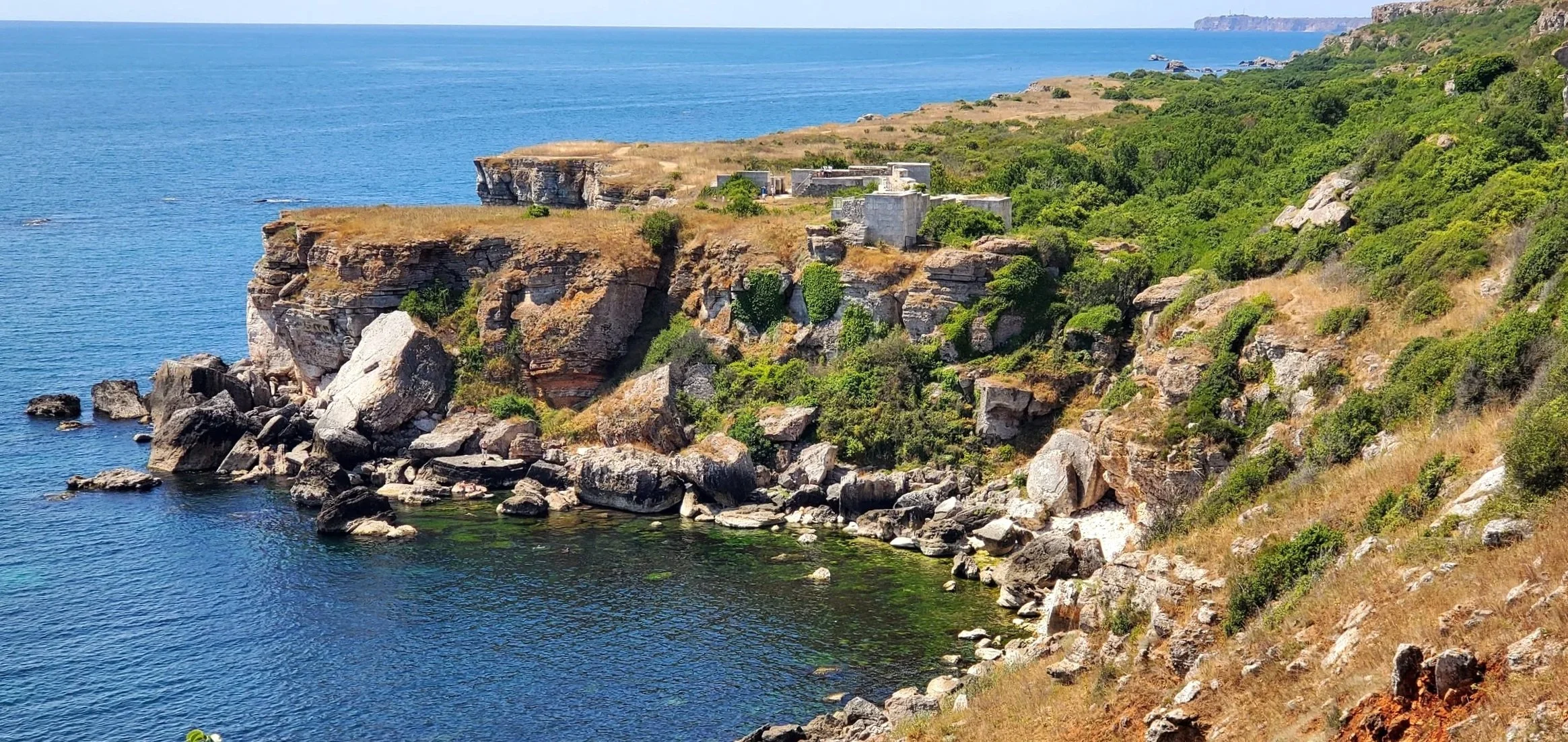
Lots to explore.
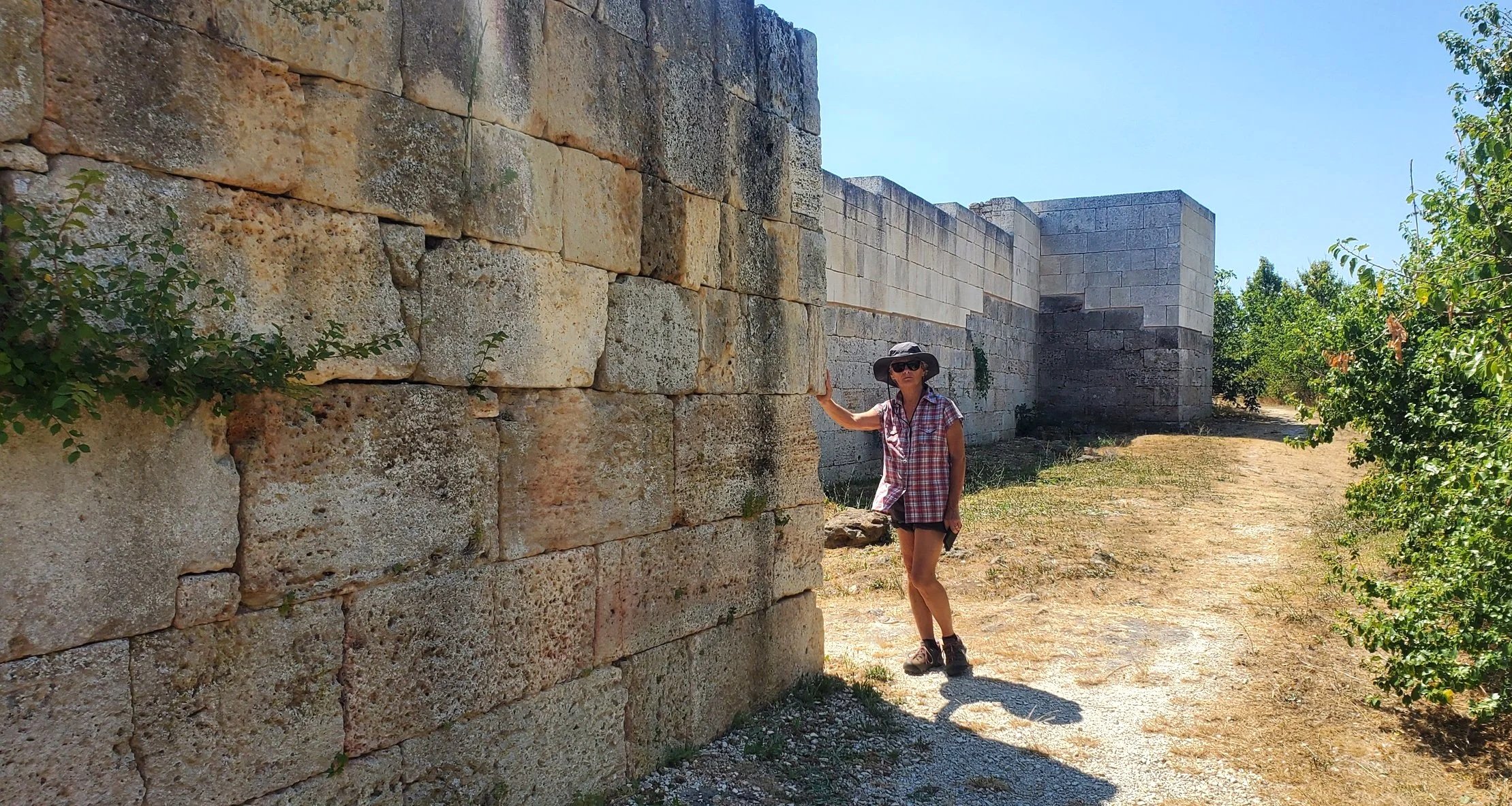
There are the remains of a Byzantine fortress.
An antique winery.
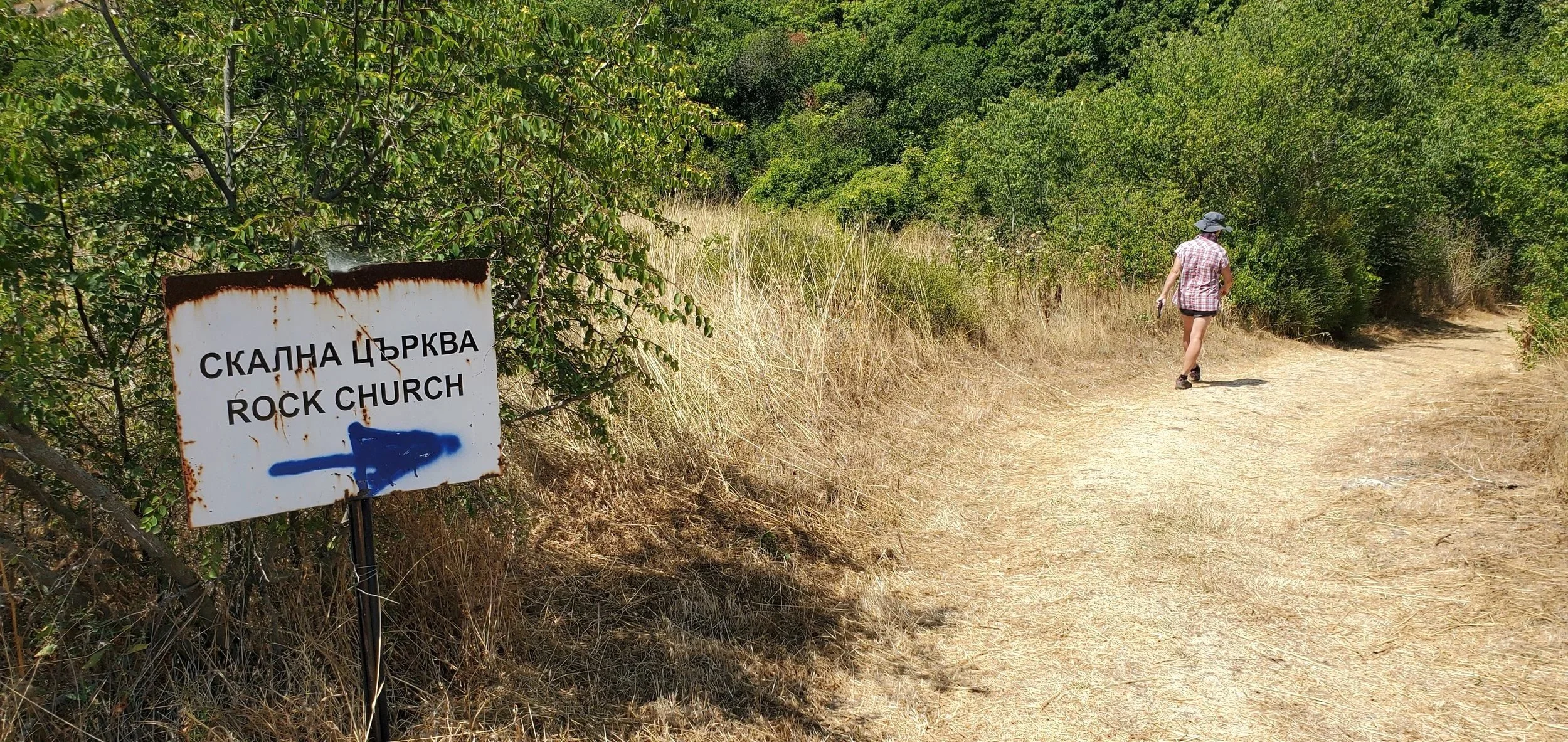
An early Christian church.
When our time on the Black Sea was up, we had a drive of about 4 hours to Bucharest for our flight the next day to Istanbul. It included a crossing of the Danube River, the border between Bulgaria and Romania.
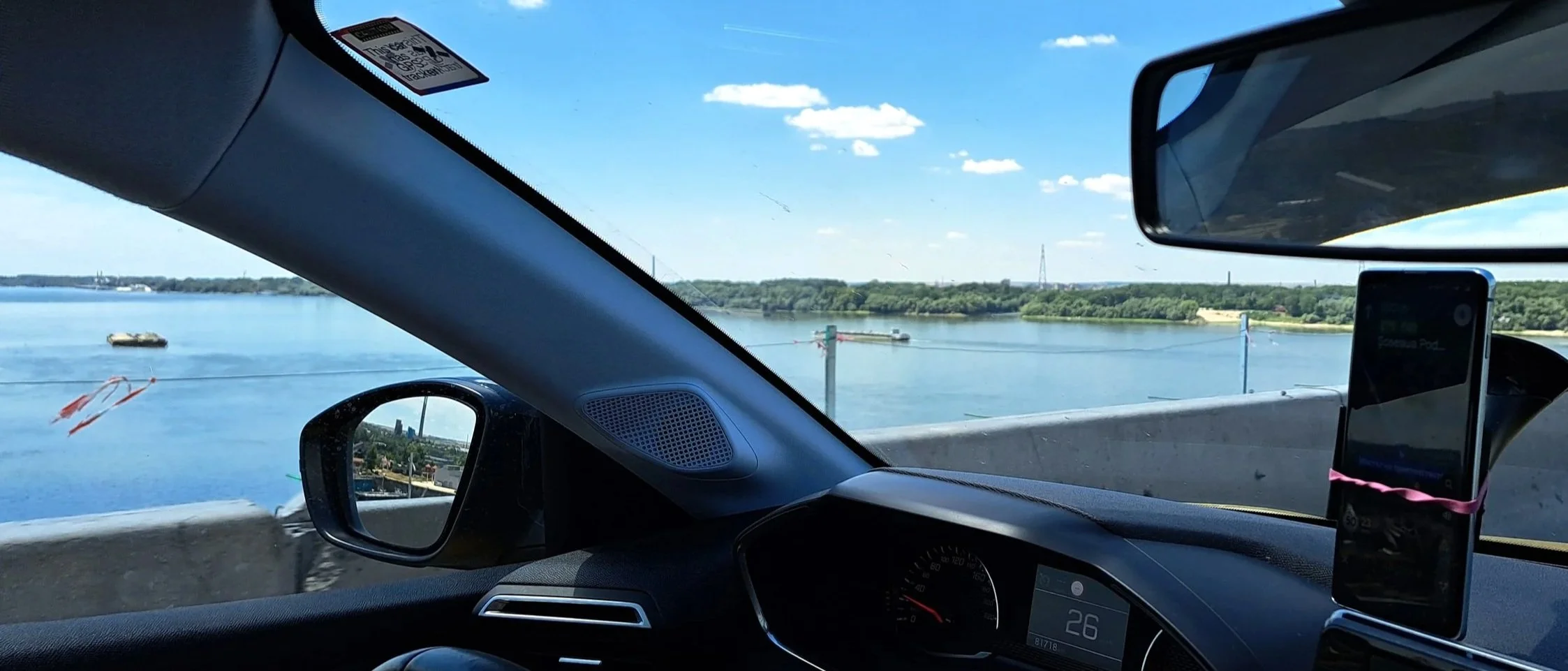
crossing the danube from bulgaria to romania
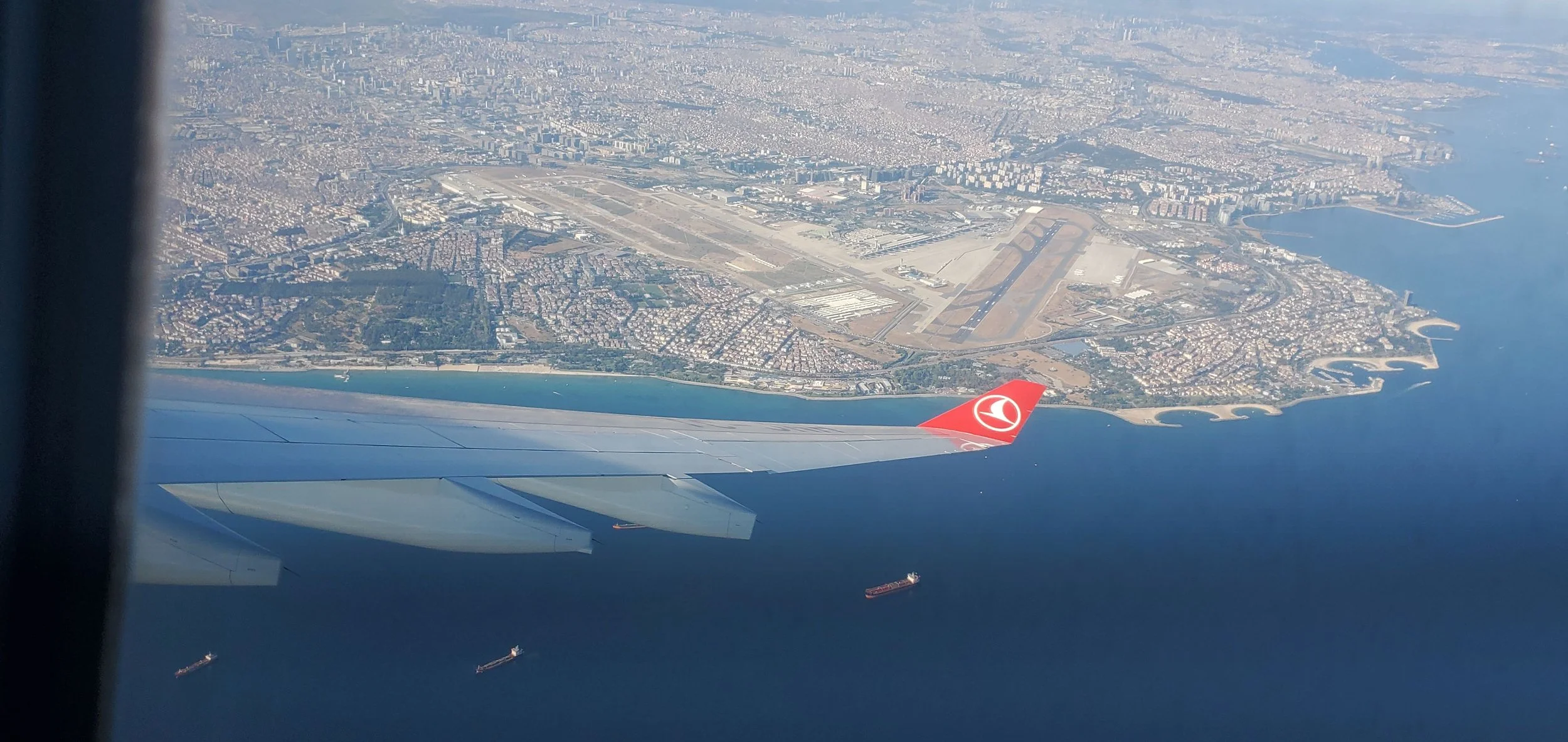
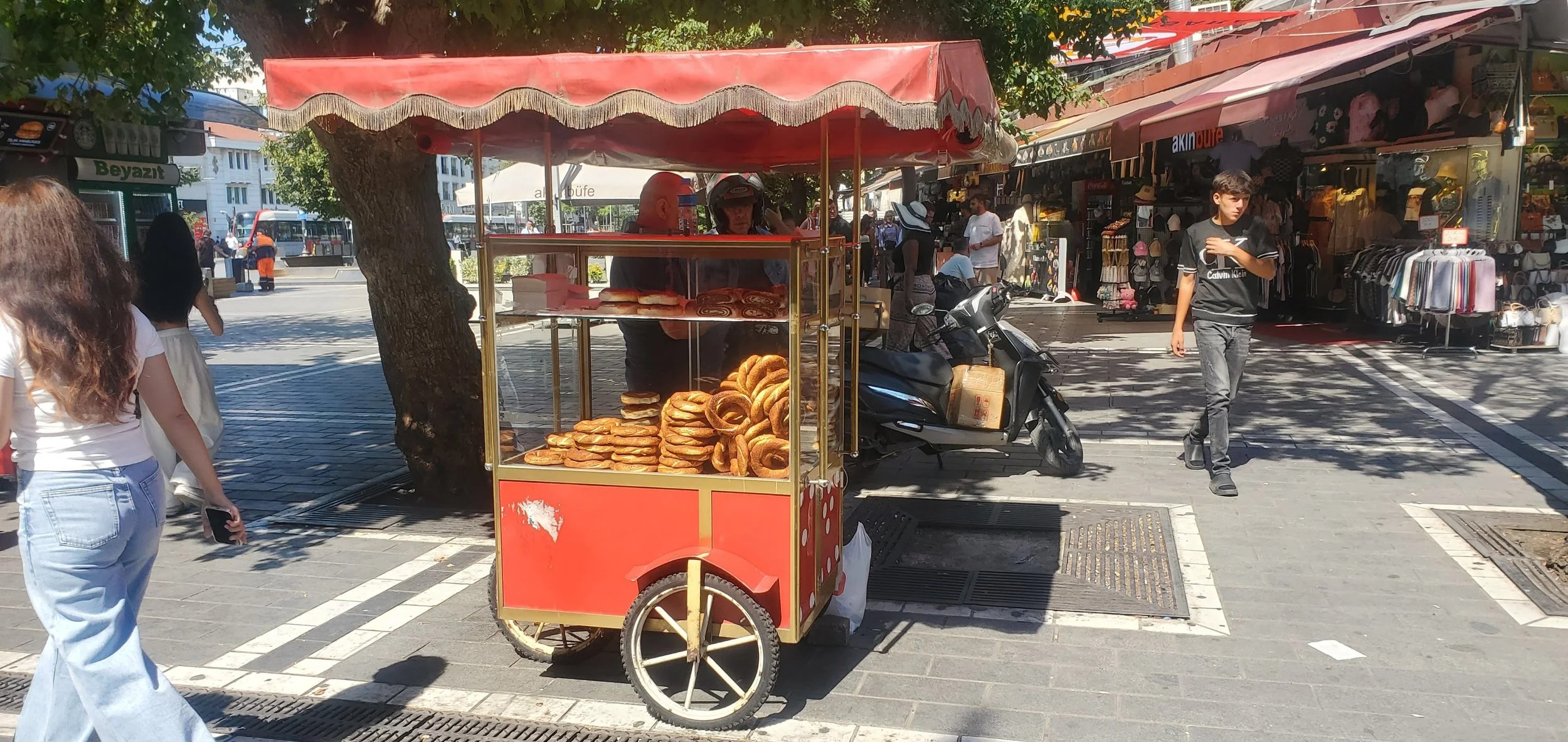
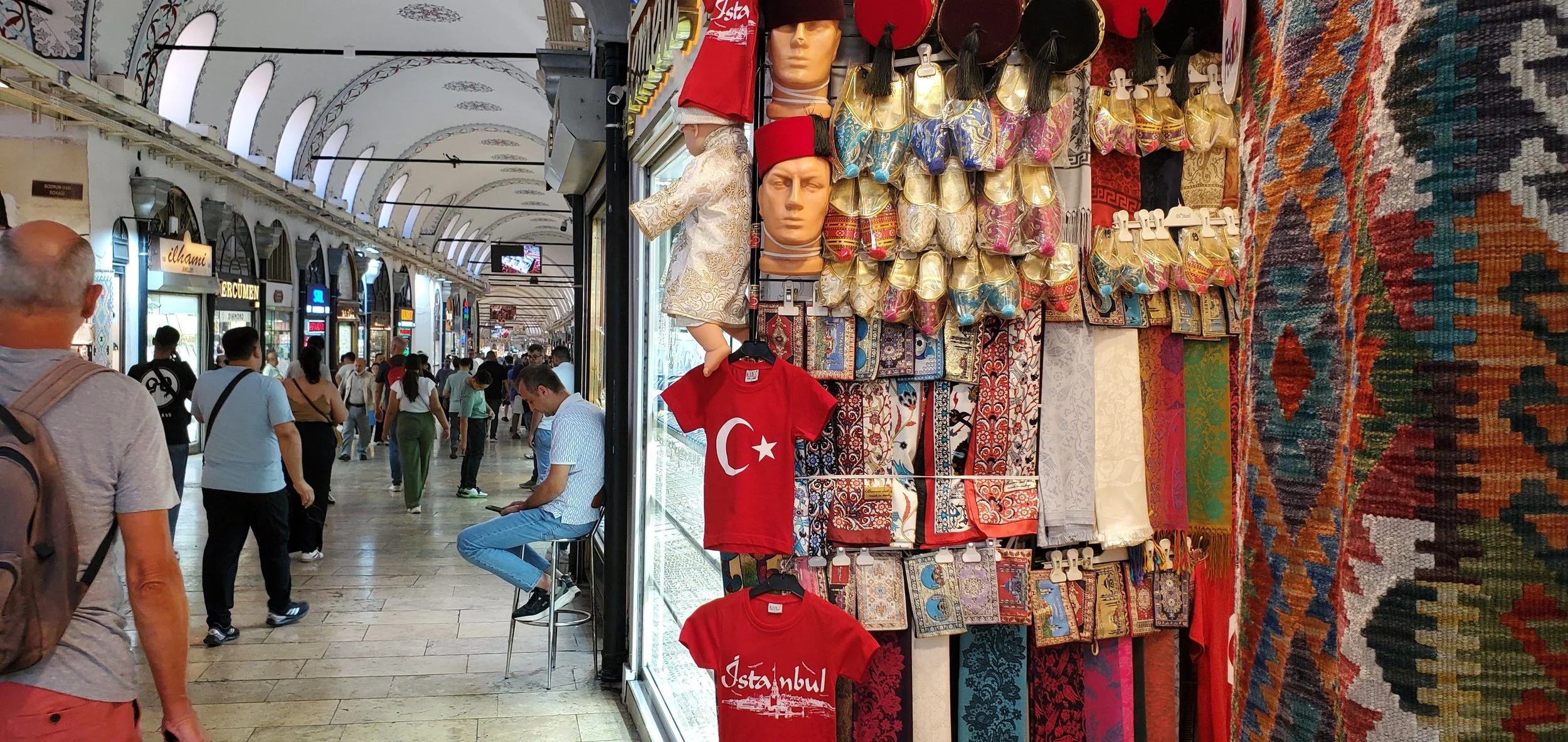
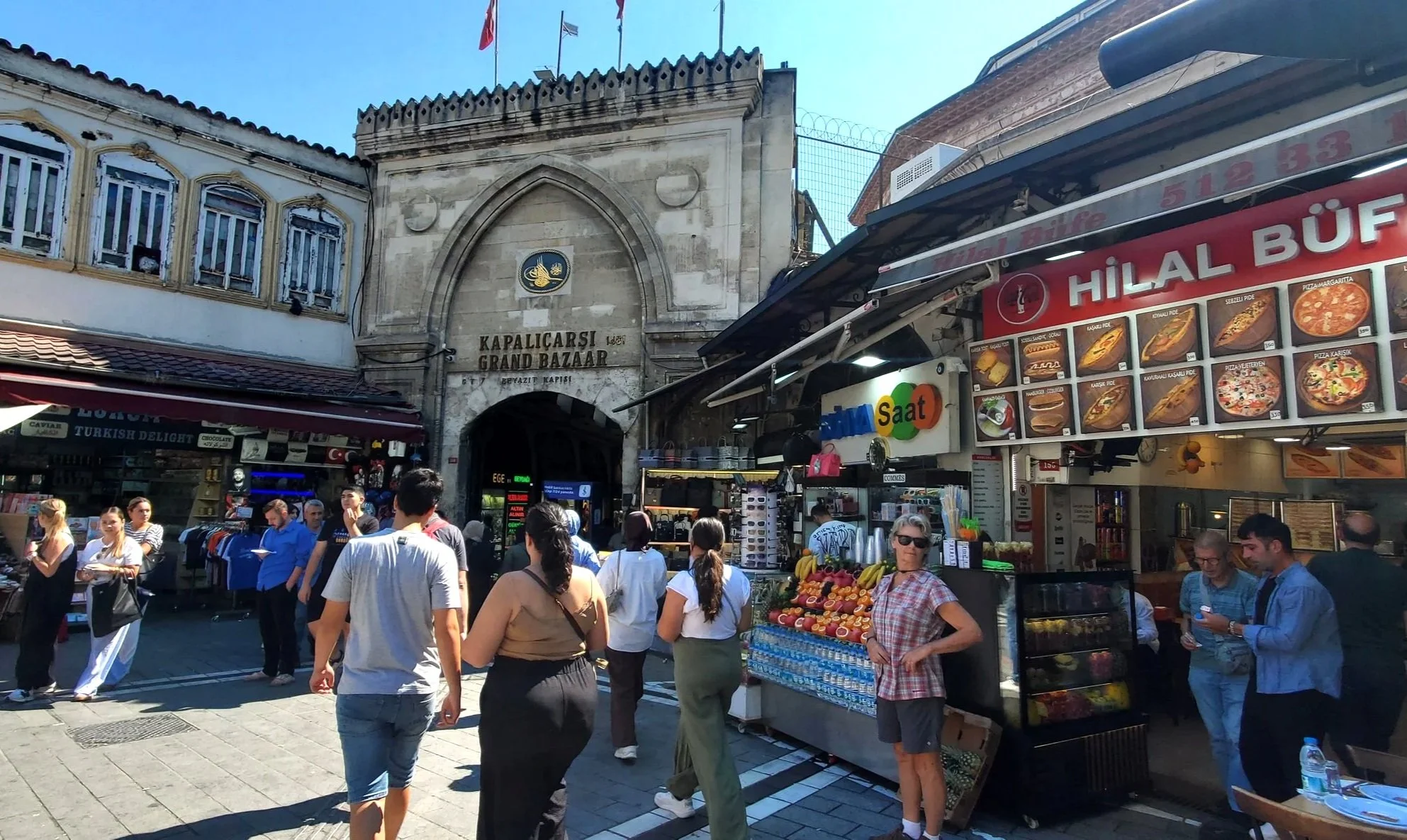
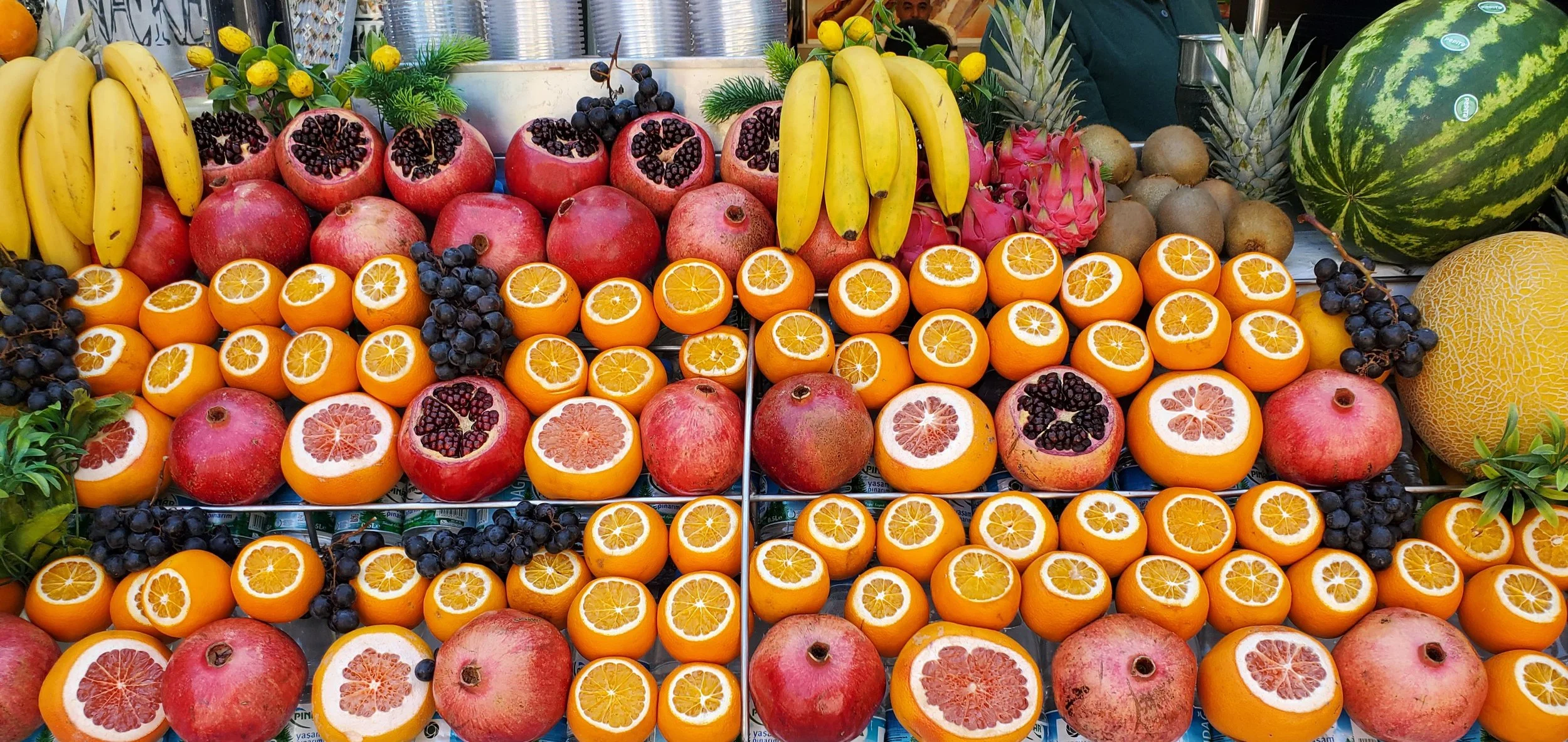
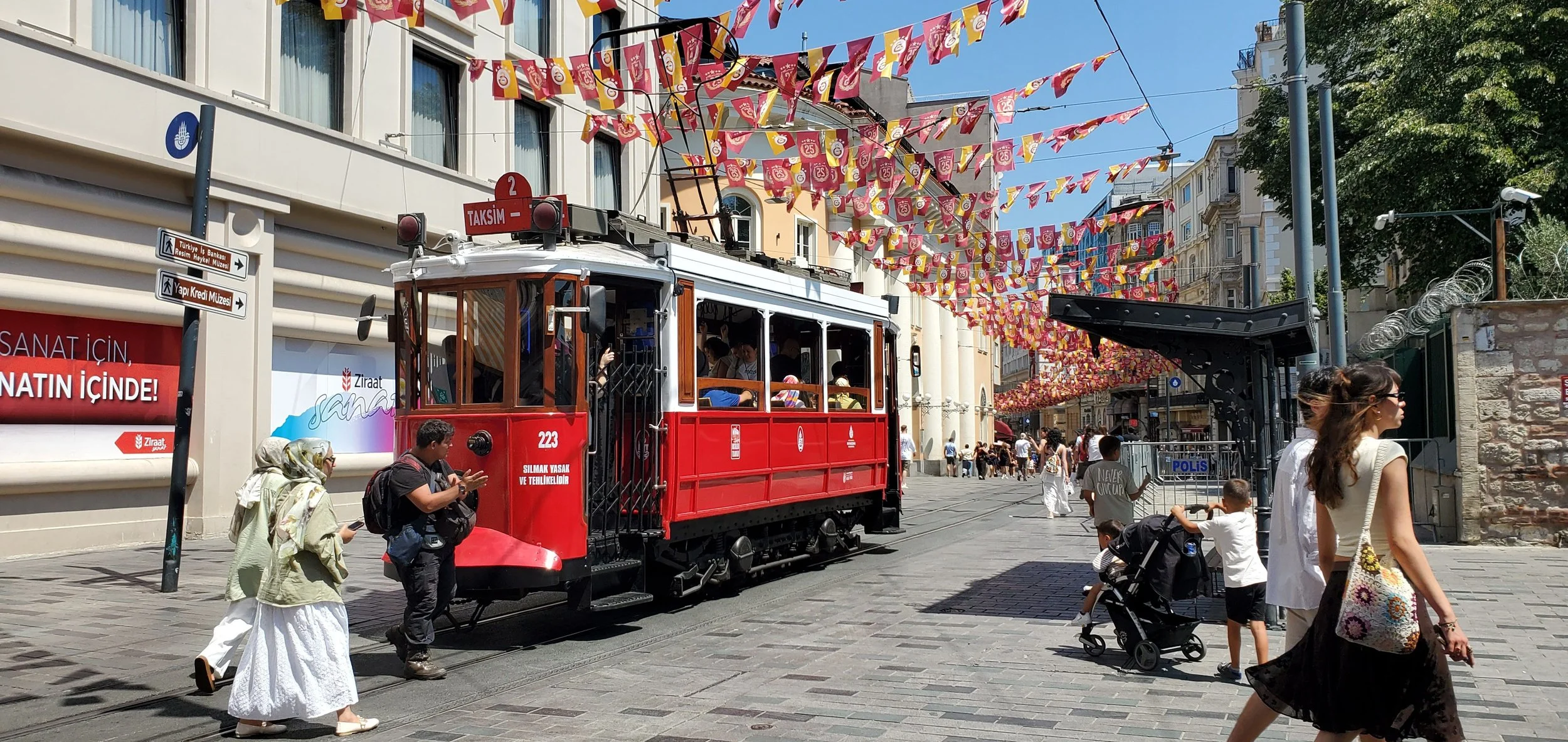
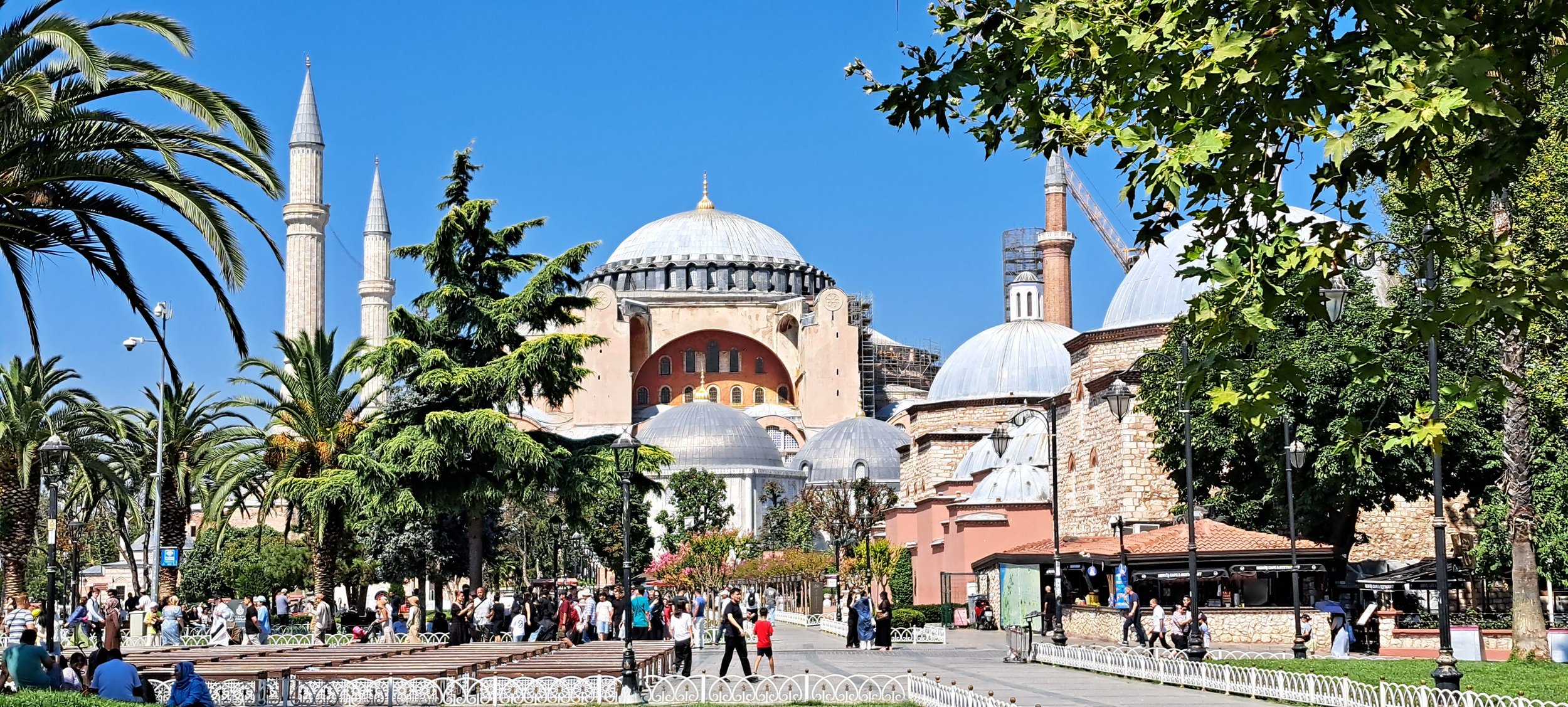
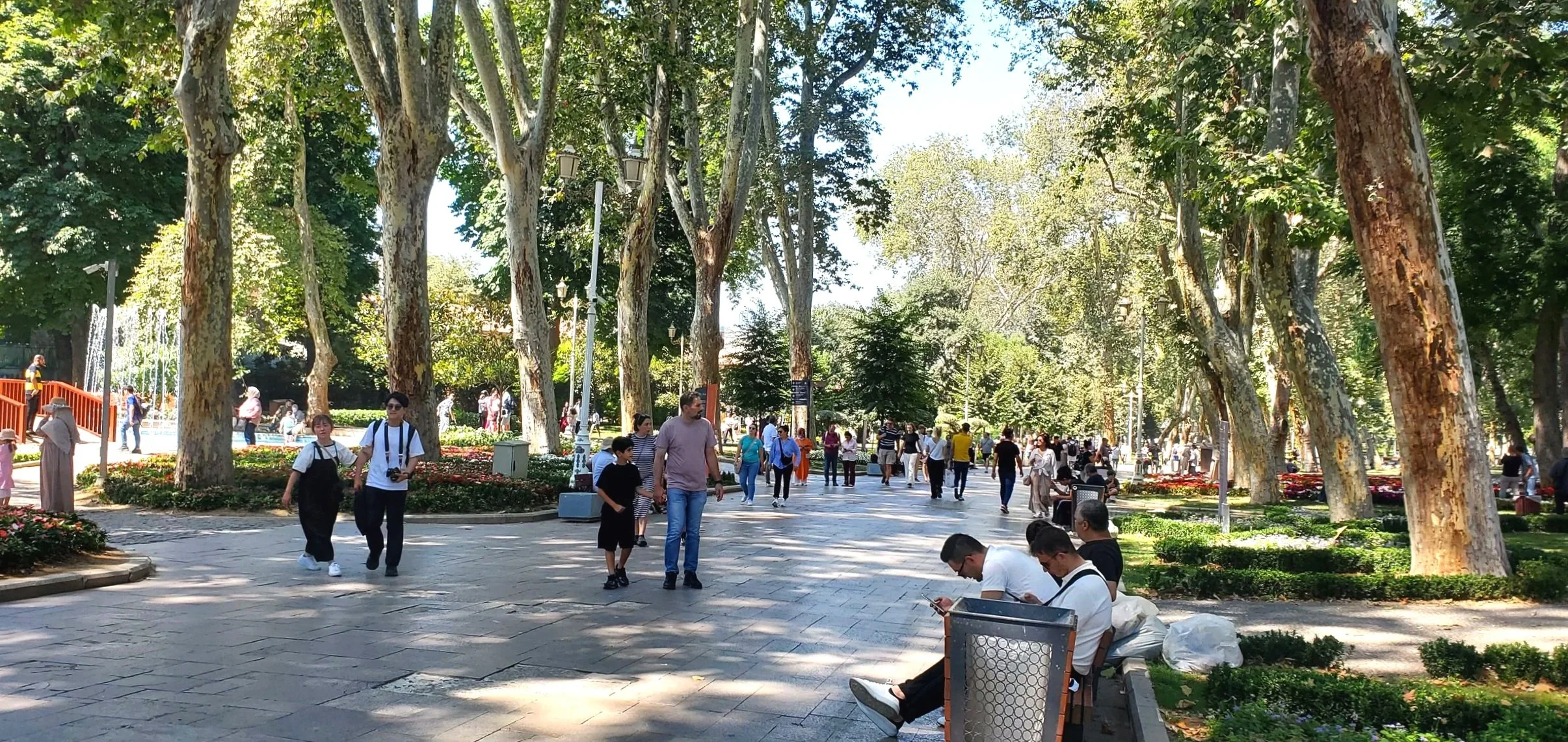
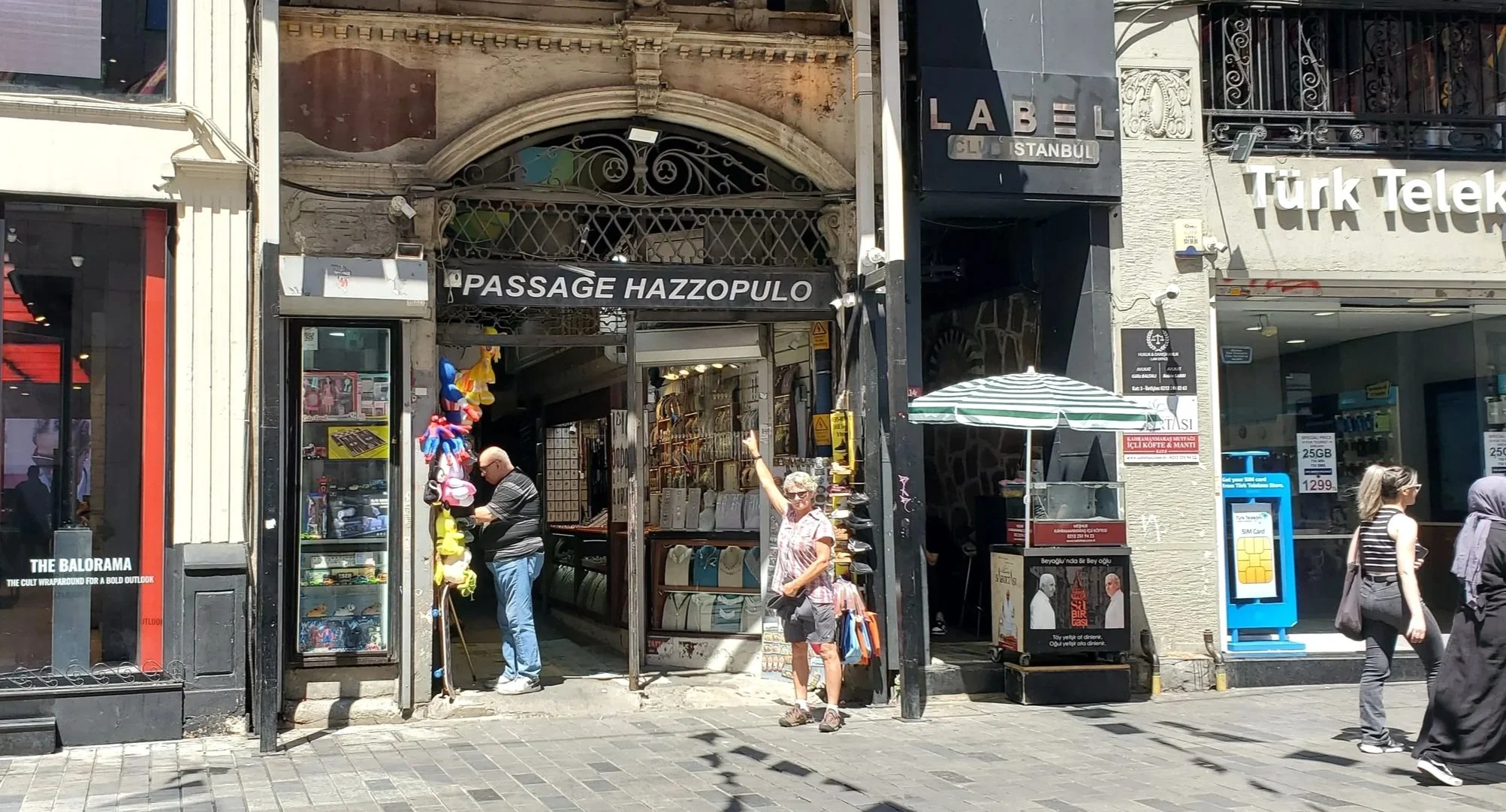
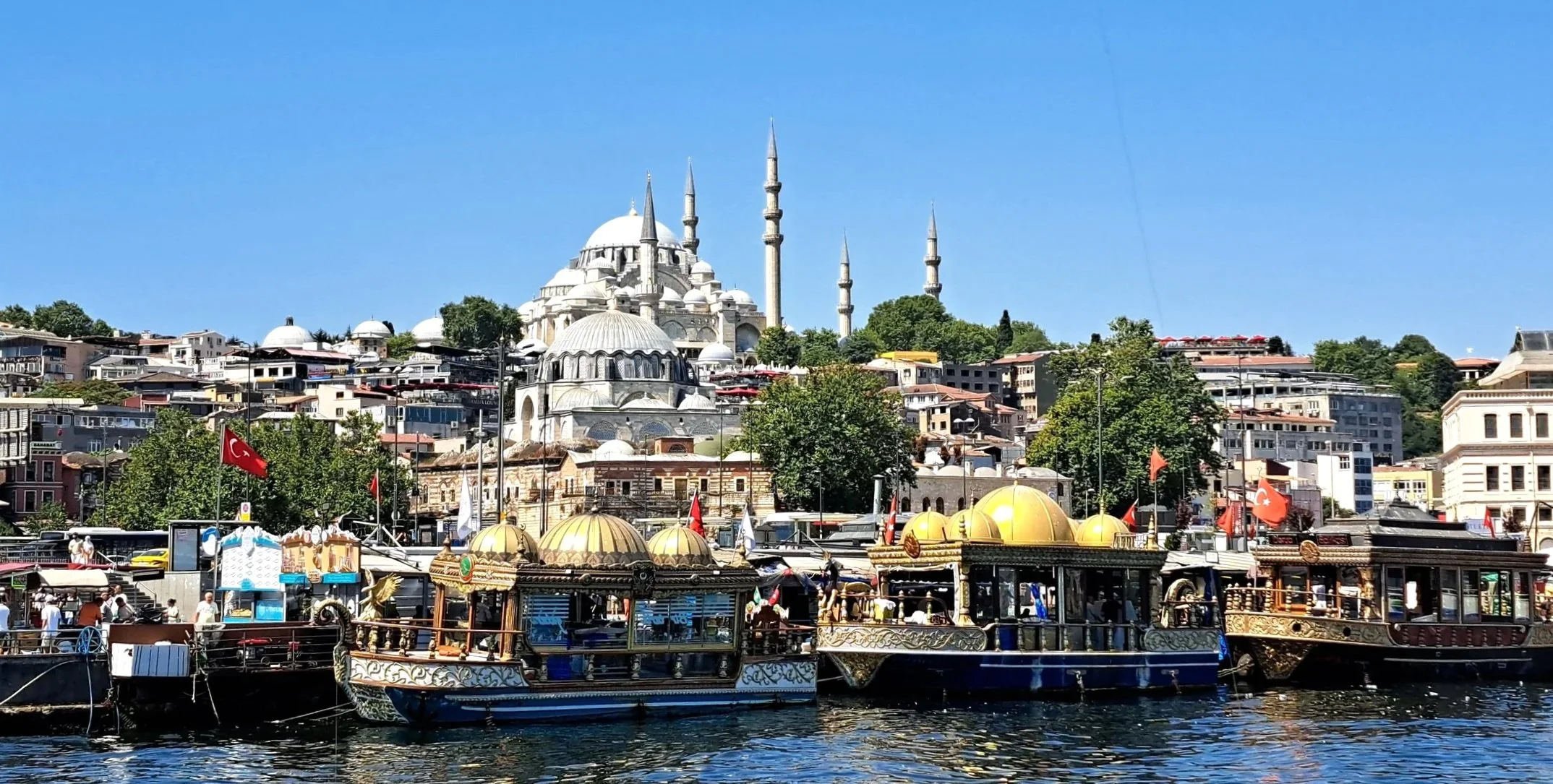
Once in Istanbul we had a couple of nights before our flight. We’d been to Istanbul before so didn’t feel the need to revisit the big-ticket attractions such as the Aya Sofia, Blue Mosque or the Underground Cisterns, thus avoiding queues and costs, preferring to just wander the lively streets and markets.
Conclusion
After 7 weeks we’d completed our journey from Helsinki to Istanbul, a trip of over 3,000km.
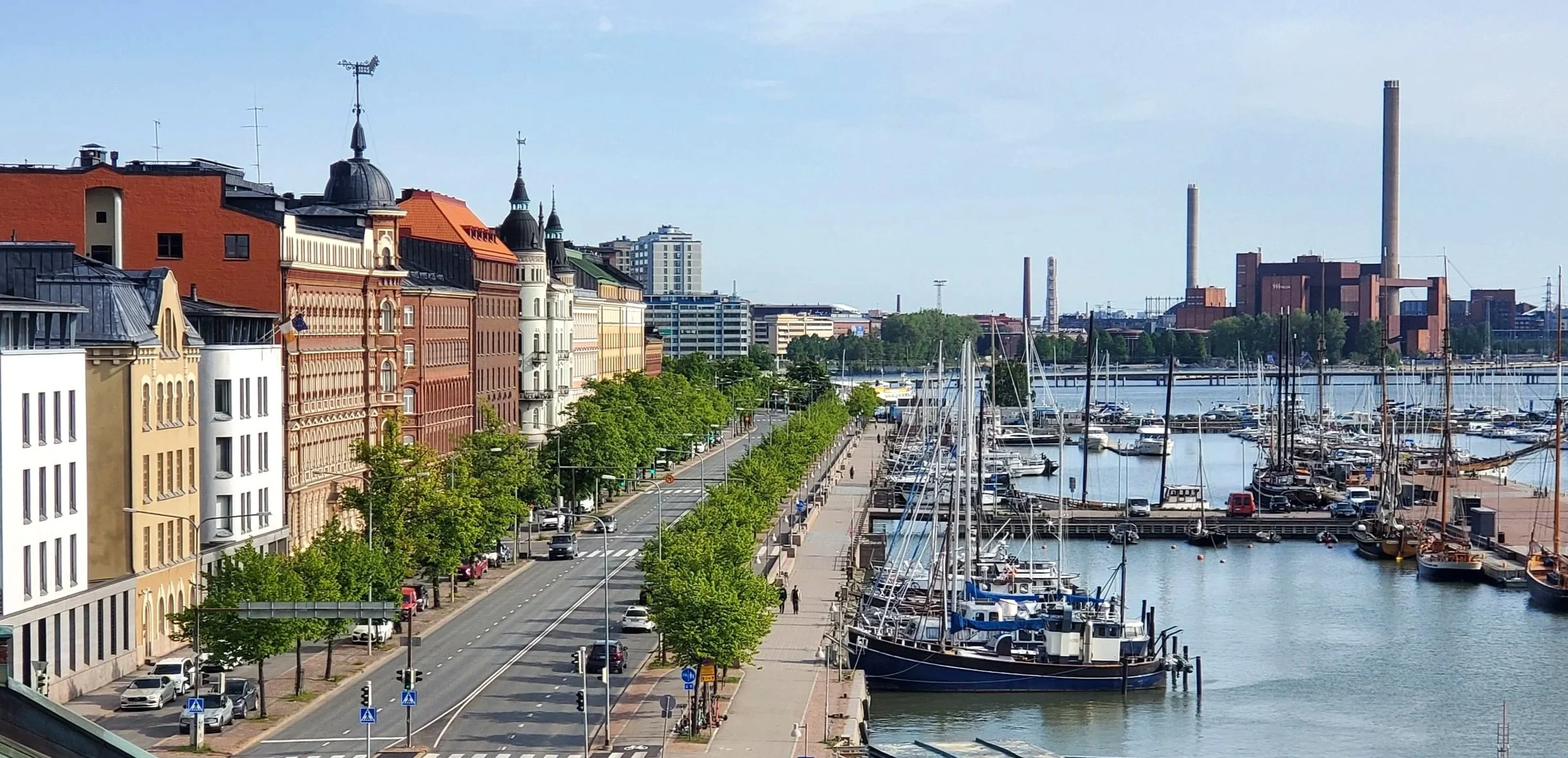
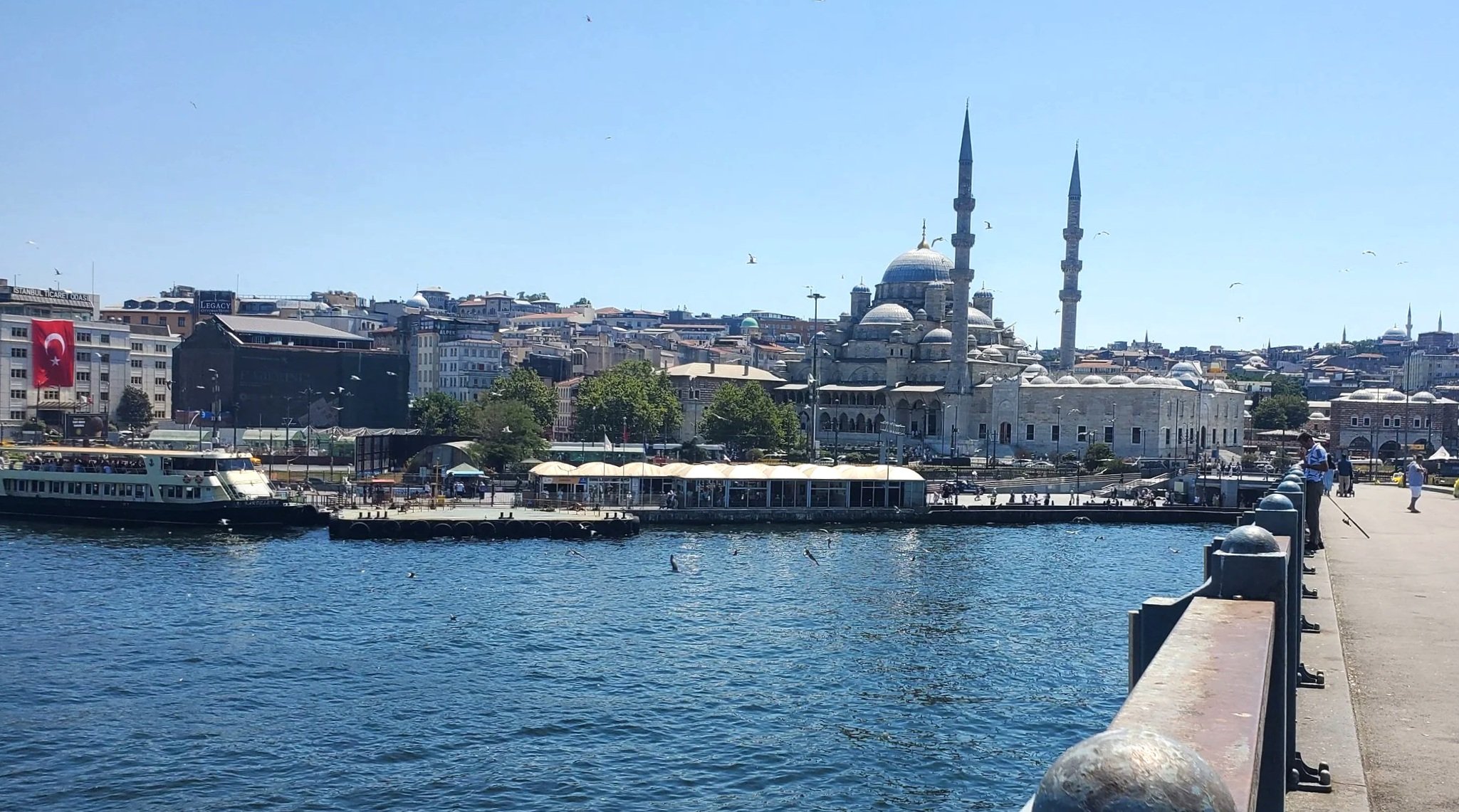
There were many highlights. It is a fascinating part of the world, and by and large, gets fewer tourists than western Europe. It’s also generally cheaper than the west, another good reason to go. If you haven’t been yet, then add it to your must-visit travel list.
Ken and Cally